Which Way Should Your Ceiling Fan Turn in Summer? A Homeowner’s Guide to Energy Efficiency
Most homeowners know that ceiling fans can help keep rooms more comfortable while potentially lowering energy bills. But many overlook a simple, often missed setting that determines whether your fan helps or hinders your cooling efforts: the direction in which it spins. Ceiling fans are not one-directional by design—they are engineered to work with different seasonal needs. In the summer, choosing the right rotation can significantly impact your energy efficiency and comfort. If that’s news to you, don’t worry—you’re not alone. This article sheds light on how ceiling fans work, why the direction matters, and how understanding this small detail can help you keep your cool during warmer months.
Understanding How a Ceiling Fan Works
Before diving into rotation settings, it helps to understand how ceiling fans actually operate. Unlike air conditioners, ceiling fans do not lower the temperature of a room. Instead, they create a wind-chill effect that makes occupants feel cooler. As the fan blades spin, they circulate air downward or upward, depending on the direction of movement. This motion facilitates either a cooling effect in summer or a warming redistribution of warm air in winter. When paired with your HVAC system, a properly set ceiling fan can reduce household energy consumption without compromising indoor comfort.
The Correct Ceiling Fan Direction in Summer
In warmer months, your goal is to maximize downward airflow. A ceiling fan should spin in a counterclockwise direction when viewed from below. This direction pushes air downward, creating a direct breeze that evaporates moisture from your skin and makes you feel cooler. If you’re unsure how to verify this, turn on your ceiling fan and stand directly underneath it. If you feel a noticeable breeze moving downward, your fan is rotating counterclockwise, which is the correct setting for summer. It’s a subtle distinction, but one with a significant payoff in energy savings and indoor comfort.
How to Change the Direction of Your Ceiling Fan
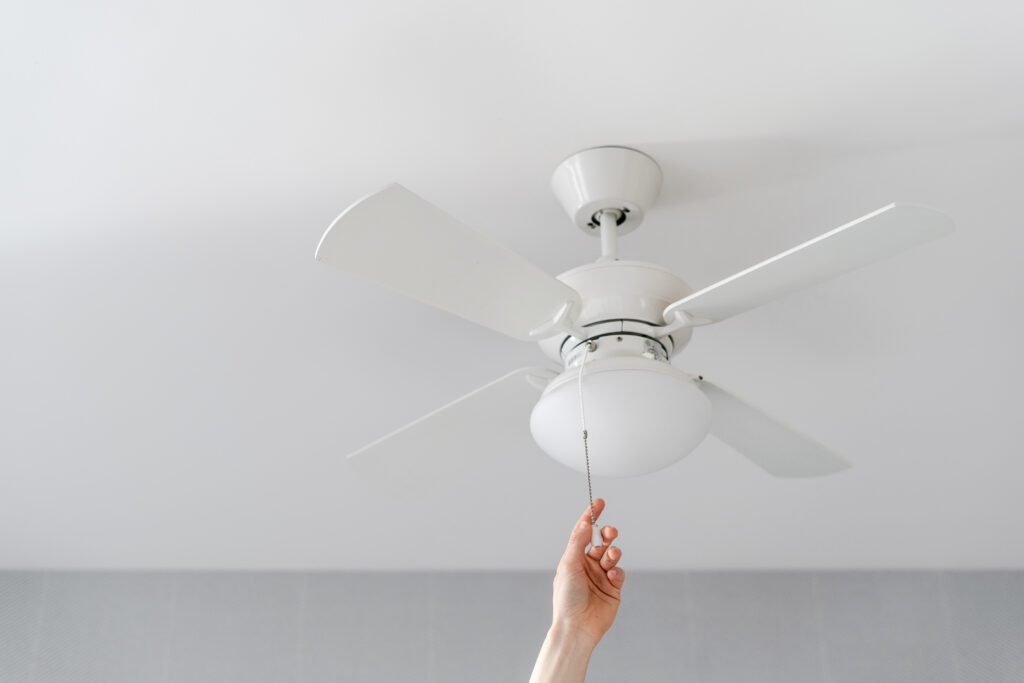
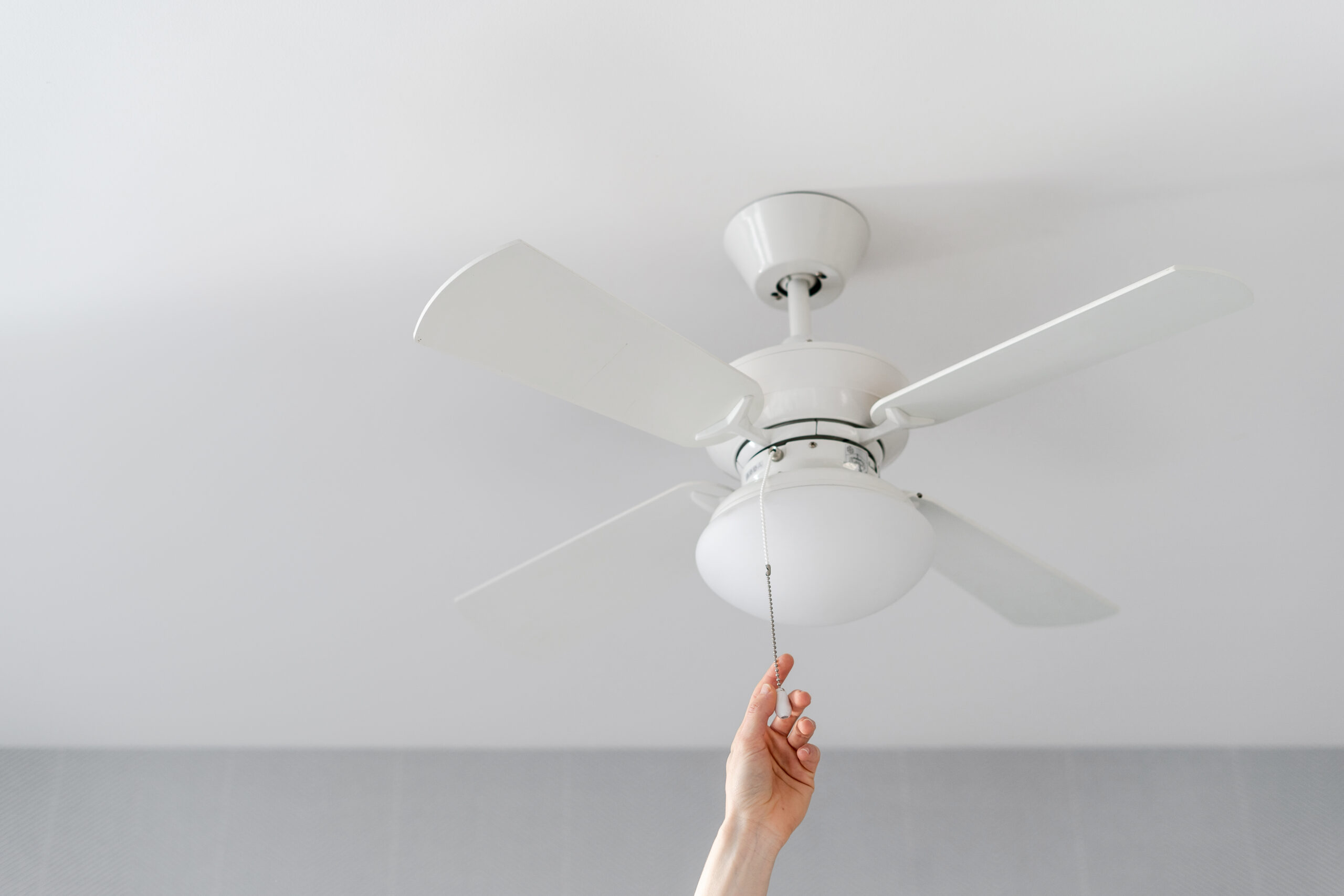
Most ceiling fans include a small switch on the motor housing that allows you to reverse the direction of the blades. The switch is typically located just above the blades and below the light fixture—though design variations do exist. With the fan turned off and the blades completely still, flip the switch and then turn the fan on at a low speed to test the new direction. Some newer models allow direction changes via remote control or wall switch, so check your user manual if needed. Taking five minutes at the start of each season to adjust your fan ensures your HVAC system isn’t working harder than it needs to.
The Benefits of Seasonal Ceiling Fan Direction
Choosing the correct fan direction aligns your climate control strategy with the seasons. In summer, the enhanced airflow reduces the reliance on your air conditioning system, which leads to lower electricity bills. While ceiling fans don’t replace air conditioning, they reduce the need to set the thermostat as low. For example, a room at 78°F can feel like 72°F with a ceiling fan properly set to counterclockwise rotation. The Department of Energy notes that this strategy can reduce cooling costs by up to 30%. Beyond savings, fans alleviate hot spots in rooms that may be poorly ventilated, creating a more balanced indoor climate throughout the home.
Common Drawbacks and Misconceptions
Despite their benefits, ceiling fans do have limitations. Using them in empty rooms accomplishes little; they cool people, not spaces. Leaving fans running when no one’s home only draws unnecessary power. Additionally, if fans are installed incorrectly—too low, off-center, or on an uneven mounting—they can produce wobbling, noise, and reduced efficiency. Another common misconception is that ceiling fans contribute to room cooling rather than personal cooling. This can lead to misuse, such as raising the thermostat too high while relying solely on fans. Homeowners should use fans as a complement to a well-performing HVAC system, not a replacement for one. Consistent maintenance, including blade cleaning and occasional balancing, also helps to optimize performance.
Energy-Smart Tips for Efficient Cooling
Combining the correct fan direction with smart energy habits offers a double benefit. Always run fans in occupied rooms only, and ensure your ceiling fans are ENERGY STAR-rated for maximum efficiency. Use the fan in conjunction with your air conditioning for the best results: increase the temperature setting on your thermostat by 4 degrees without a noticeable loss in comfort. Also remember that ceiling fan sizes affect effectiveness—larger rooms require wider blades and stronger motors to circulate air effectively. Use this as an opportunity to evaluate whether your current ceiling fan setup matches the room dimensions and usage. Seasonal adjustments, timely cleaning, and strategic placement all contribute to a more energy-efficient household.
Why Ceiling Fan Maintenance Matters—and How Armadillo Can Help
Ceiling fans might not be the most complex fixture in your home, but they are part of a larger picture—one that includes winter heating, summer cooling, and year-round comfort. Like any mechanical system, fans can wear down or fail over time due to electrical issues, motor problems, or installation faults. That’s where a comprehensive home warranty adds real value. At Armadillo, we help homeowners protect systems that matter most—including ceiling fans, lighting fixtures, and home climate controls—from unexpected repair or replacement costs. Our digital-first platform makes it simple to maintain your home proactively, while offering peace of mind when things don’t go as planned. Learn how our plans can help protect your fixtures and systems at our homepage, or start building your custom plan today at our Plan Builder. Because being comfortable in your home—all year long—isn’t a luxury. It’s the standard you deserve.