What Is AC Freon and Why Does It Matter for Your Home?
If your air conditioner has ever stopped cooling the way it should, there is a decent chance someone mentioned the word “freon” at some point. It gets thrown around a lot in HVAC conversations, and honestly, most homeowners do not have a clear picture of what it actually is or why the price of it can make a repair bill jump so significantly. Freon is a brand name that has become shorthand for refrigerant — the chemical compound that makes your air conditioning system capable of removing heat from indoor air and releasing it outside. Without it, your AC is essentially just a very expensive fan. Understanding how refrigerant works, what it costs, and what factors drive that cost is genuinely useful knowledge for any homeowner, especially when repair season rolls around.
How Refrigerant Actually Works Inside Your AC System
Here is the short version: refrigerant cycles continuously through your air conditioning system in a loop. It absorbs heat from the air inside your home when it passes through the evaporator coil, then travels to the outdoor unit where it releases that heat into the outside air through the condenser coil. A compressor keeps the whole cycle moving. The refrigerant itself never gets used up in this process — it just keeps cycling. That is an important detail, because it means if your system is low on refrigerant, it almost certainly has a leak somewhere. Refrigerant does not evaporate or burn off on its own. A properly sealed, functioning system should hold its refrigerant charge for the entire lifespan of the equipment.
The Cost of AC Refrigerant Per Pound Explained
This is where things get interesting for homeowners who are trying to budget for AC repairs. Refrigerant is priced per pound, and the cost varies significantly depending on the type your system uses. The two most common types found in residential systems are R-22 and R-410A, though newer systems are increasingly moving toward R-454B. R-22, also known as Freon, has been phased out under environmental regulations because of its ozone-depleting properties. Production and import were banned in the United States starting in 2020. That has driven the price of R-22 dramatically higher — homeowners with older systems can expect to pay anywhere from $50 to $150 or more per pound of R-22 refrigerant, and a typical system might need several pounds. R-410A, which replaced R-22 in most systems manufactured after 2010, generally runs between $20 and $70 per pound. Add in labor, diagnostics, and leak detection, and a refrigerant recharge can easily run between $200 and $600 or more depending on the situation.
Why Older Systems Cost More to Recharge
Systems that still use R-22 refrigerant place homeowners in a difficult financial position. Because R-22 is no longer manufactured domestically, whatever supply remains on the market is reclaimed and recycled material, and that limited supply means elevated prices. If an older system develops a leak and needs a significant recharge, the cost of refrigerant alone can make the repair economically questionable. In some cases, the smarter financial decision is to replace the entire system rather than continue investing in a refrigerant type that will only become harder and more expensive to source over time. A licensed HVAC technician can help you weigh those options, but it is worth going into that conversation already understanding the landscape.

Common Reasons Your AC Might Be Low on Refrigerant
Since refrigerant does not deplete on its own, a low charge is a symptom of an underlying problem. Here are the most frequent causes technicians encounter:
- Pinhole leaks in the copper refrigerant lines caused by formicary corrosion, which develops when copper is exposed to formic acid found in some household environments
- Leaks at connection points or fittings that have loosened over time due to vibration or age
- Damage to the evaporator coil or condenser coil from physical impact or prolonged exposure to environmental wear
- Improper installation that left connections insufficiently sealed from the start
- Older systems where components have simply reached the end of their material lifespan
Identifying a refrigerant leak is not always straightforward. A technician typically uses electronic leak detectors, UV dye, or nitrogen pressure testing to locate the source. Skipping leak detection and simply recharging the system is a temporary fix at best and a waste of money at worst — the refrigerant will continue to escape until the actual leak is repaired.
Signs Your AC May Have a Refrigerant Problem
Catching refrigerant issues early can help limit the cost of repairs. There are several recognizable symptoms that suggest your system may be running low on refrigerant. Warm air blowing from the vents despite the system running is one of the most obvious indicators. Ice forming on the refrigerant lines or on the evaporator coil is another, which might seem counterintuitive but is a direct result of insufficient refrigerant pressure. Longer cooling cycles, higher than normal energy bills, and a hissing or bubbling noise near the indoor or outdoor unit can also point to refrigerant-related issues. None of these symptoms are definitive on their own, but any combination of them warrants a call to a qualified HVAC professional.
What to Expect During a Refrigerant Service Call
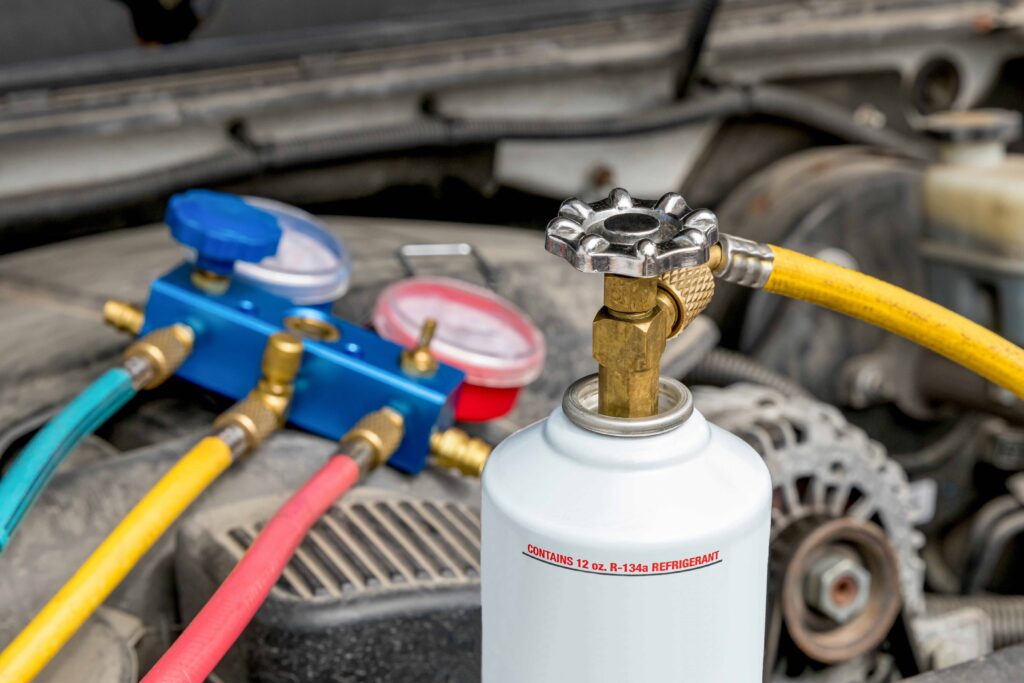
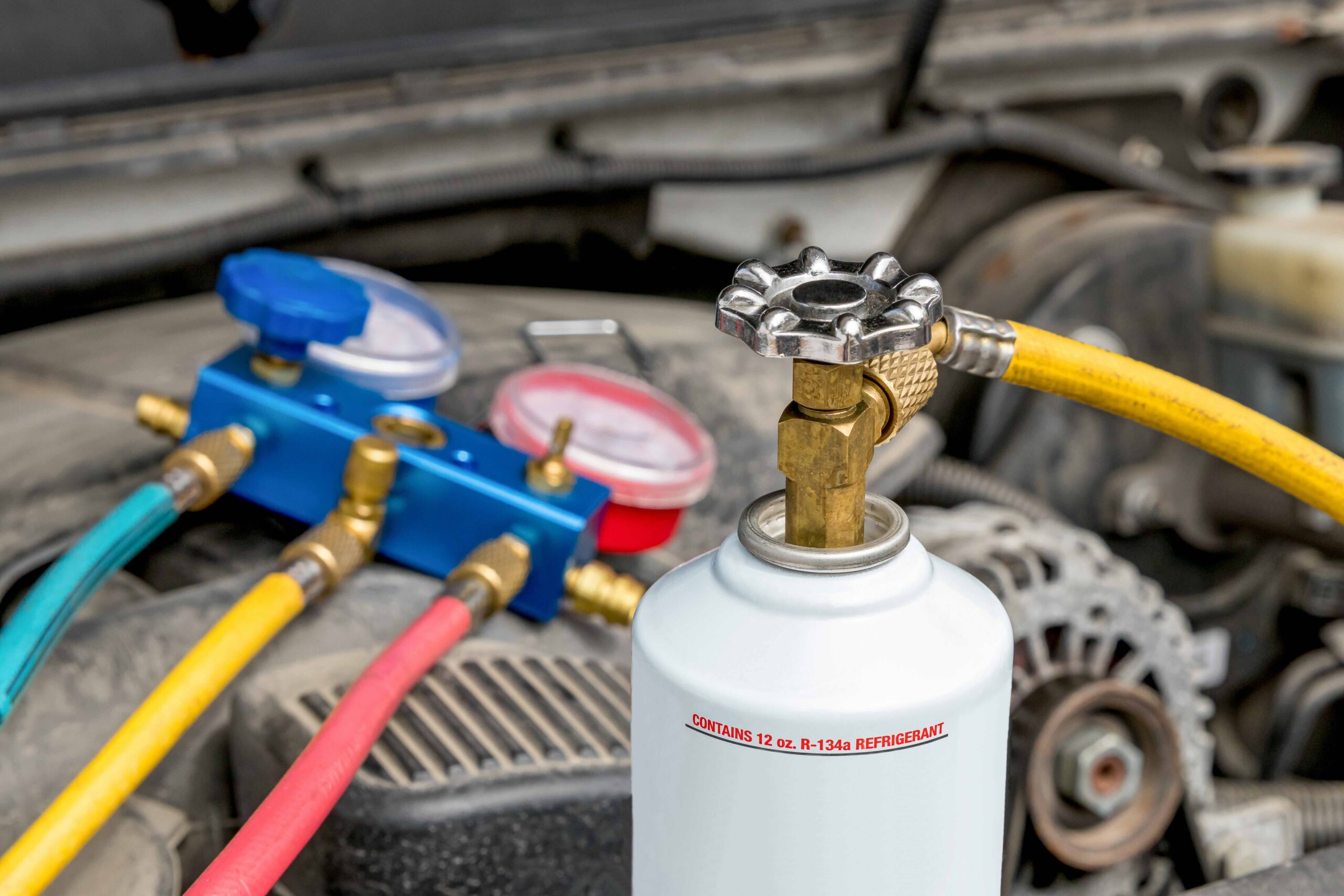
When a technician comes out to assess a potential refrigerant issue, the visit typically begins with a full system inspection rather than jumping straight to a recharge. They will measure the system’s refrigerant pressure using specialized gauges, check for visible signs of leaks, and evaluate overall system performance. If a leak is confirmed, the repair itself happens before any refrigerant is added — otherwise you are simply putting money into a system that will lose the charge again. After the repair, the technician will recharge the system to the manufacturer’s specified level. That spec matters. Overcharging a system is just as damaging as undercharging, and it requires proper training and equipment to get right. Always verify that any technician working on refrigerant holds EPA Section 608 certification, which is federally required for anyone handling refrigerants.
How Home Warranty Coverage Applies to Refrigerant Costs
This is a section that catches a lot of homeowners off guard. Home warranties vary considerably in how they handle refrigerant. Some plans cover the cost of refrigerant as part of an AC repair, while others cap the coverage amount or exclude refrigerant costs entirely. Understanding what your home warranty does and does not cover before a repair is needed saves a lot of frustration when a service call comes around. Policies that cover refrigerant typically do so within the context of a covered AC repair — meaning the leak itself must be a covered failure, and the refrigerant recharge is included as part of restoring the system to working condition. Always read the refrigerant-specific language in any home warranty plan carefully before signing.
Practical Tips for Keeping Your AC Refrigerant System Healthy
While refrigerant issues are not always preventable, routine maintenance goes a long way toward reducing the likelihood of unexpected problems. Annual HVAC tune-ups typically include a refrigerant pressure check, which can catch developing issues before they become full-blown failures. Keeping the area around your outdoor condenser unit clear of debris, ensuring proper airflow to both the indoor and outdoor units, and changing air filters on a regular schedule all support overall system health. If your system is more than 10 to 15 years old and still running R-22, it is worth having an honest conversation with an HVAC professional about the long-term cost and practicality of maintaining versus replacing the unit.
Why Armadillo Is the Smart Choice for AC and Refrigerant Coverage
When an air conditioning system starts leaking refrigerant, the costs can escalate faster than most homeowners anticipate. Between diagnostic fees, labor, leak repairs, and the refrigerant itself, a single service event can run into the hundreds — or higher if the system uses R-22. That is exactly the kind of financial exposure a well-structured home warranty is designed to address. Armadillo home warranty plans built for AC system protection are designed with real repair costs in mind, offering coverage that reflects how today’s HVAC systems actually fail — not just how older, simpler warranties were written. If the cost of refrigerant per pound has you thinking twice about what a single repair bill could look like, it is worth taking two minutes to get a personalized home warranty quote that covers your air conditioning system before the next cooling season catches you off guard. Armadillo makes the process straightforward, transparent, and genuinely useful for homeowners who want protection that actually holds up when it is needed.

Frequently Asked Questions About AC Refrigerant Costs and Coverage
The following questions reflect what homeowners most commonly want to know when navigating refrigerant issues and related repair costs.
How much does AC refrigerant cost per pound in 2024 and 2025?
R-410A refrigerant typically costs between $20 and $70 per pound depending on your region and the contractor. R-22, which is no longer manufactured, can cost $50 to $150 or more per pound due to limited reclaimed supply. Total repair costs depend on how many pounds your system needs and whether a leak repair is also required.
How many pounds of refrigerant does a typical home AC system need?
Most residential central air conditioning systems hold between 5 and 15 pounds of refrigerant, depending on the size and configuration of the system. A full recharge, if the system has completely lost its charge, can therefore represent a significant cost before labor is even factored in.
Does a home warranty cover refrigerant costs?
Coverage varies by provider and plan. Some home warranties include refrigerant as part of a covered AC repair, while others place caps on refrigerant costs or exclude them entirely. Reviewing the specific refrigerant language in any policy before purchasing is essential.
Can I add refrigerant to my AC system myself?
No. Handling refrigerant requires EPA Section 608 certification. It is illegal for uncertified individuals to purchase or handle refrigerants used in HVAC systems. Attempting a DIY recharge without proper equipment can also damage the system and create safety hazards.
Why is my AC running but not cooling the house?
Low refrigerant is one possible cause, but it is not the only one. Other possibilities include a dirty air filter, a failing compressor, a frozen evaporator coil, or ductwork issues. A licensed HVAC technician can diagnose the specific cause with proper testing equipment.
How long does a refrigerant recharge last?
A refrigerant recharge is not a maintenance item with a set interval. If your system is properly sealed and the leak has been repaired, the charge should last the life of the equipment. If you are recharging your system repeatedly, the underlying leak has not been adequately addressed.
What is the difference between R-22 and R-410A refrigerant?
R-22, commonly called Freon, is an older refrigerant that has been phased out due to its ozone-depleting properties. R-410A replaced it in systems manufactured after 2010 and is more environmentally responsible and currently more affordable. Newer systems are beginning to transition to R-454B, which has an even lower environmental impact.
Should I repair or replace an AC system that uses R-22?
This depends on the age of the system, the extent of the leak, and the cost of the repair. Given the high and rising price of R-22, many HVAC professionals recommend replacement when a major repair is required on an older R-22 system. The long-term economics often favor a new, more efficient system.
How can I tell if my AC system is leaking refrigerant?
Common signs include reduced cooling performance, ice on the refrigerant lines or evaporator coil, longer cooling cycles, unexpectedly high energy bills, and hissing or bubbling sounds near the unit. A technician can confirm a leak using pressure testing, electronic detectors, or UV dye.
Does regular AC maintenance help prevent refrigerant leaks?
Annual maintenance includes a refrigerant pressure check that can catch developing issues early. While it cannot prevent all leaks, routine service significantly reduces the likelihood of undetected problems that escalate into costly repairs. Keeping coils clean and ensuring proper airflow also reduces system stress that can contribute to component wear.