What Homeowners Should Know About Adding Refrigerant to an AC Unit and How Home Warranty Protection Applies
Air conditioning systems are often unsung heroes in residential homes—quietly managing indoor temperatures while operating behind the scenes. But when they falter, it’s usually at the worst time possible: a midsummer afternoon, high humidity, guests coming over. One of the most common culprits for an underperforming or non-functioning central AC unit is low refrigerant levels. For homeowners with a home warranty plan, it’s important to understand your coverage, responsibilities, and the implications of adding refrigerant. This guide explores how the AC system works, what refrigerant does, when recharging (adding refrigerant) is needed, and how home warranties like Armadillo handle it.
Understanding How Air Conditioners Use Refrigerant
Your home’s central air conditioning system operates on a closed-loop refrigeration cycle. Within this loop, refrigerant continuously absorbs and releases heat to move warm air out of your indoor space. As refrigerant circulates through the evaporator coil indoors, it evaporates and draws heat out of the air. Then, in the outdoor condenser coil, the same refrigerant releases that heat into the outside environment as it condenses. This thermal transfer, supported by compressors, fans, copper tubing, and coils, enables the cooling effect you rely on in hot weather.
Refrigerant is not a fuel that gets used up. Ideally, the system stays sealed, meaning refrigerant should never need to be replaced under normal conditions. If your system is low on refrigerant, there’s likely a leak—sometimes small and hard to detect, sometimes larger and damaging. Adding refrigerant to an AC without diagnosing and fixing the underlying issue doesn’t solve the problem; it temporarily masks it.
When Is It Necessary to Recharge Your AC Unit?
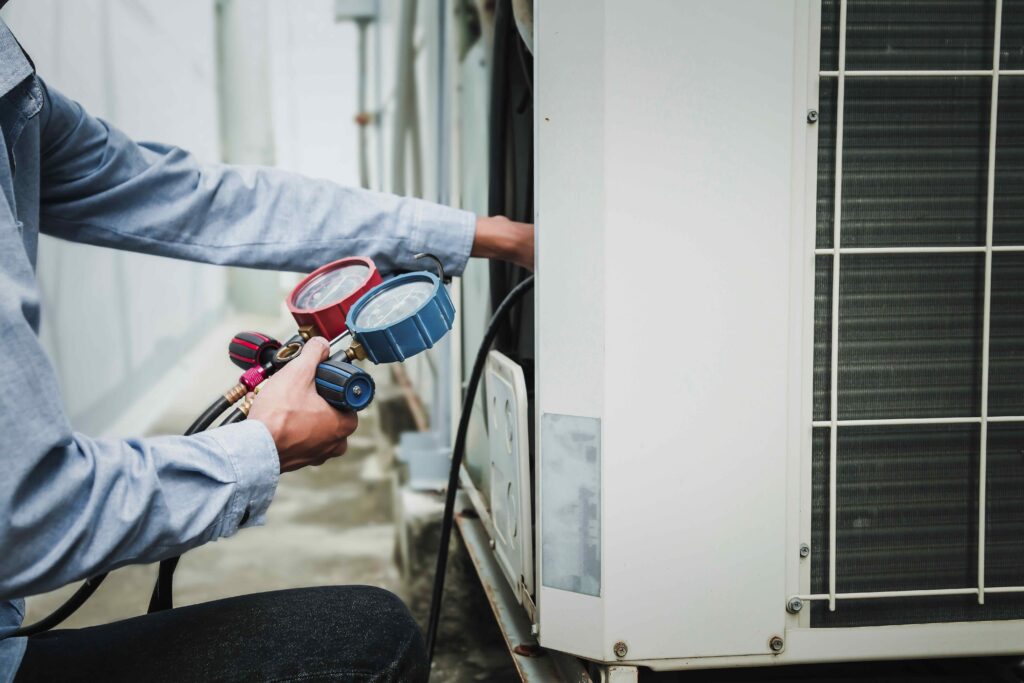
Low refrigerant typically comes with warning signs. Uneven cooling, longer system run-times, or an AC that blows warm air are all potential symptoms. In some cases, you might hear a hissing or bubbling sound from the refrigerant lines—a strong indicator of a leak. Another clue is frost buildup on the evaporator coil. If you observe any of these issues, don’t reach for a refrigerant canister. A certified HVAC technician must inspect, test for leaks, confirm low levels, and perform any necessary repairs before adding refrigerant. Recharging an AC is not a maintenance task; it’s a response to a fault within the system.
It’s essential to understand that adding refrigerant cannot function as a solution on its own. The underlying cause—usually a worn connector, aging coil, or corroded line—must be resolved. Without fixing the source of the leak, the AC will inevitably require another recharge, and over time, repeated exposure to low refrigerant levels can damage essential components such as the compressor.
Types of Refrigerants Homeowners Might Encounter
Over the years, residential AC systems have utilized different types of refrigerants. R-22 (commonly known as Freon) was widely used for decades but was phased out due to environmental concerns and ozone depletion. As of 2020, no new R-22 can be manufactured or imported into the U.S.—only recycled or recovered supplies can be used. As a result, homeowners with R-22-compatible systems may face higher servicing costs, reduced availability, and increased pressure to upgrade their HVAC systems.
The modern standard is R-410A, a more environmentally friendly and efficient alternative. It operates at higher pressure and cannot be used in systems designed for R-22. So, if you’re considering replacement components or system repairs, ensure the refrigerant type aligns with manufacturer requirements. Trying to work around refrigerant compatibility creates larger risks, both for safety and equipment longevity.
How a Home Warranty Handles Refrigerant-Related Issues
Home warranties can be a valuable safety net when dealing with AC system failures, especially those tied to refrigerant. However, not all plans treat refrigerant coverage the same. Most reputable home warranty providers, including Armadillo, offer plans that cover the components needed to keep your system functioning properly—but you’ll want to carefully review what is covered in terms of refrigerant costs, diagnostic work, and leak repairs.
In general, a high-quality home warranty includes coverage for recharging refrigerant if the system requires it due to a covered failure. However, limitations may apply: some policies cap the amount of refrigerant per service call, or base coverage on the refrigerant type (such as R-410A vs. discontinued R-22). It’s critical to choose a plan that aligns with your system’s needs, especially if your AC unit is more than a decade old.
Typical Costs Without a Home Warranty
If you don’t have a home warranty and your AC needs refrigerant, expect to pay anywhere from $150 to $600 depending on the refrigerant type, how much is needed, and where the leak is occurring. R-22 service can be especially expensive as its availability declines. Leak detection adds further costs—often over $200—while labor and repairs vary widely depending on the extent of the issue. Compressor failure due to prolonged low refrigerant levels can lead to full system replacement, which ranges from $4,000 to $12,000 or more. A home warranty can significantly offset these expenses, provided the issue falls under covered conditions and proper system maintenance has been upheld.
Responsibility and Routine Maintenance
Homeowners play a key role in ensuring their AC system performs effectively. Home warranties do not typically cover issues that stem from neglect or a lack of routine maintenance. For example, failing to replace air filters, ignoring unusual system sounds, or allowing vegetation to grow around the outdoor unit may void coverage. When it comes to refrigerant loss, the warranty provider may cover the refill and repair, but proof of maintenance—like annual servicing by a qualified technician—could be required to validate the claim.
Ideally, plan to have your AC system inspected once a year, typically in the spring before peak usage. A technician can test refrigerant pressure, inspect coils, check for signs of wear, and identify leaks early. This proactive attention can prevent the inconvenience and cost of complete system failure later in the season.
Is It Time to Replace the AC System Entirely?
For homes with aging HVAC systems still using R-22 or operating inefficiently even after repairs, it may be more cost-effective to replace the unit rather than recharge it again. Systems generally last between 10 and 15 years—beyond that, refrigerant leaks become more frequent, parts harder to find, and energy efficiency lower than current standards. Upgrading to a newer unit compatible with R-410A offers better performance, lower energy bills, and supports more comprehensive warranty coverage moving forward.
Protect Your AC System Today with Armadillo
A well-maintained HVAC system is more than a luxury—it’s a necessity during sweltering temperatures. But even properly cared-for systems can encounter issues, from refrigerant leaks to component failures. That’s where a reliable home warranty like Armadillo steps in. Armadillo offers comprehensive protection plans that cover key components of your air conditioning system, including refrigerant-related repairs. With transparent terms, modern support tools, and the ability to build a plan tailored to your home’s systems, Armadillo helps relieve the financial pressure when HVAC issues arise unexpectedly.
To get started, explore the coverage options at armadillo.one. Ready to create the perfect plan for your home right now? Begin customizing your protection at Armadillo Plan Builder.