What Is Refrigerant and Why Does Your AC Need It?
Your air conditioner does not actually create cool air. What it does is remove heat from the air inside your home and transfer it outside. That process depends almost entirely on refrigerant — the chemical compound that cycles through your AC system, absorbing and releasing heat as it moves between your indoor and outdoor units. Without the right amount of refrigerant, the entire system starts to fall apart. Rooms stay warm, humidity builds up, and your energy bills quietly creep higher while your comfort quietly disappears. Most homeowners do not think about refrigerant until something goes wrong, and by then, they are already dealing with an uncomfortable house and an unexpected repair bill. Understanding how refrigerant works and what it costs to refill it puts you in a much stronger position as a homeowner.
How Refrigerant Works Inside Your Air Conditioning System
Refrigerant operates in a continuous loop. It starts as a low-pressure gas inside your indoor unit, where it absorbs heat from the warm air passing over the evaporator coil. That absorbed heat causes the refrigerant to evaporate into a gas, which then travels to the outdoor compressor unit. The compressor pressurizes the gas, which raises its temperature significantly. The hot, high-pressure gas then moves through the condenser coil, where the heat is released outside. As the refrigerant cools, it converts back into a liquid, passes through an expansion valve to reduce pressure, and the cycle starts again. This process repeats continuously while your AC is running. A properly sealed system should never run low on refrigerant — it does not get consumed like fuel. If levels drop, it almost always means there is a leak somewhere in the system.
Signs Your AC System May Be Low on Refrigerant
Recognizing the early signs of low refrigerant can save you from a much bigger repair down the road. The symptoms are not always obvious, but they tend to follow a consistent pattern that homeowners can learn to identify before the system fails completely.
- Warm or lukewarm air blowing from your vents even when the thermostat is set low
- Ice buildup on the refrigerant lines or evaporator coil
- Unusually high electricity bills with no clear explanation
- The system runs constantly but never reaches the set temperature
- A hissing or bubbling sound near the indoor or outdoor unit
- Increased indoor humidity levels even when the AC is running
If you notice more than one of these at the same time, it is worth calling a licensed HVAC technician to inspect the system. Ignoring refrigerant issues does not make them smaller — it typically makes them more expensive.
What Does an Air Conditioner Refrigerant Refill Actually Cost?
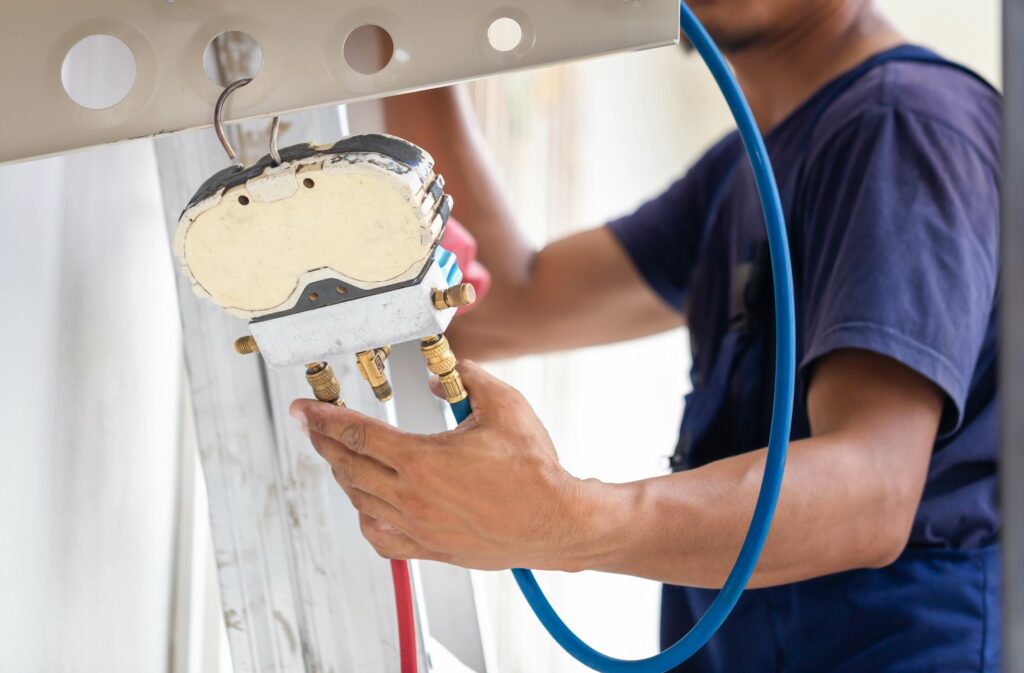
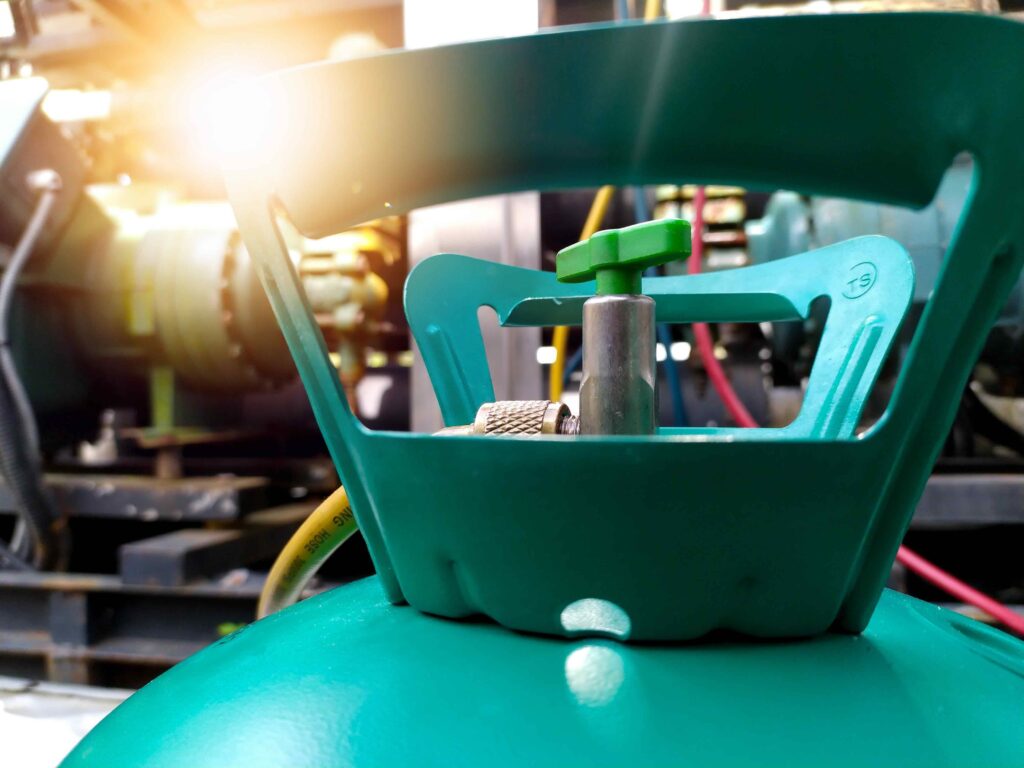
The cost to refill or recharge your air conditioner refrigerant depends on a few important variables. The type of refrigerant your system uses is the biggest factor. Older systems running on R-22, also known as Freon, face significantly higher costs because R-22 has been phased out under federal environmental regulations and is now quite scarce. Costs for R-22 can run anywhere from 50 to over 150 dollars per pound, and a typical refill might require two to four pounds or more depending on the system size. Newer systems using R-410A are generally less expensive to recharge, with refrigerant costs ranging from 20 to 50 dollars per pound. When you factor in the labor costs for a licensed technician to locate the leak, make repairs, and complete the recharge, total service costs can range from 200 dollars on the low end to well over 1,500 dollars for larger systems or more complex leak situations. It is not a small number, and it catches a lot of homeowners off guard.

R-22 vs. R-410A: Understanding the Refrigerant Your System Uses
The type of refrigerant your system uses is not something you can choose — it is determined by the age and design of your equipment. Systems manufactured before 2010 almost universally used R-22. The Environmental Protection Agency mandated a full production and import ban on R-22 starting in 2020, which means supply is limited to recovered or reclaimed stock. That scarcity drives costs up considerably. If you have an older system still running on R-22 and it develops a significant refrigerant leak, the economics of repair versus replacement become a serious conversation worth having with your technician. Systems manufactured after 2010 typically use R-410A, which is more environmentally friendly and currently much more affordable. Some of the newest systems are beginning to transition to R-32 or R-454B as the industry moves toward even lower global warming potential refrigerants. Knowing which refrigerant your system uses helps you anticipate costs more accurately and plan ahead rather than reacting in the middle of a heatwave.
The Key Benefits of Keeping Refrigerant Levels Properly Maintained
Maintaining proper refrigerant levels is not just about keeping your home comfortable on hot days. It has a direct impact on the long-term health of your entire HVAC system. When refrigerant is low, the compressor has to work significantly harder to compensate, which accelerates wear and shortens the lifespan of one of the most expensive components in your system. Compressor replacement alone can cost 1,000 to 2,500 dollars or more depending on the unit. Proper refrigerant levels also mean your system runs more efficiently, which translates directly into lower energy consumption and reduced monthly utility bills. From an air quality standpoint, a well-functioning system also does a better job of managing indoor humidity, which affects both comfort and the potential for mold growth. Routine HVAC maintenance that includes checking refrigerant levels is a relatively modest investment that protects a much larger one.
Common Drawbacks and Limitations Homeowners Should Know
There are a few realities about refrigerant service that are worth understanding clearly. First, simply recharging refrigerant without fixing the underlying leak is not a real solution. The refrigerant will escape again, and you will be back in the same situation within a season or two. Reputable technicians will always locate and repair the leak before completing a recharge — that is the correct way to handle it. Second, refrigerant handling is regulated by the EPA and must be performed by a licensed technician with proper certification. This is not a DIY repair option, and attempting it without credentials is illegal. Third, if your system is older and uses R-22, there is a realistic possibility that repeated refrigerant issues will make replacement more cost-effective than repair. A qualified HVAC professional can help you run those numbers honestly. Finally, not all home warranty plans cover refrigerant refills or the leak detection process, which is why understanding your coverage before you need it matters.
Practical Tips for Homeowners to Reduce Refrigerant Issues
While refrigerant leaks are not entirely preventable, there are steps you can take to reduce the likelihood of facing this repair and to catch problems earlier when they are less costly to address.
- Schedule annual HVAC tune-ups that include a refrigerant level check and system inspection
- Replace air filters every one to three months to reduce strain on the evaporator coil
- Keep the area around your outdoor condenser unit clear of debris, vegetation, and obstructions
- Address any unusual sounds or performance changes promptly rather than waiting
- Ask your HVAC technician about the age and refrigerant type of your current system so you can plan ahead
Proactive maintenance is almost always less expensive than reactive repairs, and it gives you time to budget for larger expenses like system replacement rather than absorbing them as sudden emergencies.
Why a Home Warranty Makes Sense When AC Costs Are This High
Air conditioning repairs are among the most frequent and most expensive claims homeowners face, and refrigerant-related issues are a consistent part of that picture. A home warranty plan designed with real coverage depth can help absorb these costs rather than leaving you to pay entirely out of pocket. Armadillo home warranty coverage for air conditioning systems is built specifically with homeowners in mind, covering the kind of mechanical failures and component repairs that catch people off guard. When your system develops a refrigerant leak or a related HVAC issue, having coverage in place means you are not scrambling to figure out how to cover a 600 or 1,200 dollar repair bill in July. You can get a free home warranty quote for AC and HVAC protection in just a few minutes and see exactly what a plan would look like for your home. When refrigerant costs are rising and HVAC systems are only getting more complex, that kind of financial protection is not a luxury — it is just smart homeownership.

Frequently Asked Questions About Air Conditioner Refrigerant
How much does it cost to refill refrigerant in a home air conditioner?
The total cost typically ranges from 200 to 1,500 dollars depending on the type of refrigerant your system uses, how much is needed, and whether a leak repair is also required. R-22 refrigerant is significantly more expensive than R-410A due to its phased-out status.
How often does an AC need refrigerant added?
A properly functioning, sealed AC system should never need refrigerant added. If refrigerant levels are low, it indicates a leak that must be found and repaired before recharging the system.
Can I add refrigerant to my air conditioner myself?
No. Refrigerant handling requires EPA Section 608 certification. It is both illegal and unsafe for unlicensed individuals to purchase or handle refrigerant for HVAC systems.
What happens if I ignore low refrigerant in my AC?
Running an AC system with low refrigerant puts severe stress on the compressor, which can lead to complete compressor failure. That repair typically costs 1,000 to 2,500 dollars or may require full system replacement.
Is refrigerant covered by a home warranty?
Coverage varies by provider and plan. Some home warranty plans cover refrigerant as part of AC system repairs, while others exclude it or cap the amount covered. Reading your plan details carefully before you need service is strongly recommended.
What type of refrigerant does my air conditioner use?
The type of refrigerant is listed on a label attached to your outdoor condenser unit. Systems made before 2010 typically use R-22, while systems made after 2010 generally use R-410A.
How do I know if my AC has a refrigerant leak?
Common signs include warm air from vents, ice on refrigerant lines, hissing sounds near the unit, high humidity indoors, and rising energy bills. A licensed HVAC technician can perform a leak detection test to confirm.
Should I repair a refrigerant leak or replace my AC system?
If the system is older than 10 to 15 years and uses R-22 refrigerant, replacement often makes more financial sense than repeated repairs. A qualified technician can help you evaluate the cost comparison for your specific situation.
How long does an AC refrigerant recharge take?
The recharge itself usually takes one to two hours, but if a leak must first be located and repaired, the total service visit may take several hours depending on the complexity of the repair.
Does low refrigerant affect indoor air quality?
Yes. When refrigerant is low, the system cannot properly dehumidify indoor air, which increases moisture levels. Elevated indoor humidity can contribute to discomfort and increase the risk of mold growth over time.