What Is a Black Stove Range Hood and Why Does It Matter in Your Kitchen?
If you have spent any time renovating a kitchen or shopping for appliances, you have probably noticed that black stove range hoods are having a serious moment. And honestly, it makes sense. A black range hood does something that stainless steel and white finishes sometimes struggle to do — it anchors the entire kitchen visually, creating a bold focal point without demanding too much attention. But beyond aesthetics, a range hood is one of the most functionally important appliances in any kitchen. It removes smoke, grease, odors, and airborne particles that cooking generates every single day. Understanding what this appliance actually does, how it works, and what to watch out for is genuinely useful knowledge for any homeowner.
How a Range Hood Actually Works
At its core, a range hood is a ventilation system mounted above your stove or cooktop. When you cook, heat, steam, grease particles, and combustion byproducts rise upward. A range hood captures all of that through a collection canopy and then either filters it and recirculates the air back into the kitchen, or vents it entirely outside through ductwork. The version that exhausts air outside is called a ducted or vented hood. The version that filters and recirculates is called a ductless or recirculating hood. Both types exist in black finishes and both serve legitimate purposes depending on your kitchen setup. Ducted hoods are generally considered more effective because they actually remove contaminants from the home rather than filtering them back in. Ductless models work well where running ductwork is not practical, but they require more frequent filter maintenance to stay effective.
The Appeal of a Black Finish on a Range Hood
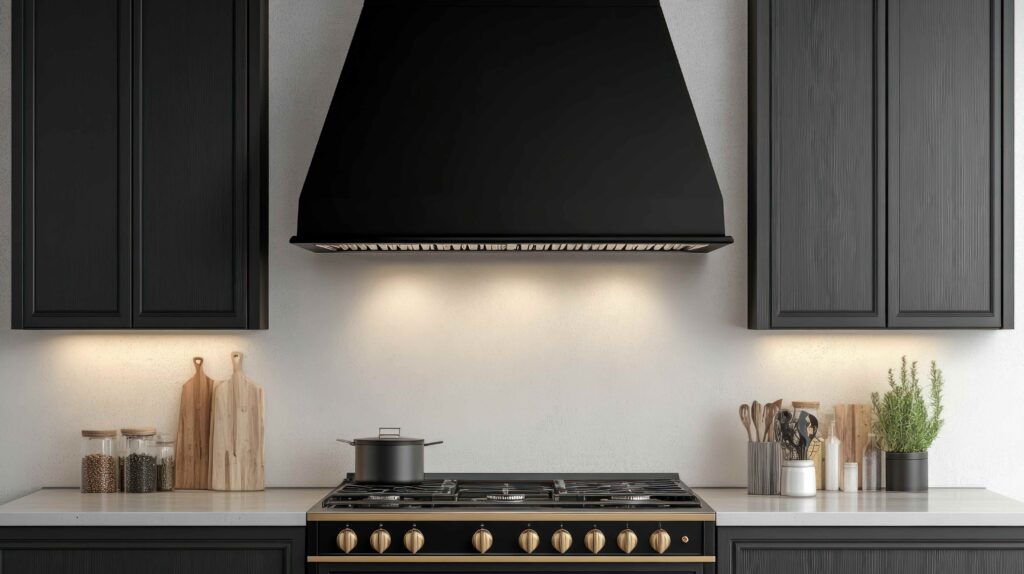
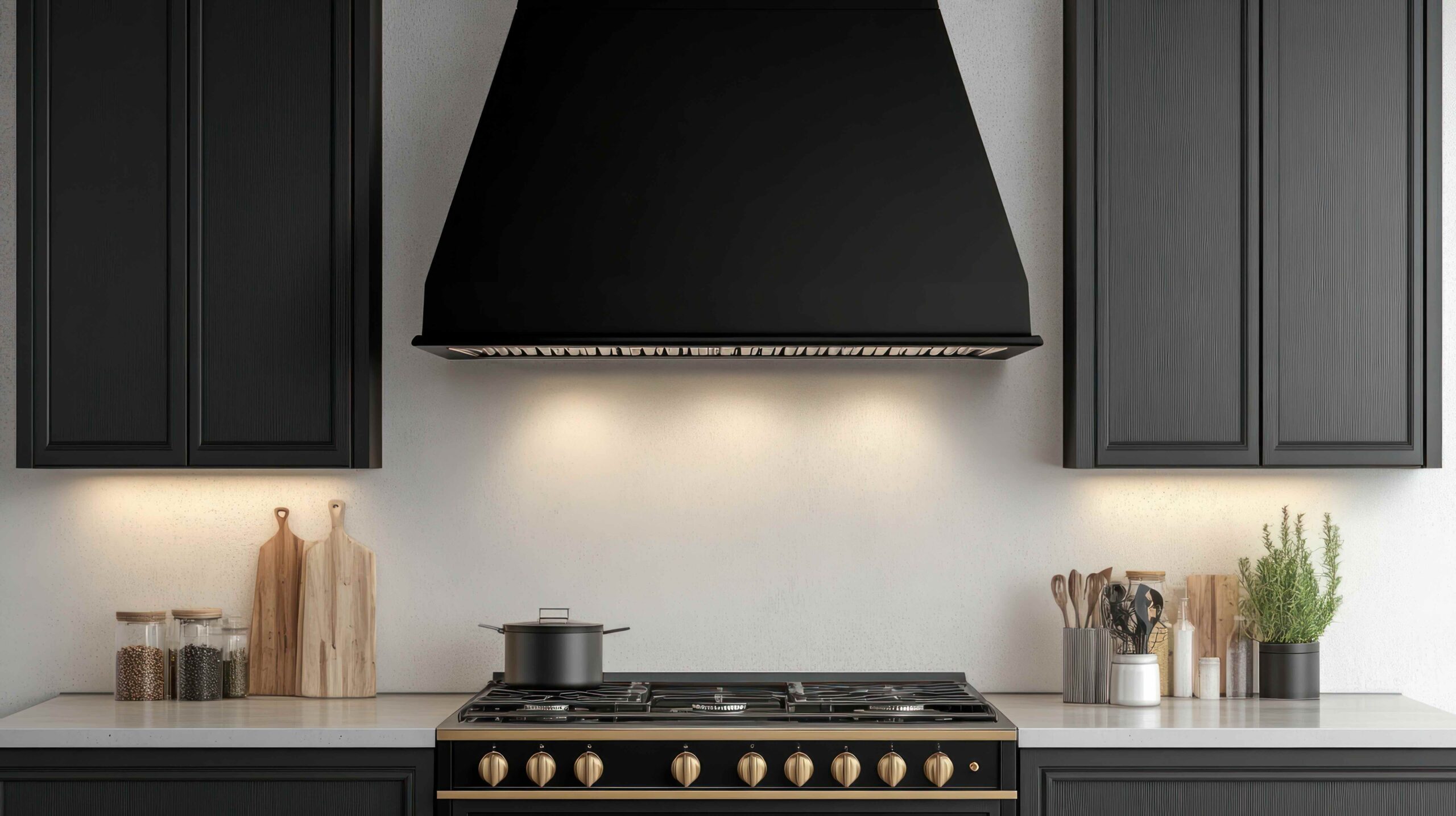
There is something satisfying about a matte or gloss black range hood above a stove. It reads as intentional — like someone actually thought about the design rather than just grabbing whatever was available. Black appliances have seen a significant resurgence in recent years, and range hoods in particular benefit from the finish because they occupy so much vertical real estate in a kitchen. A black range hood pairs well with two-tone cabinetry, dark countertops, brass or gold hardware, and even all-white kitchens where contrast is the point. From a practical standpoint, black finishes — especially matte versions — tend to hide fingerprints and smudges better than stainless steel, which is a genuine quality-of-life improvement for busy households.

Key Advantages of Installing a Black Range Hood
Beyond the obvious visual appeal, there are several practical reasons homeowners choose to install a range hood — and specifically a black one — in their kitchen space.
- Improved air quality by removing grease, smoke, and cooking odors before they settle into surfaces and fabrics
- Reduced grease buildup on walls, cabinets, and ceiling surfaces near the cooking area
- Additional lighting over the cooktop, which most range hood models include as a built-in feature
- Noise reduction in some higher-end models with multi-speed fan controls designed to minimize disruption
- A bold design statement that can increase perceived kitchen value without a full renovation
- Matte black finishes specifically tend to resist visible smudging better than glossy or metallic surfaces
These advantages make a range hood one of the smarter kitchen investments a homeowner can make, both functionally and aesthetically. It is not just decoration — it is doing real work every time you cook.
Common Drawbacks to Be Aware Of
No appliance is without its complications, and range hoods are no exception. One of the most frequent complaints homeowners have is noise. High-powered range hoods can be surprisingly loud at maximum fan speed, and if the ductwork is not properly sized or installed, that noise can worsen considerably. Another drawback specific to black finishes — particularly high-gloss black — is that they can show grease splatter more visibly than matte black versions, which somewhat defeats the purpose. Scratches are also more noticeable on darker finishes, so care during installation and cleaning matters. Ducted systems require professional installation and may involve significant modification to walls or ceilings to run ductwork properly, which adds to the overall project cost. Ductless models are easier to install but require regular charcoal filter replacements to maintain their effectiveness.
What CFM Rating Do You Actually Need?
CFM stands for cubic feet per minute, and it is the measurement used to describe how much air a range hood can move. Getting this number right matters more than most homeowners realize. A hood that is underpowered will not adequately capture smoke and grease from a high-output gas range. One that is overpowered can create pressure imbalances in your home, pulling air from unintended places. A general rule of thumb is to have at least 100 CFM per 10,000 BTUs on a gas range. For electric cooktops, the calculation is different — roughly 40 CFM per linear foot of cooking surface is a reasonable starting point. If you cook frequently, use high heat, or work with a commercial-style range, sizing up is almost always the right call. A qualified HVAC professional or appliance specialist can help you calculate the right CFM for your specific kitchen layout.
Installation Considerations for a Black Range Hood
Installation is one of those areas where cutting corners tends to create bigger problems later. Ducted range hoods need to be connected to ductwork that exits the home, which means routing through cabinetry, walls, or attic space depending on the kitchen layout. The hood itself needs to be mounted at the correct height above the cooking surface — typically between 24 and 30 inches for most residential models, though manufacturer specifications should always take precedence. Electrical connections are required for the fan motor and lighting, and in some cases, a dedicated circuit may be needed for higher-powered models. For homeowners installing over a gas range, ensuring proper clearance is also a safety requirement, not just a preference. When in doubt, hiring a licensed installer is the right move.
Maintenance Tips to Keep Your Range Hood Running Well
A range hood only performs well when it is maintained properly. Grease filters — the mesh or baffle filters that capture grease before it enters the ductwork — need to be cleaned regularly. For average households, once a month is a reasonable target, and most are dishwasher safe. Charcoal filters in ductless models are not washable and need to be replaced every three to six months depending on cooking frequency. The exterior of a black range hood should be wiped down with a soft, non-abrasive cloth and a mild cleaner to avoid scratching the finish. Inside the canopy and around the fan housing, grease can accumulate over time, so a more thorough cleaning a few times per year helps prevent buildup that can reduce airflow and even become a fire hazard if ignored long enough.
Why Armadillo Home Warranty Coverage Makes Sense for Range Hood Owners
Here is the thing about range hoods — they contain motors, electrical components, and control systems that can and do fail over time. When that happens, repair or replacement costs can catch homeowners completely off guard. That is exactly where Armadillo home warranty protection for kitchen appliances and built-in systems becomes genuinely valuable. A home warranty is designed to cover the cost of repairs and replacements when covered appliances break down due to normal wear and tear — which is exactly how most range hood failures happen. Rather than scrambling to find a qualified technician and negotiating repair costs on your own, you have a plan in place. If you want to see what coverage looks like for your home, you can get a personalized home warranty quote for your kitchen appliances and home systems in just a few minutes. Armadillo keeps things straightforward — no confusing fine print, no runaround — just solid coverage when you need it most.

Frequently Asked Questions About Black Stove Range Hoods
These are the questions homeowners ask most often about black range hoods, answered directly so you can move forward with confidence.
Are black range hoods harder to keep clean than stainless steel?
Matte black finishes are actually easier to maintain in terms of visible fingerprints and smudges compared to stainless steel. High-gloss black can show grease splatter more readily, so the specific finish matters. Either way, regular wiping with a soft cloth and mild cleaner keeps the surface looking sharp.
What is the difference between a ducted and ductless range hood?
A ducted range hood exhausts air and contaminants outside the home through a duct system. A ductless range hood filters the air through charcoal and mesh filters and recirculates it back into the kitchen. Ducted models are generally more effective at removing pollutants, while ductless models are easier to install in spaces where ductwork is not feasible.
How high should a range hood be mounted above the stove?
Most manufacturers recommend mounting a range hood between 24 and 30 inches above the cooking surface for optimal performance and safety. Always follow the specific instructions provided by your hood’s manufacturer, as some models have different clearance requirements.
How often should range hood filters be cleaned or replaced?
Mesh and baffle grease filters should be cleaned approximately once a month for average household use. Charcoal filters in ductless models are not washable and should be replaced every three to six months depending on how frequently you cook.
Does a range hood add value to a home?
Yes, a well-installed range hood — particularly a statement piece like a black stainless or matte black canopy hood — can contribute meaningfully to kitchen appeal during a home sale. Buyers increasingly expect functional ventilation, and an attractive hood can make a kitchen feel more complete and professionally designed.
Can a home warranty cover a range hood?
Yes, many home warranty plans include coverage for built-in kitchen appliances, which can include range hoods depending on the specific plan and provider. It is important to review your plan’s coverage details or speak with your warranty provider to confirm what is included.
What CFM rating is appropriate for a standard home kitchen?
For electric cooktops, a common guideline is approximately 40 CFM per linear foot of cooking surface. For gas ranges, 100 CFM per 10,000 BTUs is a widely used starting benchmark. Higher-output ranges and frequent high-heat cooking generally call for a higher CFM rating.
Is professional installation required for a range hood?
Ductless range hoods can often be installed by a competent DIYer, though electrical work should always be handled by a licensed electrician. Ducted range hoods typically require professional installation due to the complexity of routing ductwork and ensuring proper airflow and sealing.
Do black range hoods scratch easily?
Black finishes can show scratches more visibly than lighter finishes, especially on matte surfaces. Using non-abrasive cleaning cloths and avoiding harsh chemical cleaners helps preserve the finish over time. Care during installation is equally important to prevent surface damage before the hood is even in use.
What causes a range hood to stop working?
The most common causes of range hood failure include motor burnout from extended use without cleaning, electrical component failures, damaged fan blades from grease buildup, and malfunctioning controls or switches. Regular maintenance significantly extends the life of the unit, though mechanical components will eventually wear out regardless of how well the hood is maintained.