When Your Circuit Breaker Flashes Red: What It Means and Why It Matters
You walk past your electrical panel and notice it — a small red light blinking from one of the breakers. Maybe it has been there for a day, maybe longer. You are not sure if it is urgent, whether to touch it, or whether to just ignore it and hope it goes away. That instinct to pause is actually the right one. A flashing red indicator on a circuit breaker is your home’s electrical system waving a flag. Understanding what that signal means — and what grounding has to do with it — can help you protect your home, your appliances, and your family before a minor electrical issue becomes a serious safety hazard.
What Is a Circuit Breaker and Why Is It in Your Home
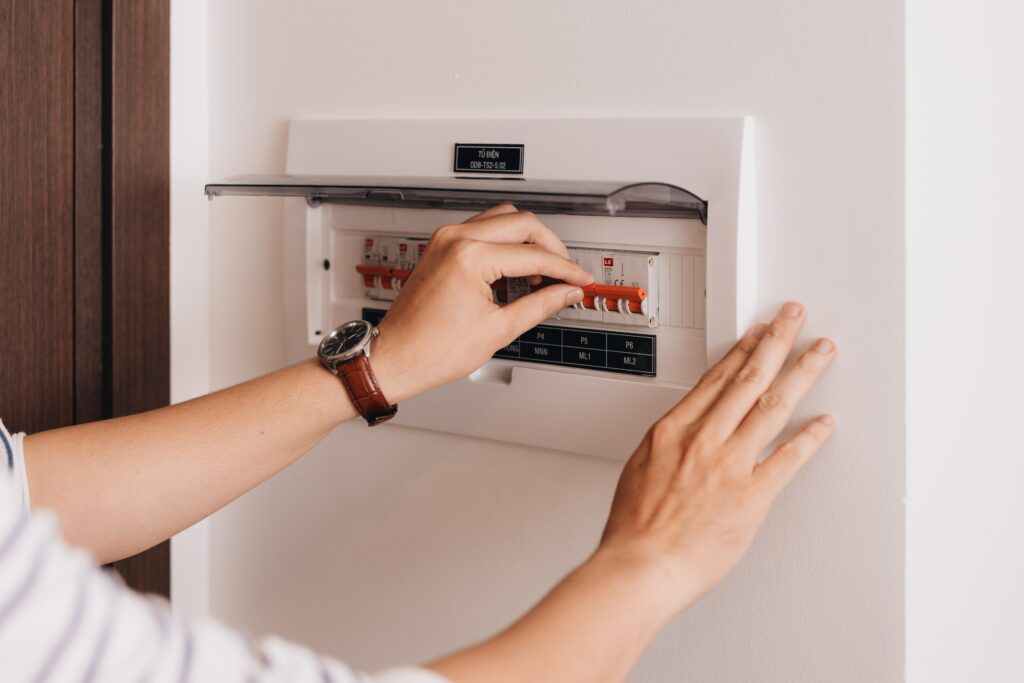
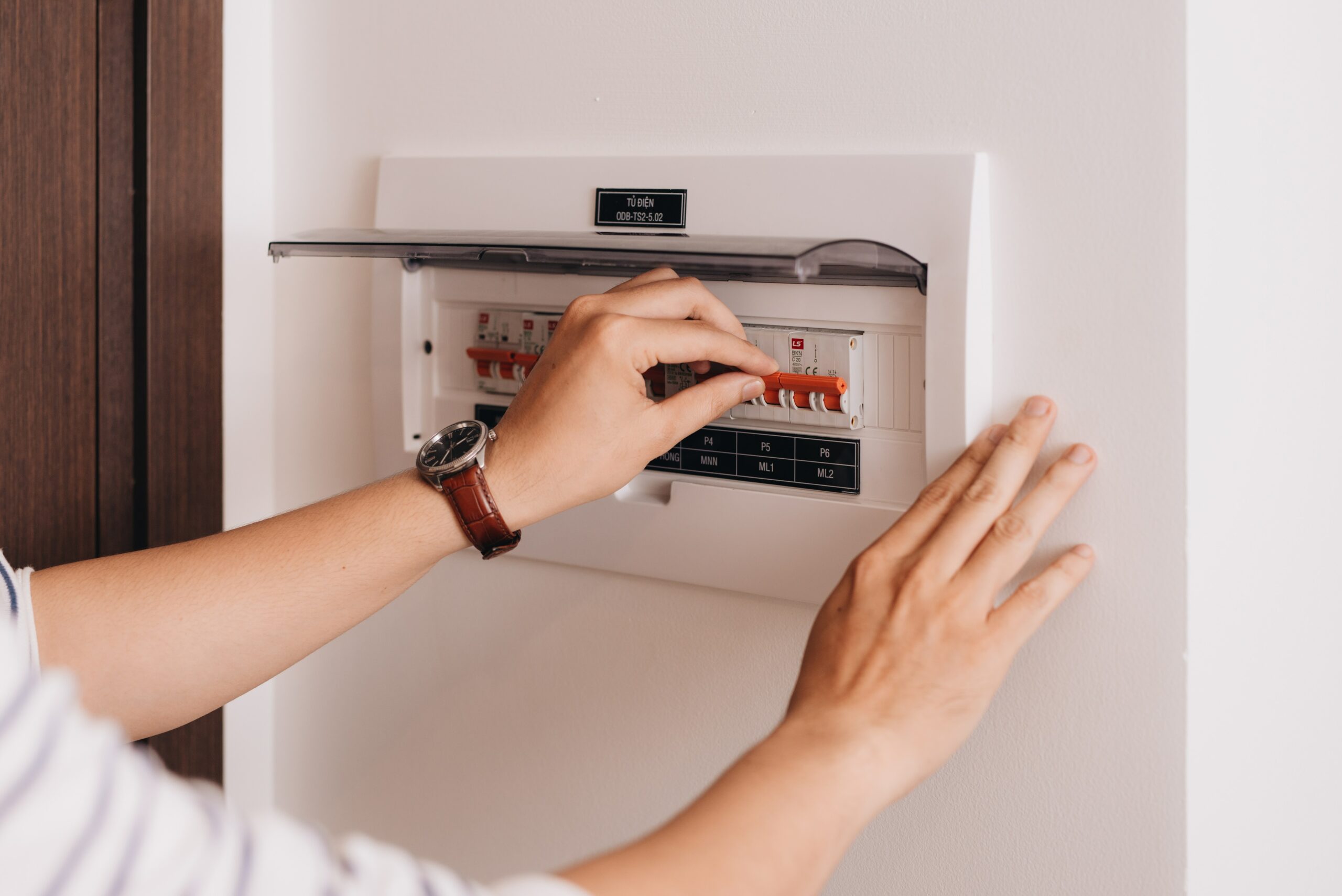
A circuit breaker is an automatically operated switch designed to protect your home’s electrical circuits from damage caused by excess current. Think of it as the gatekeeper between the electrical supply coming into your home and every device, outlet, and light fixture connected to it. When too much electricity flows through a circuit — whether from a power surge, a short circuit, or an overloaded outlet — the breaker trips and interrupts the flow before damage can occur. Every modern home has a breaker panel, typically located in a basement, utility closet, or garage, where individual breakers are organized by zone or appliance. Each breaker monitors its assigned circuit and reacts automatically when something goes wrong.
What Does a Flashing Red Light on a Circuit Breaker Actually Mean
Not all breakers include indicator lights, but advanced arc fault circuit interrupter breakers, commonly called AFCI breakers, and ground fault circuit interrupter breakers, or GFCI breakers, often do. When one of these breakers flashes red, it is communicating a specific condition that requires your attention. A solid or flashing red light typically signals one of the following situations:
- The breaker has tripped due to an arc fault or ground fault
- The circuit is overloaded and the breaker has interrupted power
- There is a wiring fault somewhere along the circuit
- The breaker itself may be failing or malfunctioning
- There is an active ground fault that has not been resolved
The key takeaway here is that a red indicator light is never decorative. It is diagnostic. Ignoring it is not a neutral choice — it is a risk.
Understanding Electrical Grounding and Why It Connects to Breaker Behavior
Grounding is one of those electrical concepts that sounds technical but is actually straightforward in purpose. An electrical ground provides a safe, intentional path for excess electrical current to travel into the earth rather than through your appliances, your wiring, or — most critically — through a person. Every properly wired home has a grounding system built into its electrical infrastructure. The grounding wire, typically bare copper or green-coated, runs alongside the hot and neutral wires throughout your home’s circuits.
When grounding is compromised — whether through faulty wiring, corroded connections, improper installation, or an aging electrical panel — the results can be unpredictable and dangerous. Ground faults occur when electricity escapes its intended path and finds an unintended route to ground, often through a person, a water source, or a metal surface. GFCI breakers are specifically designed to detect these faults in milliseconds and cut power before serious injury occurs. If a GFCI breaker is flashing red, it has detected exactly this kind of fault somewhere on its circuit.
Common Causes Behind a Tripped or Red-Light Breaker
Electricians see a fairly predictable list of culprits when homeowners call about a breaker that has tripped or is showing a red indicator. Knowing these causes helps you communicate clearly with a professional and understand the scope of any repairs needed. The most frequent causes include damaged or frayed wiring within walls or behind appliances, moisture intrusion near outlets or in junction boxes, overloaded circuits from too many high-draw devices running simultaneously, aging panels with worn internal components, and faulty appliances that are drawing irregular current. In older homes especially, outdated wiring that was never designed to handle modern electrical loads can cause chronic tripping and grounding issues throughout the panel.
What You Should and Should Not Do When You See That Red Light
This is where most homeowners get a little unsure. There is a short list of things that are safe to do yourself, and a longer list of things that absolutely require a licensed electrician. Here is a practical breakdown:
- Do turn off and unplug devices on the affected circuit before resetting
- Do press the reset button on a GFCI breaker if it has clearly tripped
- Do check if the issue is simply an overloaded circuit from too many appliances running at once
- Do not repeatedly reset a breaker that keeps tripping — this indicates an unresolved underlying issue
- Do not open the breaker panel cover and attempt internal repairs yourself
- Do not ignore a red light that persists after a standard reset
If the breaker resets and stays on without issue, monitor it closely. If it trips again — especially without an obvious cause — that is your signal to call a licensed electrician immediately.

The Real Risks of Ignoring Electrical Grounding Problems
A ground fault or compromised grounding system is not a cosmetic issue. The stakes are measurably high. According to the Electrical Safety Foundation International, electrical fires account for tens of thousands of home fires annually in the United States, with faulty wiring and electrical distribution systems among the leading causes. Beyond fire risk, an ungrounded or poorly grounded circuit puts anyone who touches an affected appliance or outlet at risk of electric shock. Sensitive electronics — computers, smart devices, home theater equipment — can also be damaged or destroyed when grounding is inconsistent, since uncontrolled voltage fluctuations have nowhere safe to go.
How Old Is Your Electrical Panel and Why That Question Matters
Most homeowners do not think about their electrical panels until something visually alerts them. But panel age is a meaningful factor in overall electrical safety. Panels that are 25 to 40 years old may not be equipped with AFCI or GFCI technology, meaning they lack the detection capabilities that modern panels provide. Some older panel brands were manufactured with known defects and have been flagged by safety agencies over the years. If your home still has a Federal Pacific Electric Stab-Lok panel or a Zinsco panel, those are specific models with documented safety histories worth discussing with an electrician. A panel upgrade is a significant investment, typically ranging from $1,500 to $4,000 depending on your home’s size and regional labor rates, but it is one of the more impactful improvements a homeowner can make from a safety standpoint.
Home Warranties and Electrical System Coverage
Here is where the home warranty conversation becomes genuinely relevant. Many homeowners assume that electrical issues fall outside warranty coverage or that they are too minor to bother filing a claim for. Neither assumption is entirely accurate. A quality home warranty plan can cover components of your electrical system, including wiring, breaker panels, and related components, depending on the plan terms. The practical value shows up in moments exactly like this one — when a flashing red breaker leads to a diagnostic visit and a repair that would otherwise come straight out of pocket. Understanding what your home warranty covers before you need it is far better than discovering the gaps after the fact.
Why Armadillo Should Be on Your Radar for Electrical System Protection
When something in your home stops working — especially something as essential and potentially hazardous as your electrical system — the last thing you want is to navigate confusing exclusions, long hold times, or opaque claim processes. Armadillo was built to change that experience entirely. As a trusted home warranty provider for electrical systems and essential home coverage, Armadillo offers straightforward plans with clear terms, responsive service, and coverage designed for real homeowners dealing with real problems. If the idea of a circuit breaker issue turning into an unexpected repair bill sounds stressful, the smarter move is to get ahead of it — you can get a free home warranty quote for electrical and system coverage in minutes and know exactly where you stand before the next red light shows up.

Frequently Asked Questions About Circuit Breakers Flashing Red and Electrical Grounding
What does a flashing red light on a circuit breaker mean?
A flashing red light on a circuit breaker typically indicates that the breaker has tripped due to an arc fault, ground fault, or circuit overload. It is a warning signal that something on the circuit requires attention and should not be ignored.
Is it safe to reset a circuit breaker that is flashing red?
You can attempt a single reset after first turning off or unplugging devices on the affected circuit. If the breaker trips again after resetting, do not continue resetting it. Call a licensed electrician to diagnose the underlying cause.
What is a ground fault and how is it different from a short circuit?
A ground fault occurs when electrical current escapes its intended path and travels through an unintended conductor, such as a person or a metal surface. A short circuit happens when the hot wire contacts the neutral wire directly. Both are dangerous, but ground faults are specifically detected by GFCI breakers.
Why does grounding matter in a home electrical system?
Grounding gives excess or stray electrical current a safe path to travel into the earth rather than through appliances, wiring, or people. A properly grounded system significantly reduces the risk of electric shock and electrical fires.
How do I know if my home’s electrical system is properly grounded?
A licensed electrician can test your outlets and panel to confirm proper grounding. Homes built before the 1960s are more likely to have ungrounded systems. Two-prong outlets throughout your home are a common visual indicator that grounding may be absent on those circuits.
Can a bad appliance cause a circuit breaker to show a red light?
Yes. A malfunctioning appliance that draws irregular current or causes a ground fault can trigger a GFCI or AFCI breaker to trip and display a red indicator. Unplugging all devices on the circuit before resetting the breaker can help isolate whether an appliance is the cause.
What is the difference between a GFCI breaker and an AFCI breaker?
A GFCI breaker detects ground faults and protects against electric shock, making it standard in areas near water like kitchens and bathrooms. An AFCI breaker detects arc faults, which are dangerous sparking conditions in wiring that can lead to fires. Some modern breakers combine both functions.
How long do circuit breakers typically last?
Most circuit breakers are rated to last between 30 and 40 years under normal conditions. However, breakers that have tripped frequently, been subjected to power surges, or are part of an aging panel may fail earlier. A persistently tripping breaker may need replacement even if it is not yet at the end of its general lifespan.
Does a home warranty cover circuit breaker and electrical panel repairs?
Coverage varies by provider and plan. Many home warranty plans include electrical panel components, wiring, and breakers as covered items. Reviewing your specific plan terms — or selecting a plan with clear electrical coverage — is important before assuming a claim will be approved.
When should I consider replacing my entire electrical panel instead of just a single breaker?
Panel replacement is worth discussing with a licensed electrician if your panel is more than 25 years old, if multiple breakers are tripping regularly, if you are planning a home addition that increases electrical load, or if your panel is a known problematic brand. Repeated issues with individual breakers can also indicate that the panel itself is failing.