What Is a Clicker Garage Door Opener and Why Does It Matter for Your Home?
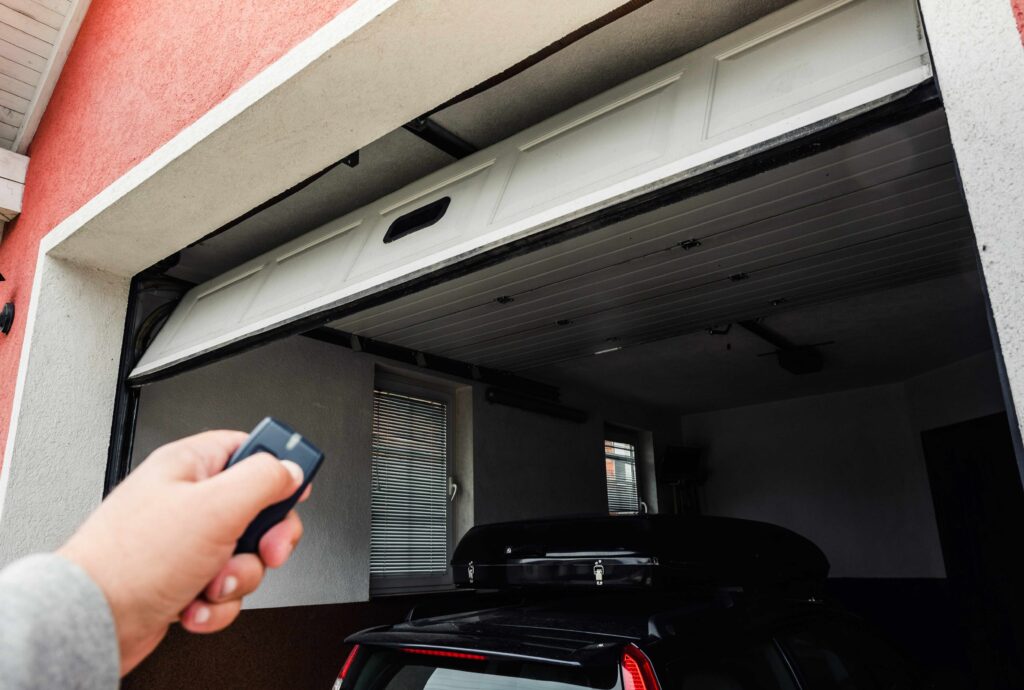
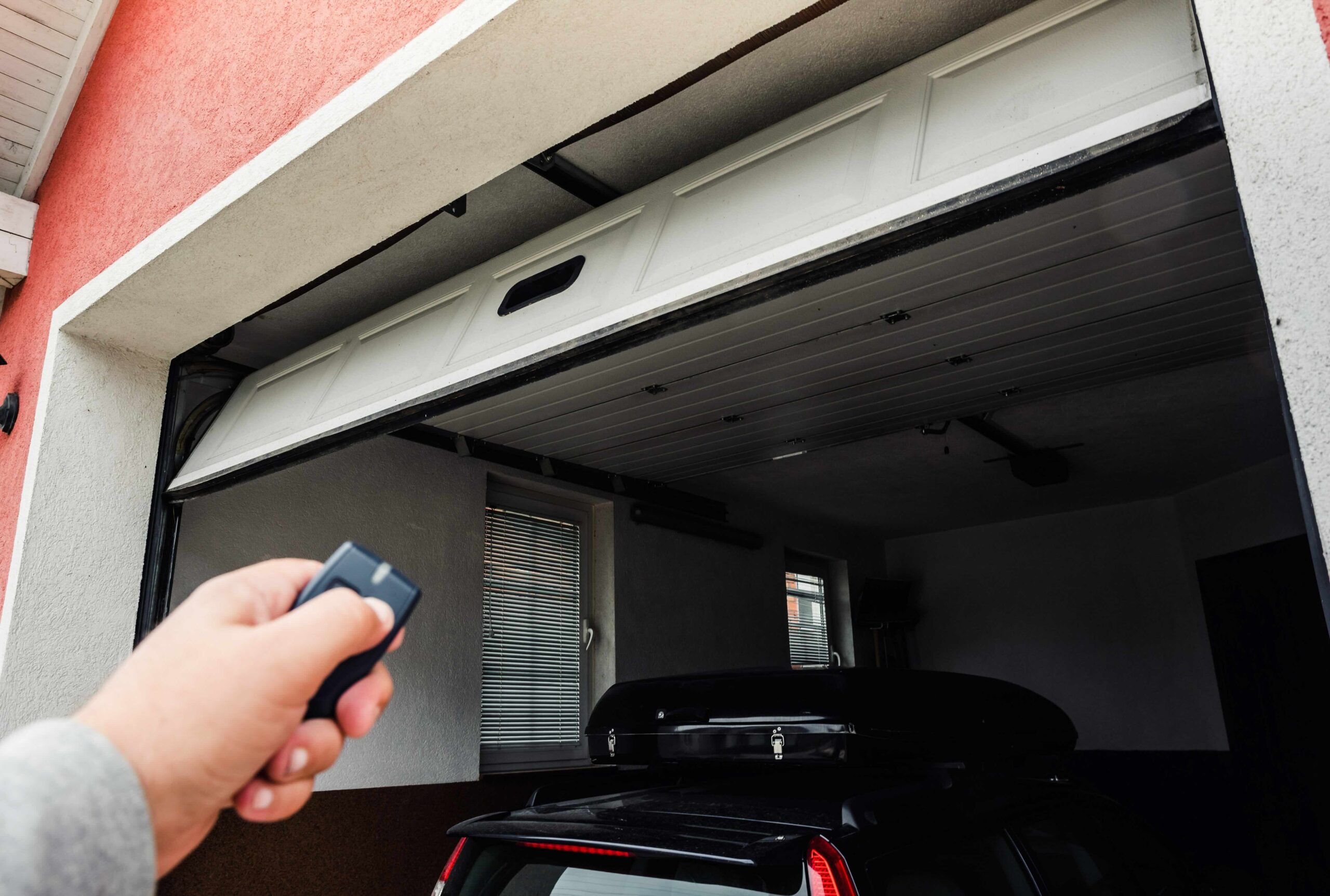
If you have ever pulled into your driveway after a long day and tapped that small button on your visor without a second thought, you already know what a clicker garage door opener does. What you might not know is how much is actually happening behind that simple press. The clicker, officially referred to as a garage door remote transmitter, is one of those home systems that quietly does a lot of heavy lifting. It communicates with your garage door opener unit through a radio frequency signal, telling the motor to engage, the door to lift, and your evening to begin. Simple in concept, surprisingly layered in practice.
How a Clicker Garage Door Opener Actually Works
The clicker itself is a radio transmitter. When you press the button, it sends a coded radio frequency signal, typically operating between 315 MHz and 390 MHz, to the receiver built into the garage door opener unit mounted on your ceiling. The receiver decodes the signal, verifies it matches the stored code, and activates the motor. That motor then drives a trolley along a track, which is physically attached to your door, pulling it open or pushing it closed. Most modern systems use rolling code technology, which means the code changes every time you press the button. This prevents signal interception and replay attacks, which were an actual vulnerability in older fixed-code systems. The clicker is the starting point, but the opener unit, motor, drive system, and safety sensors all have to work in concert for everything to function properly.
Types of Clicker Remotes and Compatibility
Not all clickers are created equal, and that matters when you are dealing with a replacement or an upgrade. There are a few categories worth knowing about. First, there are manufacturer-specific remotes designed to work exclusively with one brand of opener. Then there are universal clickers, like those made under the Clicker brand by Chamberlain, which are engineered to be compatible with a wide range of openers regardless of brand. These universal options are particularly useful when you have moved into a home and have no idea what remote originally came with the system. Clicker remotes generally support the following configurations:
- Single-button remotes for one garage door
- Two-button remotes for homes with multiple bays or a gate
- Three-button and multi-function remotes that can also control home lighting or security systems
- Keypad entry systems that mount outside the door and allow code-based access without a physical remote
Key Advantages of Using a Clicker System
There is a reason clicker garage door remotes have become the standard. Convenience is the obvious one. You do not have to exit your vehicle in the rain, fumble with a key, or leave a door unlocked for a family member who forgot their remote. Security is another strong point, especially with rolling code technology. Every transmission generates a new encrypted code, which makes it significantly harder for someone to capture and duplicate your signal. Modern clicker systems also tend to be highly durable. The remotes themselves can take a beating, and most are rated for hundreds of thousands of button presses. For families who use their garage as the primary entry point, that reliability is not a luxury, it is a necessity.
Common Drawbacks and Known Issues
Like any home system, clicker garage door openers come with their own set of frustrations. Signal interference is probably the most frequently reported issue. Certain LED light bulbs, nearby radio towers, and even some wireless networks can disrupt the frequency and cause intermittent failures. Battery life is another ongoing consideration since the remotes run on small coin or cylindrical batteries that eventually lose their charge, often at the least convenient possible moment. Programming errors can also create headaches, particularly when a homeowner attempts to sync a universal clicker to an older opener unit that uses a DIP switch configuration rather than a learn button. And then there is the opener unit itself, which houses the motor, drive mechanism, and circuit board. When those components fail, even a perfectly functioning clicker becomes useless.

How to Program a Clicker Remote to Your Garage Door Opener
Programming a clicker remote is genuinely straightforward once you understand the basic process. Most modern openers use a learn button, which is typically located on the back or side of the opener unit and is often yellow, purple, or orange depending on the brand. You press and release the learn button, which activates a 30-second pairing window, and then press and hold the button on your clicker remote until the opener lights flash or you hear a click. That confirms the pairing. For older openers that use DIP switches, the process involves matching a series of tiny physical switches on both the remote and the opener to the same binary pattern. Universal clickers like those in the Clicker lineup are designed to walk you through this process with compatibility guides and, in some cases, auto-detection features.
When to Replace Your Clicker Remote vs. the Whole Opener System
This is a question worth thinking through carefully. If the remote is the only issue, swapping it out is inexpensive and takes under ten minutes. Signs that your remote is the problem include no response even after a battery change, inconsistent range, or physical damage to the unit. However, if the opener itself is making grinding noises, moving slowly, reversing unexpectedly, or simply not responding to any input, the problem likely lives in the motor or drive system. Garage door opener units have an average lifespan of ten to fifteen years. If yours is approaching that range and showing signs of wear, a full replacement makes more financial and practical sense than continuing to patch individual components.
Garage Door Opener Maintenance Tips Every Homeowner Should Know
Routine maintenance can meaningfully extend the life of both your opener and your clicker system. A few practices worth building into your regular home upkeep routine include:
- Testing the auto-reverse safety feature monthly by placing a two-by-four flat on the ground in the door’s path and observing whether it reverses on contact
- Lubricating the chain or belt drive, the rollers, and the hinges with a garage door specific lubricant every six months
- Inspecting the weather stripping along the bottom of the door annually and replacing it when it becomes cracked or compressed
- Cleaning the photo-eye sensors at the base of the door track to ensure they are aligned and unobstructed
- Replacing remote batteries proactively each year rather than waiting for them to fail
How Home Warranties Factor Into Garage Door Opener Coverage
Here is where things get genuinely useful for homeowners. Garage door opener systems, including the mechanical opener unit itself, are often covered under a home warranty plan. That means if the motor burns out, the circuit board fails, or a component of the drive system breaks down due to normal wear and use, a home warranty may cover the repair or replacement cost. It is worth noting that the clicker remote itself is typically considered a peripheral accessory and may not be included, but the core unit that does the real work generally qualifies. Understanding what your plan covers before something breaks is always the smarter approach. Surprises in home repair tend to be expensive ones.
Why Armadillo Is the Right Home Warranty Partner for Garage Door Opener Protection
When your garage door opener motor stops working at the worst possible time, having the right home warranty in place changes everything about that experience. Armadillo was built for homeowners who want straightforward, honest coverage without the industry’s usual fine print gymnastics. As a trusted home warranty provider for garage door opener systems and major home appliances, Armadillo offers plans designed around how homes actually get used, not just how warranty companies want to define coverage. The claims process is clear, the network of service professionals is vetted, and the pricing is transparent from day one. If you are ready to stop guessing about what is covered and start feeling genuinely protected, take two minutes to get a free home warranty quote that covers your garage door opener and more. Your home does a lot for you. Armadillo is here to help protect it.

Frequently Asked Questions About Clicker Garage Door Openers
Below are answers to the most common questions homeowners ask about clicker garage door remotes and opener systems.
What is the difference between a clicker remote and a standard garage door remote?
A clicker remote is a brand name for a line of universal garage door remotes manufactured by Chamberlain. Standard remotes are often manufacturer-specific, while clicker remotes are designed to work with a wide range of opener brands and models.
Why is my clicker remote not working even after I changed the battery?
If a fresh battery does not resolve the issue, the remote may have lost its programming, or the receiver in the opener unit may be experiencing interference or a malfunction. Try reprogramming the remote using the learn button on your opener unit.
How do I know if my garage door opener uses rolling code technology?
Most garage door openers manufactured after 1996 use rolling code technology. Check your opener unit’s label or user manual. If it lists Security Plus, Intellicode, or a similar proprietary encryption feature, rolling code is active.
Can one clicker remote control two different garage doors?
Yes. Multi-button clicker remotes can be programmed to operate two or more separate garage doors or gates, provided each opener unit is compatible with the remote’s frequency and coding system.
How long do clicker remote batteries typically last?
Most clicker remotes run on a single CR2032 or similar coin battery that lasts approximately one to two years under normal use. Replacing batteries annually as a preventive measure is a practical habit.
Is a garage door opener covered under a home warranty?
Many home warranty plans include coverage for the garage door opener unit, particularly the motor and internal mechanical components. The handheld remote or clicker is usually excluded, as it is considered an accessory rather than a core system component.
What causes a garage door opener to stop responding to the remote?
Common causes include dead remote batteries, signal interference from nearby devices, a misaligned or dirty photo-eye sensor, loss of programming between the remote and opener, or a mechanical or electrical failure within the opener unit itself.
How far should a clicker remote work from a garage door?
Under normal conditions, most clicker remotes have an effective range of 100 feet or more. Interference, physical obstructions, or a weakening battery can reduce that range noticeably.
When should I replace my entire garage door opener instead of just the remote?
If the opener unit is more than ten years old, producing unusual sounds, moving inconsistently, or failing to respond to any input including a wall-mounted button, replacement of the full unit is typically the more cost-effective and reliable solution.
Does a home warranty cover garage door opener installation or just repairs?
Home warranties generally cover the cost of repairing or replacing a covered component when it fails due to normal wear. Installation of a brand-new unit as a system upgrade, rather than a failure-driven replacement, is usually not included under standard plan terms.