What Does It Really Cost to Recharge Freon in a Home AC Unit?
So your air conditioner is blowing warm air, running constantly, or icing up along the lines — and someone mentioned you might be low on refrigerant. Now you are staring down a potential repair bill and wondering what you actually signed up for when you bought this house. Refrigerant recharges, commonly still called “Freon” recharges even though the industry has largely moved past that specific chemical, are one of those AC repairs that can range from a quick fix to a surprisingly expensive situation depending on a few important variables. Understanding the cost, what drives it, and how home warranty coverage fits into the picture can save you a serious amount of stress — and money.
What Is Freon and Why Does Your AC Need It
Refrigerant is the lifeblood of your air conditioning system. It cycles through the system absorbing heat from inside your home and releasing it outside, which is how your AC actually cools the air. The term “Freon” technically refers to R-22, a refrigerant that was standard in residential systems for decades. R-22 has been phased out under EPA regulations due to its environmental impact, and as of 2020, it can no longer be manufactured or imported in the United States. What that means for homeowners with older systems is simple: if your unit still runs on R-22, recharging it just got significantly more expensive. Newer systems use R-410A or the emerging R-32 and R-454B alternatives, which are more accessible and more environmentally responsible. Knowing which refrigerant your system uses is one of the first things you should find out before calling a technician.
Average Cost to Recharge AC Refrigerant at Home
The cost of an AC refrigerant recharge varies depending on the type of refrigerant, the size of your system, and how low the levels actually are. Here is a general breakdown of what homeowners can expect to pay:
- R-410A refrigerant recharge: typically between $100 and $320 for a standard residential system
- R-22 refrigerant recharge: can range from $180 to over $600 or more depending on availability and how much is needed
- Labor costs: usually $75 to $150 per hour, with most recharge services taking one to two hours
- Leak detection and repair: if a leak is causing the low refrigerant levels, add $200 to $1,500 depending on severity and location
- Full system refrigerant replacement after a significant leak: can reach $1,000 to $2,500 or higher
The wide range exists because refrigerant is only part of the equation. A system that has leaked refrigerant — which is actually the most common reason levels drop — requires leak diagnosis, repair, and then a recharge. Skipping the leak repair and just topping off the refrigerant is like refilling a flat tire without patching the hole. It will not hold, and you will be paying again soon.
Why Refrigerant Levels Drop in the First Place
This is something that often surprises homeowners: AC systems are closed-loop systems, meaning refrigerant does not get consumed like gasoline. If your refrigerant is low, there is almost always a leak somewhere in the system. Those leaks can develop in the coils, the refrigerant lines, the valves, or the fittings — and they can range from a slow, barely-detectable seep to a larger rupture. Poor installation, vibration over time, and simple wear and tear all contribute. Some older systems develop pinhole leaks in the evaporator coils that are both difficult to find and expensive to repair. This is why a proper refrigerant recharge always starts with leak detection, not just a quick top-off.

Signs Your AC Might Be Low on Refrigerant
Catching refrigerant issues early can prevent a small problem from becoming a large repair bill. Homeowners should pay attention to these common warning signs that an AC system may be running low on refrigerant. Warm or lukewarm air coming from the vents even when the system is running full blast is usually the first clue. Ice forming on the refrigerant lines or on the evaporator coil is another strong indicator. If the system is taking significantly longer than usual to cool your home, or if your energy bills have crept up without any obvious explanation, refrigerant levels could be the culprit. A hissing or bubbling sound near the indoor or outdoor unit can indicate an active refrigerant leak. None of these symptoms should be ignored, and all of them warrant a call to a licensed HVAC technician for a proper diagnosis.
What the Repair Process Actually Looks Like
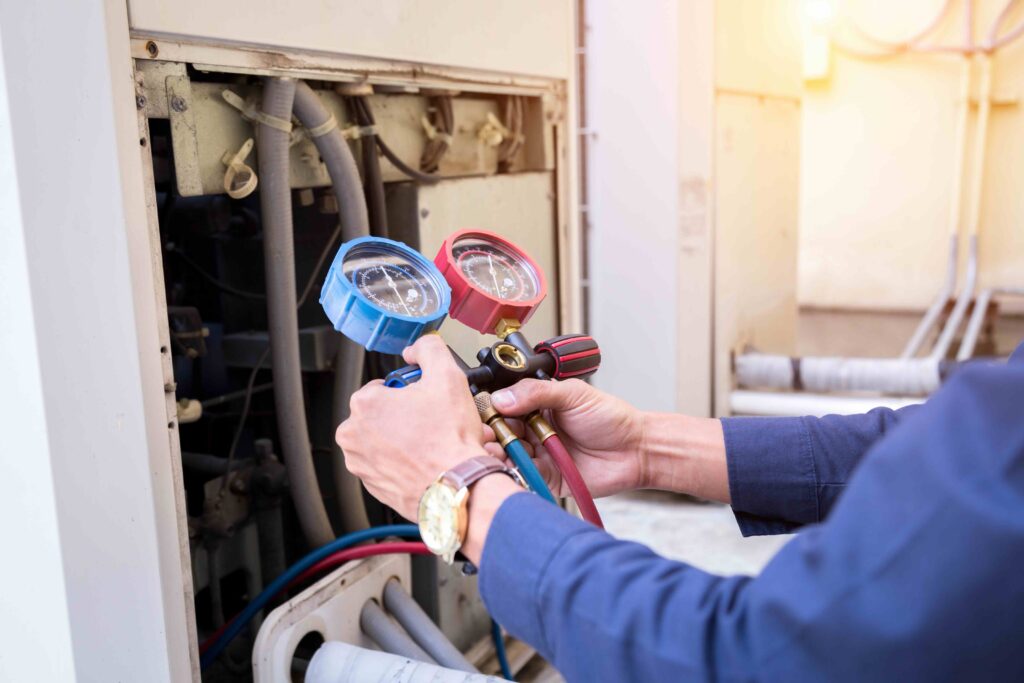
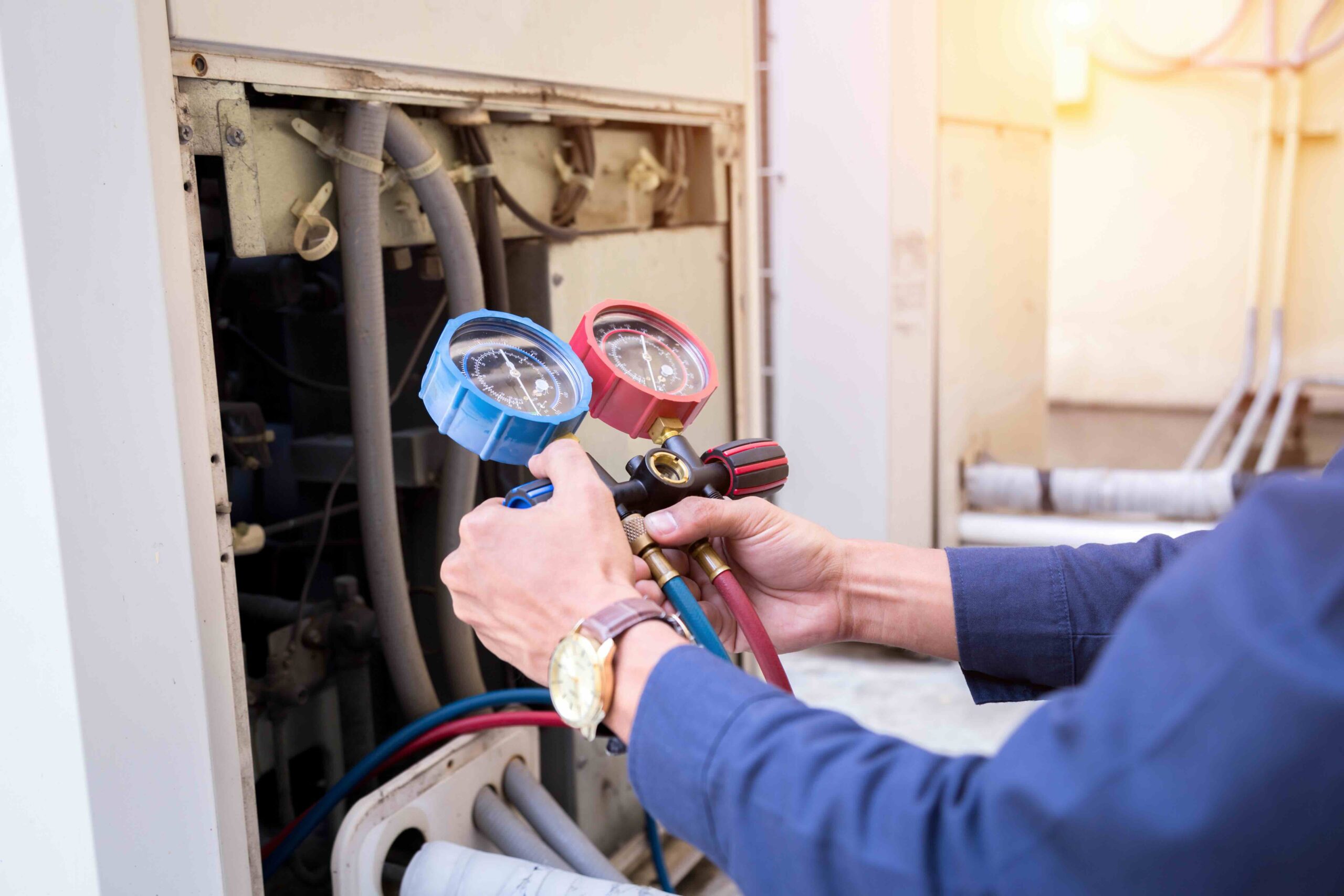
When a technician comes out to investigate a refrigerant issue, the process typically starts with pressure testing and potentially UV dye or electronic leak detection to find exactly where refrigerant is escaping. Once the leak is located and repaired — or determined to be minor — the technician will evacuate any remaining refrigerant, verify the repair holds, and then recharge the system to manufacturer specifications. This is not a DIY job. Handling refrigerants requires EPA Section 608 certification, and attempting to purchase or handle refrigerant without that certification is illegal for good reason. The chemicals involved are under significant pressure and can cause serious harm if mishandled. Always hire a licensed, certified HVAC professional for this work.
Older R-22 Systems and the Cost Reality
If your home has an air conditioner that was installed before 2010, there is a real possibility it still runs on R-22. And while it may still be functioning, the calculus for repairs has changed dramatically. Because R-22 can no longer be produced domestically, technicians must rely on reclaimed or recycled supplies, and prices have increased accordingly. What once cost $10 to $15 per pound now routinely runs $50 to $80 or more per pound in many markets, and systems can require anywhere from two to four pounds or more for a full charge. This cost reality is pushing many homeowners toward replacing older R-22 systems entirely rather than continuing to invest in recharges. A new central AC system runs between $3,500 and $7,500 installed, but with a modern refrigerant, better efficiency ratings, and years of reliable service ahead, that calculation often makes financial sense when weighed against repeated R-22 repair costs.
Key Advantages of Addressing Refrigerant Issues Promptly
Dealing with a refrigerant issue as soon as it is identified rather than delaying the repair comes with meaningful benefits. A properly charged system operates at peak efficiency, which directly reduces monthly energy costs. Running an undercharged system forces the compressor to work harder, and compressor failure is one of the most expensive AC repairs a homeowner can face — often $1,000 to $2,500 or more. Prompt repairs also extend the overall lifespan of the equipment and maintain indoor air quality and humidity control, which matters more than most people realize in warmer climates. Refrigerant leaks can also pose health risks in enclosed spaces at high concentrations, another reason timely repair is not just a financial decision but a safety one.
Common Drawbacks and What to Watch For
There are a few pitfalls homeowners should be aware of when navigating refrigerant repairs. The cost can escalate quickly once a leak is involved, and some unscrupulous contractors may simply top off refrigerant without addressing the underlying leak, leaving homeowners to pay again months later. Always ask for a written estimate before work begins and confirm that leak detection is part of the service. On older systems, discovering a significant refrigerant leak sometimes uncovers other deferred maintenance issues that compound the overall repair cost. It is also worth noting that not all home warranty plans cover refrigerant as part of their HVAC coverage — the specific terms vary significantly from provider to provider, so reading the fine print matters.
How a Home Warranty Can Reduce Your AC Repair Costs
When refrigerant costs and leak repairs start stacking up, having a home warranty that covers HVAC systems becomes genuinely valuable. Armadillo is built for exactly this kind of moment — when a system you depend on every day stops working and the repair bill lands without warning. Armadillo home warranty plans for AC systems and whole-home coverage are designed to cover the major components of your heating and cooling equipment, which means covered repairs do not have to drain your emergency fund. Refrigerant leaks, compressor failures, and related HVAC issues are the kind of unpredictable, high-cost problems that a well-structured warranty exists to address. If you are tired of bracing every summer for what your AC might cost you this year, now is the time to get a free home warranty quote for AC and HVAC system protection and find out what coverage actually looks like for your home. Armadillo makes it straightforward, with no confusing exclusion lists or runaround when you need help most.

Frequently Asked Questions About Freon Recharge Costs for Home AC
Real questions from homeowners, answered directly so you can move forward with confidence.
How much does it cost to recharge Freon in a home AC unit?
The average cost ranges from $100 to $320 for systems using R-410A refrigerant. Older R-22 systems can cost $300 to $600 or more due to the limited availability of that refrigerant. If a leak repair is also needed, total costs can climb significantly higher.
Can I recharge my home AC refrigerant myself?
No. Handling refrigerants requires an EPA Section 608 certification, and it is illegal to purchase or handle refrigerants without it. Refrigerant systems are also under high pressure and can be dangerous without proper training and equipment. Always hire a licensed HVAC technician.
How often does a home AC need to be recharged?
A properly functioning AC system should never need to be recharged because refrigerant does not get consumed. If recharging is needed, it means there is a leak somewhere in the system that must be identified and repaired first.
Does homeowners insurance cover AC refrigerant recharges?
Standard homeowners insurance does not cover mechanical breakdowns or maintenance-related repairs like refrigerant recharges. A home warranty plan is the more appropriate product for covering HVAC repairs and component failures.
What is the difference between Freon and R-410A?
Freon is the brand name for R-22, a refrigerant that was phased out due to environmental concerns and is no longer manufactured in the US. R-410A is the current standard refrigerant for residential systems, and newer systems are beginning to transition to R-32 and R-454B alternatives.
How do I know if my AC is low on refrigerant?
Common signs include warm air blowing from vents, ice on the refrigerant lines or evaporator coil, longer cooling times, unexplained increases in energy bills, and hissing or bubbling sounds near the unit. A licensed technician can confirm the issue with proper pressure testing.
Is it worth repairing an older AC system that uses R-22?
It depends on the age and overall condition of the system. Because R-22 is expensive and increasingly scarce, repeated recharges often cost more in the long run than replacing the unit with a modern, R-410A system. A technician can help you compare the numbers for your specific situation.
Does a home warranty cover AC refrigerant leaks and recharges?
Coverage varies by provider and plan. Some home warranties include refrigerant as part of HVAC coverage, while others exclude it or treat it as an add-on. Always review the terms carefully and ask specifically about refrigerant coverage before purchasing a plan.
What happens if I ignore a refrigerant leak in my AC?
Running an AC system with low refrigerant forces the compressor to work harder than it should, which significantly increases the risk of compressor failure. Compressor replacement is one of the most expensive AC repairs, often costing over $1,500. Ignoring a leak can turn a manageable repair into a much larger one.
How long does an AC refrigerant recharge take?
The recharge itself typically takes one to two hours. However, if leak detection and repair are also required, the total service call can take several hours depending on where the leak is located and how complex the repair turns out to be.