
How Much Does a Can of Freon Cost — and Why Does It Matter for Homeowners?
If your air conditioner has stopped cooling properly, there is a reasonable chance someone has mentioned the word “Freon.” It comes up constantly in HVAC conversations, and yet most homeowners have only a vague sense of what it actually is, what it costs, and whether a low refrigerant level is something to worry about. Spoiler: it is absolutely something to pay attention to. Understanding Freon — what it is, how it is priced, and what replacing it actually involves — can save you from being caught off guard by a repair bill that feels like it came out of nowhere.
What Is Freon and What Does It Do in Your Home?
Freon is a brand name that has become a catch-all term for refrigerant, the chemical compound that circulates through your air conditioning system to absorb heat from inside your home and release it outside. Think of it less like fuel and more like a heat-moving messenger. It does not get burned up during normal operation. When a system is functioning correctly, refrigerant cycles continuously without needing to be topped off. That is a critical point many homeowners do not realize — if your system is low on refrigerant, it almost always means there is a leak somewhere in the system, not just that the refrigerant has been used up.
What Type of Refrigerant Does Your System Use?
The type of refrigerant your system requires depends heavily on when it was manufactured. Older systems — generally those installed before 2010 — typically use R-22, which most people refer to as Freon. R-22 was phased out in the United States by January 2020 due to its harmful environmental impact, specifically its role in ozone depletion. Newer systems use R-410A, sometimes marketed under the brand name Puron. There is also R-32 and other blends becoming more common as the industry continues to evolve. Knowing which type your system uses is essential, because pricing, availability, and the legality of handling each type differ significantly.
How Much Does a Can of Freon Actually Cost?
This is the number everyone wants, and the honest answer is: it depends on the type of refrigerant and where you are buying it. Here is a general breakdown of what to expect when pricing refrigerant in the current market:
- R-22 (Freon): Due to the phase-out, R-22 has become increasingly scarce. A pound of R-22 can cost anywhere from $50 to $150 or more depending on supplier and region. A full recharge on an older system could run $400 to $1,500 or higher.
- R-410A: More widely available and less expensive. Typically ranges from $20 to $75 per pound, with a full recharge costing $150 to $500 depending on how much refrigerant is needed.
- Newer refrigerants like R-32 or R-454B: Pricing is still stabilizing as adoption increases, but generally falls in a similar range to R-410A for now.
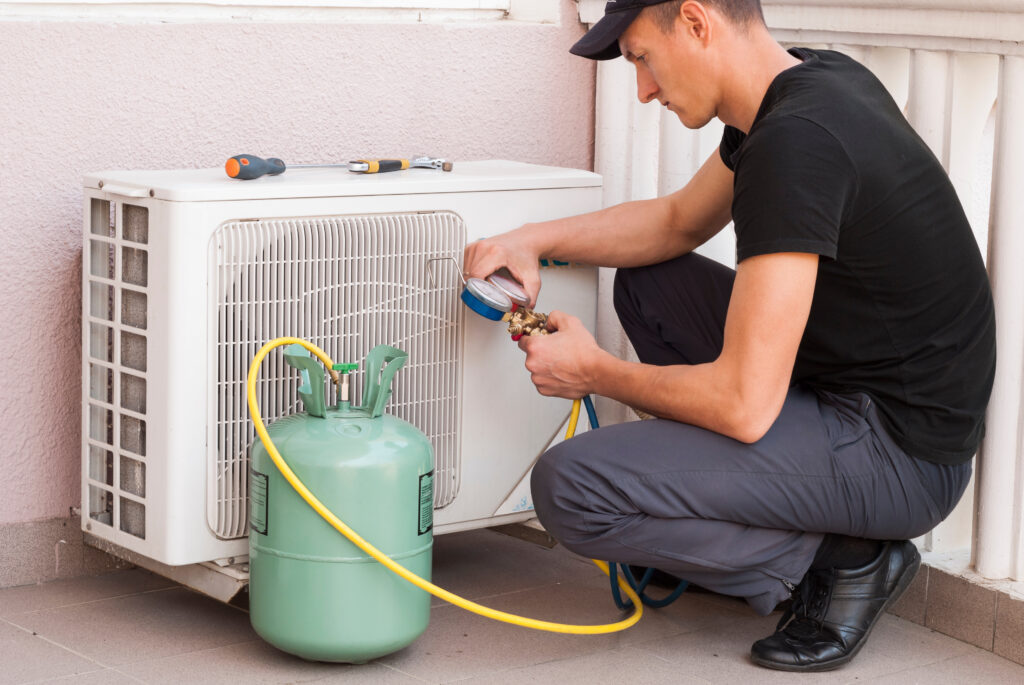
It is also worth noting that purchasing refrigerant requires EPA Section 608 certification. As a homeowner, you cannot legally walk into a supply house and buy refrigerant to add yourself. A licensed HVAC technician must handle it, and their labor costs will be added on top of the material cost. When you factor in the diagnostic fee, labor, and the refrigerant itself, even a straightforward recharge visit can cost several hundred dollars before anything else is addressed.

Why You Cannot Just Refill Refrigerant and Call It a Day
Here is where homeowners sometimes get frustrated. A technician comes out, adds refrigerant, the system cools again, and then a few months later the same problem returns. That is because adding refrigerant without finding and repairing the leak is a temporary fix at best. Refrigerant does not evaporate or disappear on its own. If the level is low, gas is escaping somewhere — through a corroded valve, a cracked line, a damaged coil. Responsible HVAC professionals will insist on locating the leak before simply topping off the system. If a technician only offers to add refrigerant without checking for a leak, that should raise a flag.
Signs Your AC System May Be Low on Refrigerant
Catching a refrigerant issue early can limit the downstream damage. There are several indicators worth paying attention to as a homeowner:
- The air coming from your vents is not as cold as it used to be, even when the system is running continuously.
- Ice is forming on the refrigerant lines or on the indoor evaporator coil.
- Your energy bills have increased without an obvious explanation.
- You hear a hissing or bubbling sound near the indoor or outdoor unit.
- The system takes significantly longer than normal to reach the set temperature on the thermostat.
None of these symptoms are a guaranteed diagnosis — other issues can cause similar behavior — but they are solid reasons to call a licensed HVAC technician for an inspection rather than waiting for the system to stop working entirely.
What About the Repair Cost Beyond the Refrigerant?
If a leak is found, which is the likely scenario, the cost conversation expands quickly. Leak repair pricing varies based on location and severity. A minor valve or fitting issue might be a relatively inexpensive fix. A damaged evaporator coil, on the other hand, can cost anywhere from $600 to over $2,000 to replace depending on the unit and the labor involved. If the system is older and uses R-22, there is also a real conversation to be had about whether repairing and recharging the unit makes financial sense versus replacing it with a newer, more efficient system that uses a compliant refrigerant. Your HVAC technician can help you weigh that decision, but it is good to walk into that conversation already knowing the general cost landscape.
Does a Home Warranty Cover Refrigerant and AC Repairs?
This is a question that comes up often, and it is worth addressing clearly. Home warranty coverage for HVAC systems varies by provider and plan, but many quality home warranty plans do cover the repair or replacement of air conditioning systems — including components like evaporator coils that are commonly involved in refrigerant leaks. Some plans also include refrigerant itself as a covered item, which can take a significant bite out of the out-of-pocket cost when a technician needs to recharge a system after completing a covered repair. Reading the fine print of any home warranty agreement is essential, because coverage limits, exclusions for pre-existing conditions, and caps on refrigerant costs differ across providers.
How to Protect Yourself From Unexpected HVAC Costs
The best position to be in as a homeowner is a prepared one. HVAC repairs — especially those involving refrigerant leaks and component replacement — have a way of arriving at the worst possible time, usually during the hottest week of the summer or the coldest stretch of winter. Regular maintenance is the first line of defense. Scheduling annual tune-ups, keeping your air filter clean, and not ignoring early warning signs all extend the life of your system meaningfully. Beyond that, having a financial cushion in place — whether that is a dedicated emergency fund or a home warranty plan — is what separates a stressful situation from a manageable one.
Why Armadillo Is the Smart Choice When Your AC Needs Refrigerant Work
When your air conditioner needs refrigerant service or any related HVAC repair, the last thing you want is to navigate the process alone and absorb the full cost out of pocket. That is exactly where Armadillo home warranty protection for HVAC systems and major appliances steps in to make a real difference. Armadillo offers straightforward, transparent plans that cover the kinds of repairs homeowners actually face — including air conditioning system failures that go well beyond a simple filter change. There are no confusing tiers of coverage designed to leave you guessing, and no surprises when you file a claim. If you want to understand exactly what your home is covered for before a problem ever arrives, you can get a free home warranty quote and see your AC coverage options in minutes. Protecting your HVAC investment is not about expecting things to go wrong — it is about being ready when they do.

Frequently Asked Questions About Freon and AC Refrigerant Costs
How much does it cost to recharge a home AC system with refrigerant?
A full refrigerant recharge typically costs between $150 and $500 for systems using R-410A, and significantly more for older R-22 systems, where the cost can exceed $1,500 depending on how much refrigerant is needed and current market pricing.
Can I buy Freon or refrigerant myself as a homeowner?
No. Federal law requires EPA Section 608 certification to purchase and handle refrigerants used in residential HVAC systems. Only licensed HVAC technicians can legally buy and add refrigerant to your system.
Why is R-22 Freon so expensive now?
R-22 was phased out of production in the United States as of January 2020 due to its ozone-depleting properties. The remaining supply is limited, which has driven prices up considerably over the past several years.
Does refrigerant need to be replaced regularly like a filter?
No. In a properly functioning air conditioning system, refrigerant does not get consumed. It circulates in a closed loop. If your system is low on refrigerant, it means there is a leak that needs to be identified and repaired.
How do I know if my AC is low on refrigerant?
Common signs include warm air blowing from the vents, ice forming on the refrigerant lines or indoor coil, higher-than-normal energy bills, hissing or bubbling sounds near the unit, and longer cooling cycles to reach the set thermostat temperature.
Will a home warranty cover the cost of refrigerant?
Many home warranty plans cover HVAC system repairs and some include refrigerant as a covered item. Coverage specifics vary by provider and plan, so reviewing the terms of your agreement is important before assuming refrigerant costs are included.
What happens if I ignore a refrigerant leak in my AC system?
Ignoring a refrigerant leak puts additional strain on the compressor, which can eventually fail — a much more expensive repair or replacement scenario. It also reduces efficiency and can cause the system to shut down entirely during peak demand periods.
Is it better to repair a refrigerant leak or replace the AC unit?
The answer depends on the age of the system, the type of refrigerant it uses, and the cost of the repair. If the unit uses R-22 and is more than 10 to 15 years old, replacement with a newer, more efficient system often makes more financial sense than ongoing repairs.
How long does it take an HVAC technician to recharge a system?
A basic refrigerant recharge, once a leak has been repaired, typically takes one to two hours. If the technician also needs to locate and repair a leak, the appointment could take considerably longer depending on where the leak is located and how complex the repair is.
Does the type of refrigerant my system uses affect my home warranty coverage?
Refrigerant type itself generally does not affect whether a system is covered, but some home warranty plans set dollar caps on how much refrigerant they will cover per service call. Reviewing your plan’s terms will clarify what limits apply to your specific situation.