Understanding Kitchen Hood CFM: Why It Matters for Your Home
When it comes to creating a healthier, more efficient kitchen, the right ventilation system plays a major role. And at the center of that system is the kitchen range hood. A common feature in most modern homes, this unsung hero helps keep indoor air cleaner while supporting long-term durability for your home’s finishes and appliances. One key term you’ll run into when researching range hoods is CFM—cubic feet per minute—a measurement that determines how much air your kitchen hood can move. Homeowners need to understand CFM to choose the right unit, ensure code compliance, and avoid long-term issues with their appliance coverage or home warranty eligibility. Let’s explore what kitchen hood CFM means, how it functions, and what you need to consider when choosing the right configuration for your home.
What Is Kitchen Hood CFM and Why Is It Important?
CFM, or cubic feet per minute, is a standardized measurement used to express airflow. For kitchen range hoods, it reflects how many cubic feet of air the unit can exhaust in one minute. It’s a critical factor in determining how well your system will remove smoke, steam, odors, and airborne contaminants produced during cooking. A hood with too low a CFM might allow lingering odors or grease particles to settle on surfaces. Too high, and you might experience drafts or noisy operation—plus potential complications for smaller ductwork systems or HVAC balance. A properly-rated CFM ensures air is exchanged efficiently without overworking connected systems or voiding your appliance protection plans.
How Kitchen Range Hoods Work
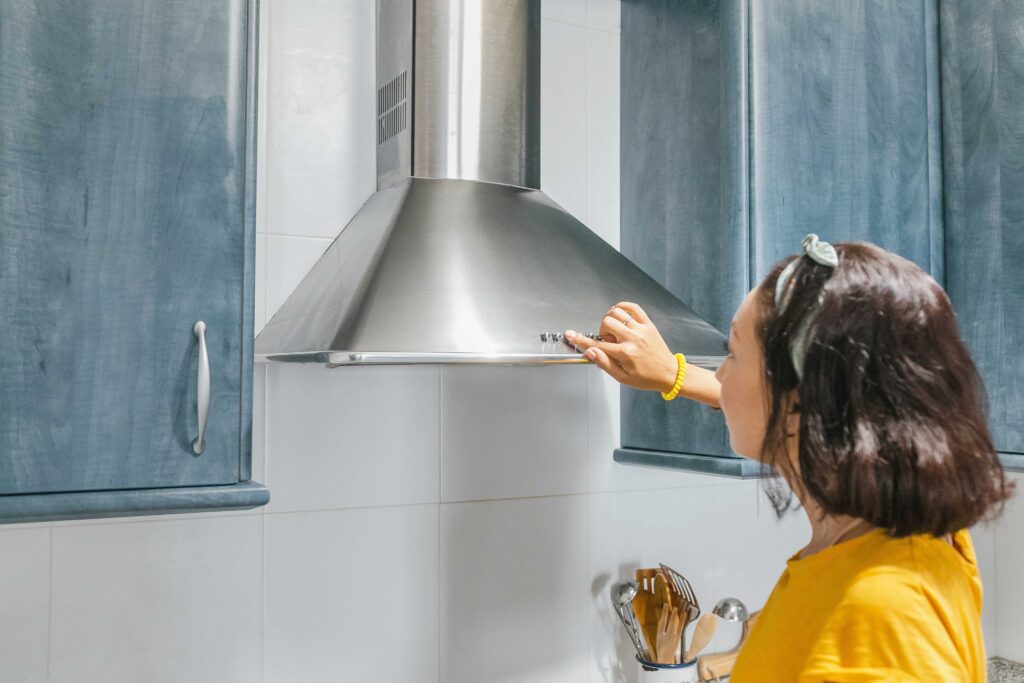
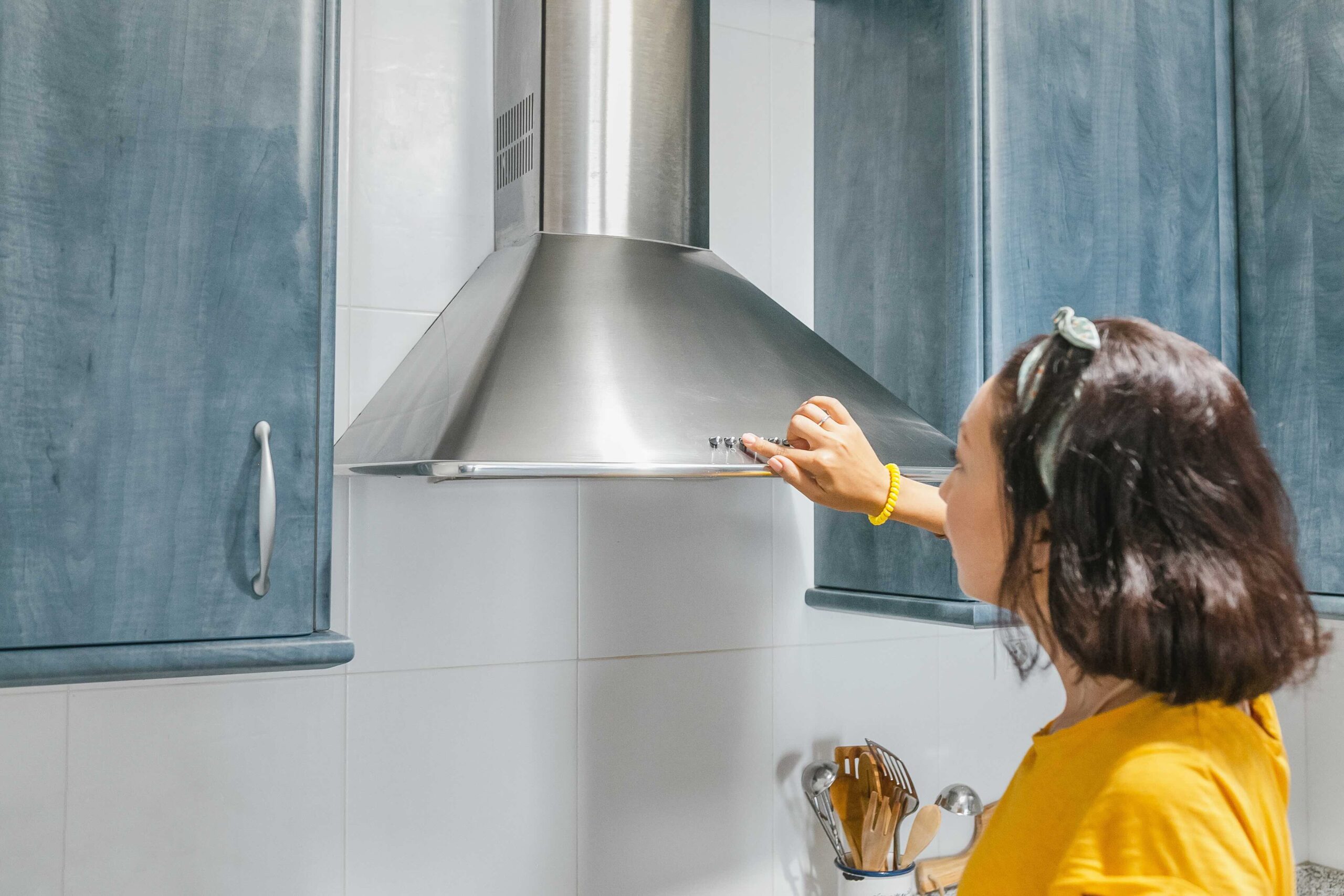
Range hoods operate by capturing rising heat, smoke, and particles through a canopy placed directly above your cooktop. Once captured, this air is pulled through a filter (usually metal mesh, baffle, or charcoal, depending on the model). Afterwards, it’s either expelled outside through ductwork (ducted systems) or recirculated into the kitchen after filtration (ductless systems). The fan’s power—expressed in CFM—is what determines how much and how quickly this air is moved. More powerful hoods remove more air, which is crucial for frequent or high-heat cooking. Choosing the right CFM aligns performance with your kitchen’s dimensions, your stove’s output, and your cooking habits.
Recommended CFM Ratings Based on Stove Type
Not all stoves are created equal, and neither should your range hood be. Gas ranges, in particular, produce more heat and byproducts than electric ones. As a rule of thumb, experts recommend at least 100 CFM for every 10,000 BTUs of your stove’s capacity. So, if your gas cooktop outputs 50,000 BTUs, a hood with 500 CFM is the minimum baseline. Electric stoves need less ventilation, but if you regularly pan-fry, sear, or roast, you still want to err on the side of higher airflow. For island hoods—which have to pull air from all sides—a minimum of 600 CFM is common. Wall-mounted models can often work well between 300 and 500 CFM, depending on the kitchen’s layout and ventilation path. Always check local building codes as they may mandate specific minimum ratings.
Pros and Cons of High-CFM Kitchen Hoods
While a high-CFM range hood offers more aggressive ventilation, it presents a few considerations. On the pro side, higher airflow hoods remove contaminants faster and more completely, which is appealing for avid home chefs. They also minimize grease buildup on cabinetry and reduce exposure to indoor pollutants like nitrogen dioxide. However, high-CFM systems can be louder, particularly if the fan motor isn’t equipped with speed adjustments or noise-dampening features. There’s also the issue of negative air pressure—moving large volumes of air out without bringing fresh air back in can disrupt HVAC performance and indoor air quality. In some municipalities, a makeup air system is required if your range hood exceeds 400 CFM. These systems introduce filtered outside air to balance what’s lost, but they add complexity and cost.
Installation Needs: Matching Duct Size and Hood Placement
Installing a kitchen hood is more than just placing a canopy above your stove. Airflow efficiency depends on duct size, direction, material, and transition points. A high-CFM hood will require larger ductwork—often 6 inches or more in diameter—to avoid static pressure that reduces airflow performance. Long duct runs, multiple elbows, or improperly sealed joints all degrade effectiveness. Vertical duct runs are more efficient than horizontal ones, and smooth-walled metal pipe is preferred to foil or flex ducts. Placement matters too. The hood should be mounted 24 to 30 inches above the cooktop surface to ensure optimal capture without overheating components. A wall-mount hood in a compact kitchen with exterior wall access is generally more straightforward than an island install where longer duct runs are typical.
Maintenance, Servicing, and Warranty Implications
Consistent maintenance ensures continued performance of kitchen hoods over time. Grease filters should be cleaned every month or more frequently depending on use. Baffle filters are often dishwasher-safe, while charcoal filters for ductless models require full replacement every few months. Neglecting upkeep can damage the blower motor, cause airflow restrictions, and accelerate wear—potentially impacting home warranty coverage. Many home warranties, including those offered by top providers, do not cover repair costs if underlying damage is due to improper maintenance or incorrect installation. Ensuring your kitchen hood meets both manufacturer guidelines and recommended CFM ratings helps preserve its lifespan and maintain eligibility for protection under plans like those offered by Armadillo.
Choosing a Range Hood That Works for Your Home—and Is Covered
Selecting the right CFM range hood means balancing performance, size, and regulatory requirements—not just aiming for the highest number. Understanding where and how the hood will vent, the type of cooking you do most, and your stove’s output will guide you toward the right fit. Whether building new or upgrading an existing kitchen, be mindful that correct sizing and proper installation are not only essential for performance but affect your appliance’s eligibility for repairs under a home warranty. That’s something we take seriously at Armadillo. Our home warranty plans are built to support your home’s essential systems, including kitchen appliances when properly installed and maintained. If you’re planning to upgrade and want peace of mind that your investment is protected, visit our site at armadillo.one to learn more, or start customizing your plan today at our plan builder.