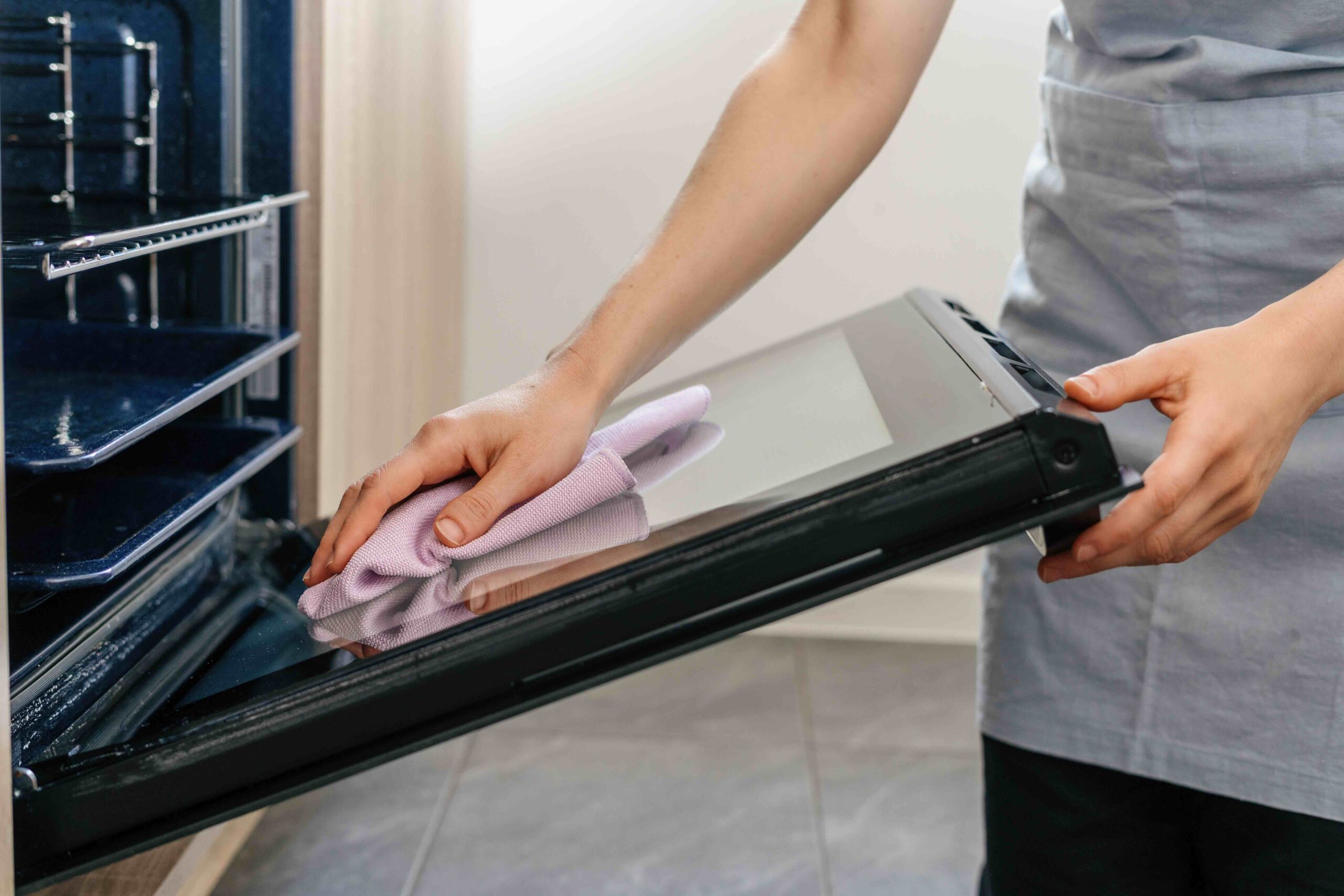
Why Cleaning Your GE Electric Oven Is More Important Than You Think
Most homeowners think about cleaning the oven somewhere between “after the holiday roast” and “never.” But here is the thing — a dirty oven is not just an aesthetic problem. Grease buildup, food residue, and carbon deposits inside your GE electric oven can affect cooking performance, produce smoke and odors, and in some cases, become a legitimate fire hazard. Keeping your oven clean is basic appliance maintenance, and when done correctly, it extends the life of one of the most-used appliances in your home. This guide walks through how to clean a GE electric oven the right way, what to avoid, and why your appliance care routine matters more than you might realize.
Understanding Your GE Electric Oven Before You Start Cleaning
GE electric ovens vary by model, but most share the same core components: a baked enamel interior, heating elements on the top and bottom, oven racks, a door with a window, and in many cases, a self-clean or steam clean feature. Before you start scrubbing anything, it helps to know which version you are working with. Check your model number — usually found on the door frame or the back of the unit — and confirm whether your oven has a self-cleaning cycle, a steam clean option, or neither. That distinction changes your entire cleaning approach. GE has been manufacturing electric ovens for decades, and their newer models tend to prioritize easy-clean surfaces, but that does not mean maintenance-free.
How the GE Self-Clean Cycle Works
The self-clean feature on GE electric ovens uses extremely high heat — typically between 800 and 1,000 degrees Fahrenheit — to incinerate food residue and grease into a fine ash that can be wiped away once the cycle completes and the oven fully cools. The process takes anywhere from two to five hours depending on the soil level you select in the settings. During the cycle, the oven door locks automatically for safety. One thing worth noting: the self-clean cycle generates significant heat and can produce smoke and fumes, especially if there is a lot of buildup inside. Ventilating your kitchen — open a window, run the range hood fan — is not optional. It is genuinely necessary, particularly if you have pets like birds that are sensitive to fumes.
How to Use the Steam Clean Feature on GE Electric Ovens
Some GE models offer a steam clean function, which is a faster, lower-temperature alternative to the self-clean cycle. To use it, pour about a cup of distilled water into the bottom of the oven, close the door, and select the steam clean setting. The cycle runs for around 30 minutes and uses steam to loosen light grease and food particles. After it finishes and the oven cools, you wipe the interior with a soft cloth. Steam clean is ideal for light, regular maintenance rather than deep cleaning heavily soiled ovens. It is gentler on the oven’s enamel coating and produces no harsh fumes — a practical option for households that prefer to clean frequently in smaller sessions.

How to Manually Clean a GE Electric Oven Step by Step
If your oven does not have a self-clean feature, or if you prefer not to use it, manual cleaning is straightforward. Here is what the process looks like from start to finish:
- Remove the oven racks and soak them in hot, soapy water in the sink or bathtub.
- Make a paste using baking soda and water — roughly three parts baking soda to one part water — and spread it across the interior surfaces, avoiding the heating elements.
- Let the paste sit for at least 12 hours, or overnight for heavier buildup.
- Wipe out the paste using a damp microfiber cloth, using a plastic scraper for stuck-on residue.
- Spray white vinegar lightly over any remaining baking soda residue to neutralize it, then wipe clean.
- Scrub the racks with a non-abrasive pad, rinse thoroughly, dry, and reinsert them.
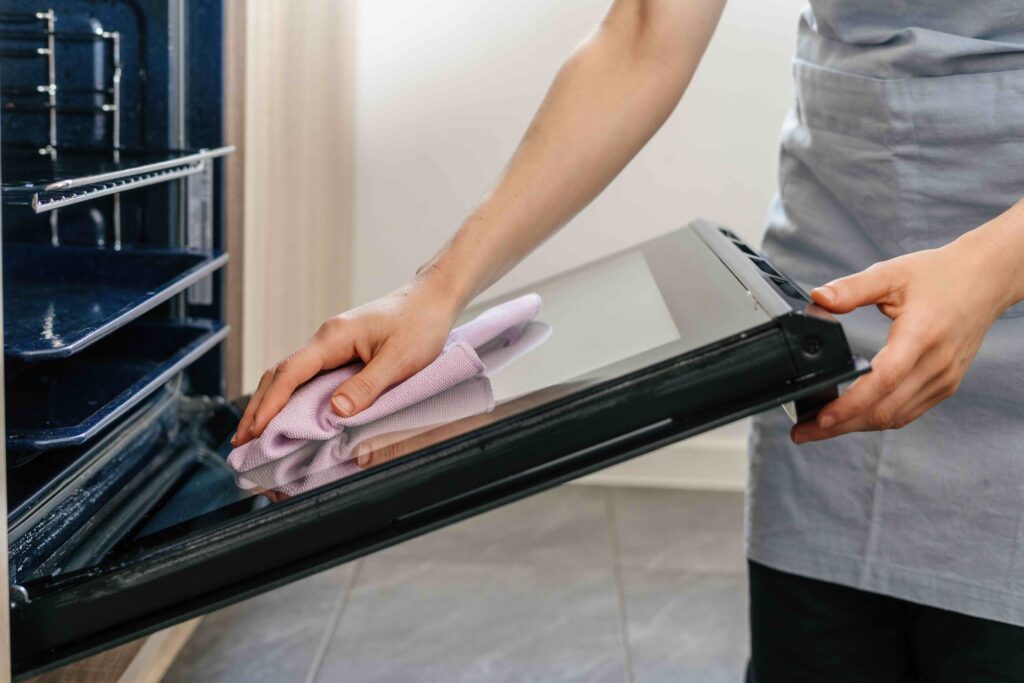
- Wipe down the oven door, including the glass, using a mixture of dish soap and warm water.
Avoid steel wool, abrasive scouring pads, or commercial oven cleaners that contain lye on the enamel interior of a GE oven. These can damage the finish and cause long-term surface degradation.
Cleaning the GE Oven Door and Glass Properly
The oven door glass gets overlooked more often than it should. That cloudy, greasy film is not just cosmetic — it makes it harder to monitor your food without opening the door and losing heat. For routine cleaning, a mixture of dish soap and warm water applied with a soft cloth handles most surface grease on the exterior and interior glass panels. For stubborn stains, the baking soda paste method works well here too. Apply, let it sit for 20 to 30 minutes, then wipe clean. Some GE oven doors can be removed entirely for deeper cleaning between the glass panels — check your specific model’s manual for instructions before attempting that, as the disassembly process varies. Forcing it without guidance can damage the door seal or hinge mechanism.
Common Mistakes Homeowners Make When Cleaning GE Electric Ovens
Cleaning an oven sounds simple, but a few common missteps can cause real damage to the appliance or create safety issues. The most frequent mistakes include using harsh chemical sprays near the heating elements, running the self-clean cycle on an oven with heavy, built-up grease without pre-wiping the worst of it first, and not allowing the oven to cool completely before wiping out ash after a self-clean cycle. Another one worth flagging is ignoring the area under the heating element — food and grease that drips below the element can smoke heavily the next time you cook and, over time, can cause element damage. Taking a few extra minutes to clean thoroughly and correctly protects both the oven and your home.
How Often Should You Clean Your GE Electric Oven
Frequency depends on how often and what you cook. For average household use, a light wipe-down of spills after they occur prevents the need for heavy-duty cleaning sessions. A full manual or self-clean cycle every three to six months is a reasonable maintenance cadence for most households. If you roast, bake frequently, or cook at high temperatures often, lean toward the more frequent end of that range. The key insight here is that preventative maintenance is always easier — and less expensive — than reactive repair. Small habits, like placing a silicone oven liner on the bottom rack to catch drips, dramatically reduce how often deep cleaning is necessary.
What Happens When Oven Issues Go Beyond Cleaning
Cleaning keeps an oven performing well, but it does not prevent mechanical and electrical components from eventually failing. Heating elements burn out. Temperature sensors drift. Control boards malfunction. Igniter systems wear down over time. These are not cleaning problems — they are repair or replacement problems, and they tend to show up without much warning. When your GE electric oven starts heating unevenly, not reaching temperature, or displaying error codes, cleaning is not going to fix it. That is when the cost of ownership gets real in a hurry, and it is also when having a home warranty in place makes a tangible financial difference.
Why Armadillo Home Warranty Is the Smart Coverage Choice for Appliance Owners
Keeping your GE electric oven clean is absolutely within your control, but what happens when a component fails despite your best maintenance efforts? That is exactly the gap that a home warranty is designed to fill. Armadillo offers straightforward, no-nonsense coverage for major home appliances — including your oven — so that when something breaks, you are not scrambling to find a technician or paying out of pocket for a repair bill that could easily run several hundred dollars. If you want to understand how home appliance protection actually works and what it covers, explore Armadillo’s home warranty plans for appliance and systems coverage to see how it fits your household. And if you are ready to stop leaving that financial exposure on the table, you can get a free GE oven home warranty quote tailored to your home in seconds. The cleaning is your job — the unexpected breakdowns should not have to be your problem alone.

Frequently Asked Questions About Cleaning a GE Electric Oven
These are the questions homeowners ask most often when it comes to maintaining and cleaning a GE electric oven.
How long does a GE electric oven self-clean cycle take?
Depending on the soil level selected, a GE self-clean cycle typically runs between two and five hours. The oven door locks during the cycle and will not unlock until the interior has cooled to a safe temperature, which may take an additional hour after the cycle ends.
Can I use commercial oven cleaner on my GE electric oven?
GE generally advises against using commercial oven cleaners, particularly those containing lye or harsh solvents, on the interior enamel surface. These products can permanently damage the finish. A baking soda and water paste is the recommended alternative for manual cleaning.
Is it safe to use the self-clean feature frequently?
Using the self-clean cycle occasionally — roughly every three to six months — is considered safe. Running it too frequently generates extreme heat that can stress the oven’s internal components, including the door latch mechanism and heating elements, potentially shortening their lifespan.
What should I do before running a GE oven self-clean cycle?
Remove all oven racks, broiler pans, and any aluminum foil from the oven before starting the cycle. Pre-wipe any large food debris or pooled grease to reduce smoke during the cycle. Open nearby windows and run the ventilation hood fan throughout the process.
Why is my GE oven smoking after a self-clean cycle?
Residual ash or cleaning product residue left inside the oven after the self-clean cycle can smoke when the oven is next used. Make sure to wipe out all ash completely with a damp cloth before cooking again. Persistent smoking may indicate that grease has dripped beneath the heating element and should be cleaned thoroughly.
Can I leave the oven racks inside during a self-clean cycle?
GE recommends removing oven racks before running a self-clean cycle. The extreme heat can discolor and warp the racks and may damage the rack guides inside the oven cavity. Racks should be hand-washed separately with warm soapy water.
How do I clean between the glass panels on a GE oven door?
Some GE oven models allow the door to be removed and partially disassembled to access the space between the glass panels. Refer to your model’s specific owner manual for safe disassembly instructions, as the process varies by model. Attempting this without guidance can damage the door seal or hinge system.
Does cleaning my GE oven help it last longer?
Yes. Regular cleaning prevents grease buildup from causing excessive heat stress on internal components, reduces the risk of element damage from dripping residue, and keeps the oven operating at accurate temperatures. Proper maintenance is one of the most effective ways to extend appliance lifespan.
What is the difference between self-clean and steam clean on a GE oven?
Self-clean uses extremely high heat to incinerate food residue over a two-to-five-hour cycle and is suited for heavy buildup. Steam clean uses water and lower heat over approximately 30 minutes to loosen light grease and is better suited for routine maintenance between deeper cleanings.
Does a home warranty cover my GE electric oven if it breaks down?
Many home warranty plans include coverage for built-in and freestanding ovens, covering repairs or replacements for mechanical and electrical failures. Coverage terms vary by provider, so it is important to review the plan details carefully. Routine cleaning and maintenance issues are generally not covered, but component failures typically are.