Why Your Kitchen Sink Smells Like a Swamp (And What to Do About It)
You walk into the kitchen, everything looks fine, and then it hits you — that unpleasant, slightly rotting odor coming from the direction of the sink. If you have a garbage disposal, that is almost certainly your culprit. Disposal odors are one of the most common kitchen complaints homeowners deal with, and the good news is that most of the time, you can fix it yourself without calling anyone. The less good news? If you ignore it long enough, the smell gets worse, and the buildup causing it can eventually affect how well the unit functions. So let us talk about what is actually going on inside that disposal, how to clean it properly, and how to keep it smelling fresh going forward.
What Causes Garbage Disposal Odors in the First Place
The short answer is bacteria. Over time, food particles — grease, bits of meat, vegetable scraps, citrus pulp — get trapped inside the disposal housing, under the splash guard, and along the walls of the grinding chamber. Those particles decompose, and bacteria thrive on decomposing organic matter. The result is that sulfurous, musty, sometimes outright foul smell that greets you every time you stand near the sink. What makes it worse is that most homeowners clean the visible parts of their sink and counter but rarely think about cleaning inside the disposal itself. The splash guard in particular — that rubber flap at the top of the disposal opening — tends to accumulate a thick film of grime on its underside that is easy to miss and hard to reach.
The Simple Cleaning Methods That Actually Work
There are a few reliable approaches to cleaning a smelly disposal, and most of them involve materials you already have at home. You do not need specialty products, though they exist if you prefer them. Here are the most effective methods homeowners use:
- Ice and coarse salt: Fill the disposal with ice cubes and pour in about half a cup of rock salt or kosher salt. Run the disposal with cold water flowing. The ice helps dislodge debris from the grinding components, and the salt acts as a mild abrasive.
- Baking soda and white vinegar: Pour half a cup of baking soda into the drain, followed by half a cup of white vinegar. Let it fizz for a few minutes, then flush with hot water. This combination neutralizes odors and helps break down soft buildup.
- Dish soap and cold water: Run cold water, squeeze a generous amount of dish soap into the disposal, then let the unit run for thirty to sixty seconds. Simple, effective for routine maintenance.
- Citrus peels: Drop lemon, lime, or orange peels into the disposal and run it with cold water. This does not deep clean the unit, but it does temporarily neutralize odors and leaves the drain smelling significantly better.
Do Not Forget the Splash Guard
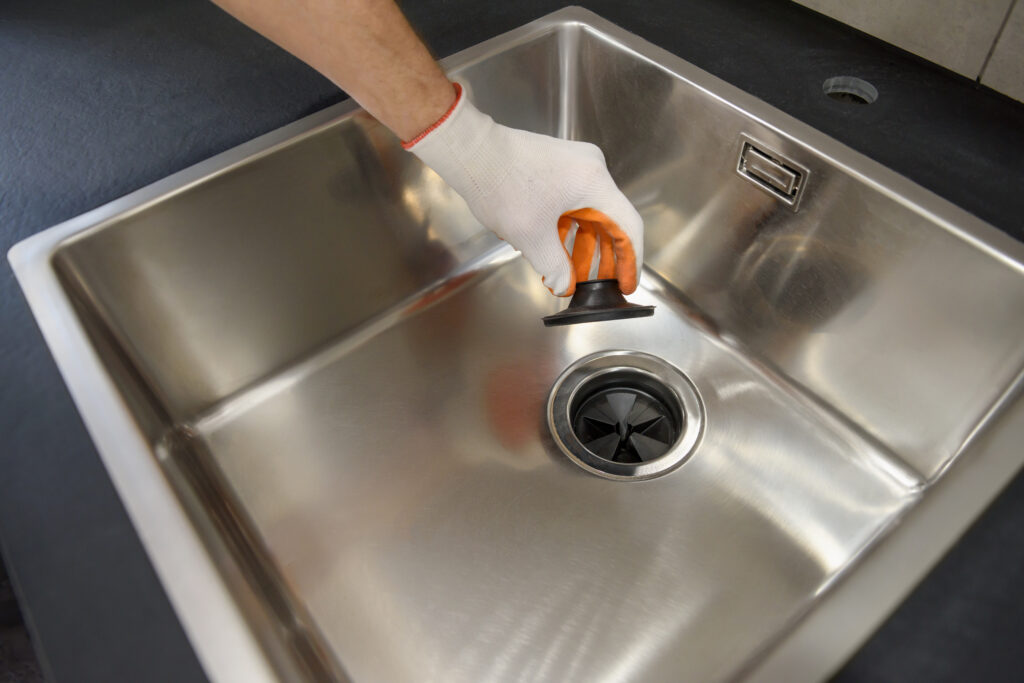
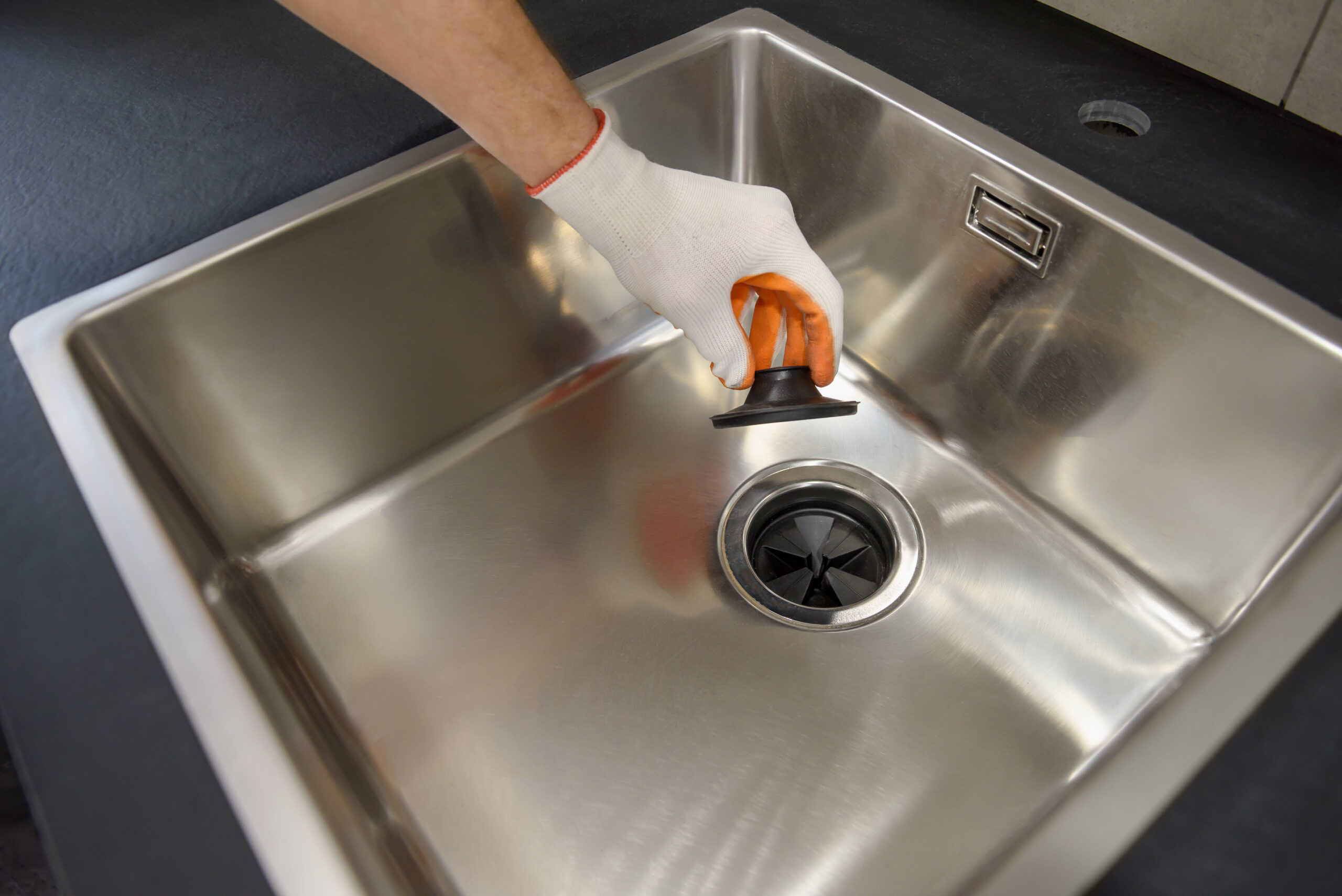
This is the step most people skip, and it is probably the most important one. The rubber splash guard sits at the top of the disposal opening and gets coated in grime on its underside — a spot that almost never gets touched during regular cleaning. To clean it properly, use an old toothbrush or small scrub brush. Fold back each flap of the splash guard and scrub underneath with dish soap and warm water. It is unpleasant work, but it makes a significant difference. Some splash guards are removable and can be pulled out entirely for a more thorough cleaning in the sink. If yours lifts out, that is worth doing every few months.

What Not to Put Down Your Disposal
A lot of disposal odor problems are preventable, and they start with understanding what the unit is not designed to handle. Garbage disposals grind food waste, but they are not equipped for everything. Grease and cooking oil are among the worst offenders — they coat the interior of the unit and the drain pipe, trap other food particles, and go rancid over time. Fibrous vegetables like celery and artichoke can wrap around the grinding mechanism. Starchy foods like pasta and rice expand with water and create thick paste-like buildup inside the drain. Coffee grounds seem harmless but accumulate in the trap and contribute to odor over time. Keeping these materials out of the disposal is the most effective long-term odor prevention strategy available.
How Often Should You Clean Your Disposal
For most households, a thorough cleaning once a week is appropriate. That does not have to mean a full deep clean every time — running dish soap through the unit with cold water after heavy kitchen use is often sufficient for routine maintenance. A more complete cleaning, including the splash guard and an ice-and-salt treatment, is worth doing once or twice a month depending on how frequently you use the disposal. If odors are persistent despite regular cleaning, that can signal a more significant buildup deeper in the drain pipe, which may require a plumber to address properly.
When Cleaning Is Not Enough
Sometimes the smell is not just about buildup on the disposal itself. Persistent odors that return quickly after cleaning can indicate a problem with the P-trap — the curved pipe section beneath the sink — or a clog forming further down the drain line. In those cases, cleaning the disposal will provide temporary relief at best. You may also notice that the disposal is running sluggishly, making unusual noises, or failing to grind food effectively. These are signs that the unit may be wearing down mechanically. Disposals typically last between eight and fifteen years, and a unit toward the end of that range may need replacement rather than just a good scrub.
Everyday Habits That Keep Odors From Coming Back
Preventing disposal odors is significantly easier than eliminating them after they have developed. A few consistent habits make a real difference in how your kitchen smells over time. Always run cold water before, during, and for several seconds after using the disposal — this helps flush food particles completely through the unit and into the drain. Avoid letting food sit in the disposal without running it. Drop citrus peels in periodically as a natural deodorizer. Clean the splash guard every one to two weeks rather than waiting for odors to appear. Small habits, maintained consistently, are what separate a disposal that stays fresh from one that becomes a recurring problem.
The Role of Your Home Warranty When the Disposal Goes Beyond Smelly
Cleaning a disposal is a maintenance task that most homeowners can handle independently. But when the unit stops working entirely — motor failure, persistent leaks, electrical issues — that is a different conversation. Garbage disposals are covered under many home warranty plans, which means repair or replacement costs may be handled for you rather than coming out of pocket. If you have ever dealt with the sticker shock of an appliance replacement you did not budget for, you understand why having that coverage in place matters.
How Armadillo Helps Protect the Appliances You Rely On Every Day
If your garbage disposal is on its last legs, or you are simply tired of wondering which appliance is going to fail next, it might be time to take a closer look at your home warranty situation. Armadillo home warranty coverage for kitchen appliances and home systems is designed to protect homeowners from the kind of unexpected repair and replacement costs that derail a budget without warning. Garbage disposals, dishwashers, HVAC systems, water heaters — these are the things that keep your home running, and they do not last forever. When one of them breaks down, having coverage in place means you make one call instead of spending an afternoon comparing repair quotes. Get a free home warranty quote to protect your disposal and home appliances and see what a plan looks like for your home in just a few minutes. No pressure, no lengthy process — just straightforward coverage that makes sense for real homeowners.

Frequently Asked Questions About Cleaning Garbage Disposal Smell
What is the fastest way to get rid of garbage disposal smell?
The fastest method is to pour half a cup of baking soda into the disposal followed by half a cup of white vinegar, let it sit for a few minutes, and then flush with hot water. Adding citrus peels afterward helps neutralize any remaining odor.
Why does my garbage disposal still smell after cleaning it?
Persistent odors after cleaning usually indicate buildup on the underside of the splash guard, inside the drain trap, or further along the drainpipe. Scrubbing the splash guard thoroughly and considering a drain flush or professional inspection may be necessary.
Is it safe to use bleach to clean a garbage disposal?
Bleach is not recommended for garbage disposals. It can damage rubber components, contribute to pipe corrosion over time, and create harmful fumes when combined with other cleaning agents. Dish soap, baking soda, and vinegar are safer alternatives.
How often should I clean my garbage disposal?
A light cleaning using dish soap and cold water should be done weekly. A more thorough cleaning that includes the splash guard and a deodorizing treatment is appropriate once or twice a month depending on usage frequency.
Can I put lemon juice in my garbage disposal to remove odors?
Yes, lemon juice is a safe and effective natural deodorizer for garbage disposals. Lemon peels are even more effective because the oils in the rind help break down grease while freshening the unit.
What foods cause the most garbage disposal odors?
Grease, cooking oil, meat scraps, onion skins, and starchy foods like pasta and rice are the most common contributors to disposal odors. These materials decompose quickly or coat the interior of the unit, creating conditions where bacteria thrive.
Should I use hot or cold water when running the garbage disposal?
Cold water is recommended during and immediately after use. Cold water keeps fats and grease in solid form so they can be broken down and flushed away. Hot water can melt grease and cause it to coat the interior of the disposal and drain pipe.
How do I know when my garbage disposal needs to be replaced instead of just cleaned?
Signs that replacement may be necessary include frequent clogs, loud grinding or humming noises, leaks at the base of the unit, failure to start, and persistent odors that return immediately after cleaning. Units older than ten years are more likely to need replacement than repair.
Does a home warranty cover garbage disposal repair or replacement?
Many home warranty plans do include garbage disposal coverage, though terms vary by provider and plan. Coverage typically applies to mechanical failures rather than cosmetic issues or damage caused by misuse, so reviewing plan details carefully is important.
Can I prevent garbage disposal odors without using any cleaning products?
Yes. Running cold water consistently before and after use, avoiding problematic food waste, using ice and coarse salt to clean the grinding components, and cleaning the splash guard regularly with only warm water and a scrub brush can all reduce odors without chemical cleaning products.