What Is Your Main Water Shut-Off Valve and Why Does It Matter?
Every home has one. Most homeowners have never touched it. The main water shut-off valve is the single most important piece of hardware standing between a minor plumbing issue and a catastrophic flood that ruins your floors, walls, and everything in between. It controls the flow of water into your entire home from the municipal supply line or well system, and knowing where it is and how to use it could save you thousands of dollars in water damage. This is not an exaggeration. When a pipe bursts or a fixture fails, the first thing any plumber will ask is whether you turned off the main. If you do not know where it is, that question becomes a very expensive problem.
How Water Flows Into Your Home
Water enters your home through a single supply line that connects to either a municipal water main running beneath the street or a private well on your property. That supply line runs underground and enters the home through the foundation, basement floor, or crawl space, depending on your home’s construction and regional climate. From there, it branches out to every faucet, toilet, appliance, and fixture in the house. The main shut-off valve sits at the point where that supply line enters your living space. Think of it as the master switch for your entire water system. When that valve is closed, water stops flowing. Full stop.
Where to Look for Your Main Water Shut-Off Valve
Location varies quite a bit depending on where you live and when your home was built. In colder climates, the valve is almost always indoors because outdoor pipes would freeze. In warmer regions, it might be outside near the foundation or even in a covered box near the street. Here are the most common places to check:
- Basement or utility room, near where the water line enters the foundation wall
- Crawl space, along the perimeter closest to the street
- Inside a garage, particularly in sunbelt or mild-climate homes
- Near the water heater or mechanical room
- Outside in a ground-level box labeled “water” near the curb or property line
If you move into a home and cannot locate the valve, check your home inspection report. Inspectors are required to document it. You can also call your local water utility, which will know where the service connection is and can help you trace the line from there.
Types of Main Shut-Off Valves
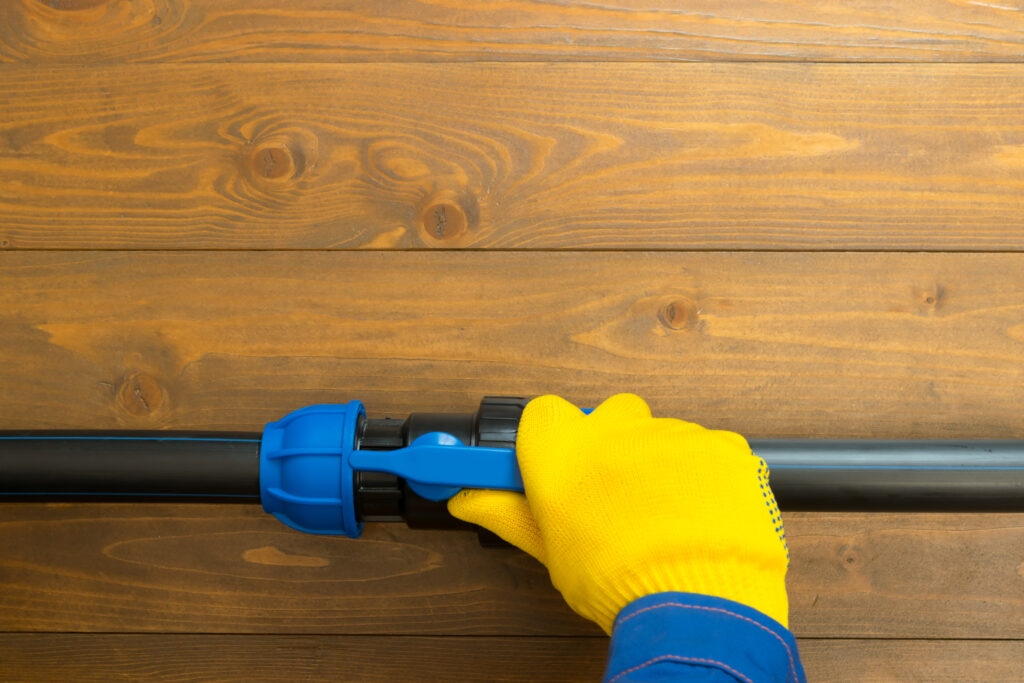
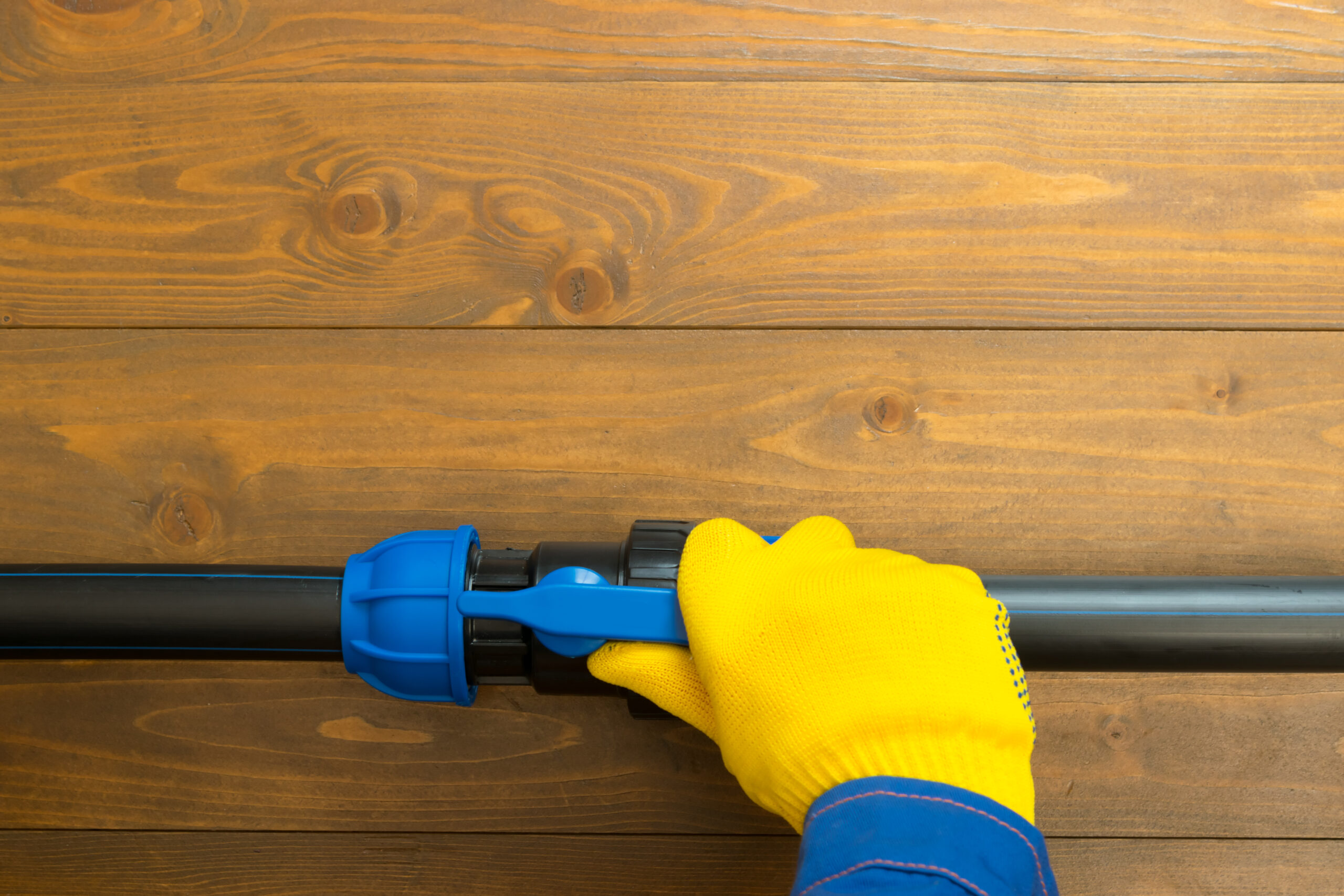
Not all shut-off valves work the same way, and knowing what type you have determines how you turn it off correctly. The two most common types are gate valves and ball valves. Gate valves are older and require multiple full rotations of a round handle to open or close. They are slower to operate and prone to failure if they have not been used in years. Ball valves are more modern and require only a quarter turn of a lever handle. When the lever is parallel to the pipe, water flows. When it is perpendicular, water is off. Ball valves are generally more reliable and much faster to operate in an emergency. If your home has an older gate valve, it is worth asking a plumber whether an upgrade makes sense.
How to Shut Off Your Main Water Supply
Once you have located the valve, the process is straightforward. For a ball valve, simply rotate the lever handle 90 degrees until it sits perpendicular to the pipe. For a gate valve, turn the round handle clockwise until it stops. Do not force it. After shutting off the valve, open a faucet somewhere in the home to release pressure and confirm that the water has stopped flowing. If water continues to run after the valve is fully closed, the valve may be worn out or partially failed, which means a plumber visit is in your near future. It is also worth doing a slow test of your shut-off valve once a year just to make sure it still moves freely.

Key Advantages of Knowing Your Shut-Off Location
The benefits here are completely practical. When a plumbing emergency strikes, every minute counts. Water damage compounds quickly, especially if the leak is behind a wall or beneath a floor. Homeowners who know exactly where their shut-off valve is and how to operate it can stop the damage within seconds. Beyond emergencies, knowing your shut-off location is essential any time you are replacing a fixture, making plumbing repairs, or winterizing a vacant property. There is also a real confidence factor. Knowing this one thing about your home makes every other maintenance task feel slightly more manageable.
Common Drawbacks and Complications to Be Aware Of
This is where things get a little less straightforward. Older valves that have not been operated in decades can seize up or fail to close completely. Corrosion, mineral buildup, and worn washers all contribute to valve failure. In some cases, turning a stiff valve can cause it to leak at the stem, creating a new problem in the process of solving another one. Homes built before modern plumbing standards may have the shut-off valve in an unusual or difficult-to-access location. Condominiums and townhomes add another layer of complexity because the unit shut-off may be inside your home, but the building main is controlled by the HOA or property management team.
What to Do If Your Valve Is Faulty or Missing
If your main shut-off valve does not close fully, leaks when operated, or is completely inaccessible, have a licensed plumber address it promptly. This is not a repair to delay. A functioning shut-off valve is not optional equipment. In some situations, the water utility can temporarily shut off service at the street while the valve is replaced, though this sometimes involves an additional fee. Replacing a main shut-off valve typically costs between 150 and 400 dollars depending on your location, valve type, and accessibility. It is a relatively affordable repair that has enormous protective value.
Practical Tips Every Homeowner Should Follow
Taking a few minutes now can prevent a very bad day later. Here are some practical steps worth taking this week:
- Locate your main shut-off valve today and confirm it operates correctly
- Label the valve clearly so any household member or house sitter can find it fast
- Show every adult in your household where the valve is and how to turn it off
- Test the valve annually by opening and closing it to prevent seizing
- Keep the area around the valve clear and accessible at all times
- Note the valve location in writing and store that information somewhere easy to find
How Home Warranty Coverage Connects to Your Plumbing System
Understanding your main shut-off valve is one piece of a larger picture when it comes to protecting your home. A plumbing emergency that starts with a burst pipe or failed fixture can quickly reveal other system vulnerabilities. That is where having the right coverage in your corner matters. home warranty coverage for plumbing systems and household appliances can help offset the cost of unexpected repairs that fall outside what your homeowner’s insurance covers. At Armadillo, the focus is on making that protection simple, transparent, and actually useful when something goes wrong. Whether it is a leaking supply line, a failed water heater, or a plumbing component that gives out after years of use, having a plan in place before the problem happens is always the smarter move. If you want to see what coverage looks like for your specific home, you can get a personalized home warranty quote for your plumbing and systems coverage in just a few minutes. No pressure, no confusion, just real information about what is covered and what it costs.

Frequently Asked Questions About Your Main Water Shut-Off Valve
Answers to the questions homeowners ask most often about locating, operating, and maintaining their main water shut-off valve.
Where is the main water shut-off valve typically located in a house?
In most homes, the main shut-off valve is located where the water supply line enters the home, which is usually in the basement, utility room, crawl space, or garage. In warmer climates, it may be outside near the foundation or in a covered box near the street.
What does a main water shut-off valve look like?
It looks like either a round wheel-shaped handle, which is a gate valve, or a straight lever handle, which is a ball valve. It is attached directly to the main water supply pipe where it enters your home and is usually made of brass or bronze.
How do I turn off the main water supply to my house?
For a ball valve, rotate the lever handle 90 degrees so it is perpendicular to the pipe. For a gate valve, turn the round handle clockwise until it stops. Then open a nearby faucet to release pressure and confirm the water flow has stopped.
What is the difference between a gate valve and a ball valve?
A gate valve uses a round wheel that requires multiple turns to open or close and is more common in older homes. A ball valve uses a lever that requires only a quarter turn and is considered more reliable and faster to operate in emergencies.
What should I do if my main shut-off valve will not turn?
Do not force it. A stuck valve can break or leak if overtightened. Contact a licensed plumber to inspect and replace the valve. In the meantime, your water utility may be able to shut off service at the street if needed.
How often should I test my main shut-off valve?
Testing it once a year is a good habit. Simply open and close the valve slowly to ensure it moves freely. This prevents the valve from seizing due to inactivity, corrosion, or mineral buildup over time.
Can I replace my main shut-off valve myself?
It is possible for experienced DIYers, but it requires shutting off water at the street first, which typically involves the water utility. Most homeowners are better served by hiring a licensed plumber to ensure the replacement is done correctly and up to code.
Does a home warranty cover the main water shut-off valve?
Coverage varies by provider and plan. Some home warranty plans cover internal plumbing components, which may include shut-off valves depending on how the plan is structured. It is important to review your specific plan details or speak with your provider.
What happens if the main shut-off valve fails completely?
If the valve fails and cannot stop water flow, you will need to have the water shut off at the street by your utility company while a plumber replaces the valve. This situation is considered urgent and should be addressed immediately to prevent uncontrolled water flow into the home.
Should I show other household members where the shut-off valve is?
Absolutely. Every adult in the household should know the valve’s location and how to operate it. In an emergency, the person closest to the valve may not be the one who typically handles home maintenance, so shared knowledge is a practical safety measure.