What Is a Circuit Breaker and Why Does It Trip in the First Place?
Your electrical panel is essentially the command center of your home. Every light, outlet, and appliance pulls power from it, and circuit breakers are the safety mechanism that keeps things from going sideways. When a circuit draws more electricity than it can safely handle, the breaker trips and cuts the power. That is not a malfunction. That is the system doing exactly what it is designed to do. Think of it as your home pumping the brakes before something much worse happens, like an electrical fire or damaged wiring. So before you go hunting for the tripped breaker, understand that the trip itself was a warning.
How to Identify a Tripped Breaker in Your Electrical Panel
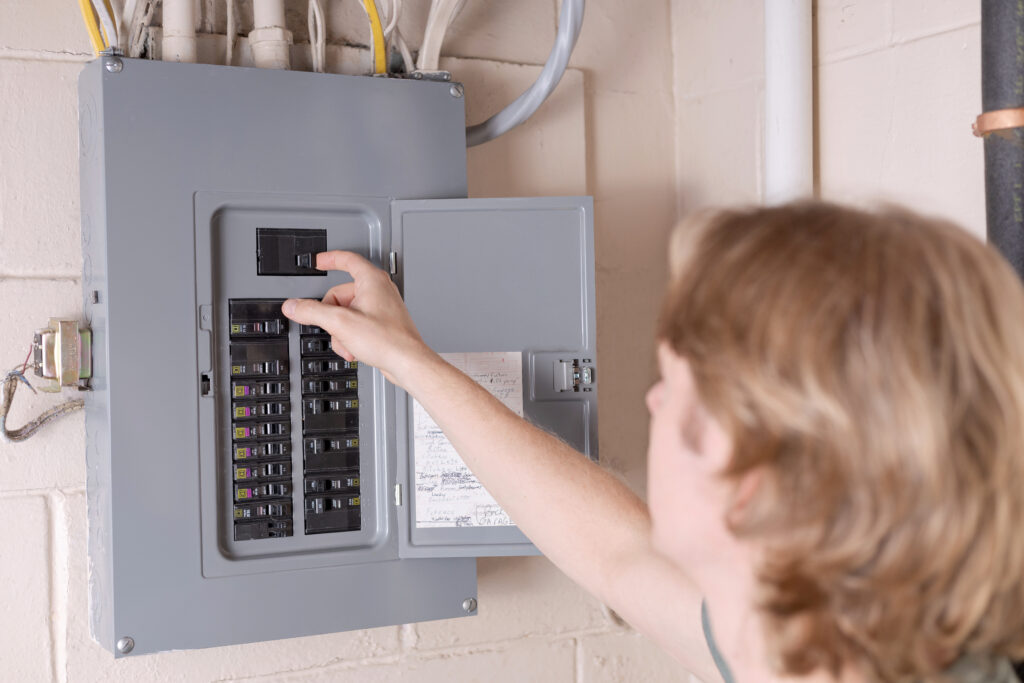
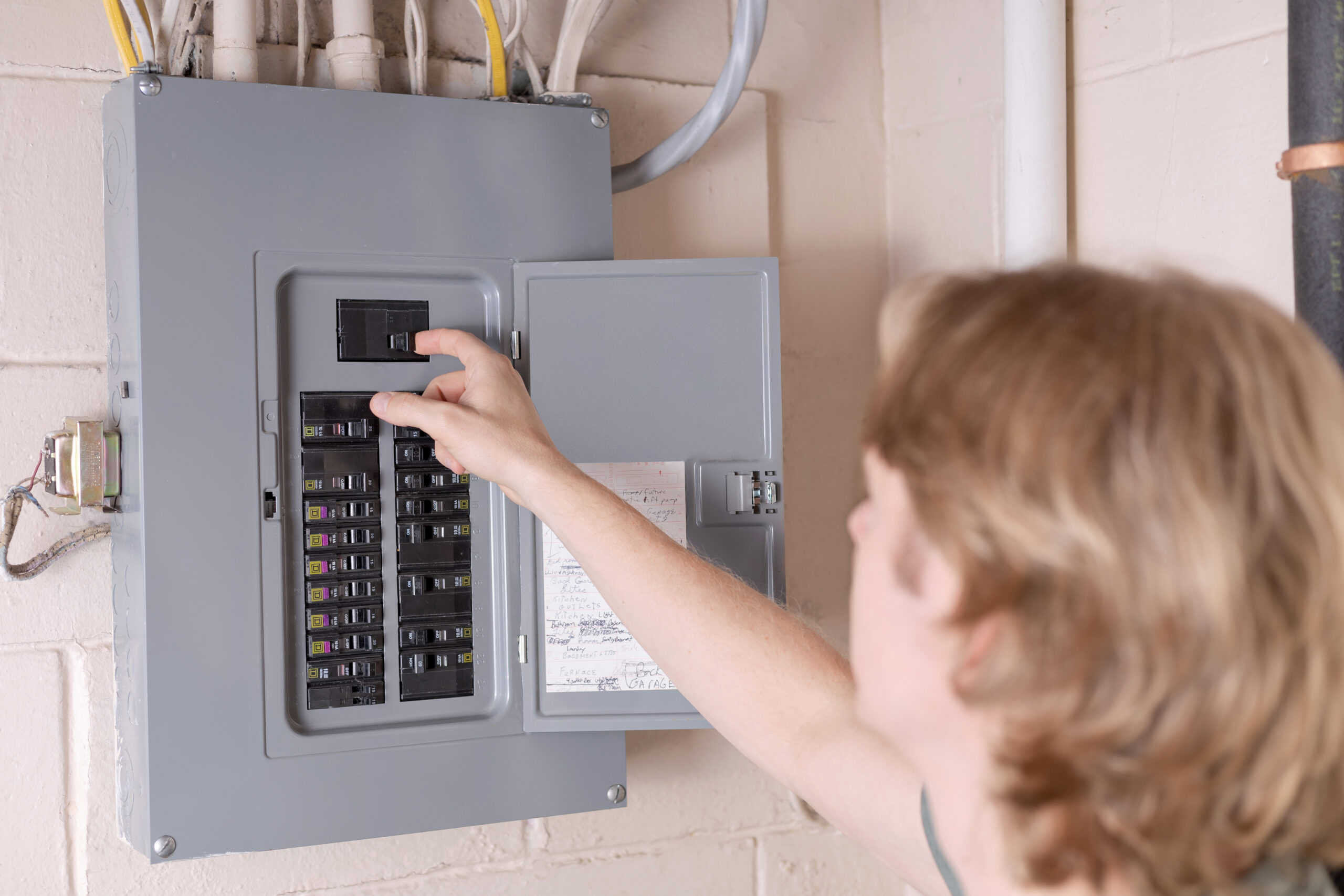
Finding a tripped breaker is actually easier than most people expect. Head to your electrical panel, which is usually located in a utility room, basement, hallway, or garage. Open the panel door and scan the row of switches. Breakers typically sit in three positions: on, off, and the middle ground that tells you it has tripped. A tripped breaker will often look like it shifted slightly away from the others, sitting somewhere between the on and off position. Some panels use colored indicators to make it even easier to spot. If your panel is not labeled, now is honestly a great time to do that, because guessing during a power issue is no fun.
How to Safely Reset and Flip a Tripped Breaker Back On
Resetting a breaker is a straightforward process, but doing it correctly matters. Here is the method that works:
- First, turn off or unplug any devices connected to the affected circuit before you reset it.
- Locate the tripped breaker in your panel. It will be in that middle or slightly off position.
- Push the breaker firmly toward the off position first, until you feel or hear a click.
- Then push it back to the full on position in one smooth motion.
- Check whether power has been restored to the affected area of your home.
That sequence matters. You cannot simply push it back to on without first fully engaging the off position. The breaker needs to reset mechanically before it will hold the on position. If it trips again immediately, that is your cue to stop and investigate further rather than keep resetting it repeatedly.
Common Reasons Why Breakers Keep Tripping
A breaker that trips once is normal. A breaker that keeps tripping is trying to tell you something. The three main causes are circuit overloads, short circuits, and ground faults. An overload happens when too many devices draw power from the same circuit simultaneously. A short circuit occurs when a hot wire makes contact with a neutral wire, often inside an outlet, appliance cord, or junction box. A ground fault is similar but involves a hot wire contacting a grounded surface. Each of these has different implications for safety and repair complexity, and it is worth understanding the difference before assuming the fix is simple.

What Grounding Actually Means in a Home Electrical System
Grounding is one of those electrical concepts that gets mentioned constantly but rarely explained clearly. In simple terms, electrical grounding provides a safe path for excess current to travel into the earth rather than through a person or a piece of equipment. A properly grounded system protects you from electrocution and protects your appliances from damaging voltage spikes. Modern homes are built with three-prong outlets specifically because that third prong connects to the grounding wire. Older homes with two-prong outlets are often ungrounded, which is a legitimate safety concern worth addressing with a licensed electrician.
Signs Your Home May Have a Grounding Problem
Grounding issues are not always obvious, but there are signals worth paying attention to. You might notice mild shocks when touching appliances or metal fixtures. Electronics may behave erratically, reset unexpectedly, or fail prematurely. Your outlets may feel warm to the touch or show visible scorch marks. In some cases, lights flicker for no apparent reason. If any of these sound familiar, the issue may not be a simple breaker reset. These are symptoms of a deeper electrical problem that warrants professional attention, not a DIY patch.
When to Call a Licensed Electrician Instead of Handling It Yourself
There is a clear line between a homeowner reset and an electrician call, and it is worth knowing where that line sits. You should contact a licensed electrician when a breaker trips repeatedly within a short period, when you smell burning near your panel or outlets, when the breaker feels hot to the touch, when you notice sparking, or when your panel is older and uses fuses instead of modern breakers. Aluminum wiring in older homes is another situation that requires professional evaluation. Attempting to troubleshoot these issues without proper training can escalate a manageable problem into a dangerous one.
How Home Warranties Relate to Electrical Systems
A home warranty is a service contract that covers the repair or replacement of home systems and appliances when they break down due to normal wear and tear. Electrical systems are often included in comprehensive home warranty plans, which can cover components like wiring, circuit breaker panels, and interior electrical lines. It is important to note that home warranties are not the same as homeowners insurance. Insurance covers damage from sudden events like fires or storms. A warranty covers the gradual breakdown of systems over time. For electrical issues that stem from age or regular use rather than an accident, a home warranty can be a meaningful financial buffer.
What Home Warranty Coverage Typically Includes for Electrical Systems
Coverage varies by provider and plan, but standard electrical system coverage under a home warranty often includes the following components:
- Wiring and junction boxes
- Circuit breaker panels and sub-panels
- Interior electrical lines
- Outlets, switches, and ceiling fans
- Doorbells and smoke detectors in some plans
What tends to fall outside of coverage includes code upgrades required after a repair, secondary damage caused by a failing component, and pre-existing conditions that were present before the policy began. Reading the fine print matters here, and a trustworthy provider will walk you through exactly what is and is not included before you commit to a plan.
Why Armadillo Is Worth Considering for Home Electrical Protection
When your breaker trips and the repair turns out to be more than a simple reset, having the right home warranty in place changes the entire experience. Armadillo home warranty coverage for electrical systems and home appliances is built around transparency and simplicity, which is honestly a breath of fresh air in an industry that has historically made things complicated on purpose. Armadillo operates without the fine print runaround, and homeowners consistently highlight how straightforward the claims process feels when something actually goes wrong. If you are ready to protect your home’s electrical system and stop hoping your panel holds up, you can get a personalized home warranty quote that covers your circuit breakers and electrical panel in just a few minutes. No pressure, no confusing tiers, just honest coverage that makes sense for where you live and what you own.

Frequently Asked Questions About Circuit Breakers and Home Electrical Systems
Here are answers to the most common questions homeowners ask about tripped breakers, electrical grounding, and related home warranty coverage.
How do I know if my breaker has tripped or if it is just turned off?
A tripped breaker will sit in a middle position between on and off, sometimes with a slight lean or a visible colored indicator depending on your panel brand. A breaker that was manually turned off will sit firmly in the off position without that middle-ground appearance.
Is it safe to reset a breaker multiple times?
Resetting once is fine if the cause was a temporary overload. Resetting it repeatedly when it keeps tripping is not safe and can mask a serious underlying problem such as a short circuit or failing breaker. If it trips more than twice in quick succession, stop and call an electrician.
Can a tripped breaker cause damage to my appliances?
The breaker trip itself is a protective action that prevents damage. However, if the underlying issue causing the trip is a voltage irregularity or short circuit, appliances connected to that circuit may already have sustained damage before the breaker activated.
What is the difference between a GFCI outlet and a grounded outlet?
A GFCI outlet monitors the flow of electricity and trips instantly if it detects an imbalance, which protects against shock near water sources. A grounded outlet has a physical ground wire that routes excess electricity safely into the earth. They serve related but distinct safety functions.
How do I know if my home is properly grounded?
A licensed electrician can test your outlets and panel to confirm grounding. As a basic indicator, three-prong outlets suggest a grounded system, while two-prong outlets typically indicate an older ungrounded setup, though this is not always definitive without a professional test.
Does a home warranty cover the cost of replacing a circuit breaker panel?
Many home warranty plans do cover circuit breaker panel repair or replacement when the failure is due to normal wear and tear. Coverage specifics vary by provider and plan, so reviewing what is included before a failure occurs is the smarter approach.
What causes a breaker to feel hot to the touch?
A warm or hot breaker often indicates it is working harder than it should, which can be caused by a loose connection, an overloaded circuit, or a breaker that is beginning to fail. This is not a normal condition and should be inspected by a licensed electrician promptly.
Can I upgrade my electrical panel on my own without a permit?
Panel upgrades require a licensed electrician and a permit in virtually every jurisdiction. Unpermitted electrical work can void your homeowners insurance, create liability issues during a home sale, and pose serious safety risks. This is not a project suited for DIY attempts.
What is the lifespan of a typical residential circuit breaker panel?
Most residential electrical panels have a functional lifespan of 25 to 40 years. Panels older than that may use outdated technology, lack sufficient capacity for modern electrical loads, or have components that are no longer manufactured, all of which can complicate repairs.
Will a home warranty cover electrical issues caused by a power surge?
Power surge damage is generally considered sudden and accidental, which places it under homeowners insurance rather than a home warranty. Home warranties are designed to cover mechanical or electrical failure resulting from normal use and age, not external events like lightning strikes or utility surges.