What Is a Hidden Air Conditioner Outdoor Unit and Why Does It Matter?
If you have ever looked at a neighbor’s home and noticed their yard looks clean, uncluttered, and oddly peaceful without a bulky metal box sitting next to the house, there is a good chance they have figured out how to conceal their outdoor air conditioning unit. Hiding or screening an AC condenser unit is a growing trend among homeowners who want the efficiency of a central air system without sacrificing curb appeal. It sounds like a small detail, but the way you manage your outdoor unit can affect everything from your home’s aesthetic value to how well the equipment actually performs over time. This guide breaks down what it means to hide an outdoor AC unit, how to do it correctly, what benefits you can expect, and where things tend to go wrong if you are not careful.
Understanding How Your Outdoor AC Unit Works
Before diving into concealment strategies, it helps to understand what that outdoor unit is actually doing. The component sitting outside your home is called the condenser unit. It works in tandem with the indoor air handler to move heat out of your home and release it outside. The condenser contains a compressor, a condenser coil, a fan, and refrigerant lines that connect back to the interior system. The fan pulls air through the coil and dissipates heat into the surrounding environment. That process requires significant, unobstructed airflow. When airflow is restricted, the system has to work harder, efficiency drops, components wear faster, and your energy bills go up. Any concealment strategy that ignores this basic operational requirement is going to cause problems down the road.
Common Methods for Hiding an Outdoor AC Unit
There are several popular approaches homeowners use to screen or conceal their outdoor condenser units, and each one comes with its own set of considerations.
- Lattice panels or decorative wood screens built around three sides of the unit, leaving adequate clearance on all sides and the top
- Ornamental fencing sections made from metal, vinyl, or cedar that create a visual barrier while still allowing air to pass through
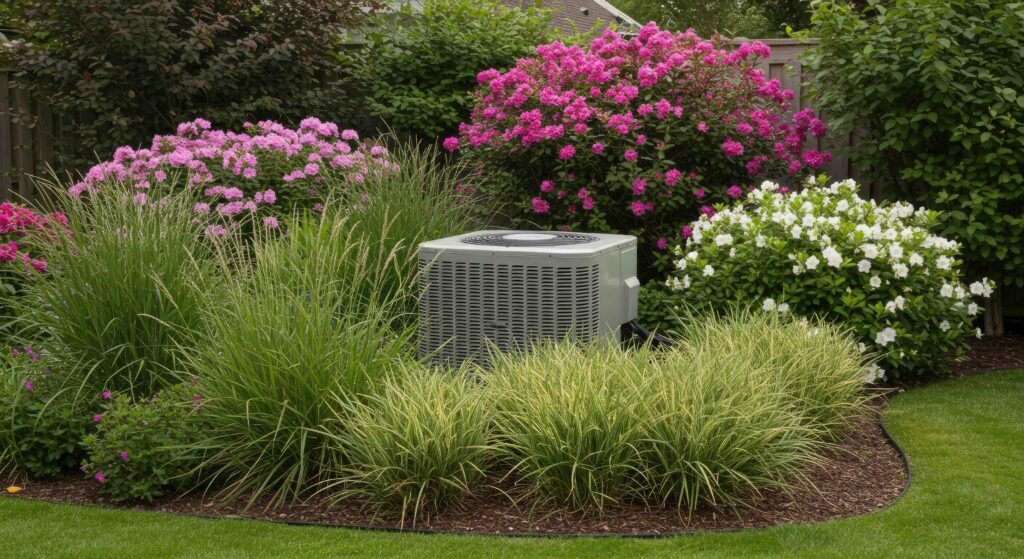
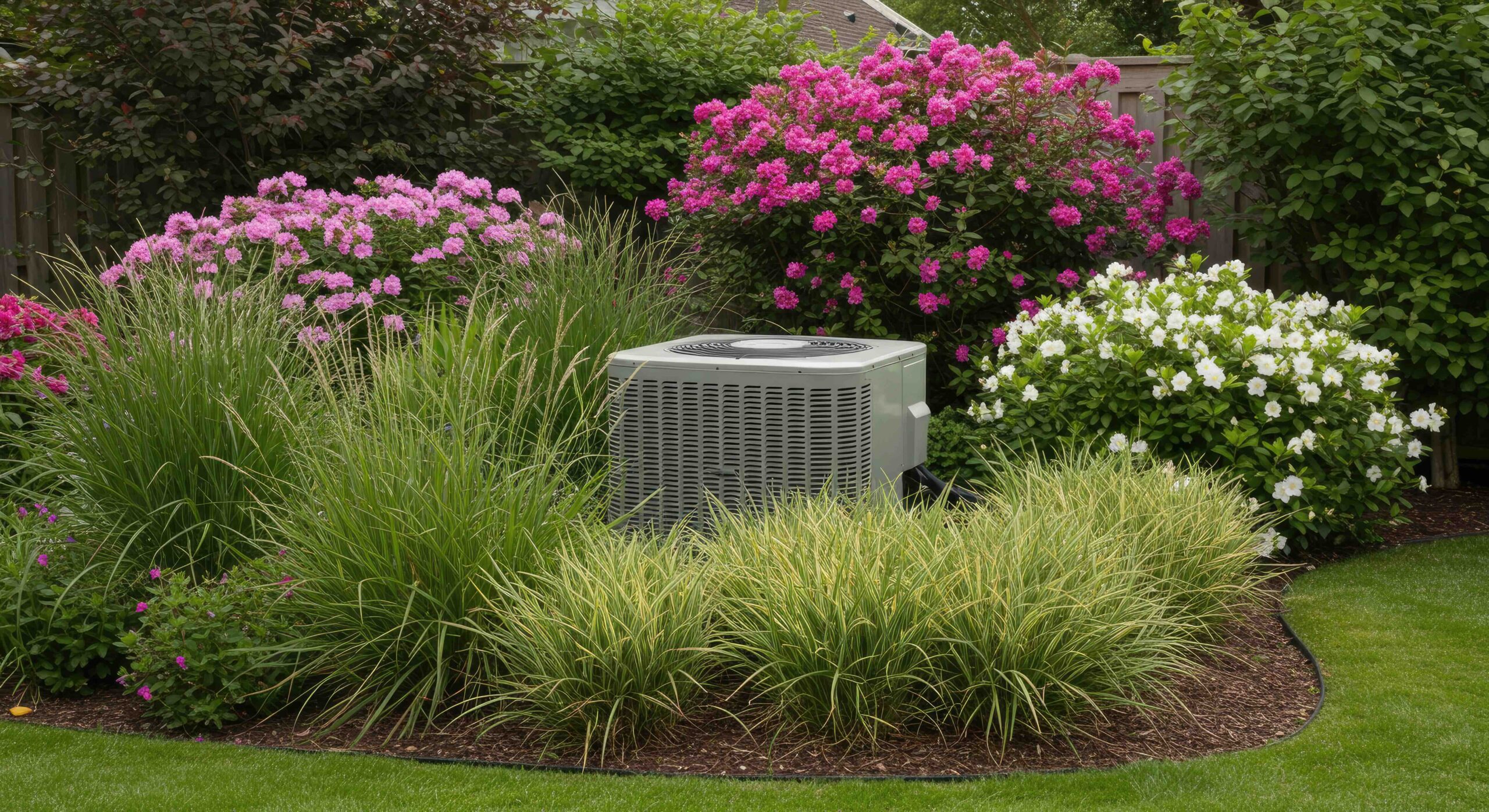
- Strategic landscaping using shrubs, ornamental grasses, or hedges planted at a safe distance to soften the unit’s appearance without blocking airflow
- Prefabricated AC unit covers or enclosures specifically designed for outdoor condensers, sold at home improvement stores
- Pergola-style structures built over and around the unit that provide shade and visual separation without trapping heat
Each of these options can work well when executed properly. The problems almost always trace back to insufficient clearance, using the wrong materials, or skipping regular maintenance once the concealment structure is in place.

The Real Benefits of Concealing Your Outdoor AC Unit
There are legitimate, practical reasons beyond aesthetics to think about how your outdoor unit is situated. Visually, a screened unit tends to blend into the landscape, which can make your outdoor living space feel more intentional and finished. Resale value is a real consideration too. Buyers notice when a property looks well maintained, and a thoughtfully screened condenser signals care and attention. Beyond appearances, a properly shaded condenser unit that receives indirect sun protection can actually run slightly more efficiently during peak summer heat, since the compressor does not have to work against extreme ambient temperatures. There is also a noise reduction benefit when solid panels are used on sides facing windows, patios, or outdoor seating areas. None of these perks come for free, but when done right, they deliver genuine value.
Key Drawbacks and Risks You Should Not Ignore
The benefits are real, but so are the risks. The most common and costly mistake homeowners make is building a concealment structure too close to the unit. Most manufacturers require a minimum clearance of 18 to 24 inches on the sides and at least 60 inches of vertical clearance above the unit. Violating these clearances restricts airflow, causes the compressor to overheat, shortens the equipment’s lifespan, and can void the manufacturer’s warranty. Dense plantings like boxwoods or arborvitae placed too close carry the same risk. Beyond airflow, concealment structures can also create access problems for HVAC technicians performing routine maintenance or repairs. A structure that takes 30 minutes to disassemble before any service work can be done is not just inconvenient, it can result in deferred maintenance. Finally, some materials used in DIY enclosures can trap moisture against the unit, accelerating rust and corrosion.
Clearance Requirements and Installation Best Practices
Getting clearance right is non-negotiable. Before building or installing anything, pull out your condenser unit’s owner manual and check the manufacturer’s specific clearance guidelines. As a general rule, the industry standard calls for 24 inches of clearance on all sides where air intake occurs and at least 18 inches on the discharge side, though this varies by unit. If you are planting shrubs or ornamental grasses, plant them at least 2 to 3 feet from the unit and keep them trimmed regularly. For wood or vinyl screens, use open lattice or slatted designs with gaps no smaller than one inch to encourage airflow. Always ensure there is an accessible panel or removable section so technicians can reach the unit without dismantling the entire structure. If you are unsure, consult an HVAC professional before building anything permanent.
Maintenance Considerations When Your Unit Is Concealed
Hiding your condenser does not reduce your maintenance obligations. If anything, it adds a layer of responsibility. Debris like leaves, pollen, grass clippings, and mulch tends to accumulate faster inside enclosed or screened spaces, which means your condenser coils can clog more quickly. Plan to inspect and clean the area around your unit at least twice a year, once in spring before cooling season begins and again in fall after leaves drop. The coil fins should be checked annually and cleaned with a garden hose or professional coil cleaner if buildup is visible. If your concealment includes a solid roof or pergola-style cover, verify after heavy rain or snow that water is not pooling inside the enclosure. A well-maintained concealed unit will last just as long as an exposed one. A neglected one will cost you significantly more in repairs.
How Home Warranties Relate to Your Outdoor AC Unit
Here is something a lot of homeowners do not think about until it is too late. Your outdoor condenser unit is one of the most expensive components in your home to repair or replace. Compressor failures alone can run anywhere from $1,500 to over $3,000 depending on the unit. A full condenser replacement can push well above $4,000 when parts and labor are factored in. Home warranties exist precisely to absorb these kinds of unexpected costs. A quality home warranty plan will cover the mechanical failure of your air conditioning system, including the outdoor condenser, when the failure is due to normal wear and tear. Understanding what your plan covers, how claims are filed, and what exclusions apply is important knowledge for any homeowner with a concealed or exposed AC unit. Coverage details vary between providers, so reading your contract carefully is always worthwhile.
Why Armadillo Is the Right Choice for Protecting Your Air Conditioning System
When your outdoor AC unit fails, the last thing you want to be doing is scrambling to find a technician and negotiating repair costs on the fly. That is where having the right home warranty in place changes everything. Armadillo offers straightforward, homeowner-friendly coverage that includes your air conditioning system, giving you a real financial safety net when mechanical failures happen. If you are serious about protecting your home’s most critical systems, home warranty coverage for central air conditioning systems through Armadillo is worth a close look. Plans are built to be transparent and easy to understand, without the fine-print surprises that frustrate homeowners with other providers. Whether your condenser is tucked behind a cedar screen or sitting in plain sight, coverage that kicks in when things break down is what actually protects your investment. Take two minutes and get a free home warranty quote for your AC unit and home systems to see exactly what coverage looks like for your home. It is a simple step that could save you thousands.

Frequently Asked Questions About Hiding Your Outdoor AC Unit
Answers to the most common questions homeowners have about concealing, screening, and protecting their outdoor air conditioning condenser units.
Is it safe to completely enclose an outdoor AC unit?
No. A completely enclosed outdoor AC unit will not receive adequate airflow, which causes the compressor to overheat and can lead to system failure. Any enclosure must allow for significant ventilation on multiple sides and above the unit.
How much clearance does an outdoor AC unit need on all sides?
Most manufacturers recommend at least 18 to 24 inches of clearance on the sides and a minimum of 60 inches of vertical clearance above the unit. Always check your specific unit’s manual for exact requirements.
Will hiding my AC unit affect energy efficiency?
When done correctly with proper clearances, concealment can slightly improve efficiency by shading the unit from direct sun exposure. If done incorrectly and airflow is restricted, efficiency will decrease and energy costs will rise.
What plants are safe to use near an outdoor AC condenser?
Low-growing ornamental grasses, compact shrubs, and perennial plants that do not shed heavy debris work best. Plants should be placed at least 2 to 3 feet from the unit and trimmed regularly to prevent encroachment.
Can I build a wood fence or screen around my AC unit?
Yes, provided you use slatted or lattice designs that allow adequate airflow and maintain proper clearance distances. Solid wood panels placed flush against the unit will restrict ventilation and cause damage over time.
Does hiding my AC unit affect my home warranty coverage?
Typically, coverage is based on how the unit was maintained and whether failures resulted from normal wear and tear. If restricted airflow caused by an improper enclosure leads to a mechanical failure, that damage may not be covered under a home warranty plan.
How do I ensure HVAC technicians can still access a concealed unit?
Build or purchase enclosures with removable panels or hinged access doors. Technicians need clear access to the condenser coils, refrigerant lines, and electrical components for routine maintenance and repairs.
Will covering my AC unit in winter protect it from damage?
Partial covers designed to protect only the top of the unit from falling debris are fine. Full covers that wrap the entire unit can trap moisture and pests inside, which can cause more damage than exposure to winter air.
How often should I inspect an outdoor AC unit that is screened or enclosed?
Inspect the unit and surrounding enclosure at least twice per year, typically in spring and fall. Check for debris buildup, signs of pest activity, moisture accumulation, and any vegetation that may have grown too close.
Does a home warranty cover my outdoor AC condenser unit?
Many home warranty plans do cover the outdoor condenser unit as part of air conditioning system coverage. Coverage typically applies to mechanical failures caused by normal wear and tear, not damage resulting from neglect, improper installation, or restricted airflow.