Why Your Stainless Steel Appliances Always Look Dirty — And What to Do About It
You clean the kitchen. The counters are wiped down, the floor is swept, the sink is sparkling. And then you turn around and notice the refrigerator covered in fingerprints. Again. Stainless steel appliances are everywhere in modern homes, and for good reason — they look sharp, they hold up well, and they pair with almost any design aesthetic. But fingerprints? Those are basically unavoidable, and they have a way of making even the cleanest kitchen feel like it needs another round of attention. Understanding how to remove fingerprints from stainless steel is one of those small bits of home knowledge that pays off every single week.
What Makes Stainless Steel So Prone to Fingerprints
Here is the thing about stainless steel — it is not actually resistant to smudges, oils, or residue. The name refers to its resistance to rust and corrosion, not to grime. The surface is typically brushed or polished during manufacturing, and that finish, while beautiful, has a slightly porous texture at the microscopic level. Skin oils, moisture, and everyday contact cling to that texture and show up almost immediately after contact. This is compounded by the fact that most stainless steel appliances live in kitchens — high-traffic areas where hands are constantly moving between food, handles, and surfaces. The result is a near-constant battle with visible smudges and prints.
How Fingerprint Removal Actually Works
Removing fingerprints from stainless steel comes down to one core concept: breaking down the oil left by skin and lifting it away without scratching the surface or leaving behind residue. The grain of the steel matters here. Stainless steel has a directional finish — look closely and you will see faint lines running either horizontally or vertically. Cleaning with the grain rather than against it is critical. Rubbing against the grain can create micro-scratches over time that dull the surface and make it harder to clean. Most effective methods rely on either a light solvent to dissolve the oil, a dry buff to absorb and lift it, or a combination of both.
The Best Methods for Removing Fingerprints from Stainless Steel
There are several approaches that consistently deliver solid results, and most of them use things already in the home. The method that works best often depends on the severity of the smudging and the specific finish of the appliance.
- Microfiber cloth with warm water: Effective for light prints and everyday maintenance. Always wipe with the grain.
- Dish soap and water: A small drop of mild dish soap mixed with warm water cuts through oily residue without damaging the finish.
- Rubbing alcohol or glass cleaner: Excellent for heavier smudging. Apply to a cloth first, never directly to the surface.
- Baby oil or mineral oil: Applied sparingly after cleaning, this creates a thin barrier that repels future prints and adds shine.
- Commercial stainless steel cleaner: Purpose-formulated products offer consistent results and often include a protective coating.
What to Avoid When Cleaning Stainless Steel Appliances
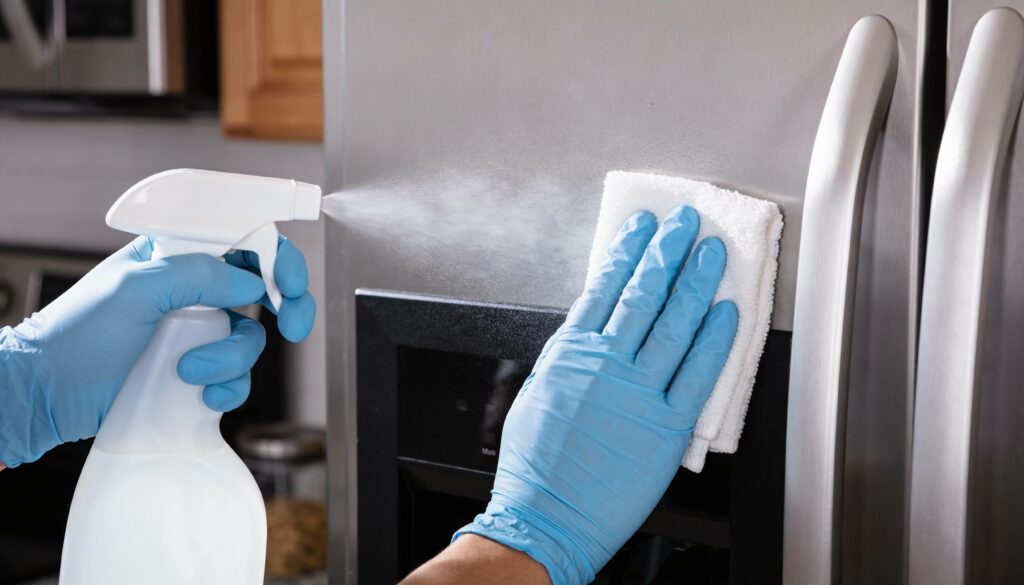
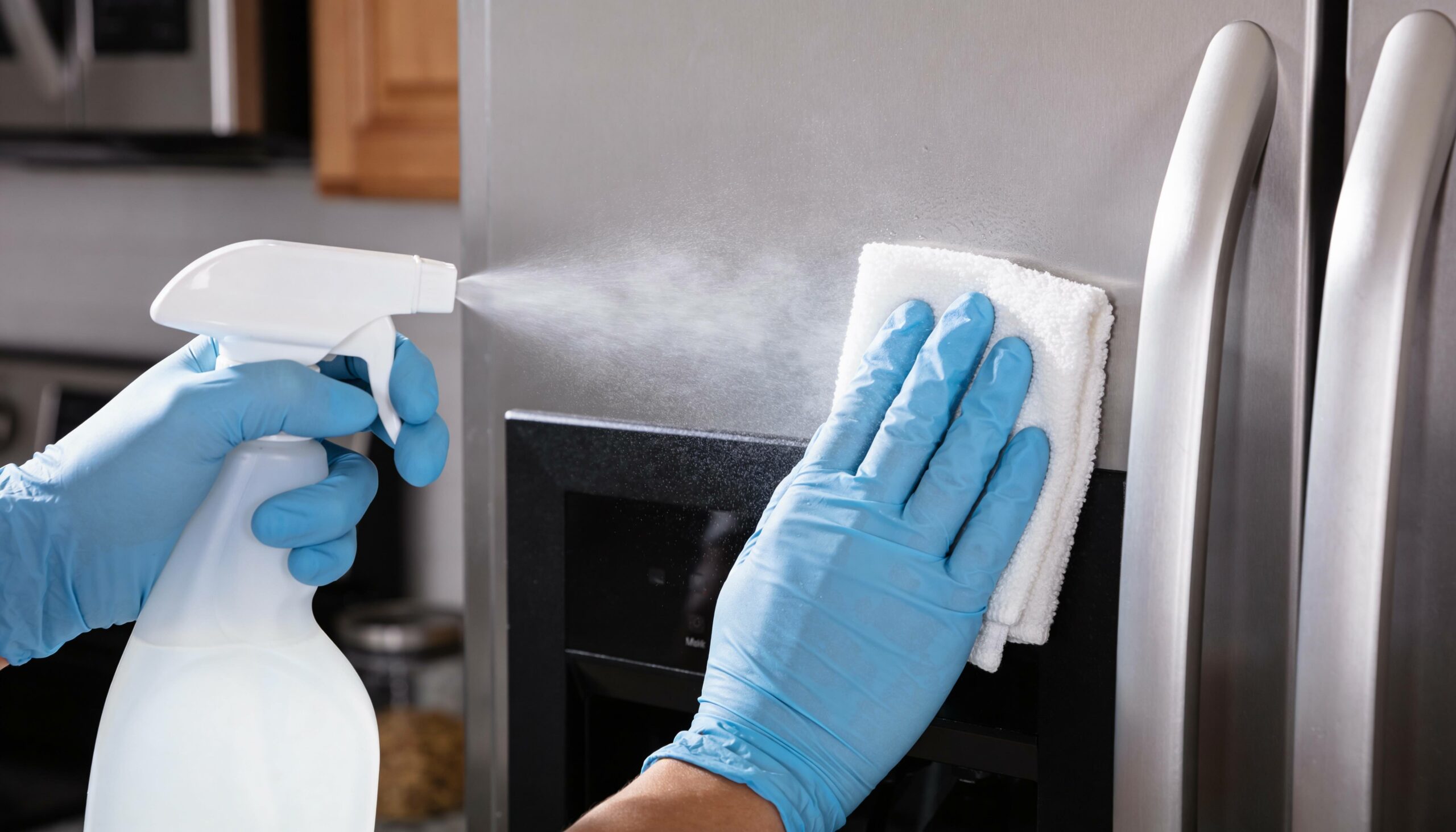
There are a few cleaning habits that seem harmless but can actually damage stainless steel over time. Steel wool and abrasive scrubbing pads are the most obvious culprits — they scratch the surface permanently. Bleach-based cleaners can compromise the protective chromium layer that gives stainless steel its corrosion-resistant properties. Hard water, if left to dry on the surface, leaves mineral deposits that are difficult to remove and can dull the finish. Spraying cleaners directly onto the surface rather than onto a cloth risks getting liquid into seams or control panels, which is a different kind of problem entirely. Keeping these habits in mind protects both the look and the longevity of the appliance.
Preventing Fingerprints Before They Start
Prevention is not always possible — handles get touched hundreds of times a week — but it is worth addressing. Applying a thin coat of mineral oil or a dedicated stainless steel polish after cleaning creates a surface barrier that causes oils to bead rather than bond. Some homeowners swear by car wax applied sparingly for the same reason. Fingerprint-resistant coatings are also now available as a factory finish on many newer appliances. If fingerprint maintenance is genuinely a concern when shopping for appliances, looking for models marketed as fingerprint-resistant is a legitimate consideration worth factoring into the purchase decision.

The Connection Between Appliance Care and Appliance Longevity
Keeping stainless steel clean is about more than aesthetics. Neglected surfaces can develop buildup over time that, depending on the cleaner used, can degrade the finish or even contribute to surface corrosion near seams and edges. Appliances that are maintained consistently — inside and out — tend to perform better and last longer. That matters when you consider what it actually costs to replace a refrigerator, dishwasher, or range. Surface care is a small part of a larger maintenance picture that extends the useful life of these systems and keeps them functioning the way they are supposed to.
When Appliance Issues Go Beyond the Surface
Surface cleaning is something any homeowner can handle confidently. But appliances are complex mechanical systems, and eventually something beyond the exterior will need attention. A refrigerator that stops cooling, a dishwasher that will not drain, or a range with an igniter that has stopped working — these are the kinds of issues that go well beyond a microfiber cloth. Repair costs for major kitchen appliances can be substantial, and they tend to arrive without much warning. Having a plan in place before something breaks is a considerably more comfortable position than scrambling after the fact.
Key Advantages and Drawbacks of Stainless Steel Appliances
- Advantage: Highly durable and resistant to rust, heat, and staining when properly maintained.
- Advantage: Timeless aesthetic that works across a wide range of kitchen styles and design preferences.
- Advantage: Easy to sanitize, which matters in a food-preparation environment.
- Drawback: Shows fingerprints, smudges, and water spots readily and requires consistent upkeep.
- Drawback: Scratches can be difficult or impossible to fully remove without professional refinishing.
- Drawback: Can be more expensive than alternative finishes on comparable appliance models.
Why Armadillo Belongs in the Conversation About Appliance Protection
Keeping the outside of your appliances clean is satisfying, and it matters. But protecting what is inside those appliances — the components, the systems, the mechanisms that actually make them work — requires a different kind of preparation. That is where a home warranty from Armadillo home warranty plans for kitchen appliances and home systems enters the picture. Armadillo is built around a straightforward premise: homeownership comes with unpredictable repair costs, and having coverage in place means those costs do not catch you completely off guard. If your refrigerator breaks down, your dishwasher stops working mid-cycle, or your range develops a problem that no amount of cleaning will fix, Armadillo is designed to step in and help. If you are ready to stop leaving your appliances unprotected and want a plan tailored to your home, you can get a free home warranty quote to protect your stainless steel appliances today and see exactly what coverage looks like for your specific situation. It takes about a minute, and the clarity it provides is genuinely worth it.

Frequently Asked Questions About Removing Fingerprints from Stainless Steel
These are some of the most common questions homeowners ask about maintaining stainless steel appliances and keeping fingerprints under control.
What is the fastest way to remove fingerprints from stainless steel appliances?
A microfiber cloth lightly dampened with warm water or rubbing alcohol wiped in the direction of the grain is the fastest and most reliable method for removing fresh fingerprints from stainless steel.
Can I use vinegar to clean fingerprints off stainless steel?
Diluted white vinegar can work for light smudges, but it should be used sparingly and rinsed promptly. Prolonged exposure to acidic cleaners can dull the finish or affect the protective surface layer over time.
Why do fingerprints show up so easily on stainless steel?
Stainless steel has a brushed or polished finish that is highly reflective, which makes oils from skin contact immediately visible. The surface does not repel oils by nature, so smudges appear quickly and stand out clearly.
Does baby oil actually help prevent fingerprints on stainless steel?
Yes. A very thin application of baby oil or mineral oil after cleaning creates a light barrier that slows oil bonding to the surface, reducing how quickly new fingerprints appear and making them easier to wipe away.
How often should I clean stainless steel appliances to keep them looking good?
For high-traffic appliances like refrigerators and dishwashers, a quick wipe-down two to three times per week is reasonable. A deeper cleaning with a dedicated stainless steel product once a month helps maintain the finish long-term.
Will fingerprint-resistant stainless steel appliances eliminate smudging entirely?
No, but they reduce it significantly. Fingerprint-resistant coatings slow the bonding of skin oils to the surface, making prints less visible and easier to clean. They do not make the appliance completely smudge-proof.
Can scratches from improper cleaning be repaired on stainless steel?
Light scratches can sometimes be minimized using a stainless steel scratch remover kit applied with the grain. Deep scratches typically require professional refinishing, and results vary depending on the severity and the appliance model.
Is it safe to use glass cleaner on stainless steel appliances?
Glass cleaner is generally safe for stainless steel when applied to a cloth first and wiped with the grain. Avoid products that contain bleach or ammonia in high concentrations, as these can affect the surface finish over time.
Does a home warranty cover damage to stainless steel appliance surfaces?
Home warranties typically cover mechanical and functional failures of appliances, not cosmetic damage to surfaces. Scratches, dents, or finish issues are generally outside the scope of warranty coverage, while internal component failures are commonly included.
What household products should never be used on stainless steel?
Steel wool, abrasive scrubbers, bleach-based cleaners, and oven cleaners should never be used on stainless steel surfaces. These can cause permanent scratching, corrosion, or discoloration that is difficult or impossible to reverse.