Why Your HVAC Drain Line Matters More Than You Think
Most homeowners spend a good amount of time thinking about air filters, thermostat settings, and energy bills. The condensate drain line? Not so much. But here is the thing — that small, unassuming pipe quietly does some heavy lifting every single day your air conditioner runs. When it gets clogged, things go sideways fast. We are talking water damage, mold growth, system shutdowns, and repair bills that nobody budgets for. Understanding how to unclog an HVAC drain line is one of those practical homeowner skills that can save you a serious headache — and a decent amount of money.
What Is an HVAC Condensate Drain Line and How Does It Work
Your air conditioning system does not just cool air — it also pulls moisture out of it. As warm, humid air passes over the evaporator coil inside your air handler, that moisture condenses into water droplets, kind of like the outside of a cold glass on a summer afternoon. That water collects in a drain pan beneath the coil and then exits your home through the condensate drain line — typically a white PVC pipe that runs to a floor drain, utility sink, or outside your home. On a hot, humid day, your system can produce anywhere from five to twenty gallons of condensate water. That is a lot of water moving through a relatively narrow pipe, and over time, algae, mold, dust, and debris can build up and cause a blockage.
How to Tell If Your HVAC Drain Line Is Clogged
A clogged condensate drain does not always announce itself loudly — sometimes it builds slowly until something obvious goes wrong. Knowing the warning signs ahead of time puts you in a much better position.
- Water pooling around your indoor air handler or furnace
- Musty or moldy odors coming from your vents or air handler area
- Your air conditioner shuts off unexpectedly or will not turn on at all
- The condensate overflow pan is visibly full of water
- Higher-than-normal indoor humidity levels
- Water stains on ceilings or walls near the air handler
Many modern systems come equipped with a float switch that sits in the overflow pan. When water levels get too high, that switch cuts power to the system entirely — which is actually a protective feature, not a malfunction. If your AC suddenly stops working on a hot day, check the drain pan before you assume the worst.
Step-by-Step Guide to Unclogging Your HVAC Drain Line
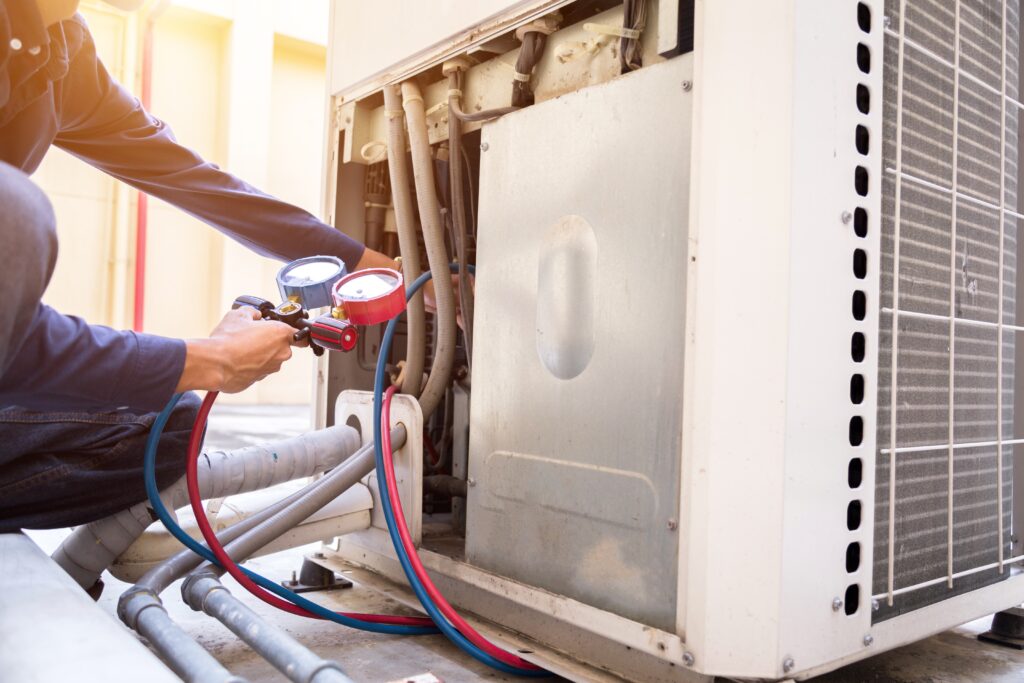
The good news is that clearing a clogged condensate drain line is genuinely something most homeowners can handle on their own. You do not need specialized tools or extensive HVAC knowledge. Here is how to work through it methodically. Start by turning off your system completely at the thermostat and the breaker — do not skip this. Locate the condensate drain line access point, which is usually a PVC pipe with a removable cap near the air handler. Remove that cap and inspect the opening for visible debris. From there, use a wet/dry vacuum to suction out the clog from the end of the drain line that exits your home — hold the vacuum hose tightly against the pipe opening and run it for about a minute. If that does not clear it, pour a mixture of distilled white vinegar and warm water into the access point and let it sit for thirty minutes before flushing with clean water. Vinegar works well because it breaks down algae and light mold growth without damaging the pipe. If the clog is more stubborn, a long flexible brush or plumber’s snake can help dislodge the buildup from inside the pipe. After clearing the line, flush it completely with clean water and replace the cap.

How Often Should You Clean Your HVAC Condensate Drain
Preventive maintenance on the condensate drain line is one of those tasks that takes ten minutes and can prevent hundreds of dollars in water damage. Most HVAC professionals recommend flushing the drain line with a vinegar solution every one to three months during cooling season. If you live in a particularly humid climate — or if your system runs almost continuously in the summer — lean toward the monthly schedule. Homeowners who have experienced clogs in the past should also consider adding a condensate drain treatment tablet to the pan. These slow-dissolve tablets release algaecide over time, which keeps biological growth from accumulating in the first place.
Key Advantages of Maintaining a Clear HVAC Drain Line
Staying on top of condensate drain maintenance pays dividends in more ways than one. A clear drain line means your system can run at full efficiency without the risk of water-triggered shutdowns. It also protects your home from water damage — ceiling stains, warped flooring, and drywall repairs are not cheap, and they are almost entirely avoidable. Maintaining clear drainage also reduces the conditions that allow mold and mildew to grow inside your air handler, which has a direct impact on the air quality throughout your home. Beyond health and comfort, regular maintenance extends the useful life of your HVAC equipment, which is a major financial asset in any household.
Common Mistakes Homeowners Make With HVAC Drain Maintenance
A few missteps tend to come up repeatedly when it comes to condensate drain care. Using bleach instead of vinegar is one of the more common ones — bleach can degrade PVC fittings over time and is harder on the system than vinegar. Another mistake is neglecting the drain pan itself. Even after clearing the line, a dirty drain pan can reintroduce debris back into the pipe. Rinse and wipe it down regularly. Some homeowners also ignore the access cap after clearing a clog, leaving the line open to additional debris. Always replace the cap securely after any maintenance. And do not assume that because your AC is cooling well, the drain is fine — a partial clog can exist quietly until it becomes a full blockage.
When to Call a Professional HVAC Technician
DIY methods work well for most minor to moderate clogs, but there are situations where calling a licensed HVAC technician is the right call. If the clog does not respond to vacuuming or vinegar flushing, there may be a deeper blockage or a damaged section of pipe that needs professional attention. Signs of significant water damage around the air handler — especially if it has been happening for a while — warrant a professional inspection. A technician can also use pressurized tools to clear the line more thoroughly and inspect the entire drainage system for issues that are not visible from the access point. If your system is repeatedly clogging despite regular maintenance, that is also worth investigating professionally, as it could indicate an installation issue or an undersized drain line.
Does Home Warranty Coverage Apply to HVAC Drain Clogs
This is a question that comes up a lot, and the answer depends heavily on the terms of your specific plan. Many standard home warranties cover the repair or replacement of HVAC components when they fail due to normal wear and tear. However, coverage for drain line clogs can vary. Some providers classify drain line maintenance as the homeowner’s responsibility and exclude clogs from coverage. Others include it as part of broader HVAC system coverage. It is worth reviewing your plan documents carefully — look for language around condensate lines, drain pans, and HVAC-related water damage. Understanding what your warranty does and does not cover before something goes wrong is always better than finding out at the worst possible moment.
Why Armadillo Is the Right Home Warranty Partner for HVAC System Issues
When it comes to protecting one of the most expensive systems in your home, having the right coverage in place changes everything. Armadillo offers straightforward, transparent home warranty plans designed for homeowners who want real protection without the frustrating fine print. If you have been dealing with recurring HVAC headaches — or you just want peace of mind going into another cooling season — Armadillo home warranty coverage for HVAC systems and major appliances is built to deliver exactly that. Plans are clear, service is responsive, and there are no surprises when it matters most. Take a few minutes to get a free home warranty quote for HVAC drain line and system protection and see what coverage looks like for your home. Because the best time to have a plan in place is before the problem shows up.

Frequently Asked Questions About Unclogging an HVAC Drain Line
Here are answers to the questions homeowners ask most often about HVAC condensate drain maintenance and clogs.
How do I know if my HVAC drain line is clogged?
The most common signs include water pooling near the air handler, musty odors from the vents, your system shutting off unexpectedly, or a full condensate overflow pan. A float switch triggering a system shutdown is also a reliable indicator of a blockage.
Can I use bleach to unclog my HVAC drain line?
Bleach is not recommended for regular use. While it can kill algae, it can also degrade PVC fittings and cause corrosion over time. Distilled white vinegar is a safer and equally effective alternative for routine cleaning and minor clogs.
How long does it take to unclog an HVAC drain line?
Most DIY clogs can be cleared in thirty minutes to an hour using a wet/dry vacuum and a vinegar flush. More stubborn blockages may take longer or require professional tools.
How often should I flush my HVAC condensate drain line?
Once a month during peak cooling season is ideal for humid climates or high-use systems. A vinegar flush every one to three months is sufficient for most households.
What happens if I ignore a clogged HVAC drain line?
Ignoring a clogged drain line can lead to overflow pan flooding, water damage to ceilings and walls, mold growth inside the air handler, and eventually a complete system shutdown triggered by the float switch safety feature.
Does a home warranty cover a clogged HVAC condensate drain?
Coverage varies by provider and plan. Some home warranties include drain line clogs as part of HVAC system coverage, while others treat them as routine maintenance exclusions. Review your plan terms carefully or contact your provider directly to confirm what is covered.
Can a clogged drain line damage my air conditioner?
Yes. Standing water in the drain pan can lead to mold growth on the evaporator coil, corrosion of internal components, and water damage to surrounding structures. Over time, these issues can shorten the lifespan of the system significantly.
Where does the HVAC condensate drain line exit the house?
The condensate drain line typically exits near the outdoor condenser unit, into a utility sink, or to a floor drain. The exact location varies by installation, but the line usually follows the same path as refrigerant lines from the air handler.
Is a wet/dry vacuum good for clearing HVAC drain clogs?
Yes, a wet/dry vacuum is one of the most effective DIY tools for clearing a condensate drain clog. Apply the vacuum to the exterior end of the drain line and run it for sixty seconds to pull the blockage out from the outside in.
When should I stop trying to unclog the HVAC drain myself and call a professional?
If multiple DIY attempts have not cleared the blockage, if you notice water damage around the air handler, or if the system continues to clog repeatedly after cleaning, it is time to call a licensed HVAC technician for a professional diagnosis and repair.