Why Your Air Conditioner Drain Line Deserves More Attention Than It Gets
Most homeowners spend a fair amount of time thinking about their air filters, their thermostat settings, maybe even their refrigerant levels. The condensate drain line? It barely crosses anyone’s mind — until water is dripping from the ceiling or the AC has shut itself off on the hottest day of the year. That is usually when the phone calls start. The condensate line is one of those components that works quietly in the background, doing its job without any fanfare, right up until it does not. Understanding how it works, why it clogs, and what you can do about it puts you in a much stronger position as a homeowner.
What Is an Air Conditioner Condensate Line
When your air conditioning system runs, it does more than just cool the air inside your home. It also removes humidity from that air, which is a major part of why your home feels comfortable on a muggy summer afternoon. As warm, humid air passes over the evaporator coil inside your air handler, moisture condenses out of the air and collects in a drain pan beneath the coil. From there, gravity and sometimes a small pump moves that water through the condensate drain line — a PVC pipe, typically — and out of your home, usually draining outside near the outdoor unit or into a utility drain. On a particularly humid day, your system might drain anywhere from five to twenty gallons of water through this line. That is a meaningful amount of water moving through a fairly narrow pipe on a daily basis.
How Condensate Lines Get Clogged in the First Place
Here is the part that surprises most people. The inside of a condensate drain line is a consistently moist, dark, moderately warm environment. If that sounds like a good place for algae, mold, mildew, and bacteria to grow — well, yes, that is exactly what it is. Over time, biological growth accumulates along the interior walls of the line and in the drain pan itself. Dust and debris that gets pulled in through the air handler can also contribute. Eventually, that buildup narrows the pipe enough to slow drainage, and then stops it entirely. A fully clogged condensate line will cause the drain pan to overflow, which either triggers a float switch that shuts the system off — a safety feature built into most modern systems — or allows water to spill into places it absolutely should not be, like your walls, your ceiling, or your floors.

Signs That Your Condensate Line May Be Clogged
Catching a clog early makes the whole situation significantly easier to manage. There are several indicators that something is going wrong with your condensate drainage, and most of them are fairly obvious once you know what to look for.
- Your air conditioner stops running unexpectedly, especially during peak cooling hours
- Water is pooling around your air handler or indoor unit
- You notice musty or mildew-like odors coming from your vents
- There is visible water staining on the ceiling near the air handler
- The drain pan appears to be holding standing water
- Your system is running but your home is not reaching the set temperature
Any one of these signs warrants a closer look. More than one at the same time means you probably already have a clog that needs to be cleared.
How to Unclog an Air Conditioner Condensate Line
The good news is that clearing a condensate line is genuinely something most homeowners can handle themselves, assuming the clog is not too severe and the line is accessible. The most straightforward method involves locating the access point on the condensate line — usually a capped T-shaped vent fitting near the air handler — removing the cap, and using a wet-dry vacuum at the outdoor end of the drain line to suction out the blockage. Some homeowners have success pouring a cup of distilled white vinegar into the access point and letting it sit for thirty minutes before flushing with water. Vinegar is mildly acidic and reasonably effective at breaking down biological growth. There are also commercially available condensate line tablets that dissolve slowly over time and help prevent future buildup. What you want to avoid is forcing anything sharp or rigid into the line, which can crack PVC fittings and turn a simple maintenance task into something considerably more expensive.
When to Call a Professional Instead
DIY methods work well for routine maintenance clogs, but there are situations where calling a licensed HVAC technician is the smarter call. If the float switch has tripped and your system will not turn back on even after you have cleared visible water from the pan, the switch itself may need to be reset or replaced. If you notice the drain pan is cracked or corroded, that is a repair beyond the scope of a vinegar flush. Persistent clogs that return quickly after being cleared often indicate a deeper issue with the line’s slope, a collapsed section of pipe, or a particularly stubborn blockage that requires a wet-dry vac with more suction or a professional drain snake. Water damage to surrounding materials — drywall, insulation, subflooring — also needs professional assessment, because moisture that sits undetected can develop into a mold issue that is far more expensive to remediate than the original drain clog ever was.
Preventing Condensate Line Clogs Before They Start
Preventive maintenance is genuinely the most cost-effective approach here. A few simple habits can keep this line clear and your system running without interruption throughout the cooling season.
- Pour a quarter cup of distilled white vinegar into the condensate access port every one to three months during cooling season
- Check and replace your air filter regularly, since dirty filters increase the debris load entering the system
- Inspect the drain pan visually at the start of each cooling season and clean it if there is any residue or standing water
- Consider having an HVAC technician flush the line during your annual tune-up
- Use slow-dissolving condensate pan treatment tablets as an ongoing preventive measure
What This Means for Your Home Warranty Coverage
This is where it gets a little nuanced, and it is worth understanding before you need to file a claim. Home warranties vary significantly in how they handle AC-related issues, and condensate line clogs specifically can fall into a gray area. Some policies cover mechanical failures of the HVAC system but exclude maintenance-related issues, and a clogged drain line is technically a maintenance issue. That said, if a clog causes a component failure — say, a water-damaged control board or a burned-out condensate pump — the resulting repair may be covered depending on the terms of your specific plan. Reading your coverage documents carefully and understanding what is and is not included before something goes wrong is always the right move. A home warranty that covers your HVAC system comprehensively can still save you significantly when an unexpected failure occurs, especially during peak summer months when HVAC technicians are in high demand and costs reflect that.
Why Armadillo Is Worth a Serious Look for HVAC Protection
When your air conditioner develops a problem — whether it starts with something as routine as a condensate line backup or something more serious — having the right coverage in place changes everything about how that situation unfolds. Armadillo was built specifically with homeowners in mind, offering straightforward plans that cover the systems and appliances that matter most without burying you in confusing fine print. If you have been wondering whether your current coverage is actually doing its job, exploring Armadillo’s home warranty plans for HVAC and cooling system protection is a genuinely worthwhile exercise. The coverage is transparent, the claims process is designed to be simple, and the peace of mind that comes with knowing your system is backed by a responsive team is hard to overstate. You can get a free home warranty quote that covers your air conditioning system in seconds and see exactly what protection looks like for your home and your budget.

Frequently Asked Questions About Unclogging an AC Condensate Line
These are the questions homeowners ask most often once they realize their condensate line might be the source of their AC trouble. Here are direct, practical answers.
How often should I clean my AC condensate drain line?
Most HVAC professionals recommend cleaning the condensate drain line every one to three months during active cooling season. If you live in a particularly humid climate, leaning toward monthly maintenance is a reasonable precaution.
Can a clogged condensate line damage my air conditioner?
Yes, it can. Overflow from a blocked drain pan can damage electrical components, corrode the drain pan itself, and in systems without a float switch, allow water to leak into walls, ceilings, and flooring, causing structural and mold-related damage.
Why does my AC keep shutting off unexpectedly?
One of the most common reasons an AC shuts off without explanation is a triggered float switch caused by a full or overflowing condensate drain pan, which is almost always the result of a clogged condensate line.
Is it safe to pour bleach down the condensate line?
Diluted bleach is sometimes recommended, but distilled white vinegar is generally the safer option because it cleans effectively without risking damage to certain fittings or introducing harsh chemicals into your drain system. If you do use bleach, dilute it significantly first.
How do I find the condensate drain line on my AC unit?
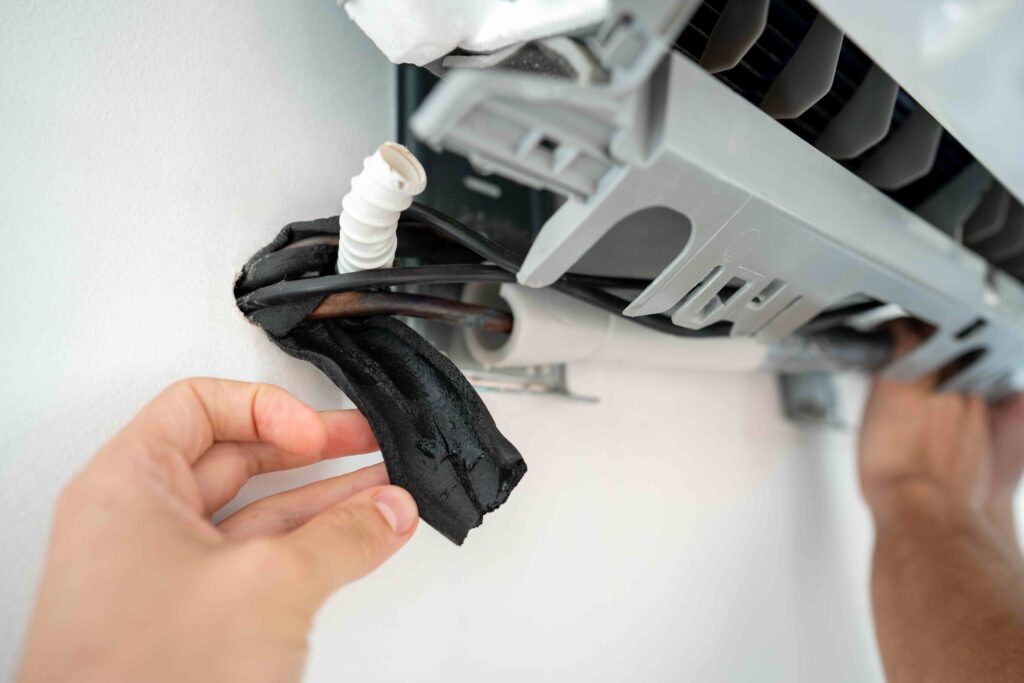
The condensate drain line typically exits the air handler as a PVC pipe, usually three-quarters of an inch in diameter, and runs to the outdoors or a nearby floor drain. There is often a capped T-fitting access point located near the air handler for cleaning purposes.
Can I use a regular vacuum to clear a condensate line clog?
A wet-dry shop vacuum works well for this task. A standard household vacuum is not appropriate because it is not designed to handle moisture and could be damaged or create a safety hazard.
How long does it take to unclog a condensate drain line?
A straightforward clog using the wet-dry vacuum method can be cleared in fifteen to thirty minutes. If you are using vinegar, allow an additional thirty-minute soak time before flushing. Persistent or severe clogs may require professional service.
Does a home warranty cover condensate line clogs?
Coverage varies by provider and plan. Routine maintenance clogs are often excluded, but failures caused by or resulting from a condensate issue — such as a failed pump or water-damaged component — may be covered. Always review your specific policy terms carefully.
What is the white pipe coming out of my house near the AC unit?
That is most likely your condensate drain line. It is a normal and necessary part of your air conditioning system, designed to route the moisture removed from your indoor air safely to the outside of your home.
Can I prevent condensate line clogs entirely?
You cannot eliminate the risk entirely, but consistent maintenance — including regular vinegar treatments, clean air filters, and annual professional tune-ups — dramatically reduces how often clogs develop and how severe they become when they do.