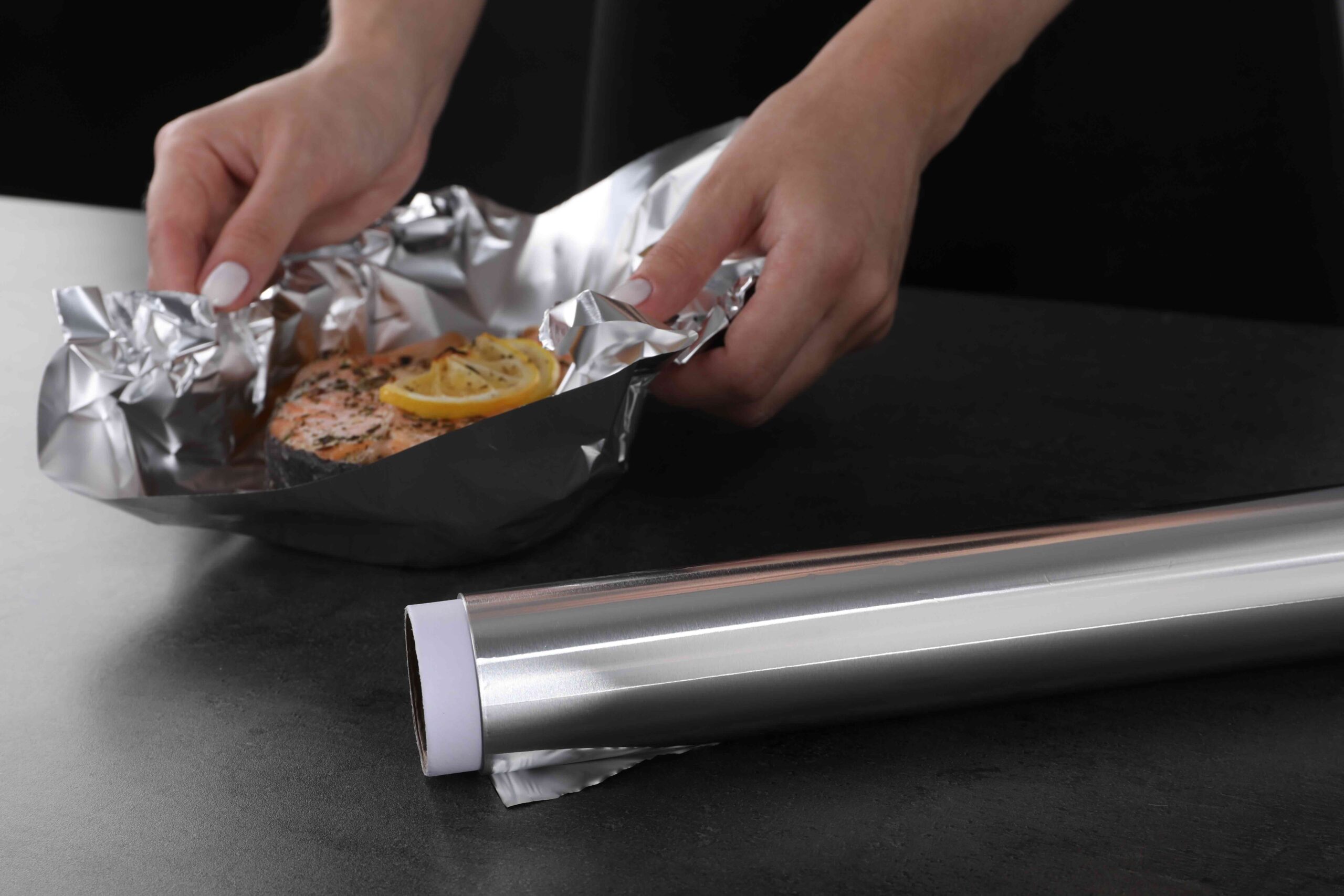
Is Aluminum Foil Safe for Microwave Use? What Every Homeowner Needs to Know
At some point, most homeowners have stood in front of the microwave holding a sheet of aluminum foil and wondered whether using it is a brilliant shortcut or a genuinely bad idea. It is one of those kitchen questions that seems simple on the surface but gets complicated fast. The short answer is: it depends. The longer answer involves understanding how microwaves work, what aluminum foil actually does inside one, and what the risks look like when things go wrong. This article breaks all of that down in plain terms so you can make smart decisions in your kitchen without second-guessing yourself every time leftovers come up.
How a Microwave Actually Works
Microwaves heat food by emitting electromagnetic radiation at a specific frequency — roughly 2.45 gigahertz — that causes water molecules inside food to vibrate rapidly. That vibration generates heat, which warms the food from the inside out. The microwave oven’s interior cavity is designed to reflect those waves back and forth so they penetrate food evenly. The walls of a microwave are made of metal, which is why they reflect rather than absorb those waves. That context matters because it directly affects why aluminum foil behaves the way it does inside a microwave environment.
Why Aluminum Foil and Microwaves Have a Complicated Relationship
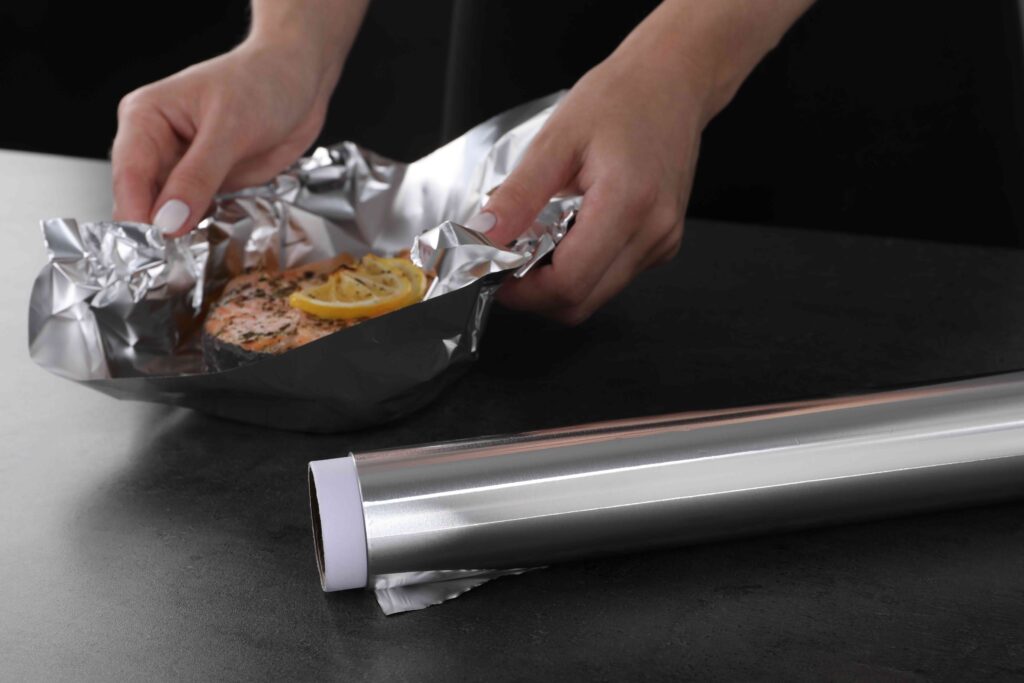
Aluminum foil is a metal, and metals interact with microwave energy differently than food does. When microwaves hit a metal surface, the electromagnetic field causes electrons in the metal to move rapidly. If those electrons have nowhere to go — meaning the metal has thin edges, sharp points, or crumpled shapes — the energy concentrates at those points and can produce arcing, which is that dramatic sparking you may have seen or heard about. That arcing can damage the interior of the microwave, start a fire, or at minimum produce a startling light show that leaves scorch marks on the walls of the appliance. So no, tossing a crumpled ball of foil in there is not a good plan.
When Aluminum Foil Is Actually Permitted in a Microwave
Here is where things get more nuanced. Many appliance manufacturers, including those who produce microwaves with convection settings, do allow small amounts of flat, smooth aluminum foil in specific situations. The key rules are consistency throughout the industry:
- The foil must be flat and smooth, never crumpled or folded into sharp angles
- It should cover no more than a small portion of the food, typically used to shield areas like chicken wing tips or thin cuts of meat from overcooking
- The foil must never touch the sides, top, or bottom of the microwave’s interior walls
- It should not be used in microwaves with metal interiors unless the manufacturer explicitly permits it
When used correctly under these conditions, a small piece of flat foil can function as a shield rather than a hazard. Always check your specific microwave’s user manual before attempting this.
Common Mistakes That Make Aluminum Foil Dangerous
The vast majority of foil-related microwave incidents come down to a few recurring errors. Crumpled foil is the top offender — those irregular surfaces and sharp folds are perfect conditions for arcing. Using large sheets of foil that cover most of the food is another common issue because it prevents microwaves from penetrating food at all, making the appliance work harder and raising the risk of electrical issues. Placing foil containers — like takeout trays — directly in a standard microwave without checking whether the unit supports metal is also a frequent mistake that catches people off guard.
The Appliance Damage You Might Not Notice Right Away
One thing that often gets overlooked is that aluminum foil incidents in microwaves do not always announce themselves dramatically. Sometimes the damage is subtle — a small scorch mark on the interior wall, a slightly degraded magnetron, or a seal that has weakened over time. These kinds of issues can quietly reduce your microwave’s efficiency and lifespan without triggering an obvious warning. That matters because microwave repairs and replacements are real costs that homeowners deal with regularly, and many of those situations stem from preventable usage errors that accumulated over months or years.

Safe Alternatives to Aluminum Foil in the Microwave
If the goal is to cover food while reheating or prevent splatters, there are far safer and more effective options available. Microwave-safe plastic wrap, microwave-safe glass lids, and dedicated microwave covers are all designed specifically for this environment. Parchment paper works well for certain applications too. These alternatives give you the coverage or shielding you need without introducing any of the risks that come with metal inside the appliance. Keeping a couple of microwave-safe covers on hand is a small investment that pays off in both convenience and appliance longevity.
What Your Microwave’s Manual Is Actually Telling You
Most homeowners never read their appliance manuals past the initial setup, and that is understandable. But the manual for your microwave contains specific guidance on what materials are permitted, and those instructions vary between models and brands. Some modern microwaves with combination convection and microwave settings are specifically engineered to handle certain metal cookware under defined conditions. Using foil in a standard microwave without checking those details is essentially guessing, and guessing with electrical appliances in your kitchen is a category of risk worth avoiding. The manual also outlines what voids the manufacturer’s warranty, which connects directly to how your home warranty coverage may respond to appliance damage.
How Home Warranty Coverage Relates to Microwave Damage
This is where the conversation shifts from kitchen habits to financial protection. A home warranty plan typically covers the repair or replacement of major home systems and appliances when they fail due to normal wear and tear. The important distinction here is that damage caused by improper use — including damage from using aluminum foil incorrectly in a microwave — generally falls outside the scope of home warranty coverage. Misuse is not the same as mechanical failure. That said, microwaves do fail on their own for reasons completely unrelated to foil use. Magnetrons burn out, control panels malfunction, and turntable motors wear down over time. Those are exactly the kinds of failures a solid home warranty is built to address.
Why Armadillo Is the Right Home Warranty Partner for Appliance-Savvy Homeowners
Understanding how your appliances work — and how to use them correctly — is one half of responsible homeownership. The other half is having a financial safety net in place for when things break down despite your best efforts. That is precisely what Armadillo’s comprehensive home warranty coverage for kitchen appliances and home systems is designed to provide. Armadillo offers straightforward plans with no confusing fine print, giving homeowners clarity on what is covered and what to expect when something goes wrong. When your microwave’s magnetron fails out of nowhere, or your refrigerator compressor gives up mid-summer, you do not want to be scrambling to find a technician and figure out costs on the fly. Instead, take a moment to get a personalized home warranty quote that covers your microwave, kitchen appliances, and essential home systems before the next unexpected repair lands in your lap. Armadillo keeps the process simple, honest, and built around what homeowners actually need.
Frequently Asked Questions About Aluminum Foil and Microwave Safety
These are the most common questions homeowners ask about using aluminum foil in the microwave, answered directly and clearly.
Can you put aluminum foil in a microwave at all?
Small amounts of flat, smooth aluminum foil can be used in some microwaves under specific conditions, but crumpled or large pieces of foil are never safe. Always consult your microwave’s user manual before using any foil inside it.
What happens if aluminum foil sparks in the microwave?
Sparking, also called arcing, occurs when electrical energy concentrates at sharp points or edges of the foil. It can cause burn marks on the microwave’s interior, damage the magnetron, and in some cases start a fire.
Does aluminum foil ruin a microwave?
It can. Repeated arcing from improper foil use can degrade the interior coating, damage the magnetron, and shorten the overall lifespan of the appliance significantly.
Is it safe to reheat food covered with aluminum foil in the microwave?
Not in a standard microwave. If food is covered tightly with foil, microwaves cannot penetrate it to heat the food, and the foil poses an arcing risk. Use a microwave-safe cover or parchment paper instead.
Why do some microwaves allow metal and others do not?
Combination microwave and convection ovens are sometimes engineered to handle metal cookware under specific operating modes. Standard microwave-only units are not designed for metal use. The difference lies in the engineering of the interior cavity and how microwave energy is distributed.
Will my home warranty cover microwave damage caused by aluminum foil?
Generally, no. Home warranties cover mechanical and electrical failures due to normal wear and tear, not damage resulting from improper use or user error. Damage from foil-related arcing would typically be considered misuse.
What is the safest way to cover food in a microwave?
Microwave-safe glass lids, vented microwave covers, and microwave-safe plastic wrap are all reliable options. Parchment paper is also safe for most reheating scenarios and prevents splatters effectively.
Can aluminum foil containers go in the microwave?
Aluminum foil takeout containers should not be used in a standard microwave. Some newer models with specific settings may accommodate shallow metal containers, but this requires explicit confirmation from the manufacturer’s guidelines for that model.
How do I know if my microwave was damaged by foil use?
Look for scorch marks or black spots on the interior walls, a burning smell during use, reduced heating performance, or unusual sounds during operation. Any of these symptoms warrant inspection by a qualified technician.
Does using aluminum foil void my microwave’s manufacturer warranty?
Using aluminum foil in ways not permitted by the manufacturer can void the manufacturer’s warranty on the appliance. If the manual prohibits foil use and damage occurs, the manufacturer is unlikely to cover the repair or replacement.