Marble Countertops in the Kitchen: A Homeowner’s Complete Guide to the Pros and Cons
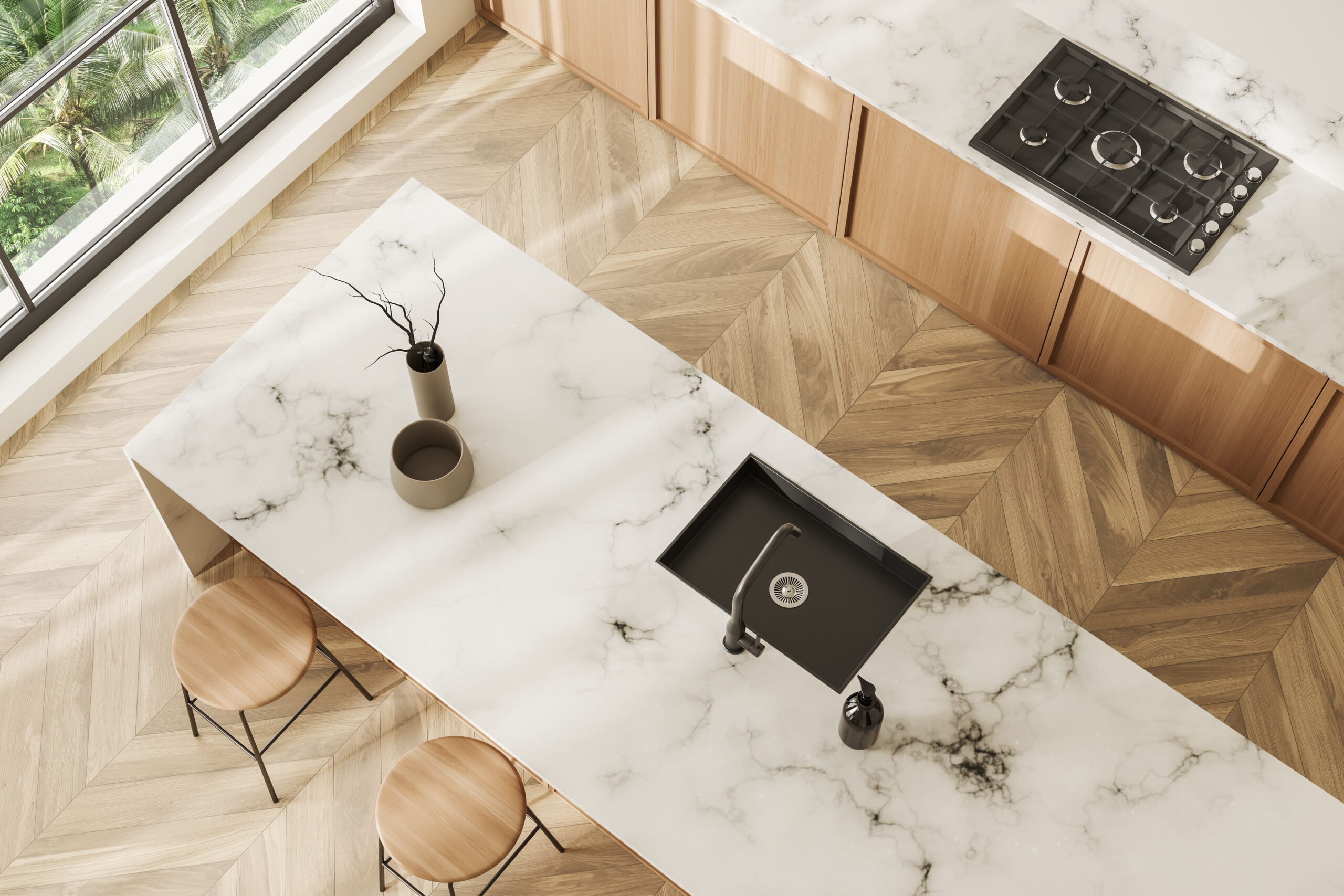
There is something undeniably striking about marble in a kitchen. The veining, the depth, the way it catches light — it is the kind of surface that makes a room feel considered. But beyond aesthetics, marble countertops come with a very specific set of trade-offs that every homeowner should understand before committing. Whether you are renovating an older kitchen or building from scratch, this guide walks through what marble actually is, how it holds up in daily kitchen life, and whether it fits your home — and your lifestyle — in the long run.
What Marble Countertops Actually Are
Marble is a natural stone formed through a geological process called metamorphism, where limestone is subjected to intense heat and pressure over thousands of years. The result is a crystalline structure that is dense, cool to the touch, and threaded with mineral deposits that create those characteristic veins. Each slab is unique, which is part of the appeal. When you install marble countertops, you are essentially bringing a one-of-a-kind piece of the earth’s surface into your kitchen. That sounds romantic, and honestly, it kind of is — but it also means you are working with a material that has real physical limitations baked into its chemistry. It is not engineered for abuse. It is just beautiful.
The Key Advantages of Marble Kitchen Countertops
Let us be direct: marble has genuine strengths that explain why it has remained a sought-after countertop material for centuries. The benefits go well beyond how it looks, though that matters too.
- Exceptional aesthetic appeal that adds lasting visual value to any kitchen
- Naturally cool surface temperature, making it ideal for baking and pastry work
- Each slab is unique, offering a custom, high-end appearance no engineered material can replicate
- Can increase resale value and buyer interest when the home goes to market
- Pairs well with a wide range of cabinet styles, hardware finishes, and flooring choices
- Has a long service life when properly maintained and sealed
The cool surface point is worth sitting with for a moment. Marble stays naturally cool, which is why it has been the material of choice in professional pastry kitchens for generations. If you bake regularly, that is not a trivial advantage — it makes a functional difference in how dough behaves on the surface. Combined with the visual impact, marble offers a combination of form and genuine function that is hard to dismiss outright.
The Real Drawbacks You Need to Know Before Installing Marble
Here is where things get a little more complicated. Marble is a soft, porous stone on the hardness scale — softer than granite and significantly softer than engineered quartz. That matters in a kitchen environment more than almost anywhere else in a home. The drawbacks are real, and glossing over them would be doing homeowners a disservice.
- Highly susceptible to etching from acidic substances like lemon juice, vinegar, and wine
- Porous surface absorbs liquids and stains if not properly and regularly sealed
- Scratches more easily than granite or quartz, particularly from knives and abrasive cookware
- Requires consistent maintenance including sealing every six to twelve months depending on use
- Higher upfront cost compared to many alternative countertop materials
- Can crack under heavy impact or if the substructure is not adequately supported
The etching issue tends to catch homeowners off guard. Etching is different from staining — it is a chemical reaction that dulls the surface finish and leaves dull marks even on sealed marble. A glass of orange juice left sitting for a few minutes can leave a mark that sealing does not fully prevent. For homeowners who cook with acidic ingredients regularly, this is not a minor inconvenience. It is a consistent reality of owning marble countertops.
Maintenance Expectations for Marble Countertops
Owning marble countertops means committing to a maintenance routine that is more involved than most other countertop materials. Sealing is non-negotiable. A penetrating stone sealer applied every six to twelve months helps reduce porosity and slows staining, though it does not make marble bulletproof. Daily care involves wiping spills immediately, avoiding harsh chemical cleaners, and using pH-neutral products specifically formulated for natural stone. Cutting boards should always be used — always. Trivets or heat pads are recommended even though marble handles heat reasonably well. The goal is to treat the surface with enough care that it ages gracefully rather than showing every meal, every glass, every shortcut. That said, many marble owners actually come to appreciate the patina that develops over time, viewing the character marks as part of what makes the surface feel lived-in and authentic.
How Marble Compares to Other Popular Countertop Materials
Marble sits in a specific tier compared to alternatives like granite, quartz, quartzite, and laminate. Granite is also a natural stone but significantly harder and more resistant to scratching and etching, making it a more forgiving choice for high-traffic kitchens. Quartz is an engineered stone that is non-porous and requires almost no sealing, offering a lower-maintenance lifestyle at a similar or sometimes lower price point. Quartzite is often confused with marble visually but is much harder and more durable. Laminate remains the most budget-friendly option but lacks the longevity and value of natural stone. Marble occupies a unique space as a material that is aspirational and beautiful but demands more from the homeowner in return. Understanding that exchange before installation is what separates happy marble owners from regretful ones.
Is Marble Right for Your Kitchen and Your Lifestyle
The honest answer is that marble is not universally the right choice. For homeowners with young children, high kitchen activity, or a preference for low-maintenance surfaces, marble may create more frustration than satisfaction. On the other hand, for homeowners who treat their kitchen more as a design centerpiece, bake frequently, and are willing to invest in regular maintenance, marble can be deeply rewarding. It rewards attentiveness. If you are the kind of person who genuinely enjoys caring for beautiful things — and who does not mind wiping down a countertop immediately after use — marble fits that lifestyle well. If the kitchen tends toward chaos, granite or quartz might serve you better without the guilt.
Cost Considerations for Marble Countertop Installation
Marble countertop costs vary significantly based on marble type, slab thickness, edge profile, and regional labor rates. Entry-level marble varieties like Carrara start around fifteen to forty dollars per square foot for material, with installation pushing total project costs to fifty to one hundred fifty dollars per square foot or higher depending on complexity. Premium marbles like Calacatta or Statuario can run well above two hundred dollars per square foot installed. These are not small numbers, and they underscore why the maintenance conversation is so important. Investing at that level means protecting the investment through proper care, prompt attention to spills, and periodic professional resealing when needed. The cost of neglect compounds quickly on a material this sensitive.
What Marble Countertops Mean for Your Home’s Long-Term Value
From a home value perspective, marble countertops tend to resonate positively with buyers in mid-to-high price point markets. They signal quality and intentionality in a kitchen renovation. However, their condition at the time of sale matters enormously. Heavily etched, stained, or cracked marble can work against a listing rather than for it. Well-maintained marble, on the other hand, can be a legitimate selling point — one that distinguishes a home in a competitive market. Homeowners should think of marble less as a passive asset and more as a managed one. Its contribution to home value is tied directly to how well it has been cared for over the years of ownership.
How Armadillo Home Warranty Can Support Your Investment in Kitchen Upgrades
Upgrading your kitchen with marble countertops is a significant investment, and protecting everything else in that kitchen is just as important as the countertop itself. When appliances break, plumbing fails, or systems go down unexpectedly, repair costs can quickly offset the joy of a beautiful renovation. That is where a reliable home warranty comes in. Armadillo offers homeowners a smarter way to manage those unpredictable repair and replacement costs, with plans designed to protect the systems and appliances that keep your home running. If you are making meaningful improvements to your home, exploring home warranty coverage for kitchen appliances and home systems is a practical next step that complements any renovation decision. When you are ready to see what coverage actually looks like for your home, you can get a personalized home warranty quote for kitchen and whole-home protection in just a few minutes. Marble countertops deserve a beautiful kitchen around them — and that kitchen deserves to be protected.
Frequently Asked Questions About Marble Countertops in the Kitchen
Do marble countertops require sealing, and how often?
Yes, marble countertops should be sealed regularly to reduce porosity and limit staining. Most experts recommend sealing every six to twelve months depending on usage level and the specific marble variety installed.
Can marble countertops be repaired if they chip or crack?
Minor chips and small cracks can often be repaired using color-matched epoxy or marble repair kits. More significant damage typically requires a professional stone restoration specialist to assess and address the repair properly.
Are marble countertops heat resistant?
Marble handles moderate heat reasonably well due to its natural composition, but placing extremely hot pots or pans directly on the surface is not recommended. Using trivets is always the safer practice to avoid thermal shock or discoloration.
What causes etching on marble countertops?
Etching is a chemical reaction caused by acidic substances such as citrus juice, vinegar, wine, and certain cleaning products. The acid breaks down the calcium carbonate in marble, leaving dull spots or marks on the surface that differ from staining.
How do marble countertops compare to quartz for a kitchen?
Quartz is engineered, non-porous, and requires significantly less maintenance than marble. Marble offers a natural stone aesthetic that quartz attempts to replicate but cannot fully match. The right choice depends on how much maintenance a homeowner is willing to commit to.
Does sealing marble prevent all stains and etching?
Sealing reduces the rate at which liquids penetrate the surface and can limit staining, but it does not prevent etching. Etching is a surface-level chemical reaction that occurs regardless of sealer application and requires different preventive measures.
What is the best way to clean marble countertops daily?
Daily cleaning should involve a soft cloth or sponge, warm water, and a pH-neutral cleaner formulated for natural stone. Avoid bleach, vinegar, ammonia-based cleaners, and anything abrasive, as these can damage the surface or degrade the sealer.
Will marble countertops add value to my home?
Well-maintained marble countertops can positively influence buyer perception and home value, particularly in mid-to-high price range markets. However, poorly maintained marble can have the opposite effect, so ongoing care is directly tied to long-term value contribution.
How thick should marble countertop slabs be for a kitchen?
The most common slab thickness for kitchen countertops is three centimeters, which provides adequate strength and durability for kitchen use. Two-centimeter slabs are sometimes used but typically require additional support underneath to prevent flexing or cracking.
Is marble a good countertop choice for a kitchen with children?
Marble requires consistent care and is sensitive to scratches, stains, and acidic substances, which can make it a challenging choice in high-activity kitchens with young children. Homeowners in that situation may find granite or quartz a more practical alternative without sacrificing a quality look.