Ceiling Fan Direction in Summer: Why It Matters and How It Impacts Your Home
When the temperature rises and air conditioners work overtime, even small adjustments in how your home operates can make a significant difference in comfort and utility costs. Ceiling fans are a common feature in many homes, but too often, they’re used without understanding their full potential. One particularly misunderstood aspect is the direction in which they should spin during different seasons—especially in summer. This seemingly minor detail plays a role not only in your indoor climate but also in the efficiency of your home’s entire cooling strategy. Let’s take a closer look at how ceiling fans work, why direction matters, and how this fits into a larger conversation about home management and home warranties.
Understanding How Ceiling Fans Work
Ceiling fans do not cool rooms in the traditional sense. Instead of lowering the actual air temperature, they circulate the air in a way that helps evaporate moisture from your skin, making you feel cooler. This sensory cooling effect, typically described as the “wind-chill” factor, can make a room feel up to four degrees cooler than it actually is. The functionality of a ceiling fan hinges on one critical factor: the direction of blade rotation. This direction is what determines how air is moved within a room—either downward to mimic a breeze or upward to redistribute warm air that has risen to the ceiling.
Correct Fan Direction for Summer
During summer, ceiling fans should rotate counterclockwise when viewed from directly below. This setting pushes air down, generating a direct breeze that increases evaporation from your skin, helping you feel cooler. Most ceiling fans have a small switch on the motor housing that controls blade direction. Set to counterclockwise, the fan will blow air downward, increasing comfort while allowing you to set your thermostat a few degrees higher without sacrificing comfort. It’s also worth ensuring the fan is on at a high-speed setting in the summer months for maximum effect. This improved airflow makes rooms more comfortable without the need to crank up your AC.
Energy Efficiency and Cost Implications
Ceiling fans, when used correctly, have the potential to support significant energy efficiency gains in the home. Rather than relying solely on air conditioning to cool indoor spaces, the strategic use of ceiling fans can help maintain comfort while using less energy. Studies from the Department of Energy suggest that homeowners can raise their thermostat by four degrees when a fan is used in conjunction with air conditioning. That translates into reduced wear and tear on your central air system and, more importantly, a drop in utility bills. With HVAC systems being one of the most commonly repaired systems under home warranty contracts, any reduction in load extends lifespan and lowers breakdown risk.
Common Mistakes Homeowners Make with Fans
Despite their simplicity, ceiling fans are often misused. A frequent error is leaving fans running in unoccupied rooms. Since fans do not cool the air itself, there is no benefit to keeping them on when no one is around. Another oversight is failing to adjust the fan direction seasonally. Some homeowners go years without realizing their fans can switch direction. Additionally, dust accumulation on blades can compromise performance and even spread allergens. Regular cleaning not only keeps your air cleaner but also ensures efficient fan operation. Finally, installing a fan that’s improperly sized for the room can limit its effectiveness. The size and placement of the fan directly impact how well it circulates air.
Maintenance Considerations for Ceiling Fans
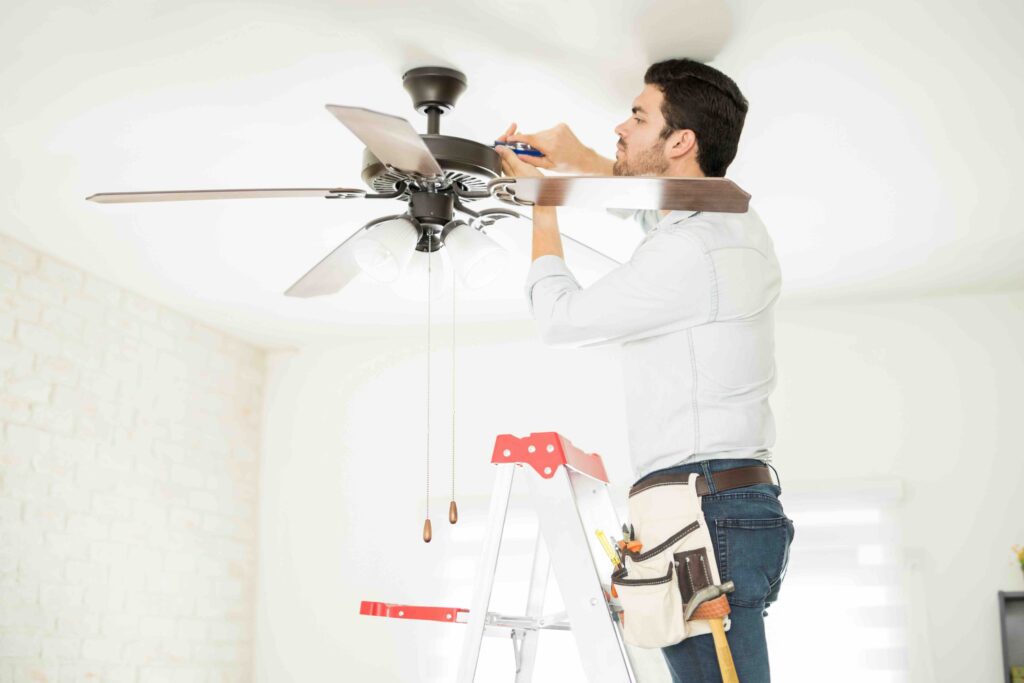
Like every other mechanical element in a home, ceiling fans require periodic checks to function optimally. Basic maintenance includes tightening any loose screws, cleaning the blades, and ensuring the motor is running quietly and smoothly. Over time, the motor bearings can wear out or fan blades can warp due to humidity and dust buildup. This kind of wear may start small, but it can result in unbalanced blades, noise, or even an electrical hazard. While ceiling fans don’t appear on every home warranty policy, any system failures that come from incorrect fan usage—such as increased HVAC strain—often do. That’s why it’s important to address minor issues early before they develop into larger, costlier problems.
When to Replace or Upgrade Your Ceiling Fan
Sometimes a fan no longer fits the needs of the room or begins to show signs that it’s past its prime. If the fan wobbles excessively, emits grinding noises, or shows signs of electrical inconsistencies such as flickering lights (in fan-light combos), it’s time to consider a replacement. Advances in ceiling fan technology have introduced energy-efficient motors and smart features like remote operation, automated temperature response, and integration with smart home platforms. Upgrading to a more efficient unit also aligns nicely with energy rebate programs available in some states. More importantly, it supports overall home performance, reduces dependency on HVAC systems, and complements your home warranty’s protection coverage.
How Fan Direction Aligns with Home Warranty Coverage
Ceiling fans themselves are not always covered under standard home warranty plans, but their impact on other systems certainly is. Improper fan usage can stress HVAC units, spike energy bills, and lead to comfort complaints. When used correctly, fans reduce the runtime for air conditioners, thereby extending the service life of these bigger, often covered items. A well-maintained fan strategy effectively supports the systems your home warranty is designed to protect—like cooling units, electrical components, and sometimes even smart home integrations. Keeping fans running in the right direction, paired with preventive maintenance, can be the difference between smooth sailing and an emergency service call when you least expect it.
Protecting the Systems That Keep You Cool
Your ceiling fan might take center stage in summer, but it plays a supporting role in your broader home performance ecosystem. Leveraging it correctly makes your home more energy efficient, prolongs the life of essential systems, and improves everyday comfort. Choosing a solid home warranty partner ensures that when the systems you rely on inevitably need repair or replacement, you’re not left to tackle it alone. That’s where Armadillo comes in. With straightforward coverage designed for real-world scenarios—from HVAC strain to electrical hiccups—Armadillo gives you assurance at home when it matters most. Learn how easy it is to get started by visiting armadillo.one, or begin customizing your coverage today with the simple signup process at our plan builder.