
What Is a Recharge HVAC System and Why Does It Matter for Your Home?
If you have ever noticed your air conditioner blowing lukewarm air on a sweltering afternoon, there is a decent chance someone mentioned the phrase “refrigerant recharge” to you. And if that conversation left you a little puzzled, you are not alone. The term gets thrown around a lot, but it is rarely explained in plain language. A recharge HVAC system refers to the process of replenishing the refrigerant in your air conditioning unit — the chemical substance responsible for absorbing heat from inside your home and releasing it outside. Without the right refrigerant level, your system simply cannot do its job effectively. Understanding what this means, how it works, and what it costs you — in both money and peace of mind — is genuinely worth your time as a homeowner.
How Refrigerant Actually Works Inside Your HVAC System
Here is the part most people skip, and honestly it makes everything else click once you get it. Your HVAC system does not generate cool air the way a refrigerator generates ice. Instead, it moves heat. Refrigerant is the working fluid that makes this possible. It circulates continuously through a closed loop between two coils — the evaporator coil inside your home and the condenser coil outside. The refrigerant absorbs heat from your indoor air as it passes over the evaporator coil, then travels outside where it releases that heat through the condenser. This cycle repeats constantly while your system runs. The refrigerant itself does not get “used up” the way gasoline does — it is designed to stay in that closed loop indefinitely. So when your system needs a recharge, it almost always means there is a leak somewhere in the system. That detail matters a lot when you start thinking about repair costs.
Signs Your HVAC System May Need a Refrigerant Recharge
Catching refrigerant issues early can save you from a full system breakdown. There are several warning signs worth paying attention to before things get worse.
- Your air conditioner is running constantly but the house is not reaching the set temperature
- There is ice forming on the evaporator coil or refrigerant lines
- Warm or room-temperature air is blowing from your vents instead of cold air
- Your energy bills have spiked without a clear explanation
- You hear a hissing or bubbling sound near the indoor or outdoor unit
- The area around your air handler feels unusually warm or humid
Any one of these symptoms on its own might not confirm a refrigerant problem, but two or more together is a strong signal to call a licensed HVAC technician. Do not attempt to diagnose or recharge refrigerant yourself — handling refrigerants requires EPA certification and specialized equipment.
The Recharge Process: What a Technician Actually Does
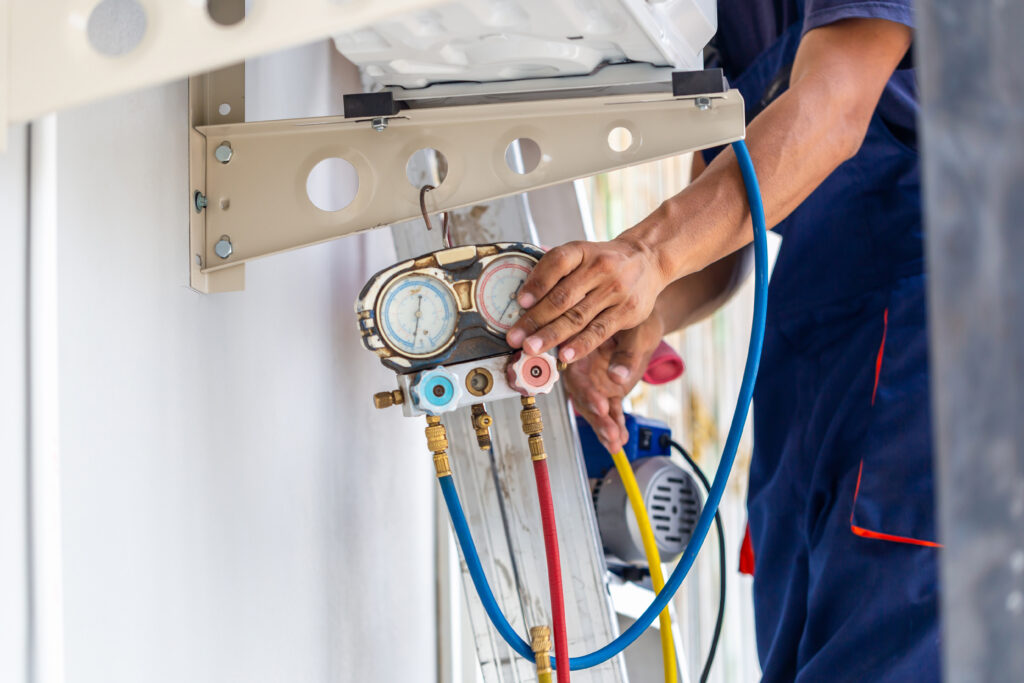
When an HVAC professional comes out to evaluate your system, they are going to do more than just top off the refrigerant. A responsible technician will first perform a leak test. Adding refrigerant to a leaking system without fixing the leak is essentially throwing money away — the refrigerant will just escape again. Once the leak is located and repaired, the technician will use gauges to measure current pressure levels and determine the correct refrigerant charge based on the manufacturer’s specifications for your specific unit. They will then add the appropriate type and amount of refrigerant — and yes, the type matters. Older systems may use R-22, which is now phased out and significantly more expensive due to limited supply. Newer systems typically use R-410A or the increasingly common R-32 and R-454B alternatives. Getting the wrong refrigerant in your system causes more damage, not less.

Key Advantages of Keeping Your Refrigerant Levels Properly Maintained
Maintaining the correct refrigerant charge in your HVAC system has a ripple effect across the entire unit’s performance. When refrigerant levels are optimal, your system runs at its designed efficiency, which translates directly to lower energy bills. A properly charged system also puts less mechanical strain on the compressor — the most expensive single component in your air conditioner, often costing between $1,200 and $2,800 to replace. Beyond cost savings, correct refrigerant levels mean more consistent indoor temperatures, better humidity control, and improved air quality throughout your home. Think of refrigerant maintenance the same way you think about oil changes in your car. Neglect it long enough, and the damage spreads well beyond the original problem.
The Real Drawbacks and Costs Homeowners Should Expect
Let us be straightforward here because this is where homeowners often feel blindsided. Refrigerant recharges are not cheap. The cost to recharge an HVAC system typically ranges from $150 to $600 or more depending on the refrigerant type, the quantity needed, and your geographic location. If R-22 is required for an older system, costs can climb significantly higher. And that does not include the cost of locating and repairing the leak, which can add another $200 to $1,500 depending on severity and accessibility. There is also the inconvenient reality that a system requiring frequent recharges is usually telling you something deeper is wrong. At some point, the math tips toward replacing the unit rather than continuing to pour money into repairs. A technician can help you evaluate that crossover point, but homeowners should go into these service calls with realistic expectations about total costs.
How Often Should HVAC Refrigerant Be Checked?
If your system has no leaks and is functioning correctly, refrigerant levels should remain stable for the life of the unit. There is no standard maintenance schedule that requires a recharge at set intervals the way you change an air filter. However, annual HVAC maintenance inspections — ideally performed in the spring before cooling season begins — typically include checks that can catch refrigerant issues before they become serious problems. During these inspections, a technician will check operating pressures and look for signs of refrigerant loss. If your system is more than ten years old or has had previous refrigerant issues, these annual checks become even more important. Staying proactive here is almost always less expensive than responding to an emergency breakdown in the middle of July.
Refrigerant Regulations and Environmental Considerations
This piece of the conversation does not come up enough. Refrigerants are regulated substances under the Clean Air Act and are managed by the Environmental Protection Agency because of their environmental impact. Older refrigerants like R-22 were phased out due to their contribution to ozone depletion. Current refrigerants like R-410A are being transitioned away from due to their high global warming potential. Newer low-GWP refrigerants are gradually becoming the industry standard. What this means practically for homeowners is that servicing older systems will continue to get more expensive as legacy refrigerants become scarcer. If your system uses R-22, it may be worth having a serious conversation with your HVAC contractor about transitioning to a newer, compliant system — especially if significant repairs are already on the table.
Why Armadillo Home Warranty Is Worth Considering for HVAC Coverage
HVAC repairs are consistently among the most expensive surprises a homeowner can face — and a refrigerant issue is rarely the last problem a system develops. That is exactly why having a home warranty that covers your HVAC system is not just convenient, it is genuinely smart financial planning. Armadillo home warranty coverage for HVAC systems and major appliances is built around the idea that homeowners should not have to absorb the full cost of unexpected breakdowns. When your air conditioner starts failing mid-summer or your system develops a refrigerant issue that leads to compressor damage, Armadillo steps in to help cover the cost of diagnosis, repair, or replacement — depending on your plan. The process is straightforward, the service network is vetted, and the pricing is transparent. If you want to stop worrying about what your next HVAC bill might look like, get a free HVAC home warranty quote and see your coverage options in minutes. Protecting your home’s most essential systems does not have to feel complicated.

Frequently Asked Questions About HVAC Recharge Systems
Homeowners tend to have a lot of the same questions once they start digging into refrigerant and HVAC recharges. Here are honest, direct answers to the ones that come up most often.
Does an HVAC system automatically run low on refrigerant over time?
No. Refrigerant does not deplete naturally through normal use. A properly sealed system should maintain its refrigerant charge indefinitely. If your system is low on refrigerant, it means there is a leak that needs to be found and repaired before any recharge is performed.
How much does it cost to recharge a home air conditioning system?
The cost typically ranges from $150 to $600 for the recharge itself, depending on the type of refrigerant and the amount needed. Older systems using R-22 can cost significantly more. Leak detection and repair costs are separate and can add several hundred dollars to the total bill.
Can I recharge my HVAC system myself?
No. Handling refrigerants requires EPA Section 608 certification. Purchasing and handling refrigerants without proper certification is illegal under federal law. This is a job for a licensed HVAC technician.
What type of refrigerant does my air conditioner use?
The type of refrigerant your system uses is listed on the data plate affixed to your outdoor unit. Common types include R-22 for older systems and R-410A for systems manufactured after 2010. Newer equipment is increasingly transitioning to lower-GWP options like R-32 and R-454B.
Will a home warranty cover an HVAC refrigerant recharge?
Coverage varies by provider and plan. Some home warranties cover refrigerant recharges as part of HVAC repair coverage, while others may have limitations. Reviewing your specific plan terms or speaking with your warranty provider directly is the best way to confirm your coverage details.
How long does an HVAC refrigerant recharge last?
If the underlying leak is properly repaired before the recharge, the new refrigerant charge should last for the remaining life of the system. If the leak is not fixed, the refrigerant will escape again and the problem will return, often within weeks or months.
Is it worth repairing an older HVAC system that needs a refrigerant recharge?
It depends on the age of the system, the severity of the leak, and the total repair cost. A general guideline used in the industry is to multiply the repair cost by the age of the system — if that number exceeds the cost of a new unit, replacement is often the smarter financial decision.
What happens if I ignore a refrigerant leak in my HVAC system?
Running an air conditioner with low refrigerant puts the compressor under significant strain, which can lead to premature compressor failure. Compressor replacement is one of the most expensive HVAC repairs, often making the case for full system replacement. Addressing refrigerant issues early is almost always less costly than waiting.
How can I prevent refrigerant leaks in my HVAC system?
Annual professional maintenance inspections are the most effective preventive measure. A technician can catch early signs of refrigerant loss, inspect coil integrity, and identify conditions that commonly lead to leaks before they become serious. Keeping the outdoor unit clean and free from debris also helps reduce stress on the system.
Does the phase-out of R-22 refrigerant affect my existing air conditioner?
If your system uses R-22, it can still be serviced and recharged using reclaimed or recycled R-22 supplies, but availability is limited and costs are higher than they used to be. Production and import of R-22 have been banned in the United States since 2020. Homeowners with R-22 systems should factor replacement planning into their long-term home maintenance budget.