The Best Product for Cleaning Baseboards: A Homeowner’s Complete Guide
Baseboards are one of those things you walk past every single day and somehow never fully notice — until you do. Then you cannot stop noticing them. Scuffs, dust buildup, grime along the edges, maybe some pet hair lodged into the crevices. Suddenly your otherwise clean home feels a little less put-together. The good news is that cleaning baseboards does not require a lot of effort or an overwhelming product arsenal. It requires the right product and a bit of strategy. This guide breaks down what the best product for cleaning baseboards actually is, how to use it effectively, and what homeowners should know to keep their home in great shape from the floor up.
What Are Baseboards and Why Do They Get So Dirty
Baseboards are the trim pieces that run along the bottom of interior walls, right where the wall meets the floor. They serve a dual purpose: they protect the wall from kicks, scuffs, and moisture, and they give the room a finished, polished look. Most baseboards are made from wood, MDF, or PVC, and while they look simple enough, their horizontal surfaces and angled edges are practically designed to collect dust. Air circulation in a home moves dust along the floor level constantly, and baseboards catch a disproportionate amount of it. Add in cooking grease, pet dander, humidity, and the occasional shoe scuff, and it becomes clear why they need regular attention. Cleaning them is not difficult — but choosing the right product makes a real difference in how effective and efficient the process actually is.
The Best Product for Cleaning Baseboards: Magic Eraser
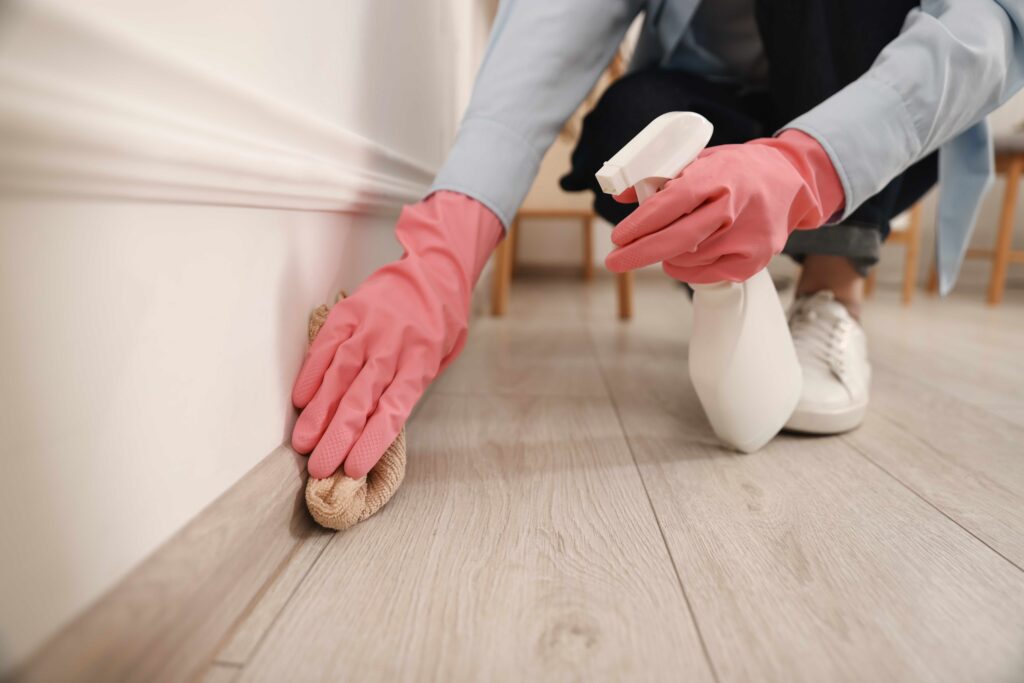
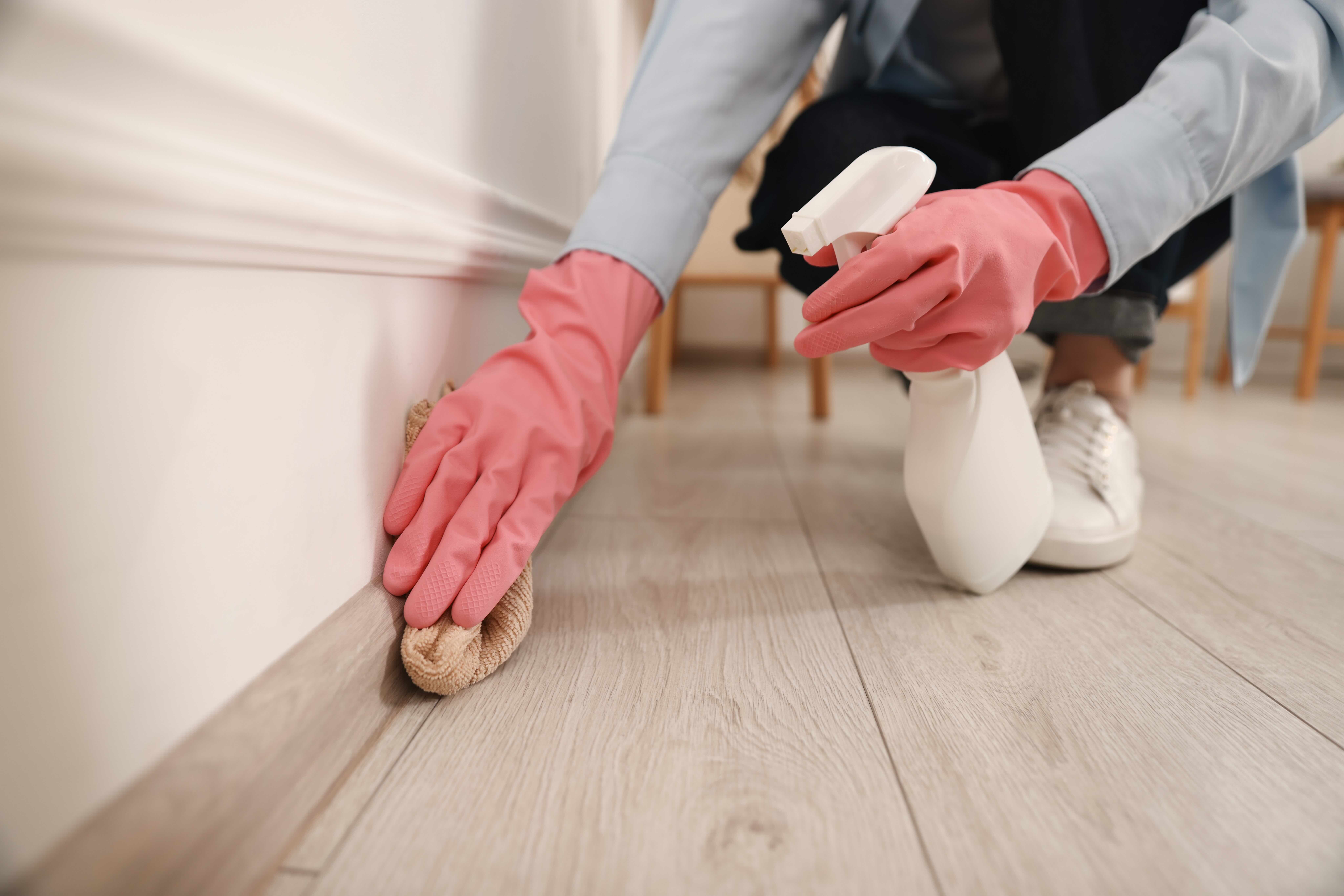
If there is one product that consistently rises to the top of nearly every recommendation for baseboard cleaning, it is the Mr. Clean Magic Eraser. This melamine foam cleaning pad has earned its reputation by doing what almost no other single product can: removing scuffs, marks, grime, and even stuck-on residue without scratching painted surfaces. It works through a process called micro-abrasion, where the foam’s fine structure acts almost like ultra-fine sandpaper — but gentle enough not to damage paint or finish when used correctly. You just dampen the pad, squeeze out excess water, and wipe. No sprays, no complicated solutions, no rinsing required. For baseboards specifically, it is remarkably effective at lifting ground-in dirt from corners and edges, cleaning painted wood without leaving watermarks, and handling pet-related residue that standard cloths just smear around.
How Magic Eraser Works on Baseboards
The science behind melamine foam is genuinely interesting. The foam forms a lattice-like structure at the microscopic level, and when wet, it becomes slightly abrasive — capable of breaking apart dirt and grime without chemical cleaners. For baseboards, this means you can tackle years of accumulated buildup with a single pass in many cases. The product works on most painted surfaces, whether gloss, semi-gloss, or satin finish, which is relevant because baseboards are often painted in semi-gloss for durability. One note of caution: because Magic Erasers are mildly abrasive, repeated heavy scrubbing on flat-painted surfaces can dull the sheen over time. Use moderate pressure and always do a small spot test in a hidden area if you are unsure about the paint finish. For the vast majority of baseboards in standard homes, it is entirely safe and exceptionally effective.

How to Clean Baseboards the Right Way
Having the right product is only half the equation. Technique matters too, and a few small adjustments to your process will produce noticeably better results. Here is a practical cleaning sequence that works well for most homeowners:
- Start by dry-dusting the baseboards using a microfiber cloth or a vacuum brush attachment to remove loose debris before introducing any moisture.
- Dampen your Magic Eraser with water and wring it out well — it should be moist, not dripping.
- Work in sections along the baseboard, applying light to moderate pressure and wiping in the direction of the trim grain if visible.
- Follow up with a dry microfiber cloth to remove any residue left behind.
- For particularly grimy areas near baseboards that border kitchens or bathrooms, a small amount of dish soap added to warm water before using the eraser can enhance results.
Supplemental Products Worth Knowing About
While Magic Eraser handles the heavy lifting in most baseboard cleaning scenarios, a few supplemental products pair well with it and can address specific challenges. A simple solution of warm water and a few drops of dish soap is great for general maintenance cleans between deeper sessions. White vinegar diluted in water is useful for cutting through grease, particularly in kitchen areas where cooking residue tends to settle on lower surfaces. Microfiber cloths are genuinely valuable here — they trap dust rather than redistributing it, and they work well for the initial wipe-down phase. For homes with pets, a lint roller before any wet cleaning step will catch hair that would otherwise clump and drag during wiping. None of these products replace the Magic Eraser for deep cleaning, but they complement it well for ongoing maintenance.
Common Mistakes Homeowners Make When Cleaning Baseboards
There are a handful of missteps that come up again and again, and they are worth addressing because they either create more work or risk damaging the surface. Using too much water is a frequent issue — baseboards made from MDF are particularly susceptible to swelling if moisture is allowed to sit or pool at the base. Skipping the dry-dust step and going straight to a wet cleaner just turns dust into muddy streaks. Using harsh chemical sprays not designed for painted surfaces can strip paint or leave a sticky residue that attracts more dust over time. And cleaning baseboards after mopping the floors — rather than before — means tracking wet mop residue back onto surfaces you just cleaned. Sequence matters. Dust, clean, then mop. It is a small adjustment that makes the whole process more efficient.
How Often Should You Clean Your Baseboards
This is one of those questions where the honest answer is: more often than most people do it. For a typical home, a light dusting every two to four weeks keeps buildup manageable. A deeper clean using Magic Eraser or a similar product every two to three months is generally sufficient for most households. Homes with pets, young children, or high foot traffic may need more frequent attention — monthly deep cleaning is not unreasonable in those environments. High-humidity rooms like bathrooms may develop more grime and occasional mold near baseboards, which warrants closer monitoring. The goal is not perfection at all times; it is preventing the kind of buildup that requires significant effort to remove and that can, over time, contribute to premature wear on the trim itself.
Baseboard Condition and Your Home’s Overall Maintenance Picture
Baseboards are a small but telling indicator of how a home is being maintained overall. Cracked, warped, or peeling baseboards can signal moisture issues, poor ventilation, or structural settling — all of which are worth paying attention to beyond just the cosmetic surface. When baseboards start to look consistently worse despite regular cleaning, that is often a sign to investigate what is happening at floor level. Is there humidity coming from beneath the flooring? Are there gaps developing between the baseboard and the wall that are letting in drafts or pests? These are not alarmist scenarios — they are practical observations that can help homeowners catch maintenance issues early before they become expensive repairs.
Why Armadillo Home Warranty Is the Smart Choice for Home Protection
Keeping your home clean and well-maintained is one side of responsible homeownership. The other side is making sure you have real financial protection when things go wrong — and things do go wrong. Appliances fail, systems break down, and the costs can add up faster than most people expect. That is where Armadillo home warranty coverage for whole-home system protection becomes genuinely valuable. Armadillo offers straightforward, transparent home warranty plans designed for homeowners who want clarity, not confusion. There are no gimmicks, no runaround — just honest coverage that helps protect the systems and appliances that keep your home running. If you are thinking about adding a layer of financial protection to your home maintenance strategy, now is a good time to get a free home warranty quote and explore coverage options built for real homeowners. Clean baseboards are great. A protected home is even better.

Frequently Asked Questions About Cleaning Baseboards
Here are answers to the most common questions homeowners have about baseboard cleaning products, methods, and maintenance.
What is the best product for cleaning baseboards?
The Mr. Clean Magic Eraser is widely considered the best single product for cleaning baseboards. It removes scuffs, grime, and buildup from painted surfaces without requiring harsh chemicals, making it effective and easy to use for most homeowners.
Can I use a Magic Eraser on painted baseboards without damaging the finish?
Yes, in most cases. Magic Erasers use mild micro-abrasion and are safe on semi-gloss and gloss painted surfaces, which are the most common finishes used on baseboards. Use moderate pressure and avoid aggressive scrubbing on flat or matte-painted trim, as this can reduce sheen over time.
How do I remove scuff marks from baseboards?
A damp Magic Eraser applied with light pressure is one of the most effective methods for removing scuff marks from baseboards. For particularly stubborn marks, a small amount of dish soap added to the pad can help lift the residue more effectively.
How often should baseboards be cleaned?
Light dusting every two to four weeks is recommended for most homes. A thorough deep clean every two to three months is sufficient for average households, though homes with pets or high foot traffic may benefit from monthly deep cleaning sessions.
Is vinegar safe to use on baseboards?
Diluted white vinegar — mixed with water at roughly a one-to-one ratio — is generally safe for cleaning painted baseboards and is useful for cutting through grease near kitchen areas. Avoid using undiluted vinegar, which can potentially dull paint finishes with repeated application.
What causes baseboards to get dirty so quickly?
Baseboards accumulate dust, pet dander, and airborne particles because air circulation in a home moves debris along floor level, where baseboards act as a natural collection point. Humidity, cooking grease, and foot traffic near walls contribute additional residue over time.
Should I clean baseboards before or after mopping the floor?
Always clean baseboards before mopping the floor. Cleaning in the reverse order means mopping can splash residue back onto freshly cleaned baseboards, and floor moisture can work its way into baseboard seams if the surrounding area is already wet.
Can dirty or damaged baseboards signal bigger home problems?
Yes. Persistent warping, swelling, or peeling on baseboards despite regular cleaning can indicate moisture intrusion, poor ventilation, or structural settling. These signs are worth investigating to identify and address any underlying issues before they escalate.
What is the easiest way to clean baseboards without bending over the entire time?
Using a flat mop with a microfiber pad is a practical option for the initial dust removal phase, allowing you to reach baseboards without kneeling. For the deeper clean, a Magic Eraser with a handle attachment or wrapped around a long-handled scrubber can reduce the physical strain involved.
Are there baseboard cleaning products I should avoid?
Avoid bleach-based cleaners on painted baseboards, as they can discolor or damage the finish. Avoid products that leave a sticky residue, as these attract dust faster and create more frequent cleaning cycles. Oil-based cleaners are also generally not recommended for painted trim surfaces.