What Can Go Down a Garbage Disposal — And What Absolutely Cannot
Your garbage disposal is one of those appliances that quietly earns its keep every single day. You rinse a plate, flip the switch, and move on without a second thought. But that small, hardworking unit under your sink has real limits — and ignoring them tends to lead to clogs, jammed blades, foul odors, and repairs that could have been completely avoided. Understanding what can go down a garbage disposal is genuinely one of the simplest ways to extend the life of both the unit and your plumbing system.
How a Garbage Disposal Actually Works
Before diving into the do’s and don’ts, it helps to understand what the appliance is doing. A garbage disposal does not use blades in the traditional sense — it uses a spinning plate with impellers that grind food waste against a stationary grind ring. This breaks down organic material into small particles that can flow safely through your drain pipes. The motor is typically powered by electricity and sits mounted beneath the kitchen sink, connected directly to the drain. It is a relatively simple system, but it is not indestructible. The grinding mechanism works well with soft, wet, biodegradable food particles. Anything harder, stickier, or more fibrous than that starts to push the limits of what the unit is designed to handle.
What You Can Safely Put Down a Garbage Disposal
There is a reasonable list of food items that disposals handle without issue, and knowing that list makes daily kitchen cleanup much more efficient. The key rule of thumb is this: if it is soft, water-rich, and biodegradable, it is likely fine in small quantities. Always run cold water before, during, and after using the disposal to help flush particles through the drain line.
- Cooked meat scraps in small pieces
- Soft fruit and vegetable scraps, excluding fibrous ones
- Small amounts of cooked pasta or rice, though sparingly
- Ice cubes, which can help clean the grinding components
- Citrus peels in small quantities for odor control
- Most liquid food waste and soft leftovers
What Should Never Go Down a Garbage Disposal
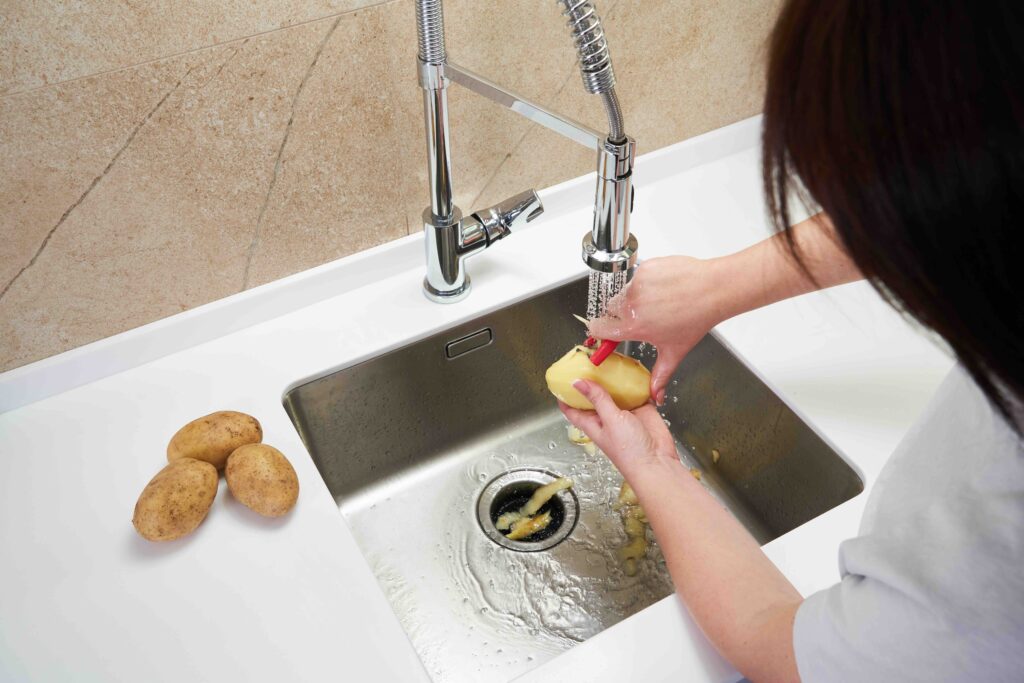
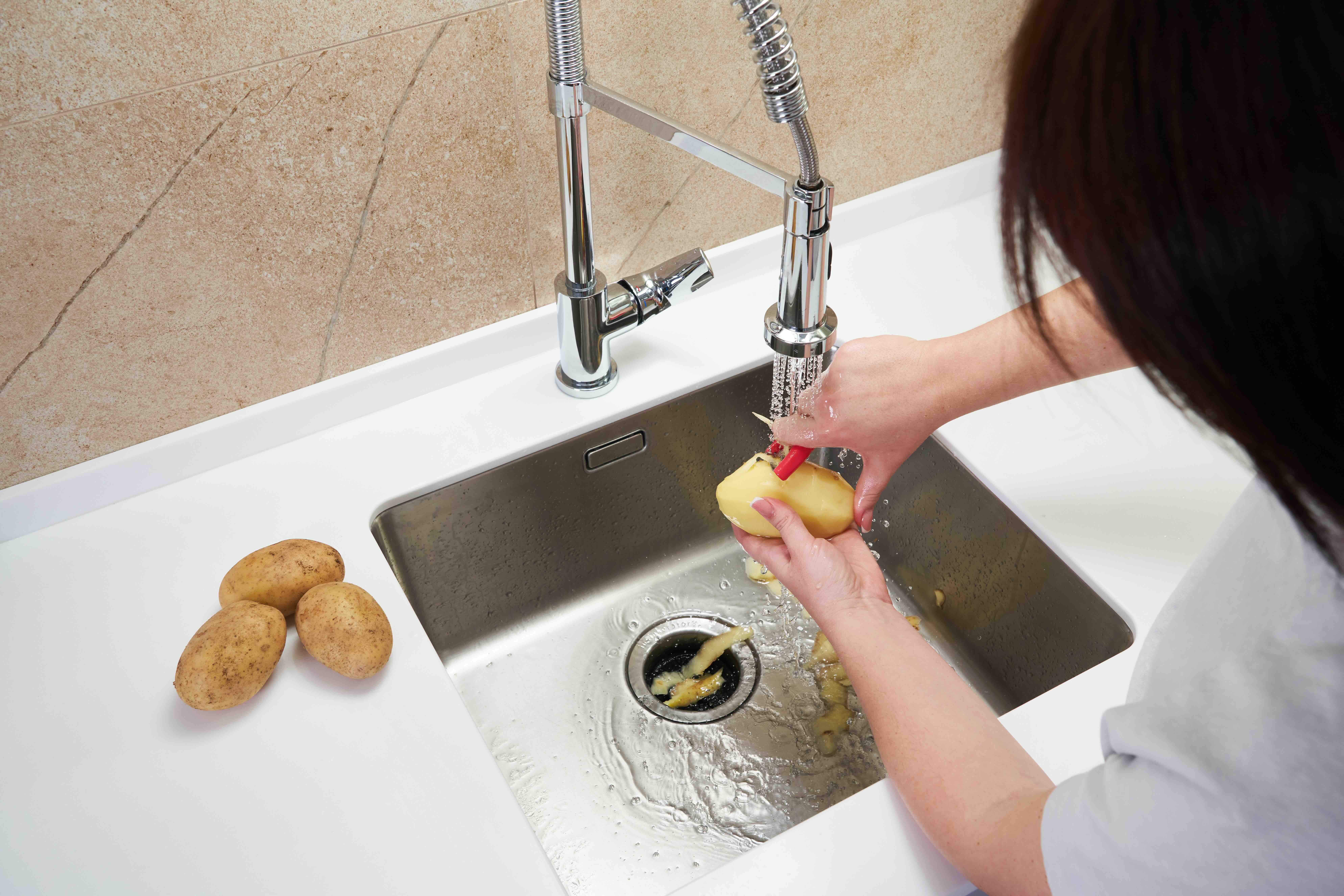
This is the part most homeowners learn the hard way. Certain foods and materials will damage the unit, clog the pipes, or create ongoing issues that no amount of running water will fix. Grease and cooking oil are among the worst offenders — they cool and solidify inside the drain, creating buildup that accumulates over time and eventually causes blockages. Fibrous vegetables like celery, artichokes, and asparagus can wrap around the impellers and jam the motor. Starchy foods like potato peels expand when wet and can coat the grinding components in a thick paste. Bones, fruit pits, and hard shells are simply too dense for the impellers to break down effectively. Coffee grounds seem harmless but accumulate into a dense sludge that collects in the trap. Eggshells are a surprisingly common point of debate — the membrane inside the shell can wrap around the grinding ring, and the ground particles behave similarly to coffee grounds in the drain. The safest approach is to keep them out entirely.
Signs Your Disposal Is Being Overworked or Misused
A disposal that is regularly receiving the wrong materials will show it. Unusual humming or a complete refusal to start often signals a jammed impeller. Slow drainage is one of the earliest warning signs that buildup is accumulating in the drain line. Persistent odors that do not resolve after cleaning typically mean food particles are trapped in hard-to-reach areas of the unit. Frequent resets — where you press the reset button on the bottom of the unit after it trips — point to motor strain caused by overloading. Catching these signs early and adjusting your habits can save you from a full disposal replacement, which can run anywhere from two hundred to five hundred dollars or more depending on the unit and installation costs.
Maintenance Habits That Extend the Life of Your Disposal
Proper usage is only half the equation. Routine maintenance makes a meaningful difference in how long a disposal lasts and how well it functions. Running cold water for a full thirty seconds after the grinding stops helps clear the drain line. Periodically grinding a tray of ice cubes can remove residue from the grinding components. A mixture of baking soda and white vinegar poured into the disposal, followed by hot water after a few minutes, handles odors without chemical damage. Avoid using harsh chemical drain cleaners inside the disposal, as they can corrode internal components over time. The more consistently you maintain the unit, the less likely you are to deal with emergency repairs or premature failure.

Common Garbage Disposal Repairs and What They Cost
Even with ideal usage habits, disposals do eventually need attention. A jammed unit is the most common service call — sometimes it can be resolved with the reset button or a manual hex key adjustment at the base of the motor. Leaks are another frequent issue and can originate from the sink flange, the drain connections, or the body of the unit itself. Electrical issues, while less common, do occur — especially in older units. Labor costs for a professional plumber or appliance technician can range from seventy-five to one hundred fifty dollars per hour, and replacement parts add to the total. If a disposal is more than ten years old and requires significant repair, replacement is often the more economical path.
How Garbage Disposals Fit Into the Bigger Picture of Home Systems
A garbage disposal does not exist in isolation. It is connected to your plumbing system, shares drain lines with other fixtures, and in some cases affects your septic system if your home is not on a municipal sewer. Homes with septic tanks require more careful disposal use because ground food particles add to the organic load in the tank, potentially requiring more frequent pumping. Understanding this interconnection matters when thinking about home maintenance holistically. A clogged disposal drain can back up into other sink basins. A failing unit can stress the drain line in ways that affect the larger plumbing system. This is exactly why knowledgeable homeowners treat every appliance not as a standalone item but as part of a larger, connected home infrastructure.
Choosing the Right Garbage Disposal for Your Home
If you are in the market for a new unit, a few specifications are worth understanding. Motor power is measured in horsepower, and units typically range from one-third to one full horsepower. A higher horsepower rating means more grinding capacity and better performance under load — particularly useful for larger households. Continuous feed models operate as long as the switch is on, while batch feed models require a stopper to activate, offering a small safety advantage. Noise insulation varies significantly between models, with premium units featuring sound-dampening components. Stainless steel grinding components tend to outlast galvanized parts. A quality mid-range unit from a reliable brand, properly installed and maintained, can last ten to fifteen years without significant issues.
Why Armadillo Belongs in Every Kitchen-Savvy Homeowner’s Plan
Garbage disposals are one of those appliances that seem minor right up until they fail at the worst possible moment — typically mid-dinner-party or just before a holiday gathering. That is where a home warranty from Armadillo home warranty coverage for kitchen appliances and plumbing systems becomes genuinely valuable. Armadillo covers the kinds of unexpected breakdowns that catch homeowners off guard, including garbage disposal failures that stem from normal wear and tear. Rather than absorbing the full cost of repair or replacement out of pocket, you have a plan in place that puts a professional on the job without the financial shock. If you want to see exactly what is covered under your roof, get a personalized home warranty quote that covers your garbage disposal and connected home systems and find out just how straightforward protecting your home can be. Armadillo keeps things clear, fair, and efficient — because that is what homeowners actually need.

Frequently Asked Questions About Garbage Disposal Use and Care
Homeowners have a lot of questions about garbage disposals — and many of the answers are simpler than expected. Here are the most common questions and straightforward answers to help you use your disposal confidently.
Can you put eggshells down a garbage disposal?
It is best to avoid eggshells. The inner membrane can wrap around the grinding components, and the ground particles behave like fine sediment that accumulates in the drain trap over time.
Is it safe to put coffee grounds down a garbage disposal?
No. Coffee grounds appear fine individually but compact into a dense, paste-like sediment inside the drain pipe. Regular disposal of coffee grounds is one of the leading causes of slow kitchen drains.
Can cooking grease go down a garbage disposal?
Never. Grease solidifies as it cools inside the drain pipe, accumulating into blockages that are difficult and costly to remove. Always dispose of grease in a sealed container in the trash.
How long should you run water when using a garbage disposal?
Run cold water for at least fifteen seconds before turning on the disposal, keep it running throughout use, and continue for another twenty to thirty seconds after the grinding stops to fully clear the drain line.
Why does my garbage disposal smell bad even after I clean it?
Odors typically come from food particles trapped inside the grinding chamber or in the drain baffle. Regular cleaning with baking soda, white vinegar, and citrus peels usually resolves the issue.
Can pasta and rice go down a garbage disposal?
In very small amounts, they are generally manageable, but starches expand when wet and can coat internal components or create a thick buildup in the drain. It is better to compost or trash starchy food scraps.
What does it mean when a garbage disposal just hums and does not grind?
A humming disposal that does not spin usually indicates a jammed impeller. Turn off the unit immediately to avoid burning out the motor, then use the manual hex key at the base of the unit to free the jam before pressing the reset button.
How often should a garbage disposal be replaced?
A well-maintained disposal typically lasts between ten and fifteen years. If yours is older than that and requiring frequent repairs, replacement is generally the more cost-effective decision.
Does a garbage disposal affect a septic system?
Yes. Ground food particles add organic load to the septic tank, which can accelerate how quickly the tank fills and may require more frequent pumping. Homeowners with septic systems should use their disposal sparingly and with extra caution.
Is a garbage disposal covered under a home warranty?
It depends on the home warranty provider and the specific plan. Some providers include garbage disposals as part of kitchen appliance or plumbing coverage. Always review the terms of your plan carefully to understand what is and is not included.