What Snow on Your Roof Is Actually Telling You
Most homeowners look at a snow-covered roof and think one of two things: either it looks kind of beautiful, or it looks kind of heavy. Both reactions are reasonable. What fewer people think about is what that snow is actually doing to the structure underneath it, and what it might reveal about the systems inside their home. Snow accumulation on a roof is not just a winter aesthetic. It is a stress test, a diagnostic signal, and sometimes an early warning system all at once. Understanding what is happening up there, and what to watch for, can save you from some genuinely expensive surprises.
How Snow Accumulates and Why the Weight Matters
Snow is not a uniform substance. Fresh powder weighs dramatically less than wet, packed snow, and ice weighs more than both. A cubic foot of light dry snow might weigh around seven pounds, while heavy wet snow can push that number past twenty. Ice can reach nearly sixty pounds per cubic foot. Most residential roofs are engineered to handle a snow load within a specific range, typically determined by the local building codes at the time of construction. When accumulation exceeds that threshold, the roof structure begins to experience stress that was never part of the original design. Over time, or in a single severe storm, that stress can lead to structural deformation, leaks, or in extreme cases, partial collapse. It is not common, but it does happen, and it is entirely preventable.
The Roof System Explained: More Than Just Shingles
A residential roof is a layered system working together to protect everything beneath it. Starting from the top, you have the exterior surface material, usually asphalt shingles, metal panels, or tiles. Below that is an underlayment, which acts as a secondary moisture barrier. Beneath the underlayment is the roof deck, typically made from plywood or oriented strand board. The deck is supported by a framework of rafters or trusses that transfer the load down to the walls and ultimately to the foundation. Snow accumulation affects all of these layers simultaneously. The weight presses down on the deck and framing. Moisture from melting snow can compromise the underlayment and shingles. Temperature fluctuations cause materials to expand and contract, eventually loosening seals and creating entry points for water.
Ice Dams: The Hidden Hazard You Cannot See From the Ground
One of the most damaging consequences of snow on a roof has nothing to do with total weight. Ice dams form when heat escaping from the interior of a home warms the upper portions of the roof, melting snow from the bottom up. That meltwater flows downward toward the eaves, where temperatures are colder because there is no warm living space below. The water refreezes at the edge, forming a ridge of ice. As more meltwater flows down and hits that ridge, it backs up under the shingles and into the roof structure. From there, it can infiltrate insulation, rot framing, stain ceilings, and damage walls. Ice dams are directly connected to how well a home is insulated and ventilated. A roof that develops ice dams every winter is telling you something important about the attic below it.
Warning Signs Every Homeowner Should Know
You do not need to climb onto the roof to spot problems. Some of the most telling signs are visible from inside the home or from the ground. Pay attention to these indicators:
- Ceiling stains or water dripping from light fixtures or around attic access points after a snow event
- Visible sagging or bowing along the roofline when viewed from a distance
- Ice formations hanging along the eaves combined with thick snow on the upper sections of the roof
- Doors or windows that suddenly become difficult to open or close, which can signal structural shifting
- Creaking or popping sounds from the ceiling during or after heavy snowfall
None of these signs should be dismissed or monitored indefinitely. They warrant a professional inspection as soon as weather permits safe access.

Safe Snow Removal: What to Do and What to Avoid
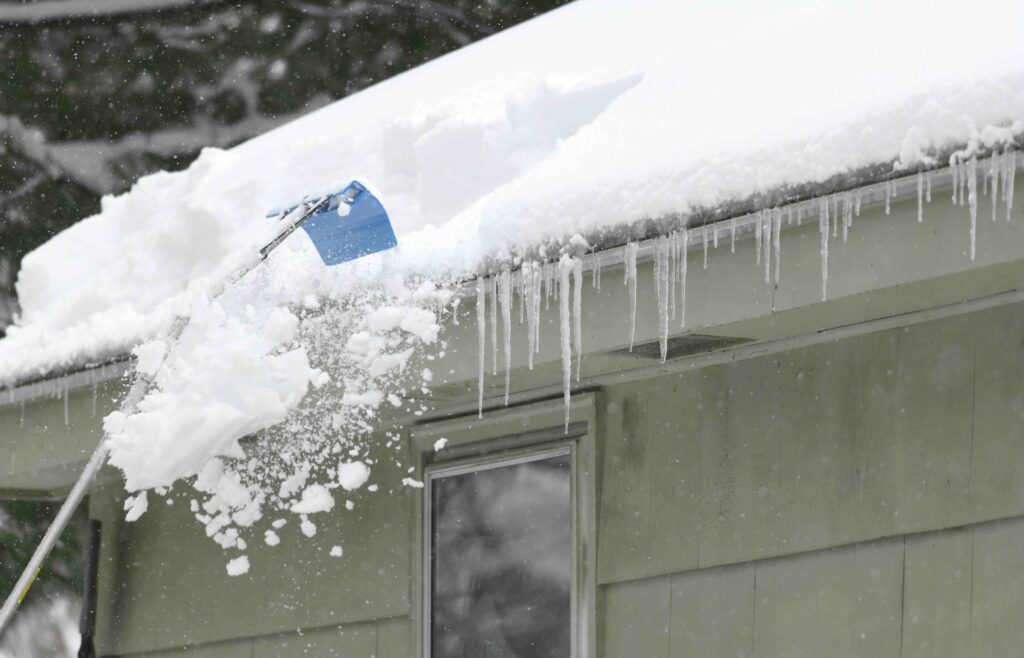
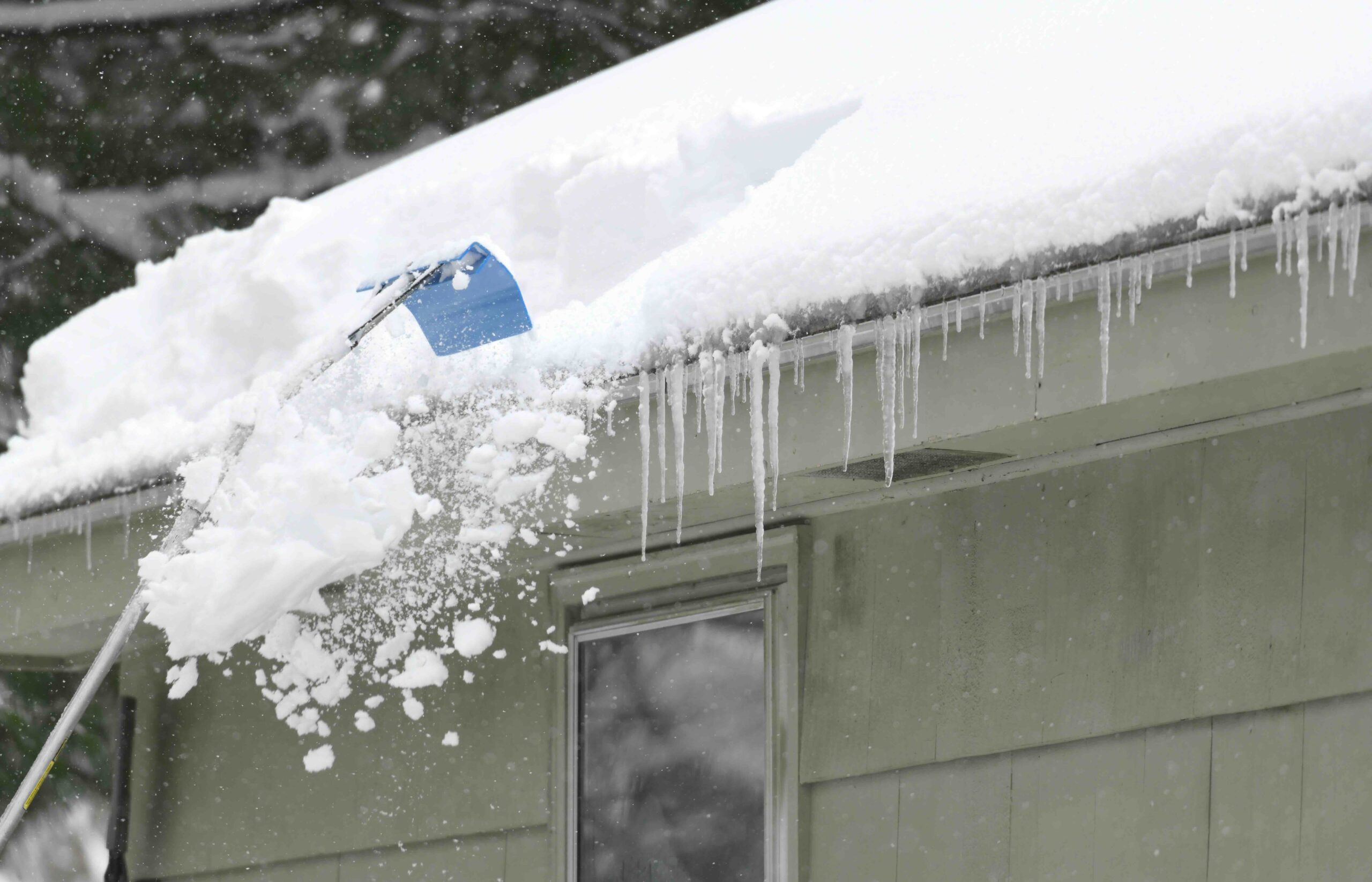
Roof rakes are the standard tool for removing snow from the ground level, and they work well for single-story homes or accessible lower roof sections. The goal is to pull snow off in sections, working from the edge upward, rather than dragging the full depth of accumulation in one motion. Never attempt to remove ice mechanically. Chipping at ice dams with a hammer or sharp tool risks puncturing the roofing material and causing far more damage than the ice itself would have. Rock salt and other chemical deicers should also be used cautiously, as some formulations are corrosive to metal flashing and can accelerate shingle degradation over time. When in doubt, a licensed roofing contractor can assess and remove hazardous accumulation safely.
How Attic Insulation and Ventilation Play a Role
The condition of your attic has a direct and measurable impact on how your roof performs under snow load. A well-insulated attic keeps the heat inside the living space where it belongs, preventing the warm roof deck scenario that causes ice dams. Proper ventilation maintains a consistent temperature across the entire roof surface, reducing the freeze-thaw cycling that degrades roofing materials over time. Homes with inadequate attic insulation not only suffer more ice dam activity but also tend to lose more energy through the roof in general, which shows up on utility bills long before it shows up as a visible roof problem. Upgrading attic insulation is one of the higher-return improvements a homeowner can make, both for structural protection and energy efficiency.
What a Home Warranty Covers and Where the Roof Fits In
This is where things get genuinely important from a financial planning standpoint. A standard home warranty plan typically covers the mechanical systems and appliances inside a home, things like HVAC equipment, water heaters, electrical panels, and kitchen appliances. Roof coverage is handled differently, and it varies significantly by provider. Some home warranty plans offer optional roof leak repair coverage as an add-on, which can cover the cost of repairing leaks that develop as a result of normal wear and tear. What most home warranties do not cover is structural roof damage resulting from storm events, which typically falls under homeowners insurance rather than a warranty plan. Understanding the distinction between these two types of protection is essential before you assume one covers the other.
Practical Maintenance Tips to Protect Your Roof Year-Round
Proactive maintenance dramatically reduces the likelihood of snow-related roof damage. Some of the most effective habits include:
- Scheduling a professional roof inspection every one to two years, and especially after any severe weather season
- Keeping gutters clean and clear so meltwater has a proper drainage path and does not back up along the eaves
- Trimming tree branches that hang over the roofline, as they can deposit additional snow and debris and cause impact damage under ice weight
- Checking attic ventilation annually to confirm intake and exhaust vents remain unobstructed
- Documenting the condition of your roof with photographs each year, which can be invaluable when filing insurance or warranty claims
Why Armadillo Is Worth Considering When Your Home Faces the Elements
Snow-related roof damage often starts small and compounds quickly. A minor leak becomes a mold problem. A stressed rafter becomes a repair project that touches structural framing, insulation, and drywall simultaneously. That kind of cascading failure hits hard, financially and logistically. Having the right home protection in place before things go sideways is not overcaution. It is just good sense. Armadillo was built for exactly this kind of reality. If you are looking for a trusted home warranty provider for comprehensive residential system coverage, Armadillo offers straightforward plans designed around how homes actually break down, not how insurance companies prefer to define coverage. When winter exposes a weakness in your home and a covered system fails as a result, you want a response that is fast and a process that does not feel like an obstacle course. Take a few minutes to get a free home warranty quote for winter-ready home protection and see what a plan built around real homeowner needs looks like.

Frequently Asked Questions About Snow, Roofs, and Home Protection
Homeowners dealing with winter roof concerns tend to have similar questions. Here are honest, straightforward answers to the ones that come up most often.
How much snow is too much for a residential roof?
Most residential roofs are designed to handle between 20 and 40 pounds of snow per square foot, depending on local building codes and construction standards. Wet, heavy snow accumulates weight much faster than dry powder, so there is no universal inch threshold. If accumulation exceeds one to two feet of heavy or wet snow, removal is generally advisable.
Do ice dams always cause leaks?
Not always, but they create conditions where leaks are likely. If the backed-up meltwater finds a gap or weak point in the roofing material, it will infiltrate the structure. Regular maintenance and proper attic insulation significantly reduce the chance of ice dams causing interior water damage.
Will my homeowners insurance cover snow damage to my roof?
In most cases, homeowners insurance covers sudden and accidental damage from snow and ice events, including collapse from excessive weight. However, damage resulting from lack of maintenance or gradual deterioration is typically excluded. Review your specific policy and confirm coverage limits with your insurer.
Does a home warranty cover roof repairs?
Standard home warranty plans focus on mechanical systems and appliances. Some providers offer optional roof leak coverage as an add-on. This typically covers leak repairs due to normal wear and tear, not storm damage. Always read the specific terms of any plan before purchasing.
How do I know if my attic has enough insulation?
A simple indicator is whether your roof loses snow more quickly than neighboring homes, which suggests heat is escaping through the roof. A professional energy audit can measure actual insulation levels against recommended R-values for your climate zone, giving you an accurate picture of where gaps exist.
Can I use a leaf blower or pressure washer to remove snow from my roof?
Neither is recommended. Pressure washers can damage roofing materials and force water beneath shingles. Leaf blowers lack the capacity to move significant snow volume and create safety risks. A proper roof rake designed for residential use is the appropriate tool for ground-level snow removal.
How often should I have my roof professionally inspected?
A professional inspection once every one to two years is a reasonable baseline for most homes. After any significant storm, severe ice event, or visible damage, an additional inspection is warranted regardless of when the last one occurred. Catching problems early almost always costs less than addressing them after they worsen.
What is the difference between a roof leak and an ice dam leak?
A standard roof leak typically originates from a damaged or missing shingle, failed flashing, or deteriorated sealant around penetrations. An ice dam leak occurs when meltwater backs up beneath intact shingles due to a frozen ridge at the eave. The source and repair approach for each are different, which is why accurate diagnosis matters.
Are metal roofs better than asphalt shingles in snowy climates?
Metal roofs tend to shed snow more readily due to their smooth surface and low friction coefficient, which can reduce accumulation-related stress. They are also more resistant to freeze-thaw degradation. However, they can accelerate snow slides in ways that create hazards below. The best roofing material for a snowy climate depends on the specific slope, pitch, and surrounding site conditions of the home.
Should I be worried about roof damage if my home is newer?
Newer homes are built to current load standards, which is an advantage. That said, age alone does not guarantee performance. Poor workmanship, substandard materials, and inadequate attic conditions can create vulnerabilities in any home regardless of build year. Regular maintenance and inspections apply equally to new and older construction.