Why Does My Electricity Keep Going On and Off? A Homeowner’s Guide to Flickering Power and What to Do About It
You are sitting at home, maybe watching something, maybe working, and then the lights flicker. Then again. Then the power cuts out entirely for a few seconds before coming back like nothing happened. It is unsettling, and honestly, it should be. Intermittent electrical issues are not just annoying — they can be a sign of something that genuinely needs attention. Understanding why your electricity keeps going on and off is one of those things that saves you money, stress, and potentially a much bigger problem down the road.
What Does It Mean When Electricity Keeps Going On and Off
When your electricity flickers or cuts in and out, it points to an interruption somewhere in the electrical circuit. That interruption could be happening at the utility level, at your service panel, inside the walls, or right at a specific outlet or fixture. The tricky part is that the symptom — flickering or intermittent power — can mean several very different things. A one-time flicker during a storm is not the same as lights dimming every time the refrigerator cycles on. Both are worth paying attention to, but they call for different responses. The first step is figuring out whether the issue is isolated to one area of the home or whether it is affecting the whole house.
Common Causes of Intermittent Power Loss in a Home
There is no single answer here, which is part of what makes this issue frustrating to diagnose. But there are several causes that come up again and again when homeowners report electricity going on and off.
- Loose or corroded wiring connections at the panel, outlets, or fixtures
- An overloaded circuit drawing more power than it was designed to handle
- A failing or outdated electrical panel that cannot manage the home’s current demand
- Faulty breakers that are tripping partially rather than fully
- Issues with the utility company’s supply line or transformer
- Damaged service entrance cables where power enters the home
- Appliances with high startup loads causing voltage dips on the circuit
Each of these scenarios produces similar symptoms, which is exactly why a proper diagnosis matters. Guessing and ignoring the issue is not a strategy — it is a liability.
How Your Home’s Electrical System Actually Works
To understand why power goes on and off, it helps to understand the basic path electricity takes through your home. Power from the utility grid enters your home through the service entrance, passes through an electric meter, and then reaches your main electrical panel. From there, it is distributed through individual circuits to every outlet, switch, light fixture, and appliance in the house. Each circuit is protected by a breaker that is designed to trip when there is too much current flowing through it. When something in that chain is compromised — whether it is a loose connection, a worn-out component, or a circuit that is simply overworked — you start to see power instability.
When Flickering Lights Signal a Serious Electrical Problem
Not every flicker is a crisis, but some of them are. If the lights in your home dim noticeably every time a large appliance kicks on — like your air conditioner, refrigerator, or washing machine — that suggests your electrical panel may not be adequately sized for your home’s load. If you notice flickering accompanied by a burning smell, buzzing sounds from outlets or the panel, or warm switch plates, those are red flags that need immediate professional attention. Arcing inside walls, which is one potential cause of intermittent power, is also one of the leading causes of residential electrical fires. This is not a situation where waiting to see if it resolves itself is a reasonable option.

How to Troubleshoot Intermittent Power Issues at Home
Before calling an electrician, there are a few things you can reasonably check yourself — carefully. Start by identifying whether the issue is isolated to one room, one circuit, or the entire house. Check your electrical panel for any breakers that appear to be in the middle position rather than fully on or fully off. A tripped breaker often sits between the two positions rather than snapping all the way to off. Reset it by switching it fully off and then back on. If a breaker keeps tripping, that is a sign of an underlying issue that needs professional evaluation. You should also check that any outlets involved are not GFCI outlets that have tripped — those have small reset buttons directly on them. Beyond those steps, diagnosing electrical issues without proper training and equipment introduces real risk. This is one category where professional help is genuinely the right call.
The Role of Your Electrical Panel in Power Stability
Your electrical panel is essentially the command center of your home’s power system, and it deserves more attention than most homeowners give it. Panels have a lifespan, and older homes — particularly those with panels from brands known for reliability problems or those that are simply decades old — may not be equipped to handle the electrical demands of modern life. If your home still has a fuse box rather than a breaker panel, or if your panel has not been inspected in years, intermittent power issues may be symptomatic of a system that has reached the end of its effective life. Panel replacements are a significant investment, but they are also one of the most impactful upgrades you can make for both safety and functionality.
What Utility-Side Problems Look Like Versus In-Home Issues
Sometimes the electricity going on and off is not your problem at all — at least not one you can fix. Utility-side issues include problems with the transformer serving your neighborhood, damage to overhead or underground lines, or grid instability during periods of high demand. A good way to distinguish utility issues from in-home issues is to check with neighbors. If multiple homes on your street are experiencing the same thing, it points to the utility. If it is just your home, the problem is almost certainly inside your system. You can also contact your utility provider directly — they often have outage maps and can tell you whether there is a known issue in your area.
How Home Warranties Factor Into Electrical System Problems
This is where it gets interesting for homeowners who have a home warranty — or who are wondering whether they should get one. Electrical systems are among the most common sources of unexpected repair costs, and a quality home warranty plan can cover components like wiring, electrical panels, and related systems when they fail due to normal wear and tear. That is the key phrase: normal wear and tear. Most home warranty plans are not going to cover damage caused by neglect, improper installation, or pre-existing conditions that were knowable at the time the policy started. Understanding what your plan covers before something goes wrong is critical. If you have intermittent electrical issues now, addressing them proactively — before a claim is ever needed — puts you in a much better position.
Why Armadillo Is Worth a Serious Look for Electrical Coverage and Beyond
When your electricity keeps going on and off, the last thing you want is to navigate a complicated, slow-moving claims process while sitting in the dark. That is exactly the kind of experience Armadillo home warranty coverage for electrical systems and whole-home protection is built to avoid. Armadillo is designed around transparency and simplicity — homeowners know what is covered, how the process works, and what to expect when something goes wrong. There are no surprise exclusions buried in dense policy language and no frustrating runaround when a legitimate repair is needed. Electrical failures are stressful enough on their own. Dealing with an unhelpful warranty provider on top of that is something no homeowner should have to experience. If you want protection that actually works when your electrical system acts up, take a few minutes to get a personalized home warranty quote for electrical and systems coverage and see what coverage looks like for your home specifically. It is a straightforward process, and it may be one of the more useful things you do for your home this year.

Frequently Asked Questions About Electricity Going On and Off at Home
Here are the most common questions homeowners ask when dealing with intermittent power issues, answered directly and practically.
Why does my electricity flicker when I turn on a large appliance?
Large appliances like air conditioners and refrigerators draw a significant surge of current when they start up. If your electrical panel or wiring is not adequately sized for that load, you may see a brief voltage dip that causes lights to flicker. This is sometimes normal but can also indicate an undersized panel or circuit.
Is flickering electricity dangerous?
It can be. Occasional flickering during storms or brief utility fluctuations is usually not cause for alarm. Persistent or unexplained flickering, especially when accompanied by buzzing sounds, warm outlets, or a burning smell, may indicate arcing or wiring issues that pose a fire risk and require immediate professional inspection.
Can a loose outlet cause the whole circuit to lose power?
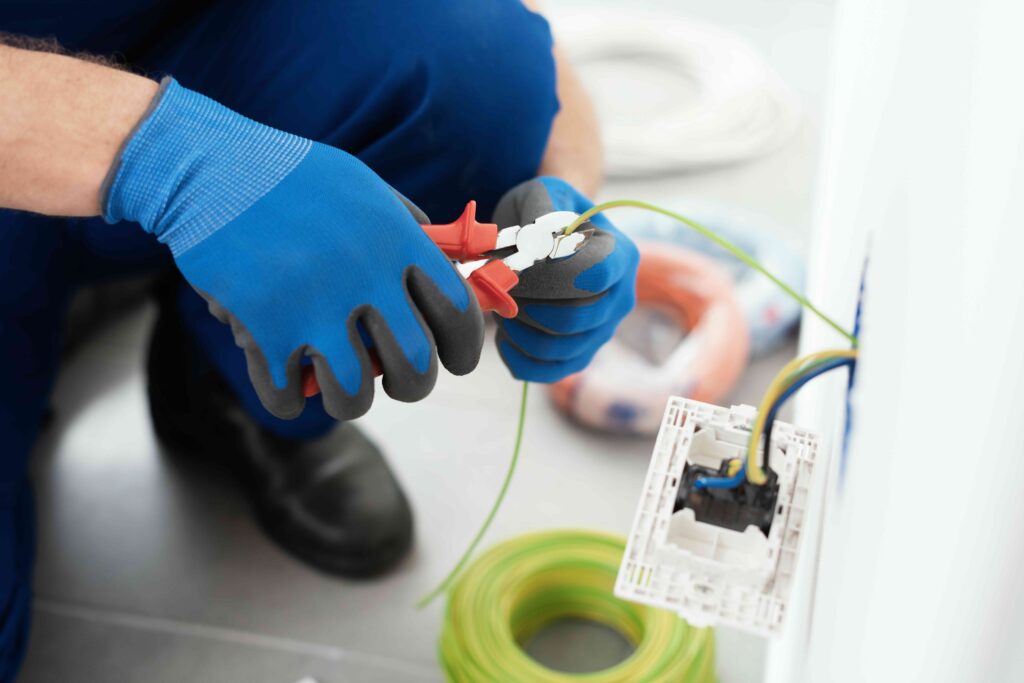
Yes. A loose connection at a single outlet can disrupt power flow to every outlet and fixture on that circuit. Loose connections are also a source of arcing, which is both a fire hazard and a contributor to intermittent power issues throughout the home.
How do I know if the problem is with my utility company or inside my home?
Check with neighbors to see if they are experiencing the same issue. You can also contact your utility provider to see if there are reported outages or grid issues in your area. If the problem is isolated to your property, the source is almost certainly inside your home’s electrical system.
Should I reset a breaker that keeps tripping?
You can reset it once to restore power, but a breaker that trips repeatedly is telling you something important — the circuit is drawing more current than it can safely handle. Continuing to reset it without identifying the cause is not safe. A licensed electrician should evaluate the circuit before further use.
Does a home warranty cover electrical problems like intermittent power?
Many home warranty plans do cover electrical system components, including wiring and panels, when failures result from normal wear and tear. Coverage specifics vary by provider and plan, so reviewing your policy details carefully or speaking with the provider before a problem occurs is always the best approach.
What is the lifespan of a home’s electrical panel?
Most electrical panels are designed to last 25 to 40 years, though this can vary depending on the brand, usage demands, and maintenance history. Homes that have added significant electrical loads over the years — such as EV chargers, home offices, or added square footage — may find their panels reach functional limits before that timeframe.
Can old wiring cause electricity to go on and off?
Absolutely. Older wiring materials, like aluminum branch circuit wiring common in homes built in the 1960s and 1970s, are more prone to connection failures and overheating. Knob-and-tube wiring from even earlier eras introduces additional risk. Both can contribute to intermittent power issues and both warrant a professional evaluation.
Is it normal for power to flicker during a storm?
Brief flickering during severe weather is common and typically caused by utility-side fluctuations rather than an in-home issue. However, if power fluctuations during storms seem to correlate with longer-term instability inside the home, it is worth having an electrician inspect the service entrance and grounding system.
How much does it cost to fix intermittent electrical problems in a home?
Costs vary widely depending on the root cause. A simple outlet or breaker repair may cost a few hundred dollars, while a full panel replacement can range from one thousand to several thousand dollars depending on panel size, local labor rates, and any required permits. Home warranty coverage, where applicable, can significantly reduce out-of-pocket costs for eligible repairs.