
Why Is My Air Conditioner Making Me Cough? What Homeowners Need to Know
You turn on the AC, the cool air kicks in, and within minutes you are reaching for a glass of water and clearing your throat. Sound familiar? If your air conditioner is making you cough, you are definitely not imagining it. This is one of those things that people tend to brush off as seasonal allergies or dry air, but the reality is that your HVAC system might be the actual culprit. Understanding how your air conditioner works and what can go wrong inside it is genuinely useful information, especially if you are someone who spends a lot of time at home.
How Your Air Conditioner Actually Works
Before diving into the coughing problem, it helps to understand what an air conditioner is doing when it runs. Your AC system pulls warm air from inside your home, passes it over a set of cold coils filled with refrigerant, and then pushes the cooled air back through your ductwork. Along the way, that air passes through a filter designed to catch dust, debris, pet dander, and other airborne particles. In theory, this process should make your indoor air cleaner and more comfortable. In practice, when any part of that system is dirty, damaged, or poorly maintained, the air coming out of your vents can carry irritants directly into your lungs. That is when the coughing starts.
The Most Common Reasons Your AC Triggers Coughing
There are several reasons an air conditioning system can cause respiratory irritation, and most of them come back to maintenance. A clogged or dirty air filter is the single most frequent offender. When the filter is overloaded with debris, it stops trapping new particles effectively, and some of that buildup can actually get pushed back into the airflow. Beyond the filter, mold and mildew growth inside the unit or ductwork is a serious concern. Air conditioners create condensation as part of the cooling process, and that moisture, if not properly drained, becomes a breeding ground for mold spores that circulate through your home every time the system runs. Dust accumulation in the ducts, bacteria on the evaporator coils, and even off-gassing from refrigerant leaks can all contribute to coughing and throat irritation.

Signs Your AC System Is Affecting Your Indoor Air Quality
Sometimes the connection between your air conditioner and your symptoms is not immediately obvious. There are a few signals worth watching for that suggest your HVAC system may be compromising the air you breathe indoors.
- Coughing, sneezing, or throat irritation that begins shortly after the AC turns on
- A musty or stale smell coming from the vents when the system is running
- Visible dust blowing out of registers when the fan kicks on
- Allergy-like symptoms that improve noticeably when you leave home
- Dark spots or discoloration near vents, which can indicate mold growth
- Family members or pets showing similar respiratory symptoms
The Role of Air Filters in Respiratory Health
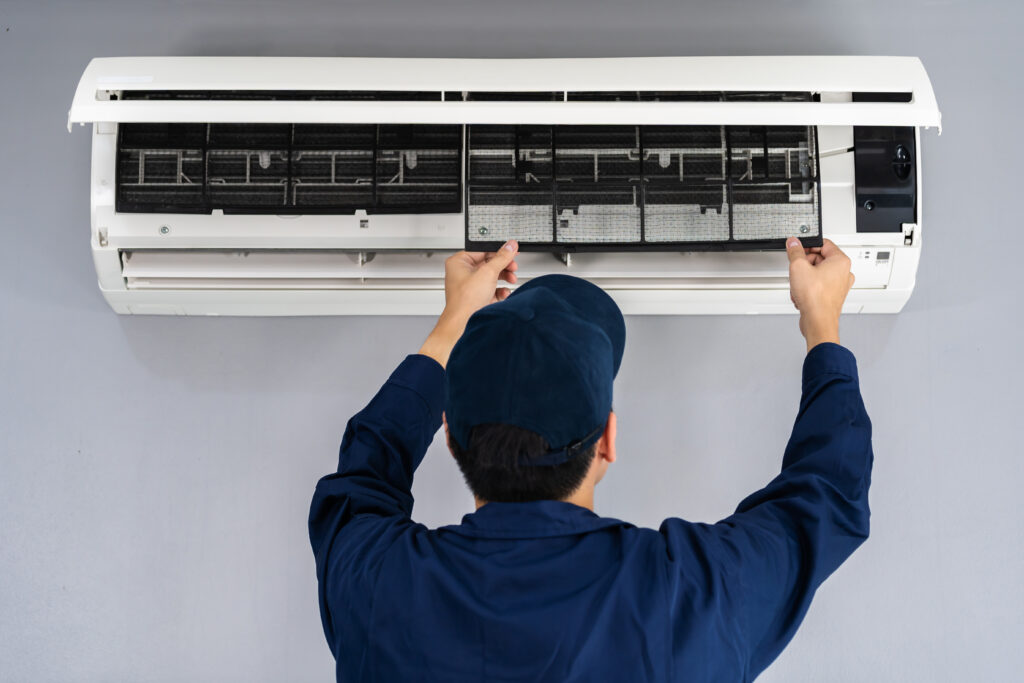
Air filters are the first line of defense between your HVAC system and your lungs, but they only work when they are clean and properly rated for your system. Filters are assigned a MERV rating, which stands for Minimum Efficiency Reporting Value. A higher MERV rating means the filter captures smaller particles, including mold spores, bacteria, and fine dust. Most standard filters fall between MERV 1 and MERV 8, which handles larger debris reasonably well but may let smaller irritants pass through. Filters rated MERV 11 to 13 offer significantly better air quality protection. The catch is that filters need to be changed regularly, typically every one to three months depending on usage and household conditions like pets or allergies. A forgotten filter does not just reduce air quality, it also strains the entire system and can lead to mechanical failures over time.
Ductwork and Hidden Contaminants
Even if your filter is clean and your unit looks fine on the outside, the ductwork running through your walls and ceilings can harbor years worth of accumulated dust, debris, and biological growth. Duct systems are rarely inspected by homeowners, and professional duct cleaning is not always top of mind. The problem is that conditioned air travels through every inch of that ductwork before it enters your living space. If those passages are contaminated, the air will be too. Signs that your ducts may need attention include inconsistent airflow from room to room, an unusually high amount of dust settling on surfaces shortly after cleaning, or a persistent musty odor that no amount of air freshener seems to fix. Duct cleaning is not something that needs to happen every year, but it is something that should happen periodically, especially in older homes.
Humidity, Mold, and Your AC System
One of the less appreciated functions of your air conditioner is humidity control. As the system cools your home, it also removes moisture from the air, which is why the air feels drier when the AC is running. This is generally a good thing, but it comes with a tradeoff. The moisture that gets pulled out of the air has to go somewhere, and it collects in a drain pan and exits through a condensate drain line. When that drain line becomes clogged, water backs up and creates exactly the kind of damp, dark environment where mold thrives. Mold spores circulating through your HVAC system are a legitimate health concern, particularly for people with asthma, allergies, or compromised immune systems. Regularly inspecting the drain pan, keeping the area around the unit dry, and scheduling annual HVAC service are all practical ways to keep mold from becoming a problem.
Practical Steps to Improve Indoor Air Quality Through Your AC
Improving the air coming from your air conditioner does not require a major renovation. There are straightforward steps that make a noticeable difference in how the system performs and how the air in your home feels.
- Replace air filters every one to three months, or more frequently if you have pets or allergies
- Schedule annual professional HVAC maintenance before the cooling season begins
- Have the evaporator coils cleaned during routine service to prevent bacterial and mold buildup
- Inspect and clear the condensate drain line at least once per year
- Consider upgrading to a higher MERV-rated filter appropriate for your system
- Add a whole-home air purifier or UV light system to your HVAC setup for additional protection
- Keep the area around your outdoor condenser unit clear of debris and vegetation
When the Problem Is Bigger Than Maintenance
Sometimes the coughing is a symptom of a deeper mechanical issue. Refrigerant leaks, for instance, can release chemicals into the airflow that irritate the respiratory system. A cracked heat exchanger in systems that also provide heating can introduce carbon monoxide into conditioned air, which is a serious safety hazard beyond just coughing. If you have addressed the obvious maintenance issues and symptoms persist, it is worth calling an HVAC technician to do a thorough inspection. These are not DIY situations. A qualified technician can test for refrigerant leaks, inspect the heat exchanger, check the electrical components, and evaluate the overall condition of the system. Catching a major issue early is always less expensive than dealing with a full system failure or a health emergency.
How a Home Warranty Can Protect You When Your AC Fails
Here is the thing about air conditioners: they are complex, expensive systems that will eventually need repair or replacement, often at the least convenient moment. When an AC breakdown happens, the cost can range from a few hundred dollars for a minor repair to several thousand for a compressor replacement or new system entirely. That kind of unexpected expense is exactly what a home warranty is designed to address. Armadillo home warranty protection for HVAC systems and major appliances gives homeowners a genuine financial safety net when covered systems break down due to normal wear and tear. Rather than scrambling to find a reputable technician and negotiating repair costs, you have a streamlined process and predictable pricing already in place. If your air conditioner has been showing signs of trouble, whether that is coughing-triggering contamination or mechanical decline, it is worth thinking ahead. Get a free home warranty quote to cover your air conditioner and HVAC system today and stop treating major repair bills as an unavoidable surprise.

Frequently Asked Questions About Air Conditioners and Coughing
These are the questions homeowners ask most often when they suspect their AC system is affecting their health and air quality at home.
Can an air conditioner actually cause coughing?
Yes. An air conditioner can cause coughing when it circulates dust, mold spores, bacteria, or chemical irritants through your home’s ductwork and vents. Poor maintenance is the most common underlying cause.
How often should I change my AC air filter?
Most households should change their AC air filter every one to three months. Homes with pets, allergy sufferers, or high dust levels may need more frequent changes, sometimes as often as every 30 days.
What MERV rating is best for improving indoor air quality?
Filters rated MERV 11 to 13 provide strong filtration for most homes, capturing smaller airborne particles including mold spores and fine dust without overly restricting airflow in standard residential systems.
How do I know if there is mold in my air conditioner?
Common signs include a persistent musty smell when the AC runs, visible dark spots near vents or inside the unit, and respiratory symptoms that worsen indoors. A professional HVAC inspection can confirm mold presence.
Is dry air from an AC bad for your throat?
Yes. Air conditioners reduce indoor humidity, which can dry out mucous membranes in the throat and nasal passages, leading to irritation and coughing. Using a humidifier alongside your AC can help balance indoor humidity levels.
Can a refrigerant leak make you cough?
Yes. Refrigerant leaks can introduce chemical irritants into your conditioned air. Symptoms may include coughing, dizziness, and shortness of breath. A refrigerant leak should be addressed by a licensed HVAC technician immediately.
How often should ductwork be professionally cleaned?
The National Air Duct Cleaners Association recommends professional duct cleaning every three to five years, though homes with pets, recent renovations, or visible mold growth may need it more frequently.
Does annual HVAC maintenance actually prevent health issues?
Annual HVAC maintenance addresses the most common sources of indoor air quality problems, including dirty coils, clogged drain lines, and filter conditions. It is one of the most practical steps homeowners can take for both health and system longevity.
Can a home warranty cover HVAC repairs related to breakdowns?
Yes. Most home warranty plans cover mechanical failures in HVAC systems caused by normal wear and tear, including compressor issues, blower motor failures, and other covered components. Coverage specifics vary by plan.
What should I do if my AC symptoms do not improve after cleaning and filter changes?
If respiratory symptoms persist after addressing basic maintenance, schedule a professional HVAC inspection to check for refrigerant leaks, duct contamination, or mechanical issues. Consult a medical professional if health symptoms continue.