Why Your Sink Won’t Drain—and How a Home Warranty Can Help Ground the Problem
A slow-draining or completely blocked sink doesn’t just disrupt your day—it can be an early warning sign of a deeper plumbing issue. Whether you’re managing the morning dishes or prepping dinner, a sink that won’t drain is more than an inconvenience; it’s a subtle cue that your home’s drainage system needs attention. For homeowners, understanding the underlying causes of poor drainage, how the system is meant to function, and what can be done to resolve or protect against future issues is essential. And that’s where a home warranty can suddenly feel more like a necessity than a luxury.
Understanding the Kitchen Drain System
Before diving into repair methods or warranty coverage, it’s important to understand how your sink’s drainage system is designed to work. The kitchen sink connects to a drainpipe positioned below the sink basin. That drainpipe typically leads to a P-trap—a curved section of pipe that prevents sewer gases from traveling back into your home. Beyond the trap, the water flows into the larger household drain line, eventually joining the main sewer line or septic system.
The P-trap works not only to keep odors at bay but also traps debris accidentally flushed down the sink. Above the trap, the tailpiece pipe connects to the strainer, which is the visible part inside the sink bowl. If everything in the system is clear, the used water flows smoothly out and away. But all it takes is buildup in just one part of this system to throw off the balance—and clog the entire process.
Common Causes for a Sink That Won’t Drain
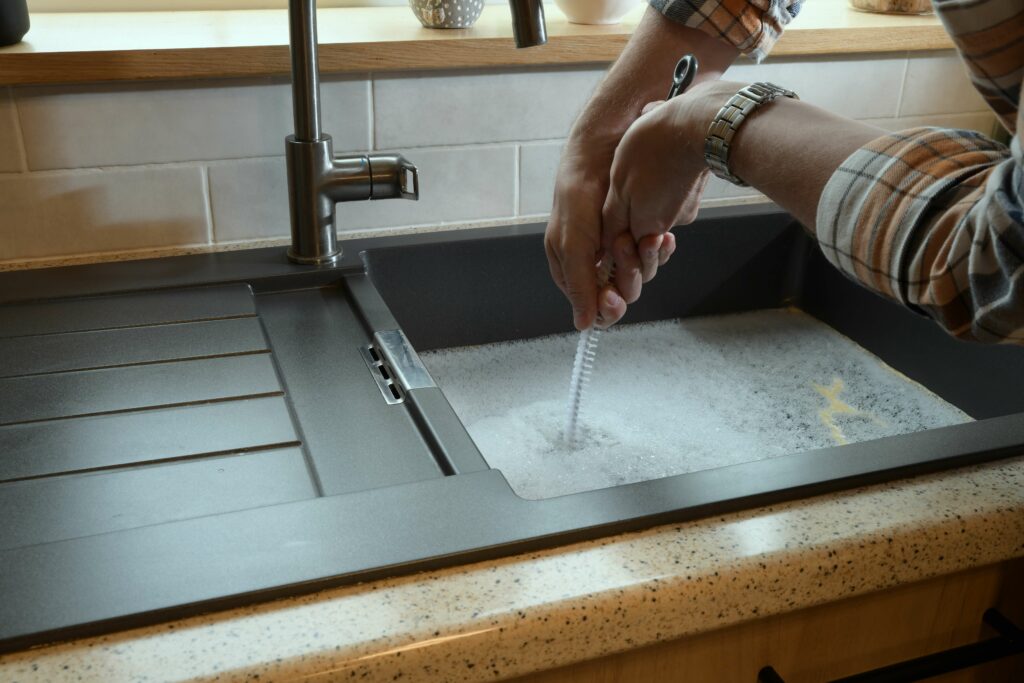
Grease buildup remains one of the most common, and most overlooked, culprits. Hot grease poured down a sink may seem liquid when it enters the pipe, but once it cools, it solidifies and adheres to pipe walls. Over time, it narrows the space through which water can pass. Then come food particles, soap residue, and even bits of sponge or plastic—anything not meant to go down a drain can add to the stoppage.
In homes with older plumbing, corrosion or pipe misalignment can also lead to reduced drainage efficiency. Slow drainage may initially appear as a nuisance, but unresolved, it grows into full blockages that can back up wastewater into your sink or cause leaks within cabinetry. Once you reach that point, it often requires professional intervention.
Signs It’s More Than Just a Clog
Persistent drainage issues that respond poorly to plunging or chemical treatments could indicate a larger problem beyond the local pipes. If you notice that one sink clogs, and shortly afterward, other drains in your home slow down, you may be dealing with a main sewer line blockage. At that point, the problem has extended beyond the immediate fixture and entered the domain of home infrastructure.
Other red flags include gurgling sounds long after the water has gone down the drain, a constant sewage-like odor, or recurring need for professional drain cleaning. These are signs of a systemic plumbing issue—one that can be both costly and disruptive if not caught early. And they’re also precisely the kind of issues that benefit from thoughtful coverage through a home warranty plan.
When a Home Warranty Provides Real Value
Home warranties exist to reduce both the cost and uncertainty of dealing with home system failures. Plumbing systems, including drain lines and stoppages, are among the more complex and expensive housing features to repair. If your sink won’t drain and localized fixes don’t work, service costs can escalate quickly—especially if excavation or sewer line repair is needed.
A comprehensive home warranty plan covers the hidden systems behind your walls, not just the appliances in front of them. Coverage for home plumbing typically includes stoppages, venting failures, breaks, and leaks associated with your home’s drain, vent, or waste systems. That means when your sink’s drainage problem is more than a surface-level clog, the warranty kicks in to connect you with vetted professionals and manage the repairs—often for just the price of a nominal service fee.
The Limits of Coverage You Should Know
While home warranties provide broad protection, they don’t cover everything. It’s important to understand the distinctions between coverage and homeowner responsibility. For instance, minor clogs from hair or soap buildup caused by improper usage may not be covered. Similarly, in some plans, lines beyond the home’s foundation—like the municipal connection—may fall outside the scope of service.
Choosing a provider that clearly states what’s included and what’s excluded within each coverage level will help you prevent unwelcome surprises. At the same time, regularly cleaning your drains and being mindful of what goes down the sink can extend the life of your plumbing and reduce your reliance on reactive fixes.
Proactive Plumbing Maintenance Pays Off
Sometimes the simplest practices are the most effective. Avoiding pouring hot grease, using screen strainers to catch food particles, and running hot water after using the sink all contribute to long-term drainage health. Even with warranty coverage, keeping issues from arising in the first place protects your time and comfort. Schedule periodic inspections, especially if you live in an older home, and address signs of slow drainage early. That way, your home warranty becomes a safeguard—not a rescue mission.
Grounded Coverage with Armadillo—The Smart Way to Solve Stoppages
When sink drainage becomes more than a minor issue, you want more than a quick fix—you want confidence that your home’s systems are protected for the long term. With Armadillo’s comprehensive home warranty options, your plumbing infrastructure gets the backup it deserves, from drain lines to stoppage removal and beyond. The coverage is smart, fast, and built to adapt to homeowners’ real-life needs. Ready to take the guesswork out of your plumbing problems? Start customizing your coverage and protect your home’s inner workings at this link today.