Everything You Need to Know About Window Air Conditioning Units
For homeowners looking to cool specific rooms without committing to the extensive cost and installation of central air, window air conditioning units offer a viable and efficient solution. These compact systems are deceptively simple and are often the first step many take in climate control for their homes. But how do they actually operate? What are the advantages compared to alternatives? And how does a home warranty play into maintaining a window AC unit over time? Let’s walk through the essentials of what you need to know—from function to maintenance—so you can make the most informed decision for your home’s comfort and budget.
What Is a Window Air Conditioning Unit?
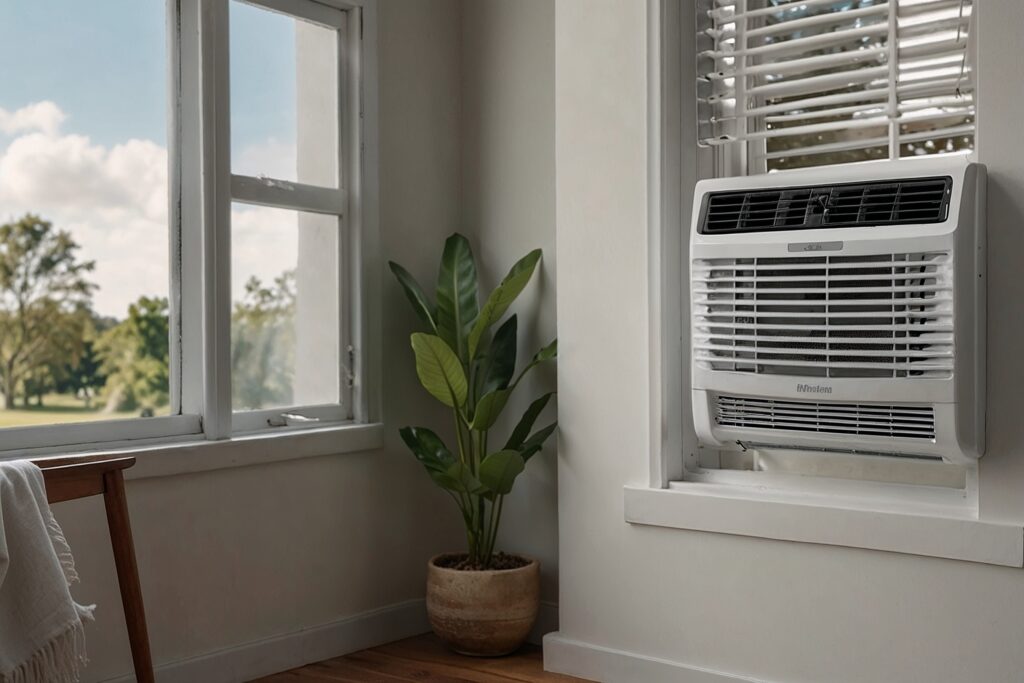
A window air conditioner is a self-contained cooling system mounted inside a window frame or sometimes through a specially designed wall opening. It’s designed to cool a single room or a small zone rather than an entire house. A typical unit includes all essential components: compressor, condenser, expansion valve, and evaporator—all packed into one box.
Unlike split systems or central air, which require ductwork and a network of connections, a window AC functions independently. It draws in warm air from the room, passes it over cold coils filled with refrigerant, and blows the cooled air back in while venting the hot air outside. Its compactness and no-duct design make it one of the most accessible cooling systems for homeowners, renters, or anyone needing temporary cooling relief.
How Does a Window AC Unit Work?
Though it appears straightforward on the surface, the science behind a window AC is built on thermodynamics and careful engineering. Here’s where we zoom in a bit. The compressor inside the unit compresses refrigerant gas, raising its temperature and pressure. From there, the hot, high-pressure gas flows through the condenser coils, releasing heat to the outside air with the help of a fan. The refrigerant, now a liquid, is routed through an expansion valve, where it rapidly cools and drops in pressure. This cool liquid travels through the evaporator coils, absorbing heat from the warm indoor air. Again, a fan helps push this cooled air back into your room.
Despite operating from your window sill, this cycle is extremely efficient for its size. Some models even have programmable thermostats, energy-saving modes, and smartphone controls. However, keep in mind that these conveniences depend on model and price tier.
Key Benefits of Installing a Window AC
Window air conditioners offer several considerable advantages, particularly for homes needing temporary or localized cooling. First, the installation process is manageable. Most homeowners with a screwdriver and a Sunday afternoon can get one up and running. No licensing, no duct installation, no contractors required, in most cases.
Next is affordability. Both in up-front cost and operational expense, window AC units remain one of the most economical options for home cooling. You can find models of varying sizes for different room square footages, so finding one tailored to your specific space is straightforward. Additionally, since they only cool one room, you’re not consuming energy cooling unused areas of the house.
In terms of portability, some units can be removed at the end of the season, allowing you to store them during winter months and prolong their lifespan. And modern designs have become increasingly efficient, with Energy Star ratings and programmable features that help reduce your monthly energy bills.
Drawbacks to Consider with Window AC Units
That said, they’re not without their compromises. Noise is a common concern, with the compressor and fan running in close proximity to your living space. Even the quieter models will emit some ambient humming. If you are sensitive to background noise at night or during focused work, a window AC may require adaptation.
Then there’s the aesthetic factor. Installing a unit in your window means partially blocking natural light and obstructing your view. Some neighborhoods or homeowners associations may discourage their use for front-facing windows. Also, they aren’t always ideal for larger homes or open-concept layouts, where cool air doesn’t circulate as efficiently.
Another limitation is security and insulation. Improper installation can leave gaps, allowing insects or outdoor air to enter. In areas where storm windows or double-hung framing isn’t available, installation could be more complex and require custom mounting solutions.
Choosing the Right Window Unit for Your Space
Model selection depends heavily on room size, insulation quality, ceiling height, and sun exposure. Window ACs are typically rated by BTU (British Thermal Unit) output. A higher BTU count means the unit can cool a larger area, but you don’t want to overshoot. A unit that’s too powerful for the room size may cycle on and off too quickly, failing to dehumidify the space properly. Conversely, a model that’s too weak will struggle to maintain a comfortable temperature and drive up energy usage.
Take accurate measurements of your window opening before purchasing. Compatibility is key. Double-check whether the model includes installation kits for security and sealing. Features such as sleep mode, multiple fan speeds, remote access, and air purification filters are all helpful for maximizing comfort and efficiency.
Maintenance and Longevity Tips
A window air conditioner, even the most rugged model, benefits from regular upkeep. Cleaning or replacing filters monthly during heavy use is essential to ensure top performance and preserve air quality. Dust and debris can clog the evaporator coils or impede airflow, causing the unit to work harder than necessary—and possibly fail prematurely.
At the end of each season, inspect and clean both condenser and evaporator coils. Remove any insects or built-up organic matter that may have collected inside. Store the unit indoors during the off-season if removable. Keeping it dry, clean, and covered minimizes the effects of oxidation and stored-up grime. With consistent care, a well-made window AC should give you around 8 to 10 years of efficient service.
How a Home Warranty Can Help
Although window AC units aren’t always covered in every standard home warranty policy, some providers offer optional appliance coverage that may include compact cooling systems. Pay special attention to warranty terms on both the manufacturer and home warranty service side. Repairs or replacement for faulty fans, motor issues, or refrigerant leaks can be costly if out of pocket.
Look for home warranty plans that cover HVAC systems and ask if window-mounted units fall under optional mechanical appliance coverage. A minor investment in a monthly policy can yield significant savings over time—especially if your unit shows signs of age or heavy usage. Proper documentation, proof of maintenance, and a responsive warranty provider can all lower the risk of surprise expenses during heatwaves.
Protect Your Cooling Comfort with Armadillo
If you’re relying on a window AC unit to keep your household cool, don’t leave its performance to chance. At Armadillo, we offer tailored home warranty solutions that help you extend the life of your home systems and stay ahead of breakdowns. Our streamlined digital claims process, transparent coverage terms, and modern flexible plans ensure you’re never left out in the heat. To explore how we can help protect your window air conditioner and other home essentials, visit our homepage or start building your custom protection plan now by heading to our plan builder. With Armadillo, peace of mind is always within reach—even when temperatures rise.