Why Your Ceiling Fan Direction in Winter Actually Matters More Than You Think
Most homeowners set up a ceiling fan, pull the chain a few times, and never really think about it again. That is honestly understandable. It spins, it moves air, it feels nice in the summer. Done. But there is a setting on that fan that a lot of people overlook entirely, and it has a real, measurable impact on how warm your home feels during the colder months. Switching your ceiling fan to rotate clockwise in winter is one of those simple, low-effort adjustments that quietly works in the background to make your home more comfortable and your heating system work a little less hard. Here is everything you need to know about how it works, why it helps, and what to watch out for.
The Basic Science Behind Ceiling Fan Airflow
Ceiling fans do not actually change the temperature of a room. That is worth stating upfront because there is some genuine confusion around it. What they do is move air, and moving air changes how temperature feels to the people and surfaces in a given space. In the summer, fans running counterclockwise create a downdraft, which pushes cooler air down and creates a wind chill effect on your skin. That is what makes a room feel cooler even though the thermostat has not changed. In the winter, that same downdraft is the last thing you want. Cold air being pushed directly down onto people sitting in a room is not comfortable. The clockwise direction changes everything. When a ceiling fan spins clockwise at a low speed, it pulls air upward near the center of the room and pushes the warm air that has collected near the ceiling outward along the walls and gently back down. It is a circulation pattern rather than a direct blast of air, and that distinction matters a lot.
Where All That Warm Air Actually Goes Without a Fan
Heat rises. That is not a metaphor. Warm air is less dense than cool air, and it naturally moves upward in any enclosed space. In a home with standard ceiling heights, that means a significant portion of the warmth your heating system generates is hanging out near the ceiling, which is not particularly useful to anyone sitting or standing in the room. In homes with vaulted ceilings, cathedral ceilings, or open floor plans, this effect is even more pronounced. You can have a furnace running at full capacity while a substantial pocket of warm air sits well above head level. Running your ceiling fan clockwise in winter at a low speed redistributes that air, blending the temperature layers in the room and making the whole space feel warmer without turning up the thermostat. Some estimates suggest this can reduce heating costs by somewhere in the range of five to fifteen percent depending on ceiling height, insulation quality, and how consistently the fan is used.
How to Actually Switch Your Fan to Clockwise Rotation
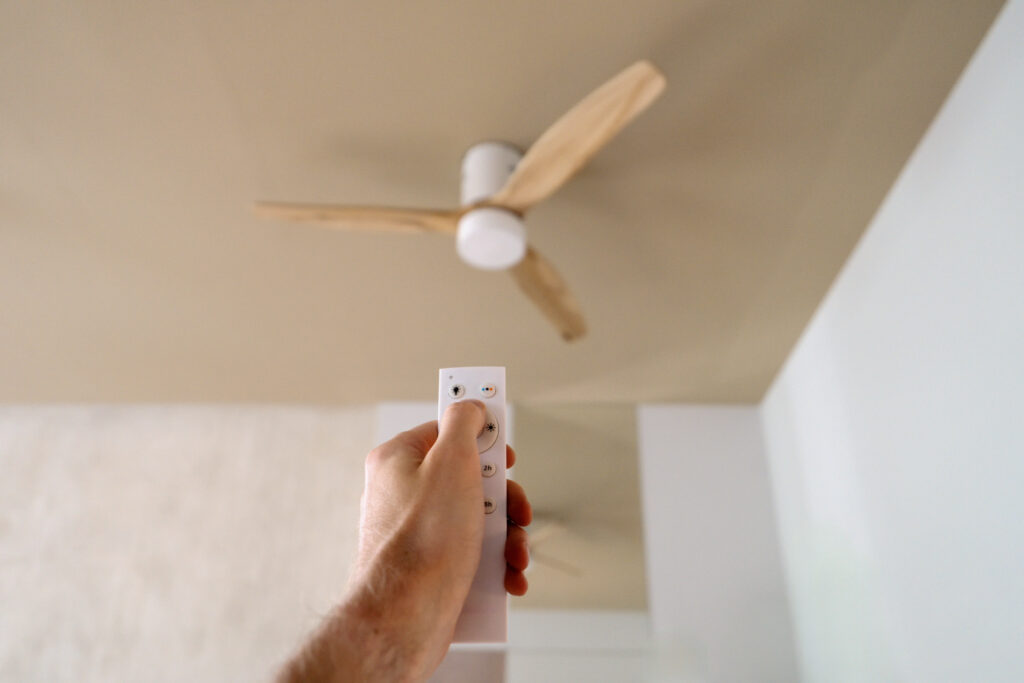
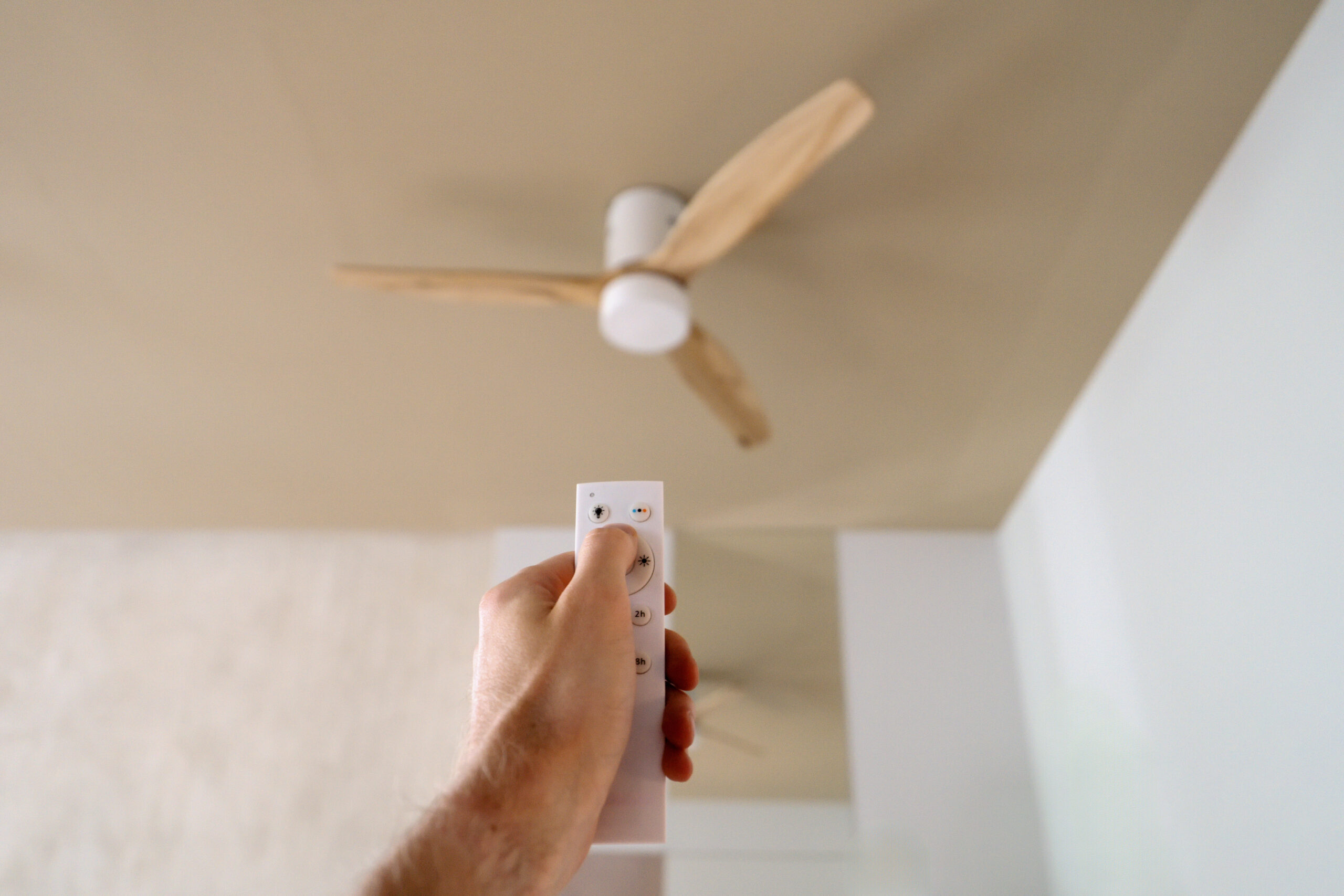
This is the part where a lot of people get stuck. Most ceiling fans have a small switch on the motor housing, usually located on the side of the body of the fan just below where the blades attach. It is easy to miss if you have never looked for it. The switch physically reverses the motor direction. To find it, you will need to either climb a step ladder or stand on stable furniture to reach the fan. Turn the fan completely off first and wait for the blades to stop moving entirely before reaching up. Slide the switch in the opposite direction from where it currently sits. Then turn the fan back on at its lowest speed setting. If you feel a gentle, indirect upward pull of air rather than a downdraft blowing down on you, you have it right. Some newer fan models allow you to reverse direction through a remote control or a smart home app, which is considerably more convenient. Either way, the process takes about two minutes once you know what you are looking for.
Key Advantages of Running Your Ceiling Fan Clockwise in Winter
It is worth being direct about what this simple habit actually delivers for homeowners. The benefits are real and practical, and they add up over the course of a full heating season.
- Reduces strain on your heating system by evening out temperature distribution throughout the room
- Can lower monthly energy bills by allowing you to set the thermostat a degree or two lower without sacrificing comfort
- Extends the life of your furnace or heat pump by reducing how frequently it needs to cycle on and off
- Particularly effective in rooms with high or vaulted ceilings where warm air stratification is most severe
- Works with any type of heating system, including forced air, radiant, and heat pump configurations
The Drawbacks You Should Know About
No home improvement tip is without some nuance, and the ceiling fan winter trick is no exception. First, it only works correctly at a low speed. Running the fan faster in clockwise mode can actually create enough of a downdraft to make the room feel drafty and uncomfortable, defeating the purpose entirely. Second, in rooms with standard eight-foot ceilings, the effect is noticeably less dramatic than in taller spaces. The warm air stratification is simply not as significant when the ceiling is close to where people are already sitting and standing. Third, if your ceiling fan is old, noisy, or wobbling, running it through the winter months adds wear to an already stressed motor. That is something to keep in mind, particularly if the fan has not been serviced or inspected in several years. And finally, if you forget to switch it back to counterclockwise in the spring, you may find yourself wondering why your fan does not seem to be cooling the room as effectively as it used to.
Practical Tips for Getting the Most Out of This Habit
A few small adjustments can make a meaningful difference in how effective this strategy actually is in your home. Keep the fan on its lowest speed setting throughout the winter. Check the direction each fall when you start running the heat regularly, and then again in spring when you switch back to cooling mode. If your home has multiple ceiling fans, make sure to reverse all of them. One fan running correctly and another running in summer mode in an adjacent room partially cancels out the benefit. If you are unsure whether a fan is running in the correct direction for winter, hold a tissue or thin piece of paper near the ceiling level while the fan runs. If the air near the ceiling appears to be pulling upward and being redistributed outward, you are in good shape.
How This Connects to Your Home Systems as a Whole
There is a bigger picture worth considering here. Your ceiling fan is not an isolated appliance. It works in relationship with your HVAC system, your insulation, your windows, and the overall thermal envelope of your home. When any one of these systems is not performing well, the others have to compensate. A ceiling fan running correctly in winter takes some pressure off your furnace or heat pump, which means those systems run fewer cycles per day, which means less mechanical wear over time. For homeowners paying attention to the long-term health of their home systems, that kind of compounding efficiency matters. It is also worth noting that ceiling fans themselves are generally not considered a high-risk appliance from a maintenance standpoint, but electrical components and motor failures do happen, particularly in fans that are older or see heavy year-round use.
Why Armadillo Is the Right Partner for Whole-Home Protection
Here is the thing about being a homeowner: it is the small details, like ceiling fan rotation, that reveal how much thought goes into really maintaining a home well. But even the most attentive homeowner cannot prevent every mechanical failure or system breakdown. That is where having the right coverage in place changes everything. home warranty coverage that protects your heating system and home appliances year-round means that when your furnace struggles after a long winter or a ceiling fan motor finally gives out, you are not facing unexpected repair bills alone. Armadillo is built for homeowners who think ahead, who understand that protecting the systems working quietly in the background is just as important as the obvious big-ticket items. If you want coverage that keeps pace with how seriously you take your home, you can get a personalized home warranty plan that fits your home and budget in just a few minutes. Real protection, no unnecessary complexity.
Frequently Asked Questions
Which direction should a ceiling fan spin in winter?
In winter, a ceiling fan should spin clockwise when viewed from below. This creates an updraft that pulls cool air up and redistributes warm air that has collected near the ceiling back down along the walls and into the living space.
Does running a ceiling fan clockwise in winter actually save energy?
Yes. By circulating warm air more evenly throughout the room, the clockwise winter setting allows homeowners to lower the thermostat by one to two degrees without reducing comfort, which can translate to a noticeable reduction in heating costs over an entire season.
How do I know if my ceiling fan is already running in the correct winter direction?
Stand beneath the fan while it is running at low speed. If you feel a gentle downdraft of air blowing directly down on you, the fan is in summer mode. If the airflow feels indirect and you notice air moving gently along the walls and downward, it is in the correct winter clockwise mode.
Where is the direction switch on a ceiling fan?
The direction switch is typically a small slide switch located on the motor housing of the fan, just below the blade brackets. Turn the fan off completely and wait for the blades to stop before reaching up to flip the switch. Some newer models offer direction reversal through a remote or app.
What speed should I use for the clockwise winter setting?
Always use the lowest speed setting when running a ceiling fan in clockwise winter mode. Higher speeds in this direction can create a downdraft that makes the room feel drafty and uncomfortable, which works against the purpose of redistributing warm air gently.
Does the ceiling fan winter trick work in rooms with low ceilings?
It works but is less dramatic in rooms with standard eight-foot ceilings because warm air does not stratify as severely in lower spaces. The benefit is most significant in rooms with vaulted, cathedral, or high ceilings where substantial warm air can accumulate well above head level.
Should I run my ceiling fan all winter or only sometimes?
For consistent energy savings and even temperature distribution, running the fan on low throughout the heating season is more effective than using it intermittently. The energy cost of running a ceiling fan on low is minimal compared to the savings generated by more efficient heat distribution.
Can running a ceiling fan in winter damage the motor?
Under normal conditions, no. Ceiling fans are designed for continuous use and direction reversal. However, older fans with worn motors or fans that are already wobbling or making unusual sounds may experience additional strain. It is worth inspecting or servicing an aging fan before committing to year-round use.
Does this work with all types of heating systems?
Yes. The clockwise ceiling fan winter setting is effective regardless of whether your home uses forced air, radiant heat, a heat pump, or baseboard heating. The principle of redistributing warm air that has risen to the ceiling applies universally across heating system types.
Is a ceiling fan typically covered under a home warranty?
Coverage for ceiling fans varies by home warranty provider and plan. Some plans include ceiling fans as part of electrical system coverage, while others treat them as optional add-ons. Reviewing your specific plan details or speaking with your provider directly is the best way to confirm what is included.