Does Your Ceiling Fan Direction Actually Matter? Yes, More Than You Think
Most homeowners walk past their ceiling fan a dozen times a day without giving it a second thought. It spins, it moves air, it does its thing. But here is something worth pausing on: the direction your ceiling fan spins plays a surprisingly significant role in how comfortable your home feels year-round, and how hard your HVAC system has to work to keep up. Understanding the difference between counterclockwise and clockwise rotation is one of those small adjustments that quietly adds up to real savings, better comfort, and less wear on the systems your home warranty is helping to protect.
The Basic Mechanics: What Is Actually Happening Up There
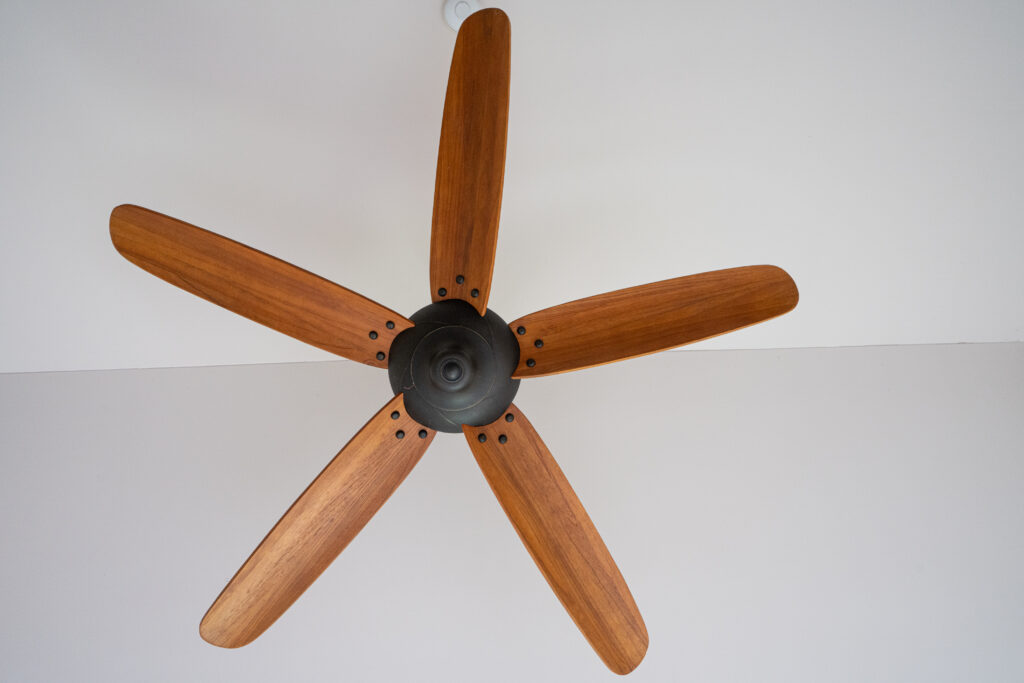
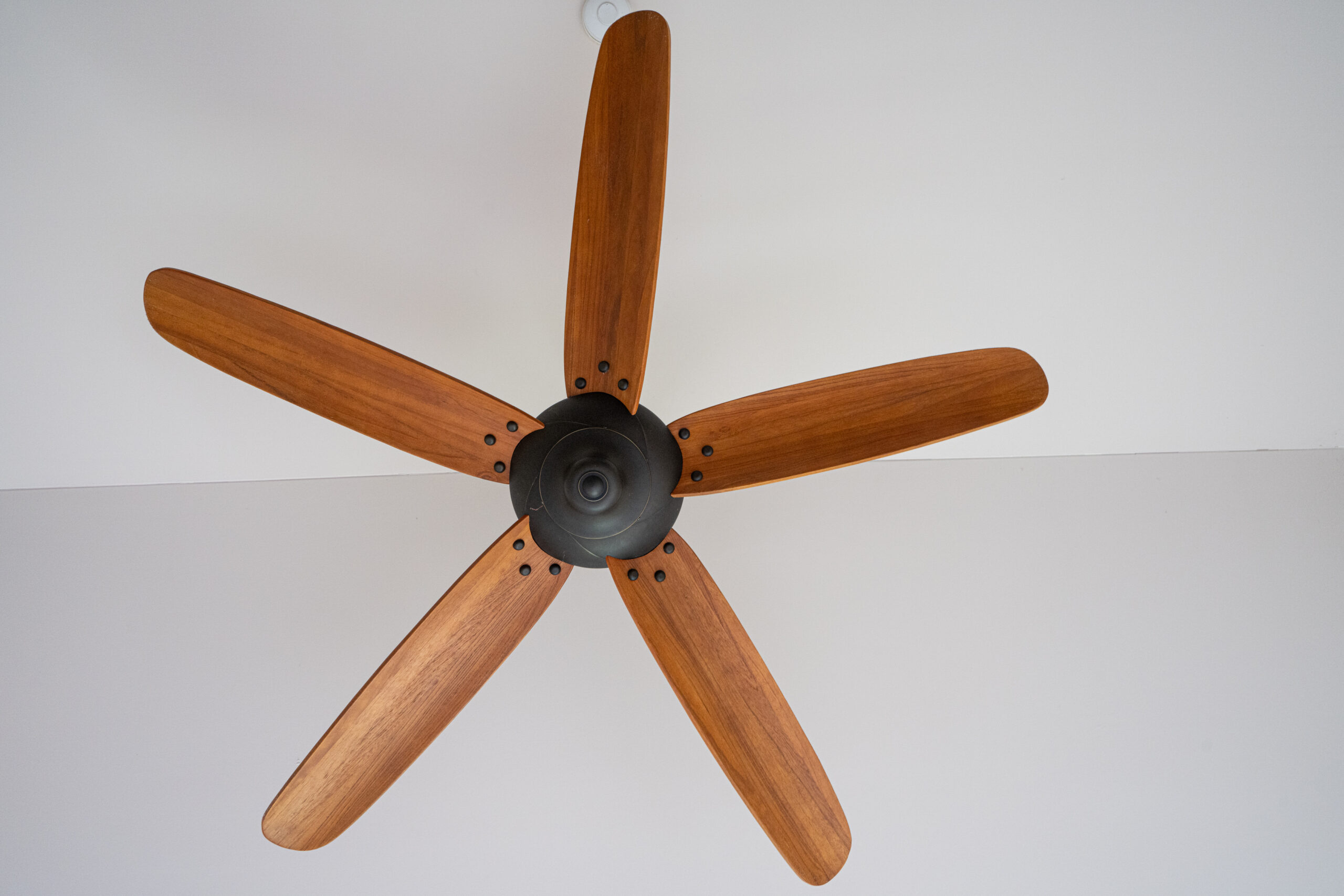
Ceiling fans do not heat or cool the air in your home. That is a common misconception worth clearing up right away. What they do is move air, and the direction of that movement determines how it affects your comfort. Fan blades are angled deliberately, which means the direction of rotation determines whether air is pushed down or pulled up. That simple distinction is the entire foundation of the counterclockwise versus clockwise conversation.
Counterclockwise in Summer: The Cooling Effect You Are Probably Already Using
When your ceiling fan runs counterclockwise, the angled blades push air straight down toward the floor. This creates what is called a wind-chill effect. The moving air passes over your skin, accelerating evaporation and making you feel cooler even when the room temperature has not changed. In the summer months, this means you can raise your thermostat by a few degrees without sacrificing comfort. Most energy experts suggest that a properly used ceiling fan in summer can allow for a thermostat adjustment of around four degrees Fahrenheit, which translates directly into lower energy bills and reduced demand on your air conditioning unit. That is good news for your comfort and for the longevity of your HVAC system.
Clockwise in Winter: The Setting Most Homeowners Completely Forget
Here is where things get interesting. In the colder months, you want your ceiling fan to run clockwise, typically at a low speed. Warm air rises and collects near the ceiling. By running the fan clockwise slowly, it draws air upward and pushes that accumulated warm air down along the walls and back into the living space. No wind-chill effect is created because the airflow is gentle and indirect, but the warmth that was sitting uselessly near your ceiling gets redistributed throughout the room. This reduces the workload on your heating system, which is a quieter kind of savings but a real one over an entire season.
How to Switch Your Fan Direction: It Is Easier Than You Think
Most ceiling fans have a small toggle switch located on the motor housing, right on the body of the fan itself. Some newer models include remote controls or app-based controls that allow you to change the direction without touching the fan at all. Before switching the direction manually, always turn the fan off completely and wait for the blades to stop moving. Then locate the direction switch, flip it, and turn the fan back on. It is a ten-second task that most homeowners have genuinely never done. Here are a few things to keep in mind when making the switch:
- In summer, set the fan to counterclockwise and a medium or high speed
- In winter, set the fan to clockwise at the lowest speed setting
- If you feel a breeze standing beneath the fan in winter, it is spinning the wrong way
- High ceilings benefit the most from the winter clockwise setting

The Energy Efficiency Angle: What It Means for Your Home Systems
Every time your HVAC system runs a shorter cycle because a ceiling fan helped maintain a comfortable temperature, that is wear and tear your heating and cooling equipment is not experiencing. Air conditioners and furnaces have a finite number of operational cycles before components begin to degrade. Ceiling fans, by contrast, are relatively low-cost to operate and contain fewer high-stress mechanical parts. When used strategically, they function as support players that extend the working life of your larger, more expensive home systems. This is exactly the kind of detail that matters when you are thinking about the long-term health of your home infrastructure.
Common Drawbacks and What to Watch Out For
Ceiling fans are not without their quirks. The most common complaints homeowners encounter fall into a predictable category. Wobbling fans are usually caused by unbalanced blades or improper installation, and left unaddressed, they can put stress on the motor and the ceiling mount over time. Noise issues, including humming or clicking, often point to loose hardware or a motor that is beginning to wear. Older fans can also be inefficient regardless of which direction they are spinning. If your fan was installed more than fifteen years ago, it is worth evaluating whether it is actually performing efficiently or quietly working against you. Also worth noting: ceiling fans only make sense when someone is in the room. Running them in empty rooms produces no comfort benefit and wastes energy entirely.
Ceiling Fan Installation and Home Warranty Coverage: What You Should Know
This is where the home warranty conversation becomes relevant in a practical way. Ceiling fans themselves are typically considered electrical fixtures, and their coverage can vary depending on the plan you hold and the provider behind it. What is more directly tied to warranty coverage is the electrical system your fan connects to, including the wiring, the junction box, and in some cases the wall switch or remote receiver components. If a ceiling fan failure is traced back to a covered electrical issue, that is where a home warranty can step in and make a material difference. Understanding how your systems connect to each other is part of being a well-informed homeowner.
Practical Tips for Getting the Most Out of Your Ceiling Fans
There are a few habits worth building if you want ceiling fans to actually contribute to a more efficient home. First, clean the blades regularly. Dust accumulation on fan blades affects their aerodynamic efficiency and can subtly reduce airflow over time. Second, check that your fan is rated for the room size it is installed in. A small fan in a large room will spin constantly without ever achieving the airflow it needs to make a difference. Third, use fans in conjunction with your thermostat settings intentionally, not just as background noise. The synergy between a properly directed ceiling fan and a well-programmed thermostat is where the real efficiency gains live.
Why Armadillo Belongs in This Conversation
Ceiling fans are one small piece of a much larger picture when it comes to protecting your home. The electrical systems they connect to, the HVAC equipment they support, the appliances throughout your household — all of it adds up to a substantial investment that deserves real protection. That is where Armadillo home warranty plans for homeowners who want dependable coverage genuinely stand apart. The approach here is straightforward coverage without the run-around, designed for people who want peace of mind without having to decode the fine print every time something goes wrong. If you are ready to stop wondering what happens when a major system or appliance fails unexpectedly, now is a good time to get a free home warranty quote that covers your HVAC and home electrical systems and see exactly what protection looks like for your specific home.

Frequently Asked Questions About Ceiling Fan Direction and Home Efficiency
Which direction should a ceiling fan spin in the summer?
In the summer, your ceiling fan should spin counterclockwise when viewed from below. This pushes air downward and creates a wind-chill effect that makes the room feel cooler without changing the actual temperature.
Which direction should a ceiling fan spin in the winter?
In the winter, set your ceiling fan to spin clockwise at a low speed. This pulls cooler air upward and pushes the warm air that has risen to the ceiling back down along the walls, improving heat distribution throughout the room.
How do I know which way my ceiling fan is spinning?
Stand beneath the fan while it is running and watch the blade direction. Counterclockwise means the blades move to the left at the top of their rotation. You should also feel a downward breeze directly beneath the fan when it is set to counterclockwise.
Where is the direction switch on a ceiling fan?
The direction switch is typically a small toggle or slide switch located on the motor housing of the fan, just above the blades. Always turn the fan off and allow the blades to stop completely before touching or flipping the switch.
Does ceiling fan direction really save energy?
Yes, when used correctly, ceiling fan direction can reduce how frequently your HVAC system runs. In summer, the cooling effect allows you to raise your thermostat setting. In winter, redistributing warm air reduces heating demand. Both scenarios contribute to lower energy consumption.
Should I run my ceiling fan when no one is in the room?
No. Ceiling fans cool people, not rooms. Running a fan in an unoccupied space wastes electricity without providing any comfort benefit. Get in the habit of turning fans off when you leave a room.
Does a home warranty cover ceiling fans?
Coverage varies by provider and plan. Ceiling fans as standalone fixtures may or may not be covered, but the electrical components they connect to, such as wiring, junction boxes, and switches, may fall under electrical system coverage. Reviewing your specific plan details is always recommended.
How often should I clean ceiling fan blades?
Cleaning ceiling fan blades every one to three months is a reasonable standard for most households. Dust buildup on blades reduces airflow efficiency and can contribute to uneven rotation or wobbling over time.
What causes a ceiling fan to wobble?
Wobbling is most commonly caused by unbalanced blades, loose blade brackets, or improper installation. It is worth addressing promptly because persistent wobbling can stress the motor housing and the ceiling mount, potentially leading to larger issues over time.
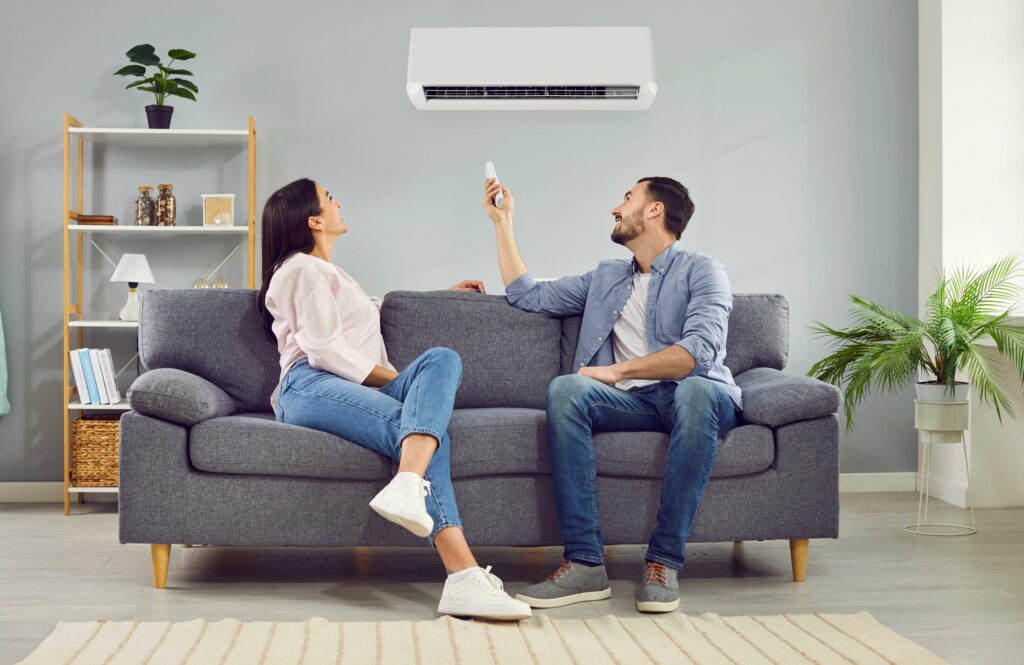
Can I use a ceiling fan and air conditioner at the same time?
Absolutely, and it is actually the recommended approach. Using both together allows you to run your air conditioner at a slightly higher thermostat setting while maintaining the same comfort level, which reduces overall energy consumption and extends the operational life of your cooling system.