Why Is My Dishwasher Not Draining Even Though There Is No Blockage?
You run a full cycle, open the door expecting clean dishes, and instead find a pool of standing water sitting at the bottom of the tub. You check the filter, inspect the drain hose, peer under the sink — nothing looks clogged. So what is actually going on? This is one of the more frustrating dishwasher problems a homeowner can face, because the obvious answers do not apply. When a dishwasher is not draining but no blockage exists, the issue tends to live somewhere else entirely — inside the mechanical and electrical components that most people never think about until something goes wrong.
How a Dishwasher Drain System Actually Works
Before diagnosing the problem, it helps to understand the system. At the end of a wash cycle, a drain pump activates and forces water out through the drain hose, which typically connects to either the garbage disposal or a dedicated drain line under the sink. The pump is controlled by the control board, which receives signals from the door latch, float switch, and cycle timer. Everything has to communicate correctly for drainage to happen on cue. If any one of those components misfires, the pump may not receive the signal it needs — and water stays exactly where it is.
The Drain Pump Is the Most Common Culprit
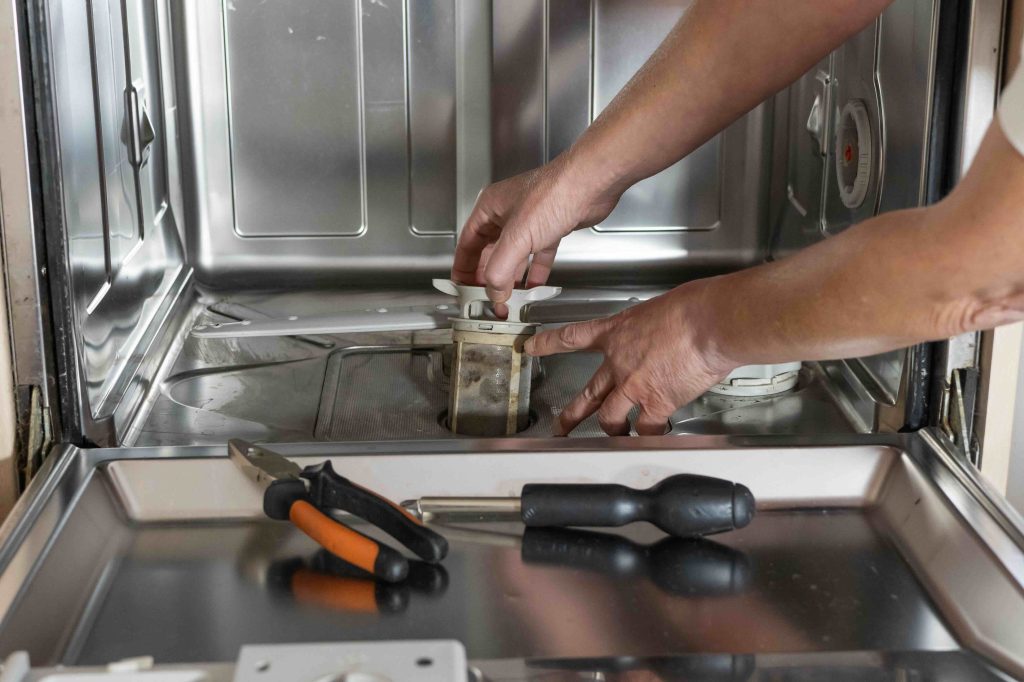
When there is no visible blockage but the dishwasher will not drain, the drain pump is usually the first place to look. The pump uses an impeller — a small rotating blade — to push water out. Over time, the impeller can wear down, crack, or seize up entirely. The pump motor itself can also burn out, especially in older units that have been running hard for years. In some cases, a small piece of debris like a broken dish fragment or a twist tie can lodge inside the pump without blocking the filter, causing the impeller to stall. You may hear a low hum or nothing at all when the drain cycle runs — both of those sounds are telling you something.
Electrical and Sensor Failures That Mimic a Clog
This is where things get a little less obvious. A faulty door latch or a misaligned door sensor can interrupt a cycle mid-drain, leaving water behind. The control board, which is essentially the brain of the appliance, can develop faults that prevent it from sending the drain signal altogether. The float switch — a small device that monitors water levels inside the tub — can also stick in the raised position, tricking the machine into thinking it is already full or already drained. None of these failures look like a clog, and none of them will respond to cleaning or snaking the drain line.
Snapshot: Common Causes When There Is No Visible Blockage
- Failed or worn drain pump impeller
- Burned-out drain pump motor
- Faulty control board not sending the drain signal
- Stuck or malfunctioning float switch
- Defective door latch interrupting the cycle
- Check valve failure allowing water to flow back into the tub
- Drain hose installed without a high loop, causing backflow
- Garbage disposal knockout plug left in place after installation

The Garbage Disposal Connection Most Homeowners Miss
If your dishwasher drains through the garbage disposal and the disposal was recently replaced, there is one detail that gets overlooked more often than it should. New disposals come with a knockout plug already installed in the dishwasher inlet port. If the installer does not remove it, water from the dishwasher has nowhere to go. It is a surprisingly common oversight, and it produces exactly the symptoms being described here — no drainage, no visible clog. Check the disposal connection first if this situation applies to your home.
The High Loop and Air Gap Issue
Drain hose installation matters more than most people realize. The hose needs to be routed upward — looped near the top of the cabinet before coming back down to the drain connection. This high loop prevents water from siphoning back into the dishwasher once the cycle ends. Some installations use an air gap device mounted on the countertop or sink for the same purpose. If the high loop was never installed, or if the air gap becomes clogged, water can back-feed into the tub after draining — making it look like the dishwasher never drained at all. This is worth verifying before assuming a mechanical failure.
When to Call a Professional and What to Expect
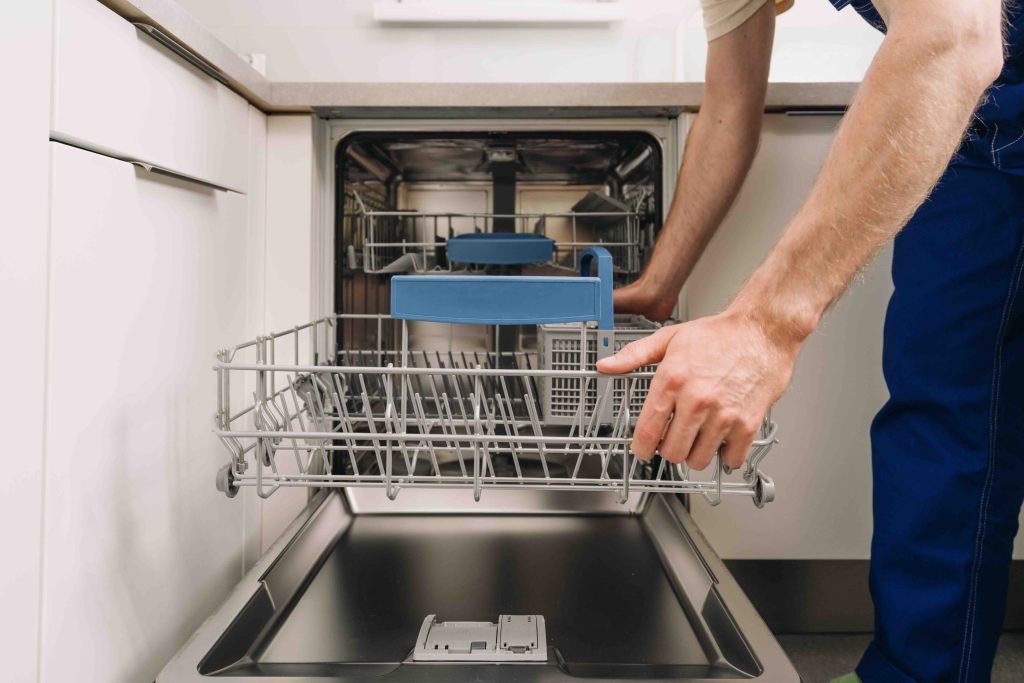
Diagnosing a drain pump failure or a failed control board requires accessing internal components, testing with a multimeter, and in some cases disassembling the lower portion of the appliance. This is not a beginner-level repair. If you are comfortable with appliance repair and have the right tools, pump replacements are manageable. Control board replacements are more involved and depend heavily on parts availability for your specific model. Repair costs can range anywhere from one hundred to four hundred dollars depending on the part and labor involved, which prompts many homeowners to weigh repair against replacement — especially on units that are seven or more years old.
Repair Versus Replace: How to Think About It
The general rule of thumb in appliance repair is to avoid spending more than fifty percent of the appliance’s replacement value on a single repair. A mid-range dishwasher costs between five hundred and nine hundred dollars new. If you are facing a drain pump and control board replacement on a unit that is already aging, the math can shift quickly toward replacement. That said, if the appliance is relatively new and the failure is isolated to one component, repair is almost always the smarter financial call. The key is getting an accurate diagnosis before committing to either path.
How a Home Warranty Can Protect You When the Dishwasher Fails
Unexpected appliance failures have a way of arriving at the worst possible time — right before a holiday, right after a tight month, right when you do not have bandwidth to deal with it. That is exactly the kind of situation a home warranty is designed to address. When your dishwasher stops draining and the issue traces back to a failed drain pump or control board, a quality home warranty plan can cover the cost of diagnosis, parts, and labor — turning a stressful repair into a straightforward service call. Armadillo home warranty coverage for dishwashers and major appliances is built around exactly these kinds of mechanical and electrical failures that fall outside what homeowners insurance will touch. If you have been putting off coverage or are not sure what your current plan actually includes, now is a reasonable time to revisit it. You can get a personalized home warranty quote for appliance and system protection in just a few minutes — no pressure, no guesswork, just a clear look at what protecting your home actually costs.

Frequently Asked Questions About Dishwashers Not Draining
Why is my dishwasher not draining even though nothing is clogged?
When there is no visible blockage, the most likely causes are a failed drain pump, a faulty control board, a stuck float switch, or a malfunctioning door latch that interrupts the drain cycle before it completes.
Can a bad control board cause a dishwasher not to drain?
Yes. The control board sends the signal that activates the drain pump. If the board has a fault or a failed relay, the pump may never receive that signal, leaving water sitting in the tub at the end of the cycle.
How do I know if my dishwasher drain pump has failed?
Listen during the drain portion of the cycle. A failed pump often produces a low hum with no water movement, or complete silence. You can also test the pump motor with a multimeter to confirm whether it is receiving power and functioning correctly.
What is a float switch and how does it affect draining?
The float switch is a small sensor inside the dishwasher tub that monitors water levels. If it sticks in the up position, the machine may interpret the tub as overfull or already drained and skip the drain cycle entirely.
Why does my dishwasher keep filling back up with water after it drains?
This is typically caused by a missing high loop on the drain hose, a clogged or absent air gap, or a failed check valve. All of these allow water to siphon back into the tub after the drain pump has already cleared it.
Is it worth repairing a dishwasher that will not drain?
It depends on the age of the unit and the cost of the repair. If the appliance is under seven years old and the failure is limited to a single component like the drain pump, repair is usually the better financial decision. Older units approaching or exceeding the cost of fifty percent of replacement value may warrant replacement instead.
Does a home warranty cover dishwasher drain pump failure?
Most quality home warranty plans cover mechanical and electrical failures of dishwasher components, including the drain pump and control board. Coverage specifics vary by provider, so reviewing what is included before a failure occurs is always the right move.
Can I fix a dishwasher that will not drain on my own?
Some issues — like cleaning the filter, removing a garbage disposal knockout plug, or correcting the drain hose routing — are DIY-friendly. Pump replacements and control board repairs involve more technical skill and access to internal components, which most homeowners prefer to leave to a qualified technician.
What happens if I leave standing water in my dishwasher?
Standing water left in the tub can lead to mold and mildew growth, odors, and potential corrosion of interior components. It can also put strain on the door gasket over time. Addressing the issue promptly protects both the appliance and the surrounding cabinetry.
How long does a dishwasher drain pump typically last?
Drain pumps generally last between seven and twelve years depending on usage frequency, water quality, and how well the filter is maintained. Regular filter cleaning reduces the workload on the pump and can extend its functional life considerably.