What Is Freon and Why Does It Matter for Your Home AC?
If your air conditioner is struggling to keep up on a hot afternoon, there is a decent chance someone has mentioned the word “freon” in the same breath as a repair estimate. Freon is a brand name that has become a catch-all term for refrigerant, the chemical compound that makes your air conditioning system work. Without it, your AC is essentially a very expensive fan. Understanding what freon is, how it functions, and what it costs to recharge your system puts you in a much stronger position when a technician shows up and starts quoting numbers at you.
How Refrigerant Actually Works Inside Your AC System
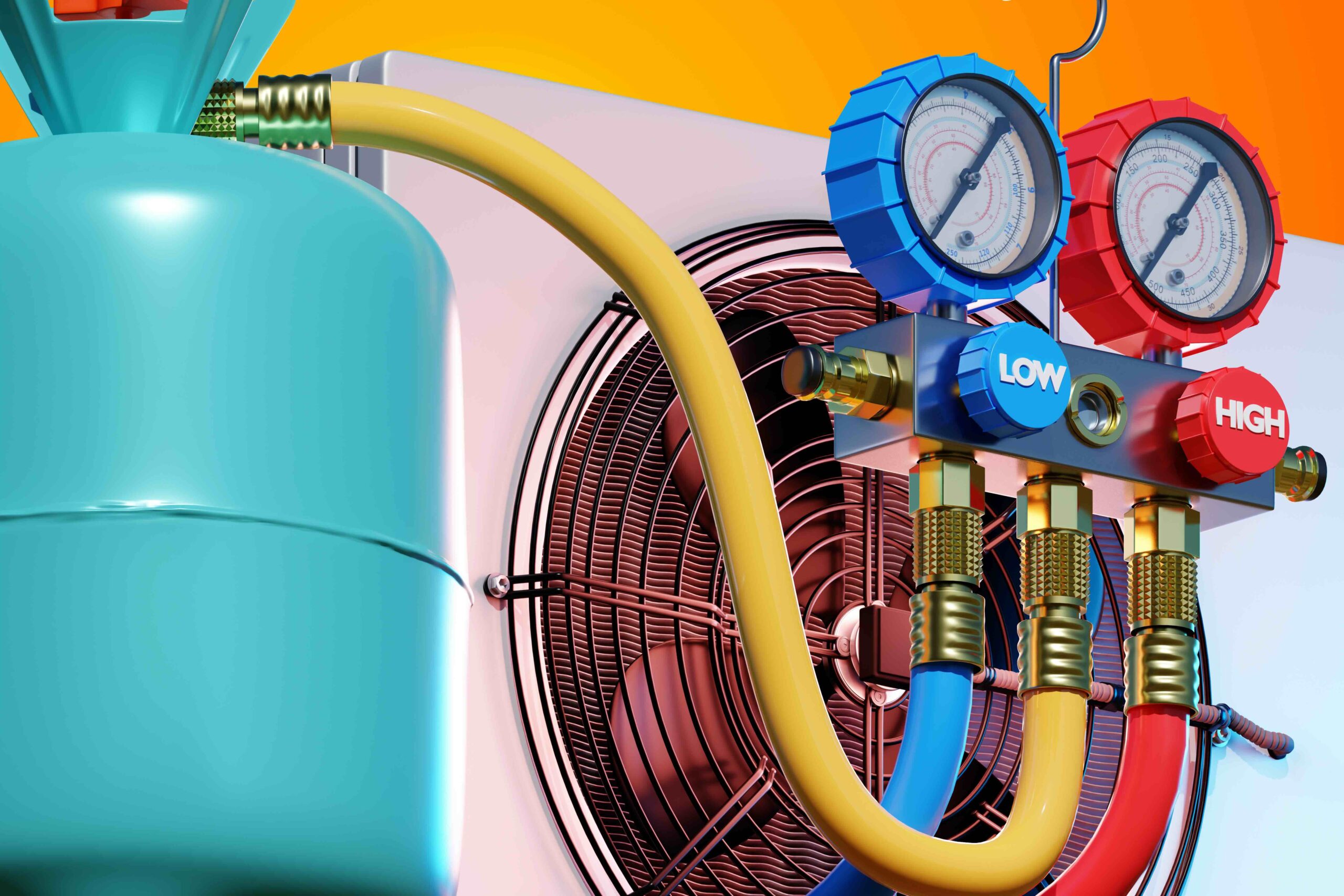
Your air conditioner does not generate cold air the way a furnace generates heat. Instead, it moves heat from inside your home to the outside using refrigerant as the transfer medium. The refrigerant cycles continuously between two states, absorbing heat indoors as it evaporates and releasing that heat outside as it condenses. This loop runs through your evaporator coil, compressor, condenser coil, and expansion valve. When the refrigerant level drops, the entire system loses efficiency. The compressor works harder, energy bills climb, and eventually the system may freeze up or shut down entirely. It is a precise chemical process that depends on having exactly the right amount of refrigerant in the system at all times.
The Phase-Out of R-22 and What It Means for Homeowners
For decades, the most common refrigerant used in residential air conditioners was R-22, widely known by the Freon brand name. The problem is that R-22 is a hydrochlorofluorocarbon, and its production was phased out under the Clean Air Act due to its contribution to ozone depletion. As of January 1, 2020, the manufacturing and import of R-22 in the United States became illegal. The only R-22 still available comes from recycled or reclaimed stockpiles, and that limited supply is exactly why prices have surged dramatically. If your home has an older AC unit, specifically one manufactured before 2010, there is a real possibility it still uses R-22. That detail alone can turn a routine refrigerant recharge into a significant expense.
How Much Does Freon Cost for a Home AC Unit?
This is where homeowners often experience sticker shock. The cost of refrigerant for a home air conditioner varies based on the type of refrigerant, how much is needed, local labor rates, and the current market. Here is a general breakdown to help you understand what to expect:
- R-22 refrigerant: anywhere from $20 to $50 or more per pound, sometimes higher depending on regional availability, with most central AC systems requiring between 2 and 4 pounds for a full recharge
- R-410A refrigerant: typically $3 to $8 per pound, making it significantly more affordable, though labor and diagnostic fees still apply
- R-32 and R-454B: newer alternatives now appearing in modern systems, generally priced similarly to R-410A or slightly higher
- Total recharge cost including labor: commonly ranges from $150 to $600 for newer refrigerants, while R-22 systems can easily reach $400 to $1,500 depending on how much refrigerant is needed
It is worth noting that refrigerant does not get used up under normal conditions. If your system is low, that almost always means there is a leak somewhere. Simply recharging without finding and fixing the leak is a temporary fix that will cost you again in the near future.

Signs Your AC System May Have Low Refrigerant
Knowing the warning signs can help you catch a refrigerant issue before it becomes a full system failure. Air conditioners that are low on refrigerant tend to display some pretty consistent symptoms. Warm air blowing from the vents despite the thermostat being set low is one of the most common indicators. You might also notice ice forming on the evaporator coil or on the refrigerant lines themselves, which seems counterintuitive but is actually caused by insufficient refrigerant pressure. Longer-than-normal cooling cycles, unusually high electricity bills, and hissing or bubbling sounds near the indoor or outdoor unit are all signals worth taking seriously. If you notice any of these, calling a licensed HVAC technician sooner rather than later is the right move.
Key Advantages of Maintaining Proper Refrigerant Levels
Keeping your AC system properly charged with refrigerant is not just about staying comfortable. It directly impacts the health of the entire system. A well-charged system runs more efficiently, which keeps energy costs lower and reduces unnecessary wear on the compressor, one of the most expensive components in the unit. Proper refrigerant levels also help maintain consistent indoor humidity control, which matters more than most people realize in terms of comfort and air quality. Homes that stay on top of HVAC maintenance, including refrigerant integrity, tend to see longer system lifespans and fewer emergency repairs overall.
Common Drawbacks and Challenges Homeowners Face
The biggest challenge most homeowners encounter is the cost unpredictability. A refrigerant recharge sounds straightforward until a technician discovers a leak, at which point repair costs can multiply quickly. Leak detection, coil repairs, and component replacements can push a repair bill well past what most households budget for. Additionally, if you have an older R-22 system, the financial math gets complicated fast. At some point, the cost of repeatedly servicing an older system running on an expensive, discontinued refrigerant exceeds the cost of simply replacing the unit with a modern, R-410A or R-32 system. Making that judgment call is not always easy, especially when a new central AC installation can cost anywhere from $3,000 to $7,000 or more depending on your home and region.
Should You Repair or Replace Your AC System?
This is the question that keeps a lot of homeowners up at night, sometimes literally. A useful rule of thumb that HVAC professionals often reference is the 5,000 rule: multiply the age of the unit by the estimated repair cost. If that number exceeds $5,000, replacement is generally the more economical long-term decision. For example, a 12-year-old system facing an $800 refrigerant-related repair would yield a product of 9,600, which suggests replacement is worth serious consideration. If your system is under 10 years old and the repair is isolated, fixing it usually makes sense. But if you are pouring money into an aging R-22 unit with recurring leaks, a newer system will pay for itself through lower energy bills, fewer repairs, and the peace of mind that comes with modern efficiency ratings.
Practical Tips for Protecting Your AC Investment
There are real, actionable steps you can take to reduce the likelihood of refrigerant problems and keep your system running longer between service calls. Annual preventative maintenance performed by a licensed HVAC technician is the single most effective measure. During a tune-up, technicians check refrigerant pressure, inspect coils, clean components, and identify small issues before they become expensive failures. Beyond professional service, replacing air filters regularly, keeping the outdoor condenser unit clear of debris, and not blocking indoor vents all contribute to a healthier, more efficient system. Knowing your unit’s age, refrigerant type, and service history also helps you have more productive conversations with technicians and avoid being caught off guard by repair estimates.
How a Home Warranty Can Help Cover AC Refrigerant and Repair Costs
When refrigerant issues arise, the last thing you want is to navigate a large, unexpected repair bill alone. That is exactly the kind of situation a quality home warranty is designed for. Armadillo home warranty coverage for HVAC systems and air conditioning repairs is built around the reality that homeowners should not have to guess whether they can afford to fix essential systems when they break down. Armadillo’s plans cover mechanical failures in your heating and cooling systems, which can include components directly tied to refrigerant-related repairs when the failure stems from normal wear and use. Rather than facing a $600 or $1,200 repair bill out of pocket, a home warranty with solid HVAC coverage can make those moments far more manageable. If you have been putting off thinking about coverage because you are not sure what it actually includes or whether it is worth the cost, now is a good time to get clarity. Get a free home warranty quote that covers your AC system and major home components and see exactly what protection looks like for your home and budget. Peace of mind when a technician calls with a repair estimate is genuinely worth something.

Frequently Asked Questions About Freon and Home AC Costs
Below are answers to the most common questions homeowners have about refrigerant, AC repair costs, and how home warranty coverage fits into the picture.
How much does it cost to add freon to a home air conditioner?
The total cost depends on the refrigerant type and how much is needed. For R-410A systems, expect to pay roughly $150 to $400 including labor. For older R-22 systems, the cost can range from $400 to $1,500 or more due to the limited and expensive supply of the now-discontinued refrigerant.
Does a home air conditioner use up refrigerant over time?
No. Under normal operating conditions, refrigerant does not deplete. If your system is low on refrigerant, it almost certainly means there is a leak in the system that needs to be located and repaired before recharging makes sense.
What is the difference between R-22 and R-410A refrigerant?
R-22 is an older refrigerant that has been phased out due to environmental concerns related to ozone depletion. R-410A is the more common replacement used in systems manufactured after 2010. R-410A is more efficient and significantly less expensive per pound, though the two refrigerants are not interchangeable.
Can I add freon to my AC unit myself?
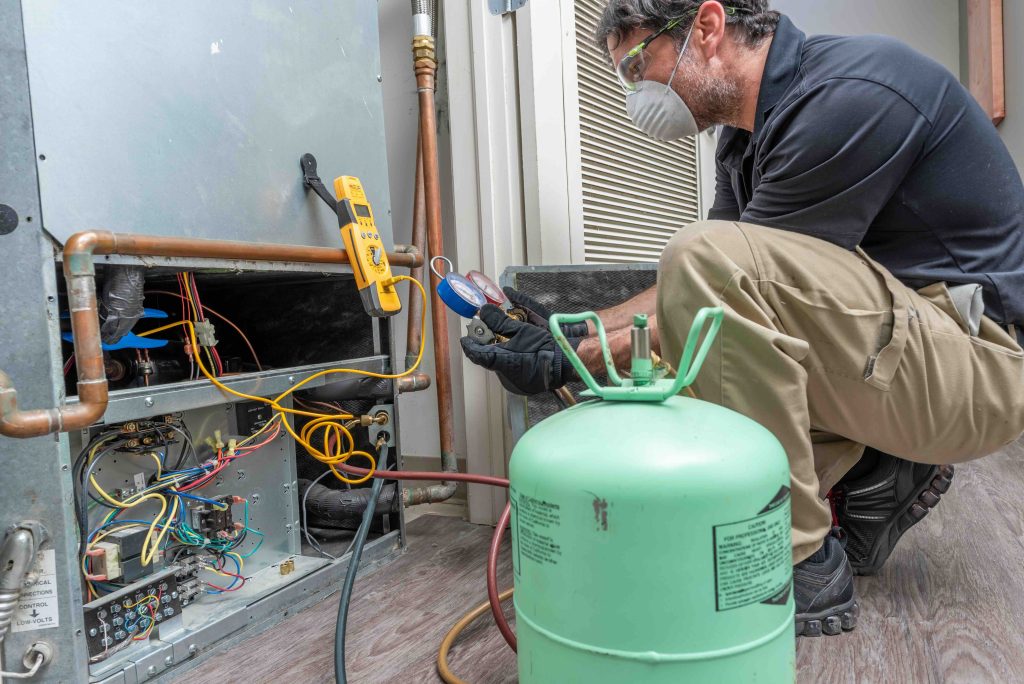
No. Handling refrigerant requires EPA Section 608 certification. Purchasing refrigerant without proper certification is restricted, and improper handling poses environmental and safety risks. Always hire a licensed HVAC technician for refrigerant-related work.
How do I know if my AC system uses R-22 or R-410A?
Check the label on your outdoor condenser unit. The refrigerant type is typically listed there. You can also check your owner’s manual or ask an HVAC technician during a service visit. Systems manufactured before 2010 are more likely to use R-22.
How often does a home AC system need a refrigerant recharge?
A properly functioning system should never need a recharge unless there has been a leak. If a technician is recommending routine top-offs without diagnosing a leak, that is worth questioning. Refrigerant does not get consumed in normal operation.
Does a home warranty cover refrigerant recharges?
Coverage varies by provider and plan. Many home warranties cover mechanical failures of HVAC components, and some include refrigerant as part of a covered AC repair. It is important to review the specific terms of your plan or speak with your warranty provider to understand what is and is not included.
What happens if I ignore a refrigerant leak in my AC?
Continuing to operate a system with a refrigerant leak can cause the compressor to overheat and fail. Compressor replacement is one of the most expensive AC repairs, often costing $1,000 to $2,500 or more. Addressing a leak promptly is almost always the less expensive path.
Is it better to repair an old R-22 AC unit or replace it?
For most homeowners, a system over 10 to 12 years old that requires significant R-22 refrigerant work is a strong candidate for replacement. The high cost of R-22, combined with the age-related wear on other components, typically makes a new, more efficient system the better financial decision over time.
What refrigerant do new air conditioners use?
Most modern residential air conditioners use R-410A, though newer units are beginning to adopt R-32 and R-454B as the industry transitions toward refrigerants with lower global warming potential. If you are purchasing a new system, ask your HVAC contractor which refrigerant it uses and what future availability looks like.