Why Your Oven Won’t Heat Up and What You Should Do About It
There are few household frustrations quite like preheating your oven, walking away to prep your ingredients, and coming back to find the inside stone cold. If your oven won’t heat up, you’re not alone — it’s one of the most common appliance complaints homeowners deal with, and it almost always happens at the worst possible time. Whether you’re dealing with an electric oven that won’t get hot or a gas range that’s refusing to ignite, understanding what’s going wrong is the first step toward getting dinner back on the table. This guide walks you through everything you need to know, from the likely culprits to when it makes sense to call a professional — and how a home warranty can take a lot of that stress off your plate.
How Your Oven Actually Works
Before diving into what goes wrong, it helps to understand what’s supposed to go right. Electric ovens rely on one or two heating elements — a bake element at the bottom and a broil element at the top — that draw electrical current to generate heat. A control board and temperature sensor communicate with each other to regulate how hot the oven gets and when the elements cycle on and off. Gas ovens operate a bit differently. They use an igniter to light a gas burner, and that burner heats the oven cavity. The igniter also acts as a safety valve, opening the gas supply only when it reaches the right temperature. Both systems are relatively straightforward, but each has multiple components that can fail over time with regular use.
The Most Common Reasons an Oven Won’t Heat Up
There’s rarely one single answer when an oven stops heating, but a few issues come up again and again. Knowing these can save you time and help you communicate clearly with a technician when needed.
- A burned-out bake or broil element in electric ovens — often visible as a break or blister in the element itself
- A weak or failed igniter in gas ovens — the igniter glows but doesn’t get hot enough to open the gas valve
- A faulty temperature sensor that misreads the oven’s internal temperature
- A damaged or malfunctioning control board that can’t properly regulate heat cycles
- A tripped circuit breaker or blown thermal fuse interrupting power to the oven
- A defective oven safety valve in gas models preventing gas from flowing to the burner
Each of these issues presents differently. Some cause the oven to heat inconsistently, others cause it to not heat at all, and a few may even cause it to overheat in the opposite direction. Diagnosing the right problem matters before any parts are ordered or replaced.
Electric Oven Won’t Heat Up: What to Check First
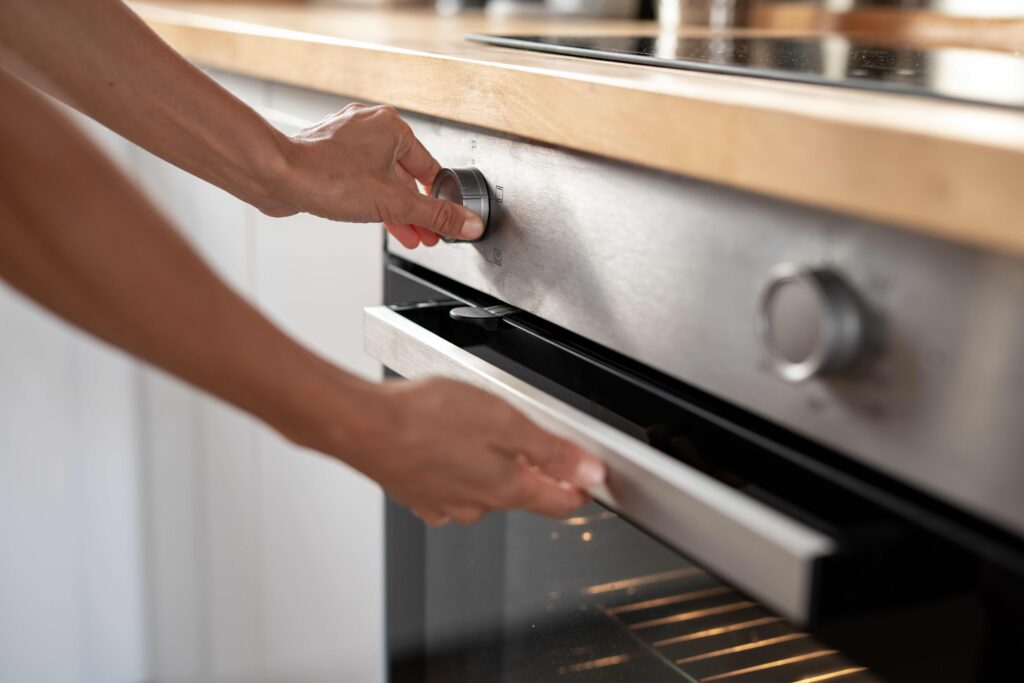
If you have an electric oven, start with the obvious. Take a look at the bake element at the bottom of the oven — it should glow red when the oven is on. If it’s not glowing, or if you can see a visible crack or dark spot on the element, that’s likely your problem. A burned-out heating element is one of the more straightforward repairs and is usually affordable to fix. If the element looks fine, the issue could be with the temperature sensor, which is the small probe that sticks out from the back wall of the oven interior. A multimeter can test whether it’s functioning within spec. If neither of those are the culprit, you’re probably looking at the control board — which is more expensive and worth having a professional evaluate before you commit to replacing it.
Gas Oven Won’t Heat Up: What to Look For
With gas ovens, the igniter is the most common failure point. When the igniter weakens over time, it may glow orange but never get hot enough to pull the gas valve open. You’ll notice the oven takes a very long time to preheat, or never gets to temperature at all. In some cases, you might smell a faint trace of gas briefly before the cycle aborts — which is the safety system doing its job correctly. If the igniter glows for more than 90 seconds without the burner lighting, it likely needs to be replaced. Gas oven repairs should always be approached carefully. If you suspect a gas leak or strong gas smell, shut off the gas supply to the appliance, ventilate the area, and contact a professional before doing anything else.

When to DIY and When to Call a Professional
Some oven repairs are genuinely accessible for a handy homeowner. Replacing a bake element on an electric oven, for example, often involves just a few screws and disconnecting two wires. The part itself is usually inexpensive, and replacement guides are widely available. However, there’s a reasonable line to draw. Anything involving the gas supply line, the control board, or internal wiring is better handled by a qualified appliance repair technician. Mishandling gas connections is a serious safety risk, and incorrectly wiring a control board can cause further damage or create a fire hazard. When in doubt, the cost of a professional diagnosis is almost always worth it — especially when you factor in the cost of ordering the wrong part or worsening the problem.
How Much Does Oven Repair Typically Cost?
Repair costs vary depending on the issue and the type of oven, but here’s a general sense of what homeowners should expect to pay out of pocket without coverage in place.
- Heating element replacement: $150 to $300 including parts and labor
- Igniter replacement: $150 to $250 including parts and labor
- Temperature sensor replacement: $100 to $200 including parts and labor
- Control board replacement: $200 to $600 or more depending on the oven brand and model
- Gas safety valve replacement: $150 to $400 including parts and labor
These numbers add up quickly, and if you’re dealing with an older oven or a high-end range, the parts alone can be significant. That’s where having a home warranty in your corner changes the financial picture entirely.
Extending the Life of Your Oven With Proper Maintenance
A little preventive care goes a long way when it comes to keeping your oven running reliably. Clean spills and grease buildup promptly — excessive residue can affect heating performance and even damage elements over time. Avoid using aluminum foil on the oven floor, as it can block airflow and trap heat in ways that stress the oven’s components. Check the door gasket periodically; a worn seal lets heat escape and causes the oven to work harder, putting additional strain on the heating elements and control systems. If your oven has a self-cleaning cycle, use it sparingly — the extreme heat involved can occasionally trip thermal fuses or stress older components. Routine care won’t prevent every failure, but it can meaningfully push back the timeline on repairs.
Understanding What a Home Warranty Covers for Ovens
A home warranty is a service contract that covers the repair or replacement of major home systems and appliances when they fail due to normal wear and tear. Most comprehensive home warranty plans include built-in ovens and ranges as covered appliances. That means if your oven won’t heat up and the cause is a mechanical or electrical failure — like a worn-out igniter, a failed heating element, or a defective control board — a home warranty can cover the cost of diagnosis, parts, and labor. It’s worth reading your specific plan’s terms carefully, since coverage details vary between providers. Pre-existing conditions and improper installation are typically excluded, but for normal use failures, a home warranty provides a meaningful financial safety net.
Why Armadillo Is the Right Home Warranty Partner When Your Oven Stops Working
When your oven fails, you want a home warranty provider that actually comes through — not one that buries you in fine print and claim delays. Armadillo home warranty coverage for kitchen appliances and home systems is built around transparency, real coverage, and a service experience that doesn’t feel like pulling teeth. Armadillo covers the repairs that matter, including oven heating element failures, igniter issues, and control board malfunctions, with a straightforward claims process that respects your time. If you’re tired of being caught off guard by appliance repair bills, now is a good time to get ahead of it. You can get a free home warranty quote for oven and appliance protection in just a few minutes and know exactly what you’re covered for before the next breakdown happens. Because with home ownership, it’s never a matter of if something breaks — it’s when.

Frequently Asked Questions About Ovens That Won’t Heat Up
These are some of the most common questions homeowners ask when their oven stops heating properly.
Why is my oven not heating up even though it turns on?
The oven may power on but still fail to heat if the bake element, igniter, or temperature sensor has failed. The control board receiving power does not mean the heating components are functioning correctly.
How do I know if my oven heating element is burned out?
Visually inspect the element for breaks, blisters, or dark spots. A working element should glow evenly red when the oven is on. If it does not glow at all or glows unevenly, it likely needs to be replaced.
Can a faulty temperature sensor cause an oven not to heat?
Yes. If the temperature sensor reads incorrectly, the oven’s control system may believe the target temperature has already been reached and stop cycling the heating element on, resulting in little to no actual heat output.
Is it safe to use an oven that isn’t heating properly?
It depends on the cause. An oven with a weak heating element is generally safe but ineffective. However, if you suspect a gas leak, smell gas, or notice unusual sparking or burning odors, stop using the oven immediately and contact a professional.
How long does an oven igniter typically last?
Most oven igniters last between five and ten years with regular use. Over time they weaken and may glow without reaching the temperature required to open the gas safety valve, which causes the oven to fail to heat.
Can I replace an oven heating element myself?
In many cases, yes. Electric oven heating element replacements are among the more DIY-accessible appliance repairs. However, if you are not comfortable working with electrical components, it is always safer to hire a professional technician.
Does a home warranty cover oven repairs?
Most comprehensive home warranty plans cover built-in ovens and freestanding ranges for mechanical and electrical failures that result from normal wear and tear. Coverage typically includes heating elements, igniters, temperature sensors, and control boards.
What is the average cost to repair an oven that won’t heat?
Repair costs generally range from $100 to $600 depending on the component that has failed, the oven brand, and local labor rates. Control board replacements tend to be the most expensive, while element and igniter replacements are typically more affordable.
Why does my gas oven smell like gas but not heat up?
This often indicates a weak igniter that is drawing gas before failing to ignite it. The gas valve opens briefly but the flame never catches. This situation should be addressed promptly by a qualified appliance repair technician.
When should I replace my oven instead of repairing it?
If the oven is more than 15 years old and the repair cost exceeds 50 percent of the cost of a new unit, replacement is generally the more economical choice. For newer appliances, repair is almost always the better option, especially with home warranty coverage in place.