What Is a Circuit Breaker and Why Does It Trip in the First Place?
Your home’s electrical panel is doing a lot of quiet work behind the scenes. It manages the flow of electricity through every circuit in the house, and at the center of that operation is the circuit breaker. A circuit breaker is a safety device that automatically shuts off the flow of electricity when something goes wrong, whether that is too much current flowing through a single circuit, a short circuit, or a ground fault. It is designed to protect your wiring, your appliances, and your home from overheating or electrical fire. When a breaker trips, it flips to the off position or to a middle position between on and off. That is your panel communicating something worth paying attention to.
How Your Home’s Electrical Panel Actually Works
Think of your electrical panel as the central nervous system of your home’s power supply. Electricity enters the home from the utility company through the main breaker, which then distributes power into individual branch circuits. Each of those circuits is controlled by its own breaker, usually rated at either 15 or 20 amps for standard household use, though larger appliances like dryers and HVAC systems often require dedicated 30 to 60-amp breakers. When the electrical demand on a circuit exceeds the breaker’s rated capacity, the breaker responds by tripping. It interrupts the circuit before the wiring overheats. The whole process happens in a fraction of a second. Honestly, it is one of the more underappreciated safety mechanisms in a home.
Common Reasons a Circuit Breaker Trips
Not all tripped breakers mean the same thing, and identifying the cause is half the battle. There are three primary reasons a breaker trips, and each one tells a slightly different story about what is happening in your electrical system.
- Overloaded circuit: Too many devices drawing power on a single circuit simultaneously. Running a space heater, a vacuum, and a hair dryer on the same circuit is a classic example.
- Short circuit: A hot wire makes contact with a neutral wire, often caused by damaged wiring, a faulty outlet, or a defective appliance cord. This is more serious than an overload.
- Ground fault: Similar to a short circuit, but the hot wire contacts a ground wire or a grounded surface. Common in areas where moisture is present, like bathrooms and kitchens.
- Worn or aging breaker: Breakers do not last forever. An older breaker may trip repeatedly even when no apparent overload exists.
How to Reset a Tripped Circuit Breaker Safely
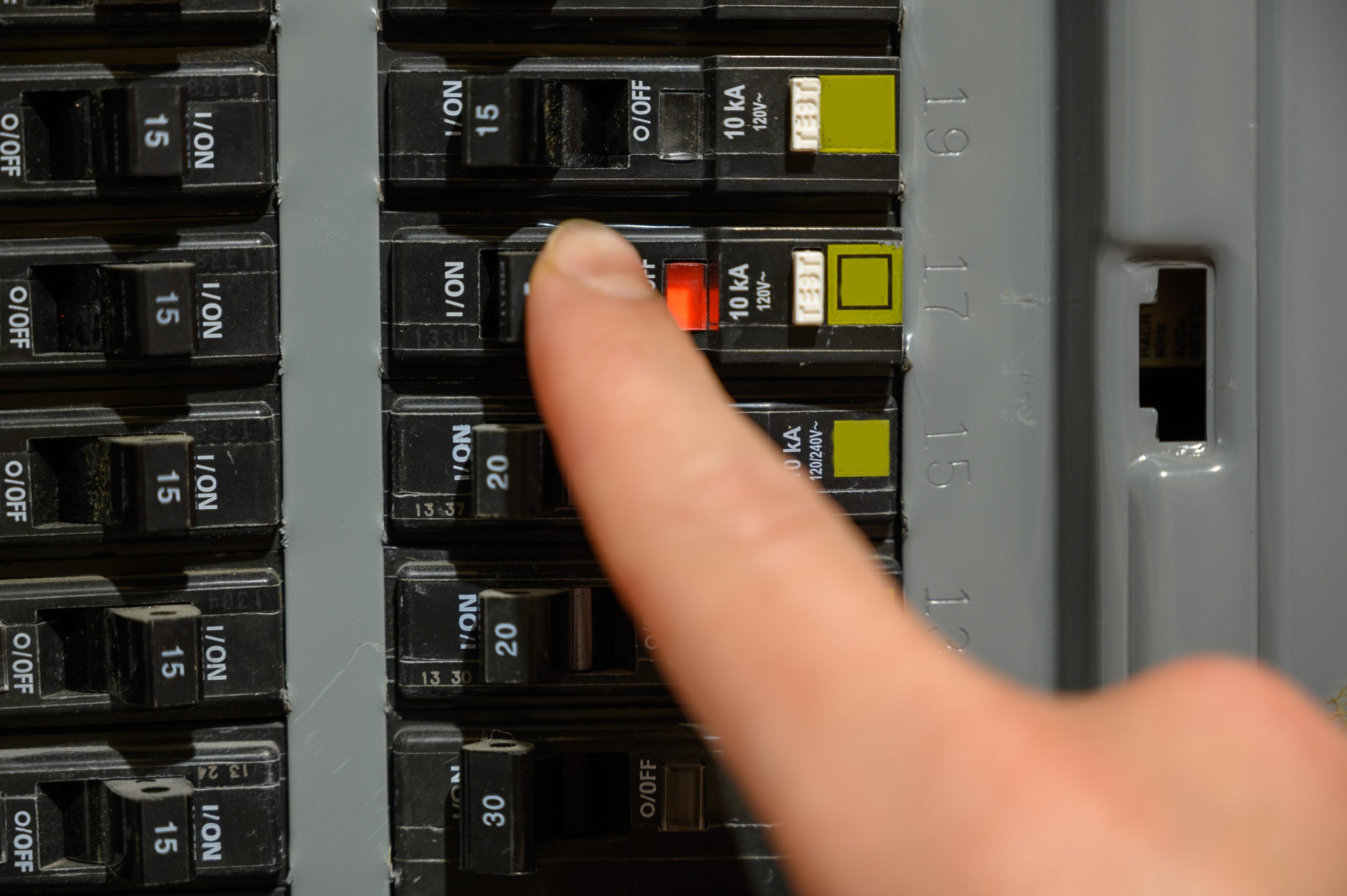
Resetting a tripped breaker is something most homeowners can handle themselves, and it is not complicated. Start by unplugging or turning off the devices on that circuit. Then locate your electrical panel, which is typically in a utility room, garage, or hallway. Open the panel door and look for the breaker that is in the middle or off position while the others remain on. Before resetting it, make sure your hands are dry and you are standing on a dry surface. Push the breaker firmly to the full off position first, then switch it back to on. You should hear or feel a click. If the breaker trips again immediately or shortly after resetting, do not keep resetting it. That is a sign the underlying issue has not been resolved and needs professional attention.
When a Tripped Breaker Is a Warning Sign, Not Just an Inconvenience
There is a meaningful difference between a breaker that trips occasionally during peak usage and one that trips repeatedly without an obvious cause. If a breaker is tripping frequently, feels warm to the touch, makes a buzzing or crackling sound, or if you notice a burning smell near the panel, these are not things to dismiss. Repeated tripping can indicate that a circuit is consistently overloaded and your home may need additional circuits to handle modern electrical demands. It can also point to deteriorating wiring inside the walls, which is a fire hazard. Homes built before 1980 are especially worth monitoring, since older wiring standards do not always meet current load demands from modern appliances and electronics.
Key Advantages of Having a Properly Functioning Circuit Breaker System
It is easy to take a working electrical panel for granted until something stops working. A well-maintained breaker system offers clear, tangible benefits for homeowners.
- Fire prevention: The primary function of a circuit breaker is to stop electrical fires before they start by cutting power when a fault occurs.
- Appliance protection: By limiting power surges and overloads, breakers extend the operational life of your appliances and electronics.
- Resettable design: Unlike older fuses that needed to be replaced after each failure, circuit breakers can be reset and reused, making them cost-efficient over time.
- Zone-based control: Individual breakers allow you to isolate specific areas of the home during repairs or emergencies without cutting power to the entire house.
Common Drawbacks and Limitations to Know About
No system is without its limits, and circuit breakers are no exception. One of the more common frustrations is nuisance tripping, where a breaker trips not because of a genuine fault but due to a minor voltage fluctuation or a slightly aging breaker that has become hypersensitive over time. Older panels, particularly those from certain manufacturers flagged for safety concerns, may have reliability issues altogether. Additionally, a standard circuit breaker does not protect against all types of electrical hazards. Arc fault circuit interrupters, known as AFCIs, and ground fault circuit interrupters, known as GFCIs, offer protection against specific fault types that standard breakers may miss. Many modern electrical codes now require these in bedrooms, bathrooms, kitchens, and other areas.
When to Call a Licensed Electrician
Resetting a breaker is well within the average homeowner’s capability. Diagnosing why it keeps tripping is generally not. If you have reset a breaker and it trips again quickly, or if you are experiencing multiple breakers tripping at the same time, it is time to bring in a licensed electrician. The same applies if you are adding high-demand appliances like an electric vehicle charger, a hot tub, or new HVAC equipment. These situations often require dedicated circuits, panel upgrades, or load calculations that go well beyond a simple reset. Electrical work done incorrectly introduces serious risk, and this is one area where a professional opinion is worth every dollar.
How Home Warranties Factor Into Electrical System Repairs
This is where things get genuinely useful for homeowners. Electrical systems, including wiring, panels, and breakers, can be covered under a home warranty plan depending on the provider and the specific terms. When a breaker fails due to normal wear and tear rather than improper installation or pre-existing damage, a home warranty may cover the repair or replacement cost. For homeowners managing older homes where electrical components are more prone to failure, having that financial backstop matters. It removes the guesswork from budgeting and prevents an unexpected repair from turning into a financial disruption. The connection between electrical system maintenance and home warranty coverage is one that does not get discussed nearly enough.
Why Armadillo Is Worth Considering for Electrical System Coverage
When your circuit breaker trips and the problem turns out to be more than a simple reset, you want a plan that is ready to respond. Armadillo is a home warranty provider built around honest electrical system and appliance protection for homeowners who want real coverage without the fine-print frustration. The plans are straightforward, the process is transparent, and the coverage is designed to address the exact kinds of failures that catch homeowners off guard, like a worn breaker, a failing panel component, or wiring issues tied to normal aging. If you are ready to stop worrying about what the next repair bill might look like, you can get a free home warranty quote for electrical and systems coverage in seconds and see exactly what protection is available for your home. Electrical issues are unpredictable by nature, but the cost of handling them does not have to be.
Frequently Asked Questions About Tripped Circuit Breakers
What does it mean when a circuit breaker trips?
A tripped circuit breaker means the breaker has automatically shut off power to a specific circuit to prevent overheating or damage. It is triggered by an overloaded circuit, a short circuit, or a ground fault.
Is it safe to reset a tripped circuit breaker yourself?
Yes, resetting a tripped breaker is generally safe for homeowners to do on their own. Turn off devices on the circuit first, make sure your hands are dry, move the breaker to the full off position, then switch it back to on.
Why does my circuit breaker keep tripping?
A breaker that trips repeatedly usually indicates an overloaded circuit, a short circuit in a device or the wiring itself, or a breaker that has worn out over time and needs replacement.
How do I know which breaker has tripped in my panel?
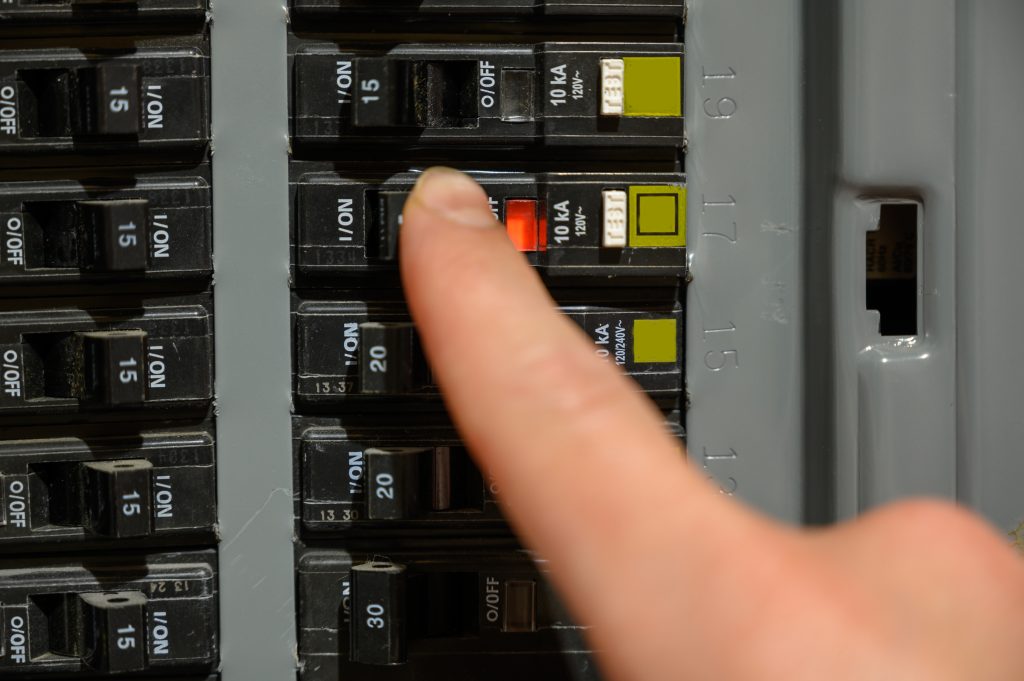
A tripped breaker will typically be in a middle position between on and off, or it may appear fully in the off position while surrounding breakers remain on. Some panels have indicators that turn red when a breaker has tripped.
Can a circuit breaker go bad without tripping?
Yes. A failing breaker may no longer trip when it should, which is actually more dangerous than one that trips too frequently. Signs include flickering lights, warm outlets, or intermittent power loss on a circuit.
What is the difference between a circuit breaker and a fuse?
Both protect circuits from overloads, but a fuse burns out and must be replaced after each fault, while a circuit breaker can be reset and reused. Breakers are the standard in modern homes.
Does a home warranty cover circuit breaker repairs?
Many home warranty plans include coverage for electrical systems, which can include breakers and panels when failure is due to normal wear and tear. Coverage varies by provider and plan, so reviewing the specific terms matters.
How often should a circuit breaker be replaced?
Circuit breakers typically last between 30 and 40 years under normal conditions. However, breakers in older homes or those that have tripped frequently may need evaluation sooner.
What is an arc fault circuit interrupter and do I need one?
An arc fault circuit interrupter, or AFCI, is a type of breaker designed to detect dangerous arc faults in wiring that standard breakers might miss. Most modern electrical codes require them in bedrooms and living areas.
When should I upgrade my electrical panel?
Consider a panel upgrade if your home has frequent breaker trips, you are adding high-demand appliances, your panel is more than 25 to 30 years old, or you have a panel brand known for safety or reliability issues.