Is Your Lawn Trying to Tell You Something? How to Find a Broken Sprinkler Line
Your irrigation system works quietly underground, doing its job day after day without asking for much attention. But when something goes wrong beneath the surface, the signs eventually show up above ground in ways that are hard to ignore. A soggy patch of grass, a section of lawn that looks like it gave up on life, or a water bill that suddenly jumped without explanation. These are not random occurrences. These are your sprinkler system waving its arms. Knowing how to find a broken sprinkler line before the damage compounds can save you real money and a lot of headaches, and that is exactly what this guide is here to help with.
Understanding How a Sprinkler System Actually Works
Before you can locate a problem, it helps to understand what you are working with. A standard residential irrigation system consists of a main supply line that branches into zone lines, each controlled by a valve. Those zone lines run underground and connect to individual sprinkler heads spaced throughout your yard. When a zone is activated, water flows from the main line through the zone valve and out through each sprinkler head in that zone. The entire network is pressurized, which means a crack, puncture, or failed fitting anywhere along the line can cause a noticeable drop in performance or visible water displacement at the surface. Understanding that pressure is the key driver helps explain why even a small break can create a surprisingly large problem.
The Most Common Signs of a Broken Sprinkler Line
Not every broken line announces itself with a geyser. In fact, most underground irrigation leaks are subtle at first. Learning to recognize the early indicators puts you in a much better position to catch damage before it escalates. Here are the signs that homeowners most commonly encounter:
- Unusually wet or muddy patches of lawn that stay saturated even without recent rain
- Dry or dead sections of grass in an otherwise healthy lawn, indicating low or no water pressure reaching certain heads
- Sprinkler heads that sputter, spray unevenly, or fail to pop up fully
- An unexpected spike in your monthly water bill
- Visible sinkholes or soil erosion in your yard
- Water bubbling up from the ground during or after an irrigation cycle
Any one of these symptoms on its own warrants a closer look. Multiple symptoms appearing at the same time almost always point to a line break or a failed valve component.
Step-by-Step: How to Find a Broken Sprinkler Line
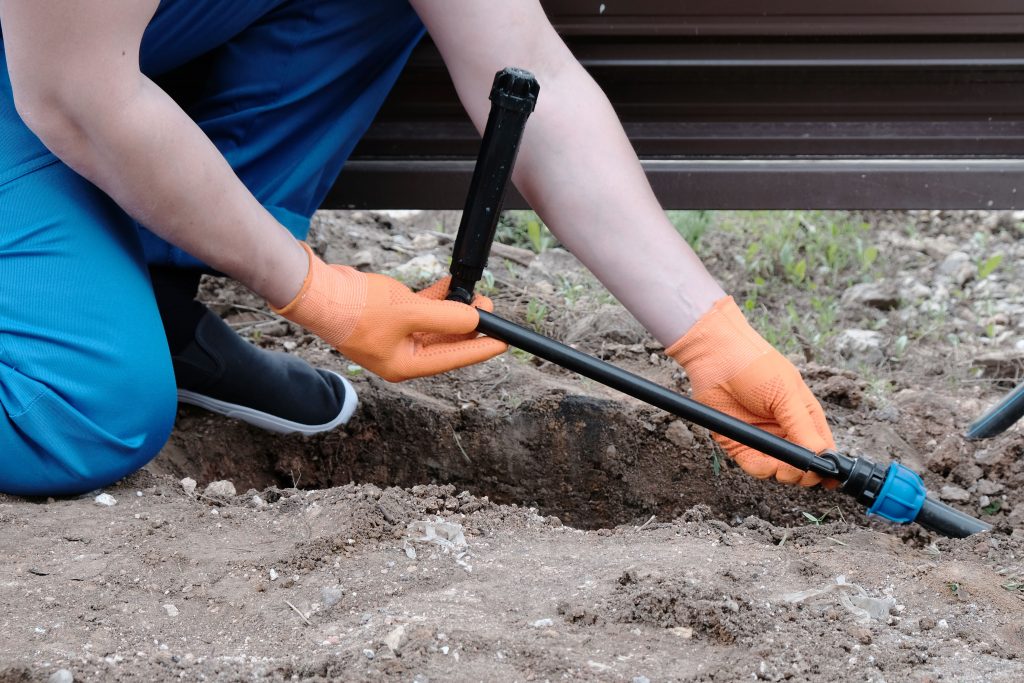
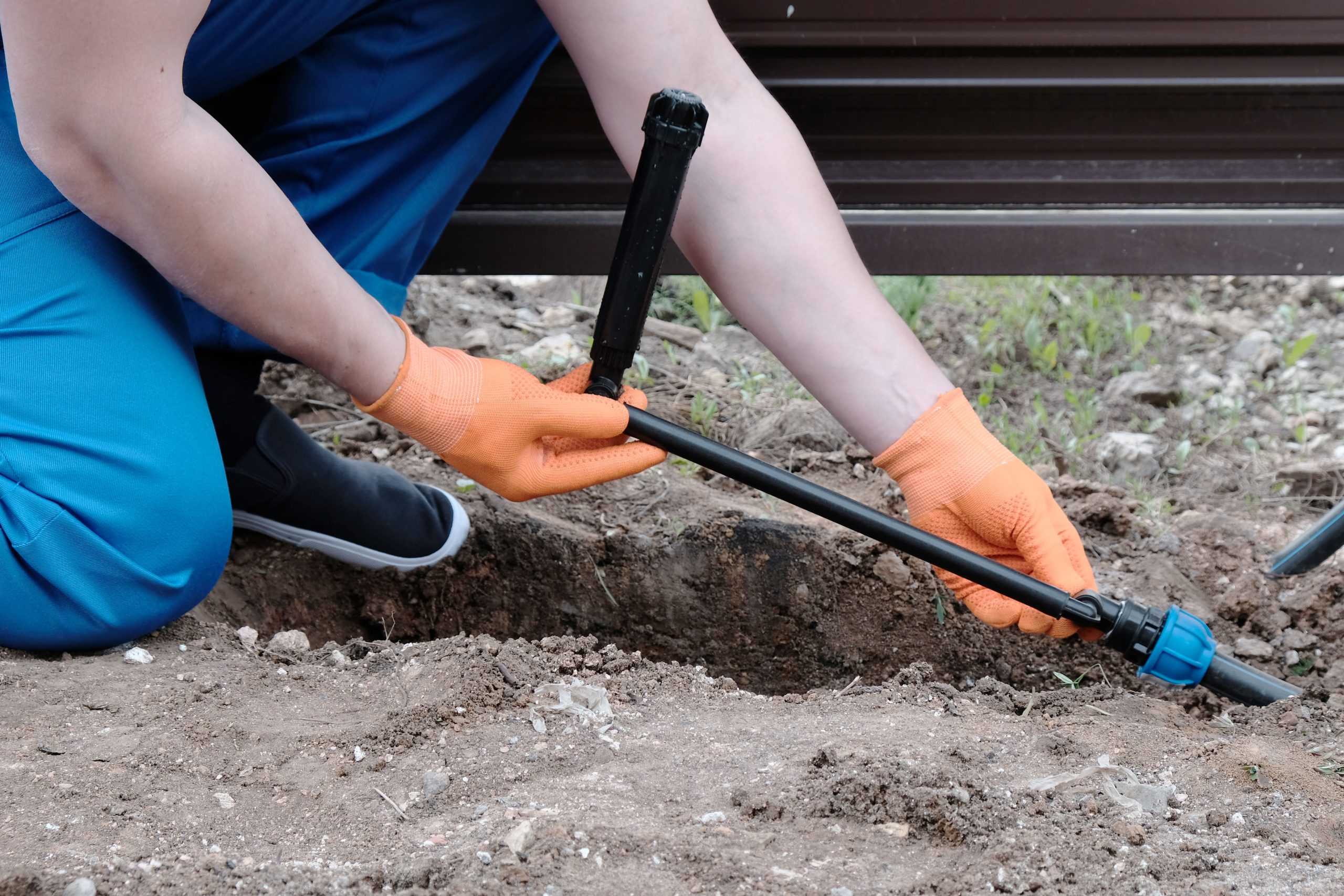
Once you suspect a problem, the next step is locating it. This does not require professional equipment in most cases, though a few tools can make the process faster. Start by turning on each zone individually and watching carefully for irregularities. Walk the zone while it runs and look for areas where water is pooling at the surface rather than dispersing evenly. Low pressure at the heads in a specific zone often indicates a break somewhere between the valve box and those heads. Pay attention to where the water is not going, not just where it is. A dry section followed by a wet section in the same zone is a strong indicator that the break sits between those two points. Once you have narrowed down the general area, probe the soil with a screwdriver or a thin rod. Saturated soil will feel noticeably softer and will give way more easily than surrounding ground. That soft zone is typically within a few feet of the actual break. Mark the area with flags or stakes and plan your excavation accordingly. Dig carefully, especially if you are not sure where your lines were originally laid.

Tools That Make the Job Easier
You do not need a contractor’s toolkit to track down a broken irrigation line, but a few items do make a difference. A wire locator or pipe locator can help you trace the path of buried lines before you start digging. Some homeowners rent these from local hardware stores. A pressure gauge attached to the zone’s supply fitting can help you confirm whether pressure is dropping before or after a suspected break point. For older systems, having the original installation map on hand is invaluable. If that document was never provided or has since been lost, checking with your local municipality may turn up utility maps that show approximate line locations. None of this equipment is expensive, and even a basic approach using a probe rod and careful observation will get you to the right spot in most cases.
What Causes Sprinkler Lines to Break in the First Place
Understanding the cause helps prevent future damage. Broken irrigation lines are rarely random. The most frequent culprits include root intrusion from nearby trees or shrubs that grow into the pipe over time, ground movement caused by freeze and thaw cycles in colder climates, accidental punctures from landscaping work or digging, aging PVC pipe that becomes brittle with years of UV exposure before burial or after shallow installation, and pressure surges caused by malfunctioning zone valves. Homes with older irrigation systems are particularly vulnerable because the materials used decades ago simply were not built to last as long as modern fittings and flex pipe. If your system is more than fifteen years old and you have never had it professionally inspected, that inspection is well worth scheduling.
DIY Repair vs. Calling a Professional
Once you have located the break, you will need to decide whether to handle the repair yourself or bring in an irrigation specialist. Minor breaks in a lateral zone line, especially those involving a clean pipe fracture or a separated fitting, are reasonably manageable for a capable DIYer. PVC repair couplings and slip fix connectors are available at most hardware stores and do not require specialized skills to install. However, breaks that occur near a valve box, along the main supply line, or in a location that is difficult to excavate safely are better handled by a licensed professional. The cost of a professional repair typically ranges from a few hundred dollars upward depending on depth, location, and extent of the damage. Attempting a complex repair without the right experience can turn a manageable problem into a much more expensive one.
The Hidden Cost Risk Homeowners Often Overlook
Here is where things get financially uncomfortable for a lot of homeowners. Sprinkler system repairs are not just about the labor and parts. Water damage from a slow underground leak can erode your foundation, kill mature landscaping, and create conditions favorable for mold if the saturation reaches close enough to your home’s structure. The cost of ignoring a broken sprinkler line compounds quickly, and it rarely stays isolated to just the pipe. This is exactly the kind of scenario where having a home warranty in place makes the difference between an inconvenience and a financial disruption. Irrigation system coverage is available through many home warranty plans and covers the components most likely to fail, including valves, lines, and heads.
Prevention and Routine Maintenance Tips
The best broken sprinkler line is the one that never happens. Routine maintenance practices significantly reduce your exposure to irrigation failures. Consider building these habits into your seasonal home maintenance schedule:
- Run each zone manually at the start of every irrigation season and inspect heads for proper operation
- Flush the system in fall before temperatures drop to prevent freeze damage
- Mark the locations of your irrigation lines before any landscaping or digging project
- Replace aging plastic fittings proactively, especially in high-pressure zones
- Install a smart irrigation controller that monitors soil moisture and prevents overwatering
Consistent attention to your system at the beginning and end of each season is one of the most cost-effective things you can do as a homeowner.
Why Armadillo Belongs in Your Home Protection Plan
Dealing with a broken sprinkler line is stressful enough without the added worry of whether the repair will drain your emergency fund. That is where Armadillo home warranty coverage for irrigation systems and essential home components becomes a genuinely smart investment. Armadillo provides straightforward, transparent home warranty plans designed to cover the systems and appliances that matter most to homeowners, including the kinds of irrigation failures that tend to surface at the worst possible times. If you are ready to stop guessing what a repair might cost and start knowing you have coverage when it counts, you can get a free home warranty quote tailored to your home’s sprinkler system and coverage needs in just a few minutes. Peace of mind does not have to be complicated, and with Armadillo, it is not.

Frequently Asked Questions About Finding and Fixing a Broken Sprinkler Line
Homeowners tend to have a lot of the same questions when an irrigation problem surfaces. Here are clear, direct answers to the ones that come up most often.
How do I know if my sprinkler line is broken or if it is just a bad sprinkler head?
A broken sprinkler head typically affects only that one head and shows signs like cracking, misalignment, or failure to retract. A broken line usually affects the entire zone or causes visible pooling between heads. Check all heads in the affected zone to narrow down the source.
Can a broken sprinkler line increase my water bill significantly?
Yes. Even a moderate underground leak can waste thousands of gallons per month depending on your system’s pressure and how frequently the zone runs. A sudden and unexplained spike in your water bill is one of the most reliable early indicators of an irrigation line break.
How deep are residential sprinkler lines typically buried?
Most residential irrigation lines are buried between six and twelve inches deep. In colder climates where frost depth is a concern, lines may be installed deeper. Always check with your local utility locating service before digging.
Is it safe to continue using my sprinkler system if I suspect a broken line?
It is best to shut off the affected zone until the repair is made. Continuing to run a broken zone wastes water, can cause erosion, and may worsen the break due to continued pressurization.
Does homeowners insurance cover a broken sprinkler line?
Standard homeowners insurance typically does not cover gradual leaks or irrigation system failures. Coverage usually applies only to sudden and accidental damage. A home warranty plan is often a better fit for this type of repair.
How long does it take to repair a broken sprinkler line?
A straightforward lateral line repair can often be completed in one to three hours by a competent DIYer or professional. More complex repairs involving deep lines, valve proximity, or significant soil disturbance may take longer.
What type of pipe is most commonly used in residential irrigation systems?
Schedule 40 PVC is the most widely used material in residential irrigation systems, though polyethylene flexible pipe is also common in certain regions. Older homes may have systems installed with materials that are no longer recommended or supported.
Can tree roots really damage buried sprinkler lines?
Absolutely. Tree roots naturally seek moisture, and an irrigation line is an attractive target. Root intrusion can gradually crush, puncture, or displace pipe over time. This type of damage tends to develop slowly and may not be immediately obvious.
Should I map my irrigation lines before selling my home?
Providing a documented irrigation map to buyers is a meaningful disclosure that adds value and transparency to the sale. It also makes future maintenance easier for the new owners and demonstrates that the system has been properly managed.
Does a home warranty cover irrigation system repairs?
Coverage varies by provider and plan. Many home warranty companies offer optional or included coverage for sprinkler systems that extends to valves, lines, and heads. Reviewing your plan details or speaking with a warranty provider directly is the best way to confirm what is included.