Why Every Homeowner Needs to Know How to Turn Off a Water Valve
Water damage is one of the most disruptive and costly things that can happen inside a home. A burst pipe, a failed washing machine hose, a leaking toilet supply line – any one of these situations can go from minor inconvenience to major disaster in minutes. The one skill that can stop all of that in its tracks? Knowing how to turn off a water valve. It sounds simple, and honestly, it is. But most homeowners have never done it, and some have never even thought about it until water is already on the floor. This guide is here to change that.
What Is a Water Shutoff Valve and What Does It Actually Do
A water shutoff valve is exactly what it sounds like – a mechanical device installed along a water supply line that controls the flow of water. When you turn it off, water stops moving through that section of pipe. When you turn it back on, flow resumes. These valves exist at multiple points throughout a home, which means you have options depending on the situation. Some valves control water to a single fixture, like a toilet or a kitchen faucet. Others control entire sections of the home. And one valve controls everything – that is the main shutoff. Understanding what each one does gives you a serious advantage when something goes wrong.
Where to Find Your Home’s Water Shutoff Valves
Before you ever need to use a shutoff valve in an emergency, you should know where yours are located. This is not the kind of thing you want to be searching for while water is spraying across your bathroom wall. Here are the most common locations to check:
- The main shutoff valve is typically located near the water meter, often in the basement, crawl space, garage, or on an exterior wall facing the street
- Individual fixture shutoffs are usually found underneath sinks, behind toilets, and behind refrigerators with ice makers
- The water heater has its own dedicated shutoff valve located on the cold water supply line feeding into the unit
- Washing machine connections often have shutoffs on both the hot and cold lines, either on the wall or behind the machine
- Outdoor hose bibs sometimes have interior shutoff valves accessible from inside the home
Take a walkthrough of your home and locate each of these. Write them down if you need to. Better yet, tag them with a small piece of colored tape so anyone in the household can find them quickly.
How to Turn Off a Water Valve the Right Way
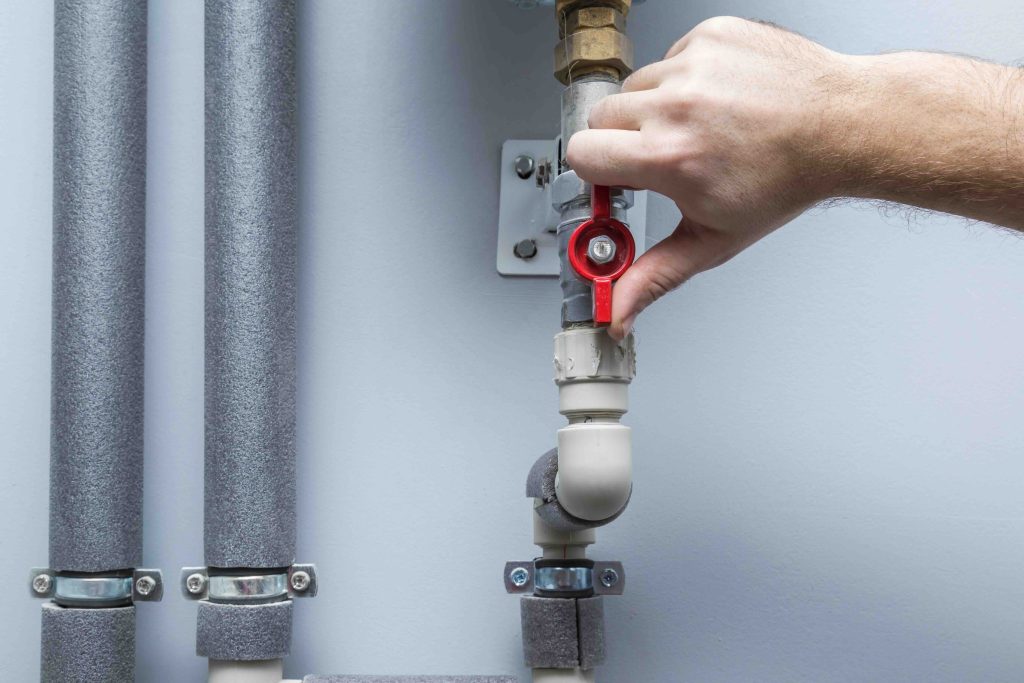
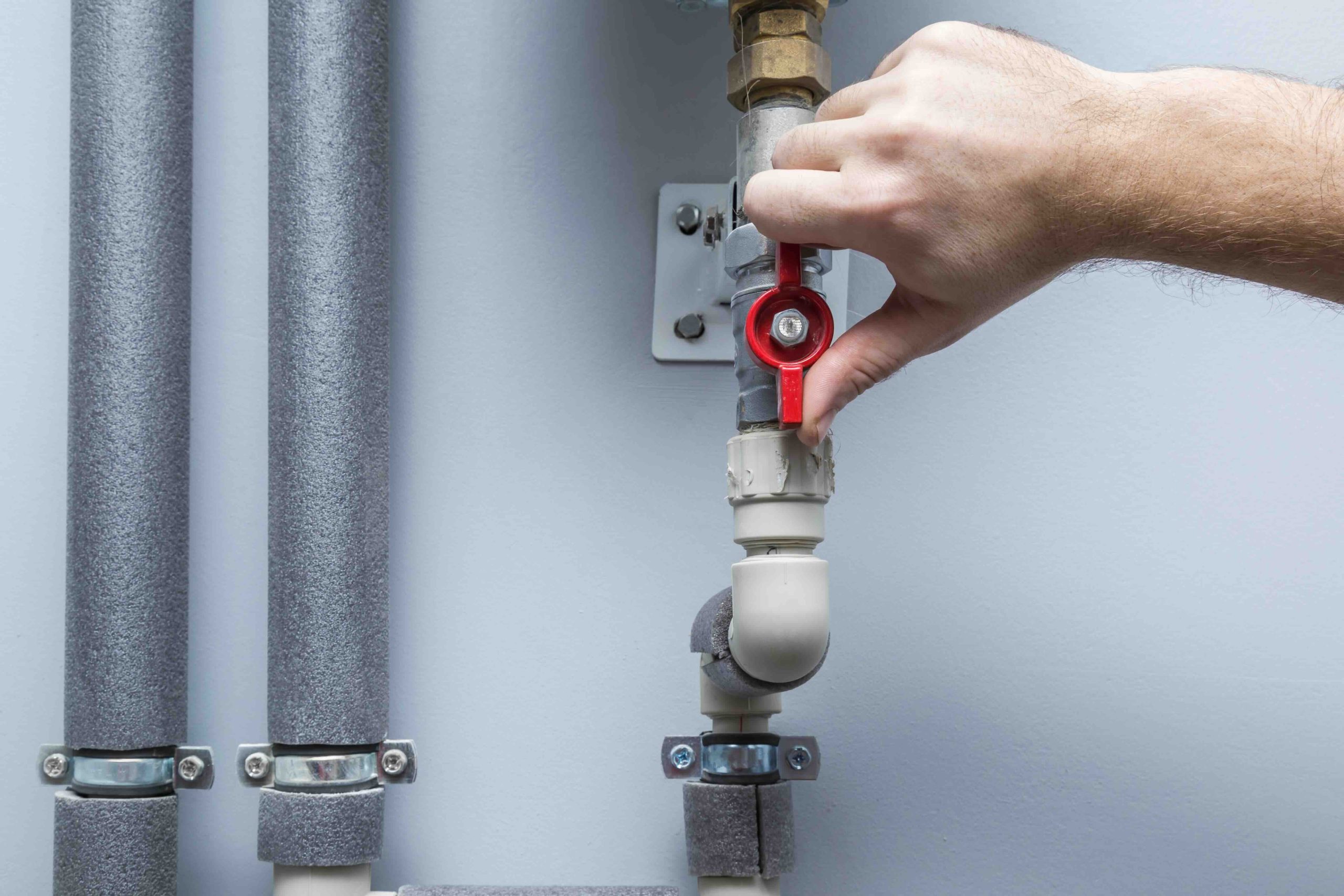
There are two main types of shutoff valves you will encounter in a residential home, and each one works a little differently. The gate valve is an older style that requires multiple full rotations to close – you turn it clockwise until it stops, and that may take several complete turns. The ball valve is far more common in modern homes and operates with a quarter turn. When the handle is parallel to the pipe, water flows. When it is perpendicular, flow is stopped. Ball valves are faster, more reliable, and generally easier to operate. If you are dealing with a main shutoff that uses an older gate valve, and it has not been turned in years, it may be stiff or even partially stuck. Apply slow, steady pressure. Do not force it aggressively or you risk breaking it. If it will not budge, that is worth addressing before an emergency ever occurs.
Common Mistakes Homeowners Make with Shutoff Valves
There are a few errors that come up time and again when homeowners try to deal with water shutoffs for the first time. One of the most common is confusing hot and cold supply lines under a sink and shutting off the wrong one. Another is assuming that turning off a fixture valve completely stops all water, when in some cases water is still sitting in the pipes and will drain out when a line is disconnected. Some homeowners also wait too long to locate their main shutoff, which turns a manageable situation into an expensive one. And then there is the valve that has not been operated in a decade, which seizes up right when you need it most. Operating your shutoff valves occasionally, say once or twice a year, keeps them functional and gives you peace of mind.

When to Use a Fixture Valve vs. the Main Shutoff
Not every water issue requires shutting off the entire house. If a toilet is overflowing, reach behind the base and turn the supply valve clockwise – that is all you need. Replacing a kitchen faucet? The valves under the sink are your friends. But if a pipe bursts inside a wall, if a major appliance supply line fails catastrophically, or if you cannot identify the source of the water, go straight for the main shutoff. Getting the water stopped quickly is always the priority. Precision comes second. Once everything is off and the immediate emergency is under control, you can work backward to isolate the exact problem area and restore water to the rest of the home while repairs happen.
What to Do After You Turn Off the Water
Shutting off the valve is step one. What happens next matters just as much. If you have shut off water due to a leak or a broken pipe, the next call should be to a licensed plumber. Do not attempt to diagnose or repair pressurized plumbing systems without the right experience and tools. Document the damage with photos before cleaning anything up, especially if a home warranty or homeowner’s insurance claim may be involved. Open cabinet doors under affected sinks to allow airflow and reduce moisture buildup. If flooring, drywall, or cabinetry was exposed to water, a restoration professional may need to assess for hidden moisture that could lead to mold growth.
Key Advantages of Understanding Your Home’s Water Shutoff System
Knowing how to turn off a water valve is not a plumbing skill – it is a homeowner skill. The advantages are straightforward and hard to argue with:
- You can stop water damage within seconds rather than waiting for a plumber to arrive
- You protect flooring, cabinetry, drywall, and personal belongings from extended water exposure
- You reduce the overall cost and scope of repairs by acting fast
- You can perform basic fixture replacements and maintenance tasks yourself
- You give every member of your household the ability to respond in an emergency, not just you
Potential Drawbacks and Limitations to Be Aware Of
There are a few limitations worth acknowledging. Older shutoff valves, particularly gate valves that have sat untouched for years, can fail when you need them most – either refusing to move or breaking under pressure. Main shutoff valves located outside the home or near the street may require a meter key tool to operate, which not every homeowner has. In some multi-unit buildings or shared water systems, shutting off your main may affect neighboring units, so it is worth understanding your specific setup. And shutting off the water solves the immediate problem but does not diagnose or fix anything – professional repairs are still required for any failed component, pipe, or fitting.
How Armadillo Helps Protect Homeowners When Plumbing Goes Wrong
Knowing how to stop a water leak is a valuable first step, but what happens after the valve is closed is where the real cost begins. Plumbing repairs are not cheap, and even a single failed pipe or worn-out component can mean hundreds or thousands of dollars in service calls. That is where a home warranty changes the equation. Armadillo home warranty coverage for plumbing systems and essential appliances is built for exactly these moments – not just the dramatic ones, but the everyday failures that catch homeowners off guard. When your shutoff valve reveals a deeper problem with your supply lines or your water heater gives out after you disconnect it for inspection, having coverage in place means you are not absorbing the full financial hit on your own. Armadillo makes the process straightforward, with transparent plans and real support when you need it. If you want to stop worrying about what the next plumbing failure is going to cost you, take two minutes to get a free home warranty quote for plumbing and home system protection and see what coverage looks like for your home.

Frequently Asked Questions About Turning Off Water Valves at Home
These are some of the most common questions homeowners ask about locating and operating water shutoff valves throughout their home.
How do I know which direction to turn a water valve to shut it off?
For gate valves, turn clockwise to close and counterclockwise to open – this follows the standard righty-tighty, lefty-loosey principle. For ball valves, the handle should be perpendicular to the pipe when the valve is fully closed.
Where is the main water shutoff valve in a house?
In most homes, the main water shutoff is located near the water meter, typically in the basement, crawl space, utility room, garage, or on an exterior wall facing the street. The exact location varies by home age and regional construction standards.
What is the difference between a gate valve and a ball valve?
A gate valve requires multiple rotations to open or close fully and is more common in older homes. A ball valve opens and closes with a single quarter turn and is the more modern, reliable option found in most homes built in recent decades.
Can I replace a shutoff valve myself?
Replacing a shutoff valve is a plumbing task that requires shutting off the main water supply and some mechanical skill. While experienced DIYers can handle it, most homeowners are better served by hiring a licensed plumber to ensure the repair is done correctly and up to code.
What if my water shutoff valve is stuck and will not turn?
Apply slow, steady pressure rather than forcing it. A valve that has not been operated in years can seize from mineral buildup or corrosion. If it will not move, contact a plumber to service or replace it before an emergency forces the issue.
Should I turn off the water if I leave for an extended trip?
Yes, shutting off the main water supply before an extended absence is considered a best practice. It eliminates the risk of an undetected leak causing significant damage while no one is home to catch it.
Does shutting off the main water valve affect hot water too?
Yes. The main shutoff stops all water flowing into the home, which means both the cold water supply and the cold water feeding your water heater are cut off. Hot water already in the tank remains available temporarily, but no new hot water will be generated until water is restored.
How often should I test my water shutoff valves?
Operating your shutoff valves at least once or twice a year is a reasonable maintenance habit. This keeps them from seizing up over time and confirms they are functional before you ever need them in an emergency.
Is a water shutoff valve covered under a home warranty?
Coverage varies by plan and provider. Some home warranty plans include internal shutoff valves as part of their plumbing system coverage. Review your specific plan details or contact your warranty provider to confirm what components are included.
What should I do if I cannot locate my main water shutoff valve?
Check your home inspection report if you have one, as inspectors typically document shutoff valve locations. You can also contact your local water utility for guidance, or ask a licensed plumber to locate and clearly mark it during a routine service visit.