Mold in Your Ventilation System: What Every Homeowner Needs to Know
There is something unsettling about the idea of mold growing inside the one system that is supposed to be circulating clean air throughout your home. And yet, it happens more often than most people expect. Mold in ventilation systems is a legitimate concern, not a fringe worry, and understanding how it develops, what it does, and how to address it is genuinely useful information for any homeowner. This is one of those topics where a little knowledge goes a long way toward protecting both your home and your health.
What Is Mold in a Ventilation System and How Does It Get There
Mold is a type of fungus that thrives in environments where moisture, organic material, and limited airflow come together. Your HVAC system, as it turns out, can check all three of those boxes without much effort. When warm, humid air passes through your ductwork and meets cooler surfaces, condensation forms. That moisture settles on dust, dander, and debris already inside the ducts, and mold spores, which are literally floating in the air all the time, land on those surfaces and begin to colonize. The result is a growth problem that spreads quietly, deep inside a system most homeowners never look at directly. It is not a sign that you have done something wrong necessarily. Sometimes the conditions just align, especially in humid climates, older homes, or properties with poorly insulated ductwork.
How to Tell If Mold Is Growing in Your Ducts
The tricky part is that mold inside ductwork is mostly invisible from where you are standing. But the signs do show up in other ways, and if you know what to watch for, you can catch it before it spreads significantly.
- A musty or stale odor that gets stronger when the HVAC system turns on
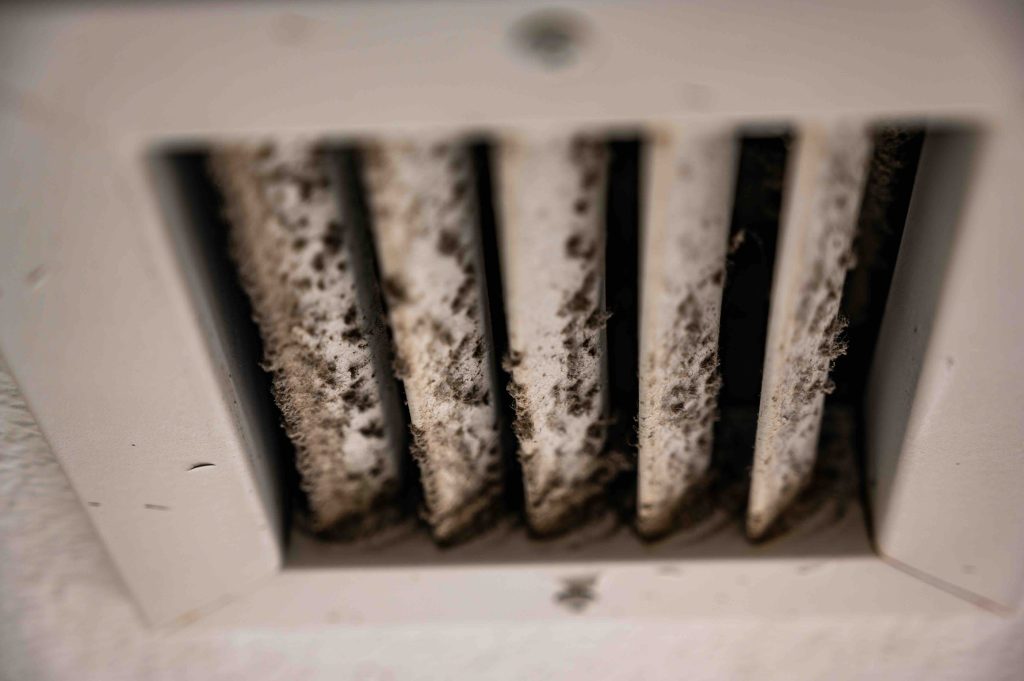
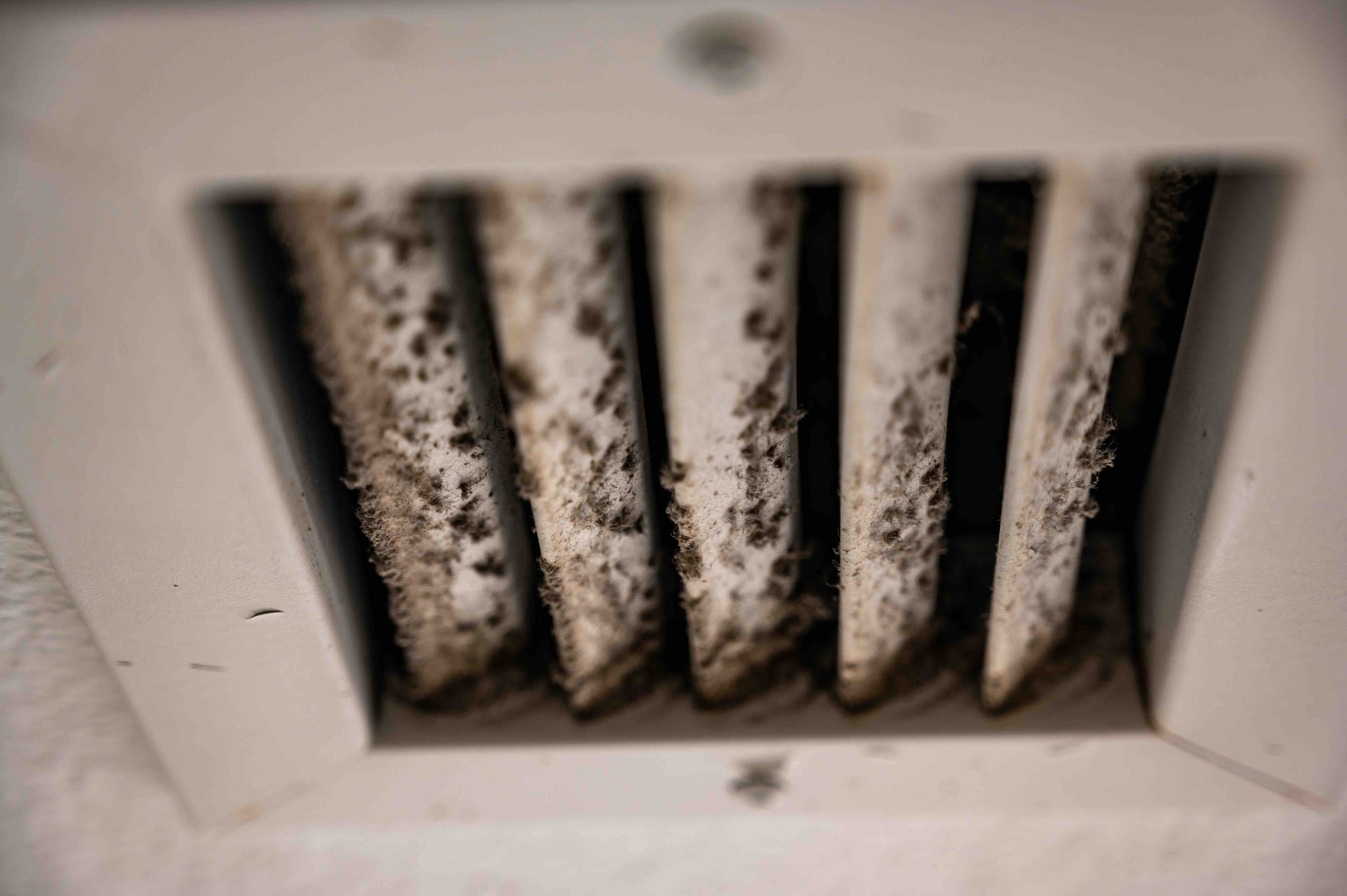
- Visible dark spots or discoloration around vent registers or grilles
- Unexplained allergy symptoms, headaches, or respiratory irritation that improve when you leave the home
- Excess humidity or condensation on windows, walls, or near vents
- A professional inspection report identifying microbial growth inside the duct system
None of these signs on their own confirm mold with certainty, but a combination of them is a strong enough reason to bring in a professional for an assessment. A visual inspection combined with air quality testing can give you a clearer picture of what you are actually dealing with.
Why Mold in Your HVAC System Is a Bigger Problem Than Wall Mold
Surface mold on a bathroom wall is contained. Mold inside your ventilation system is a distribution problem. Every time your HVAC system cycles on, it pushes air through those contaminated ducts and out through every vent in your home. That means mold spores are being actively carried into your living spaces, your bedrooms, your kitchen, everywhere. For people with asthma, allergies, or compromised immune systems, this is particularly serious. Even for otherwise healthy individuals, prolonged exposure to elevated mold spore counts can cause respiratory symptoms over time. The scale of the problem is what makes duct mold different, and worth treating with more urgency than a localized surface issue.

What Causes Mold to Grow in Ventilation Systems
Understanding the root causes helps with prevention, and prevention is always less expensive than remediation. The most common contributors to mold growth in ductwork include high indoor humidity levels, poorly sealed or uninsulated ducts that allow condensation to form, oversized HVAC units that cool a space too quickly without adequately dehumidifying the air, clogged or dirty air filters that restrict airflow and trap moisture, and leaks in the duct system that allow unconditioned humid air to enter. Any one of these conditions can create a foothold for mold. Several of them together create an environment where mold growth is almost inevitable without intervention.
How Mold in Ductwork Is Treated and Removed
Mold remediation in a ventilation system is not a do-it-yourself job in most cases. The process typically involves a professional inspection to confirm the presence and extent of growth, followed by containment procedures to prevent spores from spreading during cleaning. Technicians use specialized equipment including HEPA vacuums, antimicrobial treatments, and negative air pressure systems to clean duct surfaces thoroughly. In cases where mold has penetrated porous duct lining material, sections of ductwork may need to be replaced entirely. Following remediation, a post-treatment inspection and air quality test confirm that the work was effective. Cutting corners on this process tends to result in regrowth, so working with a certified mold remediation professional is the right call.
The Advantages of Addressing Mold in Your Ventilation System Early
Catching and treating mold early in your ductwork carries real advantages that extend well beyond air quality. Early intervention means less contamination to remediate, which translates directly to lower costs. It protects the integrity of the duct lining and surrounding insulation, both of which can be compromised by prolonged mold exposure. It also reduces the risk of mold spreading from the ductwork to wall cavities or other structural areas, which would significantly escalate the scope and expense of the problem. And practically speaking, it keeps your HVAC system operating efficiently. Mold and debris buildup in ductwork increases resistance to airflow, which forces your system to work harder and consume more energy. Treating the problem early is a financial decision as much as a health one.
The Drawbacks and Limitations to Be Aware Of
There are some honest limitations to acknowledge here. Mold remediation is not a permanent fix on its own. If the underlying conditions that allowed mold to develop, excess humidity, poor insulation, inadequate filtration, are not corrected, the mold will return. Remediation addresses the symptom; source control addresses the cause. Additionally, professional duct cleaning and mold treatment can be expensive, often ranging from several hundred to several thousand dollars depending on the size of the system and severity of the growth. Home warranties vary significantly in how they handle mold-related claims, so understanding your coverage before a problem arises is genuinely important. Some policies cover mold remediation when it results from a covered system failure, while others exclude it explicitly.
Practical Steps Homeowners Can Take to Prevent Mold in Ductwork
Prevention is where homeowners actually have the most control, and the steps involved are straightforward enough to integrate into regular home maintenance habits.
- Change HVAC air filters every one to three months depending on household conditions and filter type
- Keep indoor humidity levels between 30 and 50 percent using a dehumidifier if needed
- Schedule annual HVAC inspections to catch early signs of moisture issues or duct leaks
- Ensure ductwork in unconditioned spaces like attics and crawlspaces is properly insulated and sealed
- Run bathroom and kitchen exhaust fans to reduce localized humidity that can enter the duct system
- Consider upgrading to a higher MERV-rated filter to capture more particulates and reduce the organic material available for mold to feed on
These are not complicated measures. They are the kind of consistent, low-effort habits that collectively make a meaningful difference in the health of your home’s air quality over time.
Why Armadillo Is the Right Coverage Partner When HVAC Issues Arise
When something goes wrong with your HVAC system, whether it is a component failure that creates the moisture conditions for mold or a breakdown that leaves your home without heating and cooling, having the right protection in place changes everything. Armadillo home warranty coverage for HVAC systems and home ventilation protection is built around the idea that homeowners deserve straightforward, reliable support without the fine-print frustration that defines too many warranty experiences. Armadillo covers the systems and appliances that matter most, with plans that are easy to understand and backed by responsive service. If you want to stop guessing what your coverage actually includes and start managing your home with real confidence, get a free home warranty quote to protect your HVAC system and more and see exactly what a plan built for your home looks like.

Frequently Asked Questions About Mold in Ventilation Systems
Can mold in ductwork make you sick?
Yes. Mold spores distributed through a ventilation system can cause respiratory symptoms, allergic reactions, headaches, and eye or throat irritation. People with asthma, allergies, or weakened immune systems are at greater risk.
How do I know if I have mold in my air ducts?
Common signs include a musty odor when the HVAC system runs, visible discoloration around vent registers, and allergy or respiratory symptoms that improve when you leave the home. A professional inspection can confirm the presence of mold.
Is mold in HVAC systems common?
It is more common than most homeowners realize, particularly in humid climates, homes with older ductwork, or systems that have experienced moisture issues from condensation or leaks.
Can I clean mold from my air ducts myself?
In most cases, professional remediation is strongly recommended. DIY cleaning without proper containment and equipment can spread spores throughout the home and may not address growth that has penetrated porous duct materials.
How much does mold remediation in ductwork cost?
Costs vary based on the size of the system and extent of the contamination. Homeowners can generally expect to pay anywhere from a few hundred dollars for minor treatment to several thousand dollars for more significant cases requiring duct replacement.
Will a home warranty cover mold in my HVAC system?
Coverage depends on the specific policy. Some home warranties cover mold remediation when it results directly from a covered system failure, while others exclude mold explicitly. Reviewing your policy terms before a problem arises is essential.
How can I prevent mold from growing in my air ducts?
Key prevention steps include maintaining indoor humidity between 30 and 50 percent, changing air filters regularly, scheduling annual HVAC inspections, and ensuring ductwork in unconditioned spaces is properly insulated and sealed.
Does mold in ductwork mean my whole HVAC system is contaminated?
Not necessarily. Mold may be localized to specific sections of ductwork, though without a professional inspection it is difficult to know the full extent. Early detection helps limit how far the contamination has spread.
How long does mold remediation in an HVAC system take?
The timeline depends on the scope of the problem. Minor cases may be resolved in a single day, while more extensive contamination requiring duct replacement or deep cleaning of a larger system can take several days.
Can mold come back after duct cleaning?
Yes. If the underlying conditions that caused mold growth are not corrected, such as excess humidity or duct leaks, mold can return even after professional remediation. Source control is just as important as the cleaning process itself.