Why Your Garbage Disposal Smells and What You Can Do About It
If you have ever walked into your kitchen and caught a whiff of something unpleasant drifting up from the sink, there is a good chance your garbage disposal is the culprit. It is one of those appliances that quietly handles a lot of dirty work, and over time, it starts to show for it. Food debris, grease, and moisture create the perfect environment for bacteria and mold to grow, and that combination produces odors that can make your entire kitchen feel less clean. The good news is that deodorizing a garbage disposal is genuinely simple once you understand what causes the smell and how to address it properly.
How a Garbage Disposal Actually Works
Understanding the mechanics helps here. A garbage disposal is mounted beneath your kitchen sink and connects to the drain. When you run it, a spinning plate with impellers grinds food waste into small particles that flush through your plumbing. The unit uses water to carry those particles down the drain, which is why running water during and after use is so important. The inside of the disposal housing, the rubber splash guard, and the grinding components are all areas where food particles can cling and begin to decompose. That decomposition is exactly where odors originate, and it is why surface-level fixes like pouring bleach down the drain rarely solve the problem completely.
Common Causes of Garbage Disposal Odors
There are a few consistent offenders when it comes to disposal smells. Getting familiar with them makes it easier to prevent the problem from recurring.
- Food residue stuck to the grinding components and housing walls
- Grease and oil buildup that coats the interior over time
- The rubber splash guard, which traps debris on its underside
- Infrequent use, which allows stagnant water and particles to sit
- Improper flushing, meaning not running enough water after grinding
Natural Methods to Deodorize a Garbage Disposal
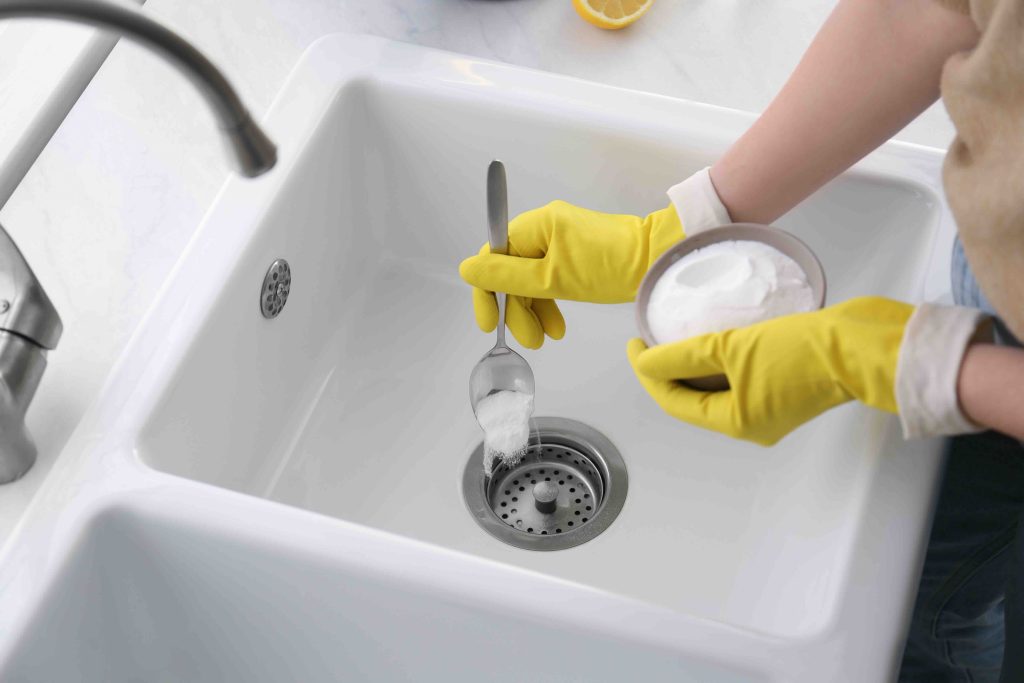
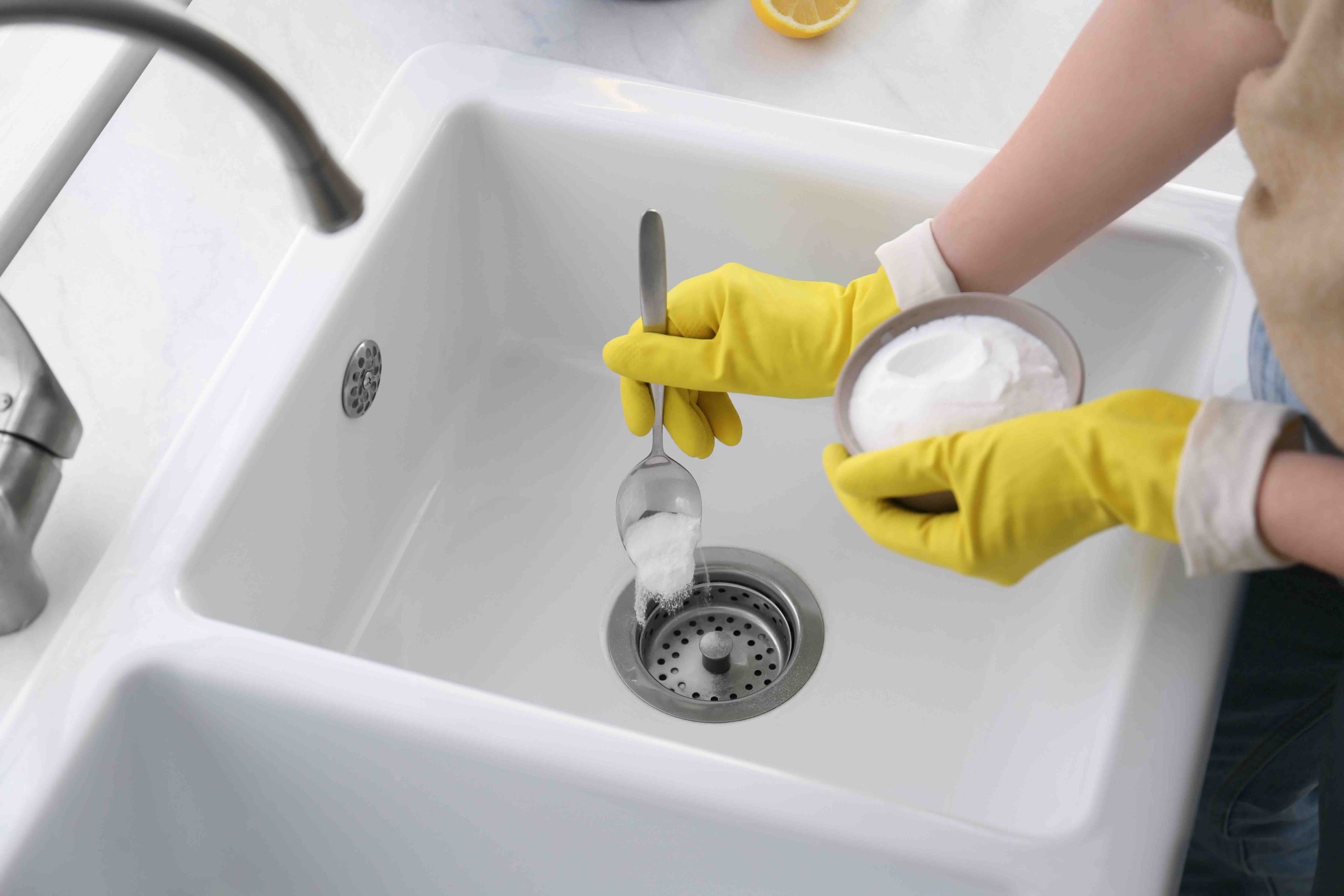
Before reaching for harsh chemicals, it is worth trying the approaches that actually work and that most homeowners already have the ingredients for. One of the most reliable methods is using a combination of baking soda and white vinegar. Pour half a cup of baking soda into the disposal, follow it with a cup of white vinegar, and let the fizzing reaction do its work for several minutes before flushing with hot water. This combination breaks down residue and neutralizes odors at the source rather than masking them. Another effective method involves citrus. Grinding lemon, lime, or orange peels releases natural oils that coat the interior and leave behind a clean scent. This is not just a temporary fix, the oils have mild antimicrobial properties that help slow bacterial growth.
Ice and Salt: The Mechanical Cleaning Approach
This one surprises a lot of homeowners, but it works well. Filling the disposal with ice cubes and a generous amount of coarse rock salt, then running it without water for a short period, creates a scouring effect on the grinding components. The ice helps dislodge stuck-on debris and the salt acts as an abrasive. After grinding, flush thoroughly with cold water. Some people add citrus peels to this process to combine cleaning and deodorizing in a single step. It is worth doing this once a month as a maintenance routine rather than waiting until odors become noticeable.
Cleaning the Splash Guard Properly
The rubber splash guard, sometimes called the baffle, is often the most overlooked part of disposal maintenance. Because it sits right at the opening of the unit, food and grease collect on its underside almost constantly. Many homeowners wipe the visible top surface but never address what is hiding underneath. To clean it correctly, fold back the flaps and scrub beneath them with a stiff brush, dish soap, and warm water. Some splash guards are removable, which makes cleaning even easier. If yours has visible mold or a persistent smell even after scrubbing, it may be time to replace it entirely. They are inexpensive and widely available at hardware stores.

What Not to Put Down Your Garbage Disposal
Preventing odors is significantly easier than eliminating them after they have developed. A large part of that prevention comes down to knowing which foods should never enter the disposal in the first place.
- Grease, oil, and fat, which solidify and coat internal components
- Fibrous vegetables like celery, artichokes, and corn husks
- Starchy foods such as pasta, rice, and potato peels
- Coffee grounds, which accumulate and form dense, odor-trapping buildup
- Eggshells, which are widely debated but generally best avoided
- Bones or pits from fruit, which can damage grinding components
Establishing a Regular Maintenance Routine
Consistent maintenance is what keeps disposal odors from becoming a recurring problem. Running cold water before, during, and after each use helps flush particles completely through the system. Following up with a small amount of dish soap and water every few days keeps the interior from accumulating grease. Once a month, running the baking soda and vinegar treatment or the ice and salt method provides a deeper clean. The entire routine takes very little time, and the difference in how your kitchen smells is noticeable. The disposal itself also tends to run more efficiently and last longer when it is not working against layers of built-up residue.
When Odors Point to a Bigger Problem
Sometimes persistent smells are not about the disposal itself but about what is happening further down the drain line. If you have cleaned every accessible part of the unit thoroughly and the odor continues, there may be buildup in the drain pipe, a partial clog, or even a plumbing issue that is allowing sewer gases to enter through the drain. Drain line cleaning products designed for kitchen use can help with buildup, but a slow drain or gurgling sounds accompanying the smell are signs that a plumber should take a look. It is also worth noting that garbage disposals have a typical lifespan of around ten to fifteen years. An older unit that smells despite consistent cleaning may simply be at the end of its useful life.
How a Home Warranty Protects Your Garbage Disposal Investment
Keeping your garbage disposal clean and well-maintained is absolutely within your control as a homeowner, but what happens when it stops working altogether? Disposal motors burn out, grinding components wear down, and electrical connections fail without much warning. That is where having the right coverage in place makes a real difference. Armadillo home warranty plans designed to protect kitchen appliances and home systems are built to cover exactly these kinds of unexpected repair and replacement costs, so you are not caught off guard by a bill you did not see coming. If you want to know what coverage would look like for your specific home, you can get a personalized home warranty quote that includes garbage disposal coverage in just a few minutes. Armadillo keeps the process straightforward, the coverage clear, and the support responsive when you actually need it.

Frequently Asked Questions About Deodorizing a Garbage Disposal
Here are answers to the questions homeowners ask most often about garbage disposal odors, maintenance, and coverage.
How often should I clean my garbage disposal to prevent odors?
A light cleaning with dish soap and water every few days is a good baseline. A deeper cleaning using baking soda, vinegar, or the ice and salt method should be done about once a month to prevent buildup from accumulating.
Is it safe to use bleach to deodorize a garbage disposal?
Bleach is not recommended for regular use in a garbage disposal. It can damage rubber components, including the splash guard and internal seals, and it does not effectively remove the food residue that causes odors in the first place.
Why does my garbage disposal still smell after cleaning it?
If odors persist after a thorough cleaning, the issue may be in the drain pipe rather than the disposal itself. Buildup further down the line, a partial clog, or sewer gas entering through the drain are all possible causes that may require professional attention.
Can I put lemon juice down the disposal instead of lemon peels?
Lemon juice can help with mild odors, but grinding the actual peels is more effective. The peels release oils that coat the interior of the unit and provide a more thorough deodorizing and light cleaning effect than juice alone.
What is the rubber piece at the top of the disposal called, and why does it smell?
That rubber piece is called the splash guard or baffle. It traps food particles and grease on its underside, which decompose over time and produce odors. Cleaning the underside of the splash guard regularly is one of the most effective ways to eliminate disposal smells.
Does a home warranty cover garbage disposal repair or replacement?
Many home warranty plans do cover garbage disposal repair and replacement when the unit fails due to normal wear and tear. Coverage terms vary by provider and plan, so it is important to review what is included before assuming the disposal is covered.
How long does a garbage disposal typically last?
A well-maintained garbage disposal generally lasts between ten and fifteen years. Units that receive consistent cleaning and are used correctly tend to reach the higher end of that range, while neglected units may fail sooner.
Can I use commercial garbage disposal cleaning tablets?
Yes, commercial cleaning tablets designed for disposals are generally safe and can be a convenient option for routine maintenance. They work best as a supplement to regular cleaning habits rather than as a complete replacement for manual cleaning methods.
Is it bad to run a garbage disposal without water?
Running a disposal without water, except briefly during the ice and salt cleaning method, can cause heat buildup and damage to the motor and grinding components. Always run cold water before starting the unit and keep it running for at least thirty seconds after grinding is complete.
What should I do if my garbage disposal is making a bad smell and a grinding noise?
A combination of odor and unusual noise often indicates something is stuck in the grinding chamber. Turn off the unit, do not put your hand inside, and use disposal-safe tools to clear any debris. If the noise continues after clearing the chamber, the grinding components may be damaged and should be inspected by a professional.