Why Does My Dishwasher Smell? Understanding the Root Cause
A dishwasher that smells bad is one of those home problems that sneaks up on you. One day everything is fine, and the next you open the door and get hit with something between mildew and last Tuesday’s salmon. The smell is real, it is common, and it has a source. Most dishwasher odors come from food debris, grease buildup, standing water, or a combination of all three. When food particles accumulate in the filter, the spray arms, or along the door gasket, bacteria and mold move in quickly. The result is that unmistakable, unpleasant odor that no amount of dish soap seems to fix. Before jumping to conclusions about whether your appliance is failing, it helps to understand what is actually causing the issue and whether a few targeted cleaning steps can resolve it entirely.
How a Dishwasher Works and Why Odors Develop
Your dishwasher relies on a closed loop system: water comes in, sprays through rotating arms to clean your dishes, drains out through a filter, and repeats. The filter at the bottom of the unit captures food particles so they do not recirculate onto clean dishes. That filter is also the number one culprit when it comes to odor. If it is not cleaned regularly, it becomes a collection point for decaying food. Add residual moisture from incomplete drying cycles, a dark enclosed interior, and the occasional greasy pot, and you have created an environment where odor-causing bacteria thrive. The door gasket, the spray arm holes, and even the drain line can all trap debris and contribute to that lingering smell. Understanding this helps you target the right spots when cleaning instead of just running an empty cycle and hoping for the best.
Step-by-Step Guide to Getting Rid of Dishwasher Smell
Getting rid of dishwasher odor does not require expensive products or professional help in most cases. A systematic cleaning approach covers the major sources of the problem. Here is what to do:
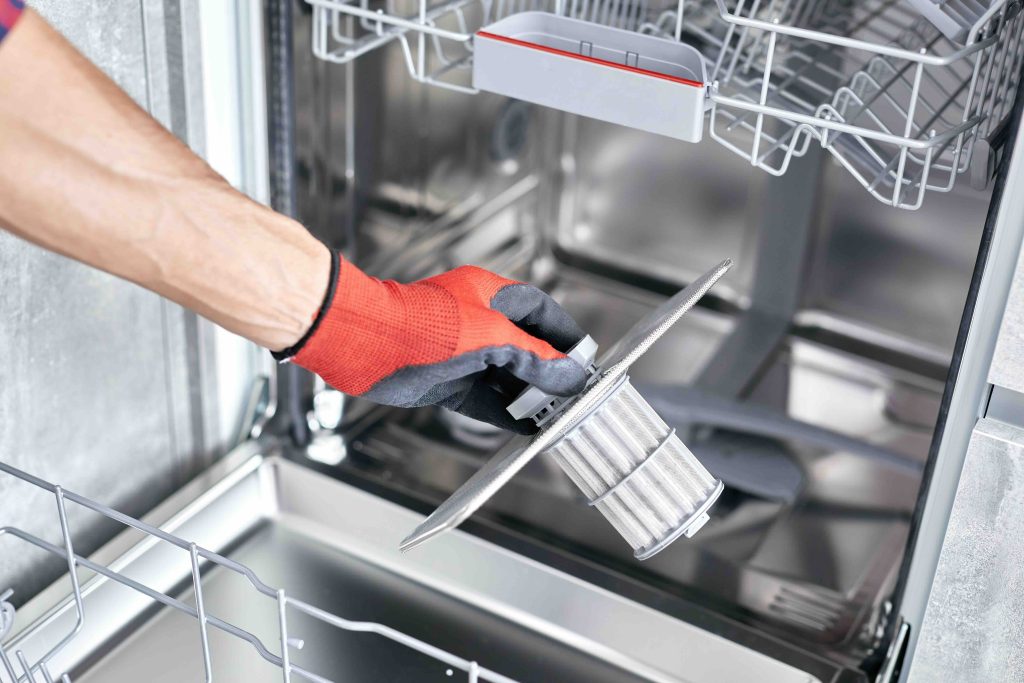
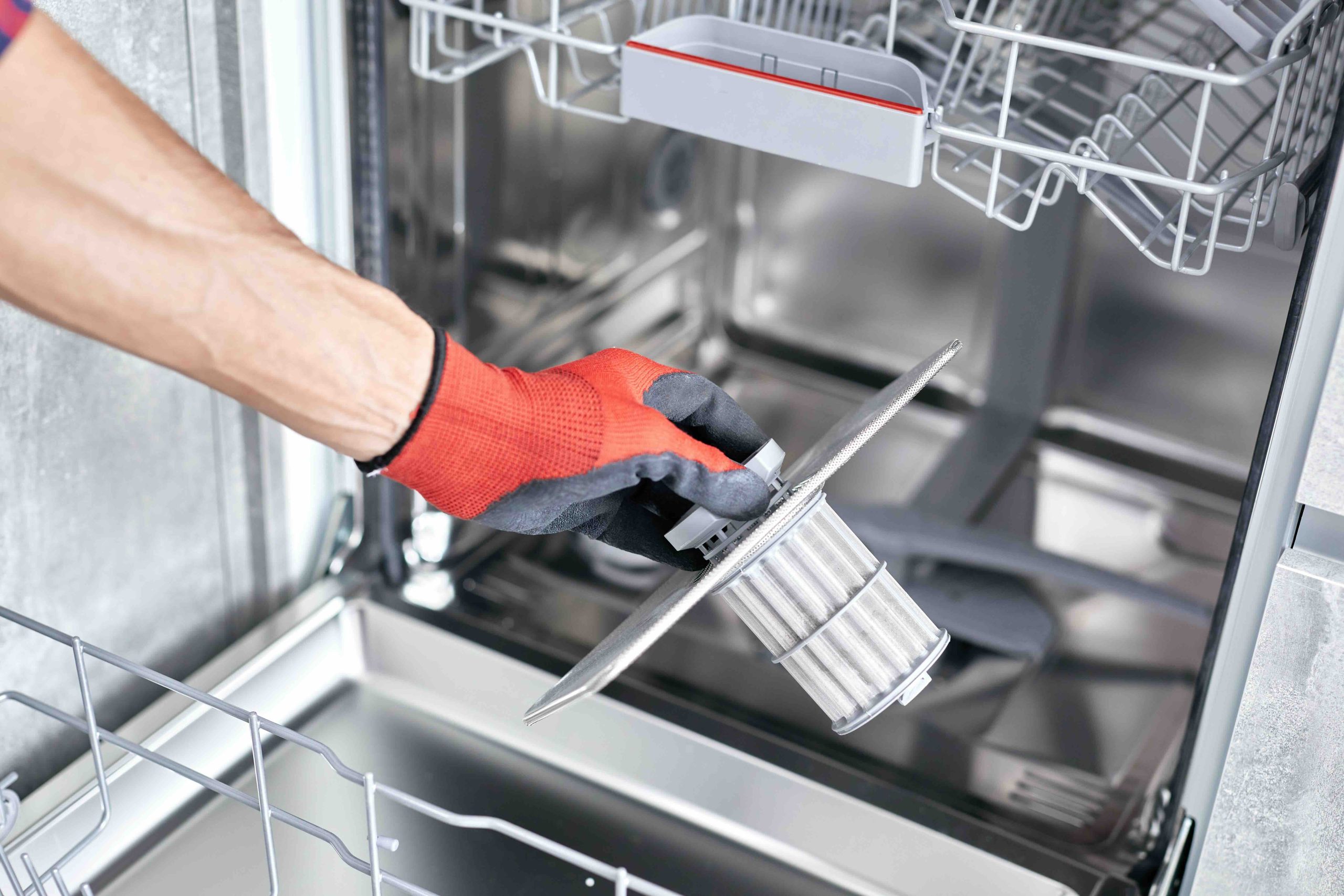
- Remove and clean the filter by rinsing it under warm water and scrubbing it gently with a soft brush and dish soap.
- Wipe down the door gasket with a damp cloth and a mild cleaning solution, paying close attention to the folds where grime hides.
- Clear the spray arm holes using a toothpick or small wire to dislodge any blocked debris.
- Run an empty hot water cycle with a cup of white vinegar placed upright in the top rack to break down grease and deodorize the interior.
- Follow that with a short cycle sprinkled with one cup of baking soda along the bottom of the dishwasher to neutralize remaining odors.
- Inspect the drain area and remove any visible standing water or debris near the drain basket.
Repeating this routine once a month keeps odor from building back up. It takes about fifteen minutes and makes a noticeable difference. Consistency is key here because the conditions that cause odor never really go away permanently.

The Role of the Dishwasher Filter in Odor Control
Not all homeowners realize their dishwasher even has a removable filter. Older models used self-cleaning filters with a grinder that pulverized food particles, but most modern dishwashers use a manual filter that requires periodic removal and rinsing. This filter sits at the bottom of the dishwasher tub and is typically twisted out by hand. If it has not been cleaned in months, it will smell on its own, separate from any other issues in the machine. Pulling it out and giving it a thorough rinse is often the single most impactful thing you can do to eliminate odor. Check your owner’s manual to locate the filter on your specific model if you are unsure where it is. Most manufacturers recommend cleaning it every month, though households that run the dishwasher daily may need to do it more frequently.
Common Mistakes That Make Dishwasher Smell Worse
A few well-intentioned habits can actually make the smell problem worse. Using too much detergent, for example, creates a residue buildup along the interior walls and around the door that traps bacteria over time. Rinsing dishes too thoroughly before loading them can also be counterproductive because modern dishwashers and detergents are designed to work with some food residue present. Without it, enzymes in the detergent have nothing to act on and the wash cycle is less effective. Leaving the door shut immediately after a cycle traps moisture inside and accelerates mold growth. Cracking the door slightly after a cycle finishes allows steam to escape and the interior to dry more completely. These small behavioral shifts are low effort and genuinely reduce how quickly odor returns.
When Cleaning Is Not Enough: Mechanical Issues That Cause Odor
Sometimes the smell is not just about food debris. A dishwasher that consistently leaves standing water at the bottom may have a drain pump issue, a clogged drain hose, or a failing check valve. Standing water is a direct breeding ground for mold and mildew, and it will produce a persistent smell regardless of how well you clean the filter. A worn door gasket that no longer seals properly can also introduce outside air that disrupts the drying cycle and contributes to odor. If you notice your dishwasher is not draining fully, making unusual sounds during the drain cycle, or if the smell returns within days of cleaning, those are signs that something mechanical may be involved. At that point, the issue moves from a maintenance task to a repair situation.
Preventive Habits That Keep Your Dishwasher Smelling Fresh
Prevention is genuinely easier than remediation when it comes to dishwasher odor. A few consistent habits make a significant difference over time:
- Scrape, but do not rinse, dishes before loading to remove large food particles without eliminating the enzymes the detergent needs.
- Run the garbage disposal before starting the dishwasher to clear the shared drain line.
- Use a rinse aid to improve drying performance and reduce the moisture that supports mold growth.
- Leave the dishwasher door slightly ajar after each cycle to allow the interior to air out.
- Run a cleaning cycle with a dedicated dishwasher cleaner tablet once a month.
These are not complicated routines. They are small additions to what you are already doing that compound into noticeably better results over months of regular use.
How Home Warranties Relate to Dishwasher Problems
Odor from a dirty dishwasher is a maintenance issue, which means it falls on the homeowner to address through regular cleaning. But what happens when the smell is traced back to a broken drain pump, a failing motor, or a malfunctioning spray arm assembly? That is where the repair side of appliance ownership gets expensive fast. Dishwasher repair costs can range from a modest drain cleaning to several hundred dollars for a pump or motor replacement. Home warranties are designed specifically for moments like this. They cover the mechanical and electrical failures that go beyond what a cleaning routine can fix. Knowing that your appliances are backed by a warranty plan changes how you approach these situations, because instead of delaying a necessary repair due to cost concerns, you can address it promptly before a minor issue turns into a full replacement.
Why Armadillo Is the Right Home Warranty Partner for Appliance Owners
When your dishwasher goes from smelling bad to not working at all, the last thing you want is to navigate a complicated claims process or discover that your coverage has more exclusions than protections. Armadillo home appliance warranty coverage is built around transparency, simplicity, and real coverage for the appliances homeowners depend on every day. Armadillo covers the kind of mechanical failures that a cleaning routine simply cannot prevent, including drain pump failures, motor issues, and internal component breakdowns that are the real culprits behind persistent dishwasher problems. If you want honest coverage without the guesswork, you can get a free dishwasher warranty quote for your home in seconds and see exactly what is covered before committing to anything. Protecting your appliances is a straightforward decision when the coverage is clear and the process is easy.

Frequently Asked Questions About Dishwasher Smell
Why does my dishwasher smell even after I clean it?
If the odor persists after cleaning, the source may be a clogged drain hose, a failing drain pump, or mold growth in areas that are difficult to access, such as the spray arm interior or the door vent. A mechanical inspection may be necessary if standard cleaning does not resolve the issue.
How often should I clean my dishwasher filter to prevent odors?
Most manufacturers recommend cleaning the filter at least once a month. Households that run the dishwasher daily or wash heavily soiled items regularly should clean the filter every two to three weeks.
Can I use bleach to get rid of dishwasher smell?
Bleach can be effective on mold and mildew, but it should never be used in dishwashers with stainless steel interiors or components, as it causes corrosion. Vinegar and baking soda are safer and effective alternatives for most units.
What causes a rotten egg smell in a dishwasher?
A sulfur or rotten egg odor typically indicates that bacteria have built up in the drain line or that food debris is decomposing in the filter or the drain basket. Cleaning the filter thoroughly and running a hot vinegar cycle usually resolves it.
Is a smelly dishwasher covered by a home warranty?
Odor caused by lack of maintenance or food buildup is not covered under a home warranty, as it is considered a maintenance issue. However, if the smell stems from a mechanical failure such as a broken drain pump or faulty motor, those repairs are typically covered under an appliance warranty plan.
Why does my dishwasher smell like mildew or wet dog?
This type of odor is almost always caused by moisture trapped inside the dishwasher combined with bacteria or mold growth along the door gasket or filter. Improving ventilation after cycles and cleaning the gasket regularly eliminates this smell in most cases.
Can the drain line cause dishwasher odor?
Yes. If the drain line has a low point that allows water to pool, or if it connects to the garbage disposal without a proper high loop, stagnant water can accumulate and produce a noticeable smell. Inspecting and correcting the drain line routing can resolve this issue.
Does running hot water before starting the dishwasher help with odors?
Running the kitchen faucet until the water is hot before starting the dishwasher ensures the first fill cycle uses hot water from the start, which improves cleaning performance and reduces the residue that contributes to odor over time.
How do I know if my dishwasher smell is a maintenance issue or a repair issue?
If cleaning the filter, gasket, and spray arms eliminates the odor, it was a maintenance issue. If the smell returns within a few days, is accompanied by standing water, or comes with unusual sounds during the drain cycle, a mechanical problem is likely involved and a repair should be evaluated.
What is the best natural remedy for dishwasher odor?
White vinegar and baking soda are the most effective natural solutions. Run an empty cycle with a cup of white vinegar on the top rack to cut through grease and kill bacteria, then sprinkle baking soda on the bottom of the tub and run a short cycle to neutralize residual odors.