When Your Window AC Unit Starts Leaking: Understanding a Clogged Drain Line
You notice water dripping down the inside of your wall, pooling on the windowsill, or seeping into the floor below your window air conditioner. It is a small problem that feels oddly alarming. The culprit, more often than not, is a clogged drain line. Window unit drain line issues are incredibly common, and yet most homeowners have no idea they exist until something goes wrong. Understanding what is happening inside that unit, and why water suddenly has nowhere to go, is the first step toward fixing the problem and preventing it from coming back.
How the Drain System in a Window AC Unit Actually Works
Window air conditioners do more than just cool the air. They also pull moisture out of it. As warm, humid air passes over the evaporator coils inside the unit, condensation forms, the same way a cold glass sweats on a hot day. That moisture collects in a drain pan, then exits through a drain line or drain port that directs the water outside. Some units are designed to collect that condensation and use it to cool the condenser coils, which actually improves efficiency. Either way, the system depends on water moving freely. When something blocks that path, water backs up, overflows, and finds the nearest exit, which is usually somewhere inside your home.
Why Window Unit Drain Lines Get Clogged in the First Place
The honest answer is that window AC drain lines are small, damp, and sitting in a spot where dust, debris, and biological growth can accumulate easily. Over time, a few specific things tend to cause blockages.
- Algae and mold growth: Moisture plus darkness plus warm temperatures create ideal conditions for algae and mold to build up inside the drain pan and line
- Dust and dirt accumulation: Airborne particles pulled through the unit settle in the drain pan and gradually restrict water flow
- Improper tilt: Window units should angle slightly outward so water drains away from the home; if the unit is level or tilts inward, water stagnates and debris settles faster
- Insect or debris intrusion: Small insects, leaves, or other debris can enter the drain port from outside and block flow
- Infrequent cleaning: Units that go seasons without maintenance develop buildup that becomes increasingly difficult to clear
Signs That Your Window AC Drain Line Is Clogged
Not every clog announces itself dramatically. Some develop slowly, and the warning signs are easy to dismiss until the problem becomes obvious. Water dripping from the front or bottom of the unit inside your home is the most direct signal. You might also notice a musty or mildew smell coming from the unit, which suggests standing water and biological growth in the drain pan. Reduced cooling efficiency can follow, since a flooded pan can interfere with how the unit operates. In more advanced cases, the water damage extends to the wall, the windowsill, or the floor beneath the unit. If you are seeing any of these signs, addressing the clog quickly protects both the appliance and the surrounding surfaces.

How to Clear a Clogged Drain Line on a Window AC Unit
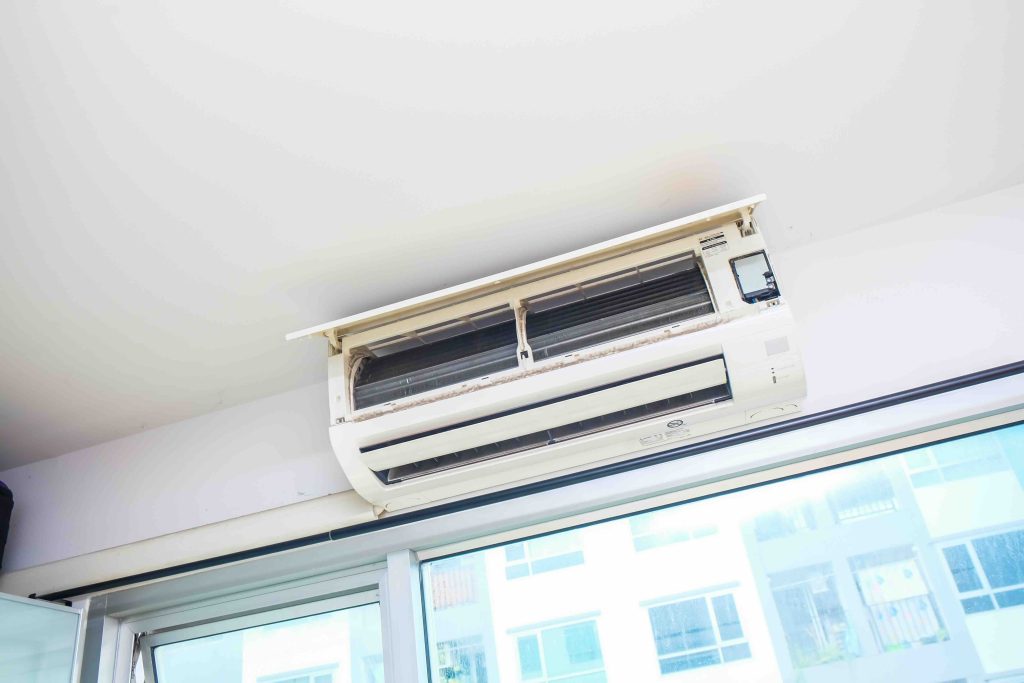
The good news is that many homeowners can address a clogged window unit drain line without calling a technician. Start by turning the unit off and unplugging it completely before doing anything else. Remove the front panel or grille to access the interior, then locate the drain pan. If you see standing water, soak it up with a cloth or sponge. Inspect the drain port or drain hole, which is typically located at the base of the unit toward the exterior side, and use a small brush, pipe cleaner, or compressed air to clear any visible blockage. A diluted bleach solution or white vinegar poured into the drain pan can help break down algae and biological growth. Rinse, dry, and reassemble the unit before testing it again. If the blockage persists or is located deeper within the drain line, that may require professional attention.
Preventing Window AC Drain Line Clogs Before They Start
Routine maintenance is genuinely the best defense against a clogged window unit drain line. A few habits go a long way toward keeping the system clear and functioning properly throughout the cooling season. Clean or replace the air filter every two to four weeks during heavy use, since a dirty filter allows more particles to reach the interior components. At the start and end of each season, flush the drain pan with a mild bleach solution. Check the installation angle of the unit annually to confirm it tilts slightly toward the exterior. Consider placing a drain pan tablet, available at most hardware stores, inside the drain pan to inhibit algae growth between cleanings. These small steps prevent the kind of buildup that leads to overflow and water damage.
The Risks of Ignoring a Clogged Window AC Drain Line
A clogged drain might seem like a minor inconvenience, but the downstream consequences can be significant. Persistent moisture inside the unit accelerates corrosion of internal components, shortening the lifespan of the appliance. Water that overflows onto the surrounding wall or flooring creates conditions for mold growth in building materials, which is both a health concern and a costly repair. Prolonged exposure to moisture can also damage the electrical components inside the unit, creating potential safety risks. If the unit sits in a rented space or is part of a property with shared walls, the liability expands further. Addressing a drain clog early is almost always far less expensive than dealing with what happens when it goes ignored for a full season.
When a DIY Fix Is Not Enough and You Need Professional Help
Some clogs are straightforward to address, and some are not. If you have cleared the accessible drain port and pan but the unit continues to leak water inside, there may be a more significant issue at play. A cracked or corroded drain pan cannot be flushed clean because the water is escaping through the damage itself. A failing condensate pump, found in some window units, may need to be replaced. Internal component damage from long-term water exposure can affect the evaporator coils or the fan assembly. At that point, a qualified HVAC technician can assess whether the unit can be repaired cost-effectively or whether replacement makes more sense given the age and condition of the appliance.
Does Your Home Warranty Cover Window AC Drain Line Issues
This is where things get a little nuanced. Home warranty coverage for window air conditioning units varies by provider and plan. Some home warranty plans cover window units as part of broader HVAC coverage, while others exclude them or offer coverage as an optional add-on. When coverage does apply, it typically addresses mechanical and electrical failures, meaning a failed component that causes drainage issues could fall within the scope of a claim. However, clogs resulting from a lack of maintenance are frequently excluded, since most contracts require homeowners to perform routine upkeep. Reading the fine print on any home warranty policy matters here. Understanding what is and is not covered before you file a claim saves time, frustration, and unexpected out-of-pocket costs.
Why Armadillo Is the Right Partner When Home Repairs Get Complicated
Window AC drain line problems have a way of revealing a broader truth about homeownership: when one thing starts failing, others tend to follow. Having a home warranty that actually works, with clear terms and responsive service, changes the experience of dealing with repairs entirely. Armadillo home warranty coverage for HVAC systems and home appliances is designed to be straightforward, with no confusing fine print and no runaround when you need help. Whether the issue starts with a clogged drain line and turns into something more involved, Armadillo connects homeowners with qualified service professionals efficiently. If you are evaluating your current coverage or looking for something better before the next cooling season, now is a good time to get a free home warranty quote for window AC unit protection and whole-home coverage. The peace of mind is real, and the process is refreshingly simple.

Frequently Asked Questions About Window Unit Clogged Drain Lines
Here are answers to the most common questions homeowners have about window AC drain line problems, clogs, and what to do when water starts showing up where it should not.
Why is my window air conditioner leaking water inside my home?
The most common reason a window AC unit leaks water indoors is a clogged drain line or drain port. When water cannot exit through the proper channel, it overflows the drain pan and finds its way inside. A unit tilted slightly toward the interior rather than the exterior can produce the same result.
How do I unclog the drain line on a window AC unit?
Turn off and unplug the unit first. Remove the front panel and locate the drain pan. Clear visible blockages from the drain port using a small brush, pipe cleaner, or compressed air. Flush the pan with a diluted bleach solution or white vinegar to dissolve biological buildup, then rinse and dry thoroughly before reassembling.
How often should I clean the drain line on my window AC unit?
At a minimum, clean the drain pan and flush the drain line at the beginning and end of each cooling season. If you run the unit frequently or live in a humid climate, a monthly check during peak use is a reasonable precaution.
Can a clogged drain line damage my window AC unit?
Yes. Standing water in the drain pan accelerates corrosion of internal metal components, can damage electrical parts, and creates conditions for mold growth inside the unit. Over time, this reduces efficiency and shortens the lifespan of the appliance.
What causes mold and algae in a window AC drain pan?
The combination of persistent moisture, warmth, and limited light inside the drain pan creates ideal conditions for mold and algae to develop. Infrequent cleaning allows biological growth to accumulate until it restricts or fully blocks the drain line.
Is it normal for a window AC unit to drip water outside?
Yes, some external dripping is normal and expected. Window units are designed to drain condensation to the exterior. What is not normal is water dripping or leaking on the interior side of the unit or onto indoor surfaces.
Can I use bleach to clean my window AC drain line?
A diluted bleach solution, typically one part bleach to ten parts water, is effective for killing mold and algae in the drain pan and clearing biological buildup in the drain line. Rinse thoroughly after application and allow the components to dry before reassembling and operating the unit.
Does a home warranty cover a clogged window AC drain line?
Coverage depends on the specific home warranty provider and plan. Many policies cover mechanical failures within covered systems but exclude issues caused by a lack of maintenance, including clogs from accumulated debris or biological growth. Reviewing your contract details before filing a claim is important.
What angle should a window AC unit be installed at to prevent drain issues?
Window AC units should tilt slightly toward the exterior, generally about one quarter to one half inch lower on the outside than the inside. This ensures gravity assists drainage and prevents water from pooling or draining into the room.
When should I call a professional to fix my window AC drain line?
If clearing the drain port and flushing the pan does not stop the leak, or if you notice a cracked drain pan, corrosion on internal components, or electrical issues, a qualified HVAC technician should assess the unit. Persistent leaks after a basic DIY attempt often indicate a more significant underlying problem.